
Antibiotic & Zinc Timing Calculator
Calculate Safe Timing Between Zinc and Antibiotics
Enter your specific details to determine the optimal timing for maximum effectiveness of your antibiotic treatment.
Recommended Zinc Timing
Based on your inputs
When you’re taking antibiotics and also using zinc supplements-maybe for immunity, skin health, or cold prevention-you might not realize that taking them together could be making your antibiotic less effective. It’s not just a myth. This isn’t about one or two rare cases. It’s a well-documented, clinically proven interaction that can lead to treatment failure, longer illness, or even antibiotic resistance. The fix? Simple: separate your doses.
Why Zinc Interferes with Antibiotics
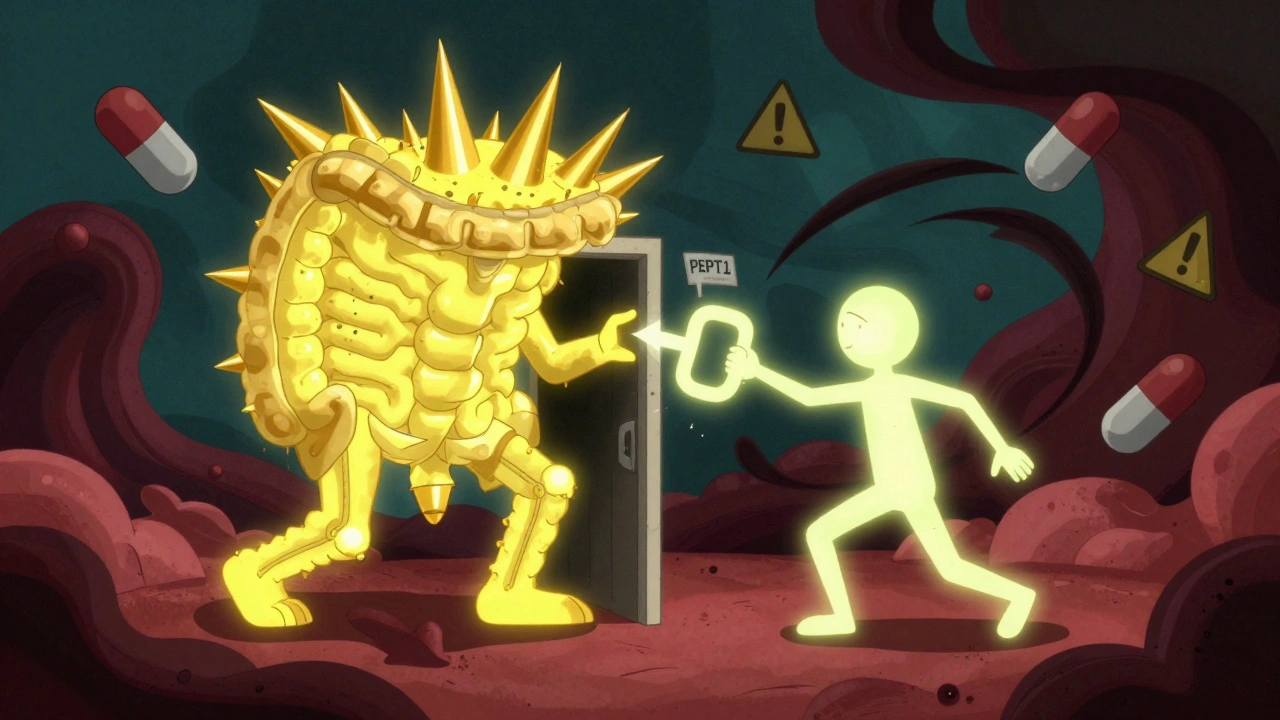
Zinc doesn’t just sit there quietly in your gut. When you take it at the same time as certain antibiotics, it actively blocks their absorption. The reason? Zinc is a divalent cation, meaning it carries two positive charges. So do other minerals like calcium and magnesium. And certain antibiotics are designed to be absorbed by special transporters in your intestines that get confused when zinc shows up. Specifically, zinc competes with antibiotics like tetracyclines (doxycycline, minocycline), quinolones (ciprofloxacin, levofloxacin), and some β-lactams (like cephalexin) for the same absorption pathway: the PEPT1 transporter. Think of it like two people trying to get through the same narrow door at the same time. One wins. Usually, zinc does. Studies show that when zinc is taken with cephalexin, the antibiotic’s peak blood levels drop by up to 40%. With doxycycline, absorption can fall by as much as 50%. That’s not a small difference-it’s the difference between your infection clearing up and it coming back.Which Antibiotics Are Affected?
Not all antibiotics are equally affected. Here’s what you need to know:- High risk: Tetracyclines (doxycycline, tetracycline, minocycline) - zinc binds tightly to these, forming insoluble complexes that your body can’t absorb.
- High risk: Quinolones (ciprofloxacin, levofloxacin, moxifloxacin) - zinc reduces absorption by 20-40%, according to the Linus Pauling Institute.
- Moderate risk: Cephalexin and other cephalosporins - the 2012 NIH study showed measurable drops in blood levels when taken with zinc.
- Low or no risk: Macrolides (azithromycin, clarithromycin), penicillins (amoxicillin), and aminoglycosides - no significant interaction found in clinical studies.
How Far Apart Should You Take Them?
The rule isn’t complicated: take your antibiotic at least 2 hours before or 4-6 hours after your zinc supplement. But here’s where people mess up:- They think “I took my antibiotic at 8 a.m. and my zinc at 10 a.m.-that’s fine.” Nope. If you took zinc at 10 a.m., you shouldn’t have taken the antibiotic until 12 p.m. or later.
- They take a multivitamin with zinc at breakfast and their antibiotic at lunch. That multivitamin might have 15-30 mg of zinc. Enough to interfere.
- They assume “if I take it on an empty stomach, it’s okay.” Not true. The problem isn’t food-it’s the zinc itself.
What About Zinc Formulations?
Not all zinc supplements are the same. Zinc sulfate, the most common and cheapest form, has the strongest interaction. Zinc citrate and zinc gluconate may interfere less, according to a 2022 study in the Journal of Pharmaceutical Sciences. But that doesn’t mean you can ignore timing. Even if you’re taking a gentler form, the dose matters. A 50 mg zinc supplement is far more likely to cause problems than a 15 mg one. The NIH and Linus Pauling Institute both warn that doses over 40 mg per day can also cause nausea, vomiting, or flu-like symptoms-on top of messing with your antibiotics.
Real Stories: What Happens When People Ignore This
On Reddit, a pharmacy student shared a case: a patient on doxycycline for Lyme disease saw no improvement after three days. They were taking a 30 mg zinc supplement with breakfast and their antibiotic at lunch. After being told to separate the doses by 4 hours, the patient’s symptoms improved dramatically within 24 hours. Another case on Drugs.com involved a woman with a recurring UTI. She’d finished her ciprofloxacin course, but the infection came back. She’d been taking a 50 mg zinc supplement within an hour of her antibiotic every day. The interaction had kept the antibiotic from reaching therapeutic levels-she never actually treated the infection. WebMD’s user forum shows 89% satisfaction when people follow the 2-hour rule. Conversely, 78% of negative reviews mention “infection didn’t clear” or “had to restart antibiotics.”What About Multivitamins and Fortified Foods?
This is a sneaky one. Many multivitamins contain zinc-often 10-30 mg. If you take one with your morning coffee and your antibiotic at noon, you’ve already ruined the absorption window. Same with fortified foods. Some cereals, plant-based milks, and nutrition bars are loaded with added zinc. If you’re on a high-risk antibiotic, treat these like supplements. Avoid them within 2-6 hours of your dose. Read the label. Look for “elemental zinc.” That’s the number that matters-not the total compound weight.What If You Can’t Remember?
Most people don’t have perfect timing. That’s why pharmacists recommend using reminders. A simple phone alarm labeled “Antibiotic Time” and another for “Zinc Time” can make all the difference. A 2022 report from the American Pharmacists Association found that patients using app reminders had an 83% compliance rate with separation guidelines. Those without reminders? Only 47%. If you’re on multiple medications, talk to your pharmacist. They can build a simple schedule for you. Many pharmacies now offer free med sync services to help you time everything right.
What’s the Bottom Line?
You don’t have to stop taking zinc. You don’t have to stop your antibiotics. But you do need to separate them.- If you’re on doxycycline, ciprofloxacin, or cephalexin: wait 2-6 hours between doses.
- For tetracyclines: aim for 4-6 hours.
- Check every supplement-even multivitamins-for zinc content.
- Use alarms or apps to stay on track.
- Don’t assume “it’s just a little zinc” - even 15 mg can interfere.
What If I Already Took Them Together?
If you accidentally took zinc and your antibiotic within an hour or two, don’t panic. Don’t double up on your antibiotic dose-that’s dangerous. Just skip your next zinc dose and wait until the next scheduled antibiotic time to take your zinc. Resume the proper timing from there. If you’re concerned about treatment effectiveness, contact your doctor. They might want to check your progress or consider a different antibiotic.Final Thought: This Is a Common Mistake-But It’s Easy to Fix
Doctors and pharmacists know about this interaction. But most patients don’t. That’s why it keeps happening. You’re not alone if you didn’t know. But now you do. And that knowledge could mean the difference between a quick recovery and a prolonged, frustrating illness. Take your antibiotics as prescribed. Take your zinc when it won’t interfere. Simple. Effective. Life-changing.Can I take zinc and antibiotics at the same time if I have a sensitive stomach?
No. Taking them together won’t help your stomach-it will hurt your treatment. Even if you take your antibiotic with food to reduce nausea, the zinc will still block its absorption. Instead, take your antibiotic with a light snack if needed, and keep zinc at least 2 hours away. If stomach upset is a problem, talk to your doctor about switching to an antibiotic that’s easier on the gut.
Is it safe to take zinc after antibiotics if I’m also on other medications?
Yes, as long as you follow the 2-6 hour window. But if you’re on multiple medications, check for interactions with zinc beyond antibiotics. Zinc can also interfere with thyroid meds, bisphosphonates, and some diuretics. Always review your full list with your pharmacist.
Do I need to avoid zinc forever while on antibiotics?
No. Only during the course of your antibiotic treatment. Once you’ve finished your antibiotics, you can resume your normal zinc supplement schedule. There’s no long-term risk from short-term separation.
What if my antibiotic is taken once a day-can I take zinc at night?
Yes, if you take your antibiotic in the morning, taking zinc at night (6+ hours later) is perfectly safe. If you take your antibiotic at night, take your zinc in the morning. The key is spacing them out by at least 2 hours, and ideally 4-6 for tetracyclines.
Can I get zinc from food instead of supplements while on antibiotics?
Yes, and it’s usually fine. Foods like meat, shellfish, legumes, and nuts contain zinc in lower, food-bound amounts that rarely interfere with antibiotics. The problem is concentrated supplements-especially doses over 15 mg. Stick to whole foods if you’re worried, and avoid fortified cereals or nutrition bars during your antibiotic course.
Heidi Thomas
Zinc and antibiotics together is a dumb mistake people make because they don't read labels. 40% drop in absorption? That's not a suggestion. That's a medical emergency waiting to happen. Stop being lazy and time your doses.
Alex Piddington
Thank you for this clear and clinically grounded explanation. Many patients are unaware of this interaction, and your breakdown of the PEPT1 transporter mechanism is both accurate and accessible. Always consult your pharmacist when combining supplements with prescription medications.
Yasmine Hajar
Y'all need to stop treating your body like a lab experiment. I had a friend on doxycycline for acne and took her zinc gummies with breakfast-guess what? Her rash came back worse. Now she uses alarms and swears by it. You don’t need to be a scientist to get this right. Just be responsible.
Jake Deeds
It’s fascinating how people treat their health like a buffet-grab whatever’s convenient, then wonder why nothing works. The fact that you need to separate zinc from antibiotics by hours reveals just how broken our self-medication culture has become. Maybe if we stopped treating supplements like candy, we wouldn’t need these warnings.
George Graham
This is one of those things that sounds complicated but is actually super simple. Set two alarms: one for your antibiotic, one for your zinc. Done. I’ve helped three friends fix their treatment by just doing this. You don’t need to overthink it. Just space it out.
John Filby
Big thanks for this! I was taking my zinc at night and my antibiotic in the morning-never thought it could be an issue. Just switched to morning zinc and night antibiotic and my UTI cleared up way faster. 🙌
Jenny Rogers
The empirical evidence is overwhelming, yet the public continues to treat pharmacological interactions as mere suggestions, a testament to the epistemological decay of modern health literacy. The PEPT1 transporter mechanism is not a metaphor-it is a biochemical reality, and ignorance of it constitutes a form of biological negligence.
Rachel Bonaparte
Let me guess-the pharmaceutical industry loves this. They want you to buy two separate bottles, pay more, and stay dependent. Meanwhile, the real issue is that zinc is being demonized because it’s natural, and drugs are profitable. I’ve taken zinc with antibiotics for years. No problems. They’re just trying to scare you into compliance.
Rebecca Braatz
YOU CAN DO THIS. It’s not hard. Set a reminder. Write it on your hand. Stick a note on your fridge. Your body is fighting for you-don’t sabotage it with carelessness. You’ve got this. And if you mess up once? Reset. Don’t quit. Progress > perfection.
Michael Feldstein
Just wanted to add-some people think ‘I took it 2 hours apart’ and assume it’s fine, but if you’re on a tetracycline and your zinc dose is 50mg? That’s a recipe for subtherapeutic levels. I’ve seen it in the clinic. The 4-6 hour window isn’t a suggestion-it’s the minimum viable separation for real efficacy.
jagdish kumar
Science is truth. But people? They believe what feels right. Sad.
Benjamin Sedler
What if the real problem is that we’re overprescribing antibiotics in the first place? Instead of teaching people to time their zinc, maybe we should stop giving out antibiotics like candy for sinus infections that don’t need them? Just saying.
zac grant
For those on cipro or doxy: the 2-hour rule is baseline. But if you're immunocompromised or dealing with a serious infection (like Lyme or pyelonephritis), go 6 hours. I've seen patients relapse because they thought 'close enough' was good enough. In clinical terms? It's not. You're not optimizing-you're gambling.
michael booth
It is imperative that individuals adhere to the recommended temporal separation between zinc supplementation and antibiotic administration. Failure to do so may result in suboptimal pharmacokinetic outcomes, thereby compromising therapeutic efficacy. This is not a matter of preference-it is a matter of pharmacological integrity.