
Medication Heartburn Risk Calculator
Enter the medications you take and how you take them to calculate your risk of heartburn and get personalized prevention advice.
Your Heartburn Risk Assessment
Personalized Prevention Advice
-
✓
More than one in five people taking common medications like ibuprofen, metformin, or doxycycline experience heartburn or an upset stomach-not because of what they ate, but because of what they swallowed. It’s not rare. It’s not just "bad luck." It’s a direct side effect built into how these drugs work in your body. And most people don’t know how to fix it without quitting the medicine they need.
Why Your Pills Are Burning Your Stomach
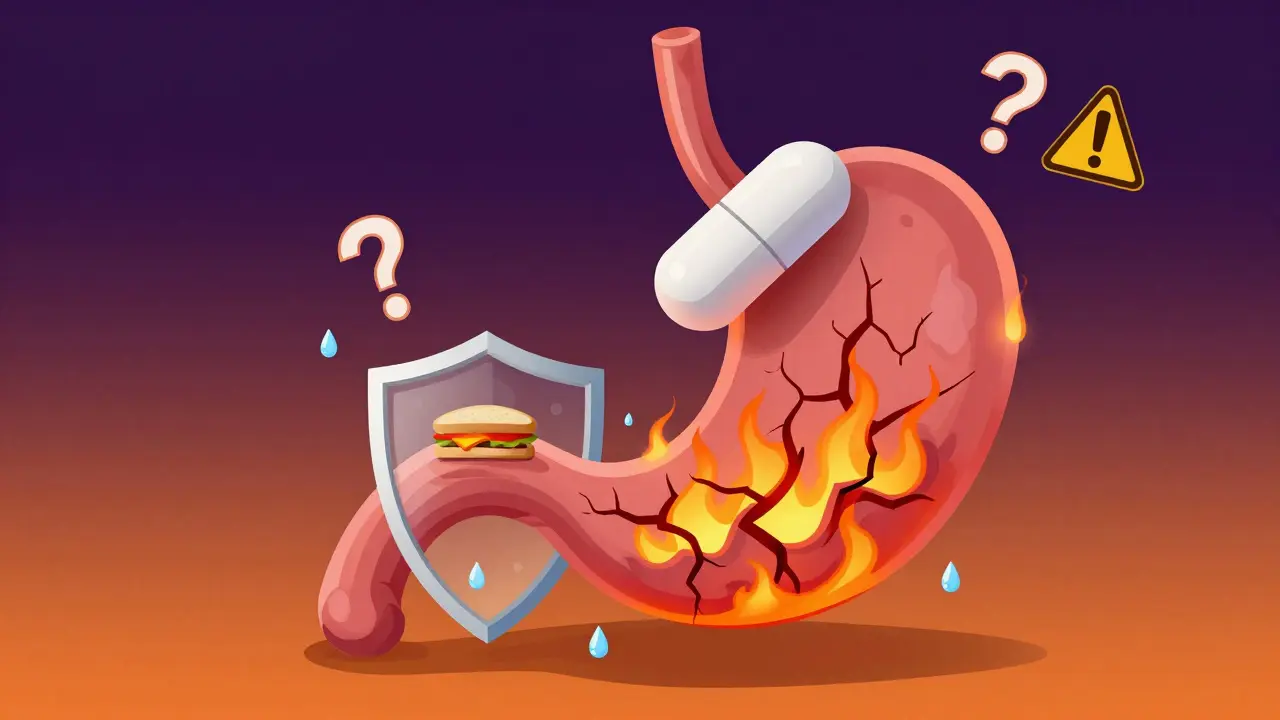
Not all heartburn is caused by spicy food or late-night pizza. Sometimes, it’s your blood pressure pill, your antibiotic, or your daily painkiller. Medications trigger stomach problems in three main ways: they irritate the lining of your esophagus or stomach, they loosen the muscle that keeps acid from rising up, or they make your stomach produce more acid than usual. NSAIDs like ibuprofen and aspirin are the biggest offenders. They block enzymes that protect your stomach lining. Without that protection, acid eats away at the tissue. Up to 30% of people who take ibuprofen regularly get heartburn. Aspirin isn’t far behind. And if you’re on these drugs long-term, your risk of ulcers jumps from 1-2% to 15-30%. Then there’s doxycycline, a common antibiotic. If you swallow it without enough water or lie down right after, it can stick to your esophagus and cause chemical burns. About 12% of people who take it this way develop pill-induced esophagitis. Symptoms show up fast-sometimes within a few hours. Calcium channel blockers, used for high blood pressure, relax the lower esophageal sphincter. That’s the valve that keeps stomach acid from creeping up. When it’s loose, acid escapes. About 1 in 5 people on nifedipine or amlodipine feel that burning sensation. Even asthma meds like theophylline can weaken that valve by up to half, leading to reflux in 25-30% of users. And metformin? The most common diabetes drug in the world. About 1 in 4 new users get nausea, bloating, or heartburn. It’s not dangerous, but it’s uncomfortable enough that many stop taking it-often unnecessarily.Which Medications Are Most Likely to Cause Problems?
Some drugs are more trouble than others. Here’s a breakdown of the top culprits and how often they cause issues:- NSAIDs (ibuprofen, naproxen, aspirin): 20-30% of users get heartburn. Risk goes up with dose and duration.
- Doxycycline and other tetracycline antibiotics: 12% risk of esophagitis if taken improperly. Can cause ulcers in 3-5% of cases.
- Calcium channel blockers (nifedipine, amlodipine): 10-20% trigger reflux by relaxing the esophageal valve.
- Theophylline (asthma meds): Weakens the valve by 30-50%, leading to reflux in 25-30% of users.
- Metformin: 20-30% get GI symptoms, but 60-70% improve within 2-4 weeks.
- Bisphosphonates (alendronate for osteoporosis): 5-10% develop severe esophagitis if not taken correctly. Can require hospitalization.
- Potassium chloride: 15-20% get irritation. Often causes burning in the chest or throat.
What’s surprising? Beta blockers-also used for blood pressure-cause heartburn in only 5-10% of users. If you’re on a calcium channel blocker and struggling with reflux, switching to a beta blocker might be a better option. Always talk to your doctor first.
What Actually Works to Stop the Burning
You don’t have to live with it. And you don’t have to quit your meds. Here’s what science says works:- Take NSAIDs with food. It cuts heartburn risk by 40-50%. A small snack or meal buffers the acid and protects your stomach lining.
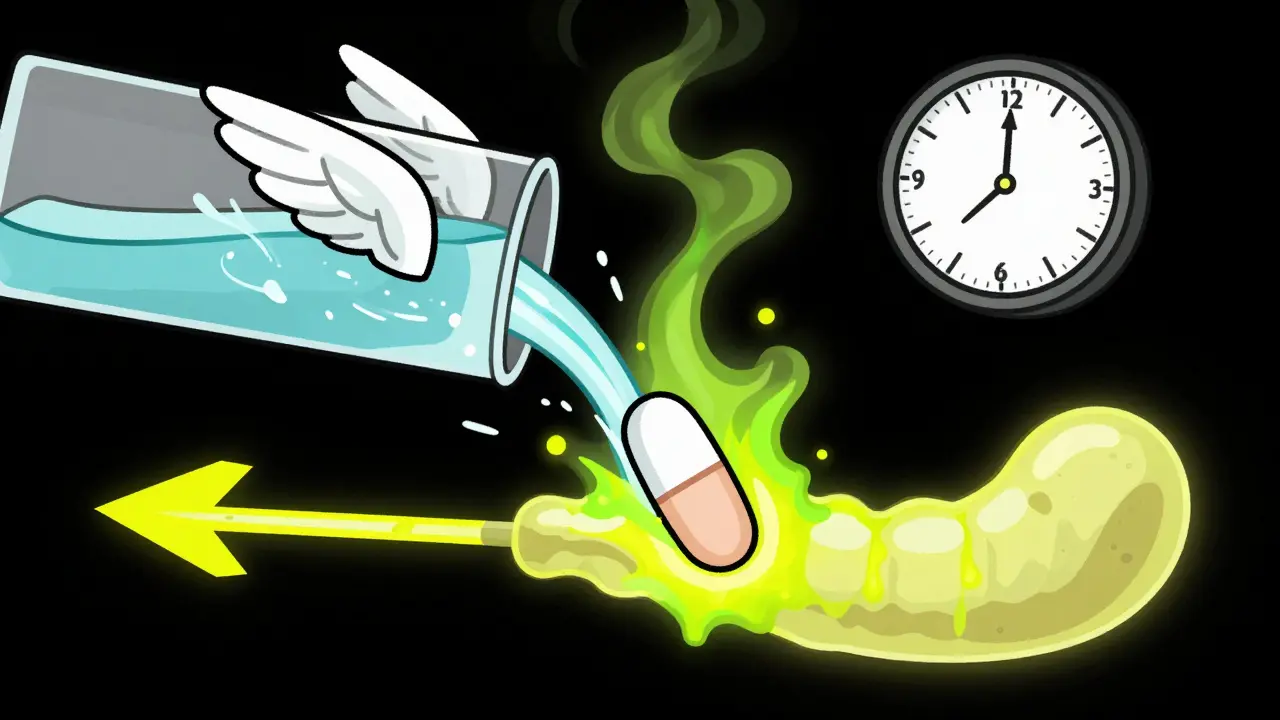
- Drink a full glass of water (8 oz) with every pill. This is critical for antibiotics and bone meds like alendronate. Water washes the pill down before it has time to sit and burn. This reduces esophagitis risk by 60-70%.
- Stay upright for 30-60 minutes after taking pills. No lying down. No slouching on the couch. Gravity keeps the pill moving and acid where it belongs. This prevents 80-90% of pill-induced esophagitis cases.
- Use antacids before NSAIDs. Taking an over-the-counter antacid like Tums or Rolaids 30 minutes before your painkiller reduces heartburn by 30-40%.
- Ask your doctor about a PPI. Proton pump inhibitors like omeprazole or esomeprazole reduce stomach acid production. For high-risk patients on long-term NSAIDs, PPIs cut ulcer risk by 70-80%.
Some people think drinking milk helps. It doesn’t. It might feel good at first, but milk triggers more acid later. Same with baking soda-it’s temporary and can mess with your electrolytes if used too often.
When to Worry (Red Flags)
Most medication-induced heartburn is annoying, not dangerous. But some signs mean you need to see a doctor now:- Chest pain that feels like pressure-not just burning. Could be heart-related.
- Difficulty swallowing-food feels stuck. This suggests scarring or narrowing of the esophagus.
- Blood in vomit or stool-dark, tarry stools or bright red blood. Could mean bleeding from an ulcer.
- Unexplained weight loss along with heartburn. Could signal something more serious like Barrett’s esophagus.
Barrett’s esophagus-a condition where the lining of the esophagus changes due to chronic acid exposure-affects 1-2% of people with long-term, untreated reflux. It’s rare, but it increases the risk of esophageal cancer. That’s why ignoring persistent symptoms isn’t an option.
What Doesn’t Work (And Why)
Many people try to fix this themselves-and make it worse.- Stopping your medication cold. If you quit metformin because of nausea, your blood sugar spikes. If you stop a blood pressure pill, your numbers go wild. Up to 7% of people discontinue essential meds because of heartburn. That’s dangerous.
- Taking pills with coffee or juice. These can slow down how fast the pill moves through your esophagus. Water is the only safe choice.
- Swallowing pills right before bed. Lying down increases the chance of the pill sticking or acid rising. Always take meds at least 2 hours before sleeping.
- Assuming it’s just "acid reflux". If it’s caused by a pill, treating it like regular GERD won’t fix the root cause. You need to change how you take the drug.
New Solutions on the Horizon
Medicine is catching up. In 2022, the FDA approved a new delayed-release version of doxycycline that dissolves lower in the digestive tract-cutting esophagus exposure by nearly half. In 2023, new coated NSAIDs showed 30-35% fewer stomach complaints in clinical trials. Hospitals are also using smart software that flags risky drug combinations before they’re prescribed. One 2024 study found these systems catch 85-90% of high-risk patients before they start feeling pain. Future options? Genetic tests to find people who metabolize NSAIDs poorly (15-20% of Caucasians). Or pills that go through the skin instead of the stomach-patches or sprays that bypass the GI tract entirely. These are still in trials, but they’re coming.What You Should Do Today
If you’re on any of these meds and feel heartburn:- Don’t panic. Don’t stop.
- Check how you’re taking the pill. Are you drinking enough water? Are you staying upright?
- Take it with food if it’s an NSAID or metformin.
- Call your doctor or pharmacist. Ask: "Is there a safer way to take this?" or "Is there a different pill I can try?"
- If symptoms last more than 2 weeks, or get worse, ask about a PPI.
Medications save lives. But they can also hurt you-if you don’t know how to use them right. You don’t have to choose between feeling better and staying healthy. There’s a middle ground. It just takes a few simple changes.
Can I take ibuprofen with omeprazole to avoid stomach pain?
Yes. Taking a proton pump inhibitor like omeprazole with ibuprofen reduces the risk of stomach ulcers by 70-80% in people who need long-term pain relief. This is a standard recommendation for patients over 60, those with a history of ulcers, or anyone taking NSAIDs daily. Always follow your doctor’s dose instructions-PPIs aren’t meant for daily use unless prescribed.
Why does doxycycline cause esophagitis?
Doxycycline is a sticky, acidic pill that can cling to the lining of your esophagus if you don’t drink enough water or lie down too soon. It doesn’t dissolve properly and starts burning the tissue. This causes inflammation, pain, and sometimes ulcers. Taking it with a full glass of water and staying upright for at least an hour prevents this in nearly all cases.
Does metformin-induced heartburn go away on its own?
Yes, for most people. About 60-70% of those who start metformin and get nausea, bloating, or heartburn see symptoms fade within 2 to 4 weeks. The body adjusts. Taking it with food and starting with a low dose helps speed this up. If symptoms last longer than a month, talk to your doctor about switching to extended-release metformin, which is easier on the stomach.
Can I switch from a calcium channel blocker to avoid heartburn?
Possibly. Beta blockers cause heartburn in only 5-10% of users, compared to 10-20% with calcium channel blockers. If your blood pressure is stable and you’re struggling with reflux, your doctor may consider switching you. But never change your meds on your own-some drugs cause dangerous rebound effects if stopped suddenly.
Are natural remedies like ginger or aloe vera helpful?
Ginger may help with nausea from metformin, but it won’t fix pill-induced esophagitis or acid reflux caused by NSAIDs or blood pressure meds. Aloe vera has no proven benefit for medication-related heartburn. These aren’t harmful, but they don’t replace proven strategies like drinking water, staying upright, or using PPIs. Don’t rely on them as a primary solution.
Is it safe to take antacids every day for medication-induced heartburn?
Short-term use is fine-like taking Tums before your ibuprofen. But daily antacids can interfere with how your body absorbs other meds, including antibiotics and thyroid pills. They can also cause diarrhea or constipation. If you need acid relief daily, ask your doctor about a PPI instead. They’re more effective and safer for long-term use.
Nishant Desae
man i totally get this. i was on ibuprofen for months after my knee surgery and thought i was just eating too much spicy food. turned out it was the pills. started taking them with a banana and a big glass of water and boom-no more burning. also stayed upright for like 45 mins after. weird how such a simple thing fixes so much. thanks for laying this out so clearly, i wish more doctors told patients this stuff.
Chris Van Horn
While I appreciate the attempt at simplification, this article fundamentally misunderstands the pathophysiology of NSAID-induced gastropathy. The COX-1 inhibition mechanism is not merely "blocking protective enzymes"-it is a systemic disruption of prostaglandin-mediated mucosal defense, including mucus secretion, bicarbonate transport, and mucosal blood flow. Furthermore, the assertion that "water washes the pill down" is reductive; esophageal transit time is governed by peristalsis, not fluid volume alone. This is dangerously oversimplified medical advice masquerading as public health guidance.
Virginia Seitz
omg YES. i took doxycycline once and felt like my throat was on fire. i didn't know why. now i know. water. up. no lying down. simple. 🙏💧
Kent Peterson
Let me guess-you're one of those people who think "staying upright" is a cure-all? What about the 30% of patients who can't stand for 60 minutes because they're elderly, disabled, or recovering from surgery? This article reads like a marketing brochure for Big Pharma's "easy fix" agenda. Meanwhile, real people are getting ulcers because the system doesn't give them alternatives. Stop blaming the patient for not following 10-step instructions they can't physically execute.
Evelyn Vélez Mejía
There’s a quiet tragedy in how medicine treats the body as a machine that can be fine-tuned with dosage adjustments and timing protocols-when in truth, it’s a living, breathing, deeply individual ecosystem. We are told to swallow pills with water, stay upright, take antacids-but rarely are we asked: why does this system demand such constant vigilance from the patient? Why must the burden of safety rest on the shoulders of the sick, rather than on the designers of the drugs? The real question isn’t how to take the pill-it’s why the pill was designed to harm in the first place.
Victoria Rogers
lol at the "take with food" advice. like i'm gonna eat a full meal before my 7am metformin when i'm barely awake and my stomach's already flipping. also, PPIs? sure, if you want to lose bone density, get pneumonia, and turn into a walking B12 deficiency. this whole thing is a scam. just stop taking meds. problem solved.
Jane Wei
my grandma takes metformin and just eats a cracker before bed. says it helps. no idea if it's science or placebo but she's 82 and still hiking. maybe the real fix is just… chillin’?
Linda Caldwell
you’re not alone!! i thought i was just "sensitive" but turns out it’s the meds. took me 2 years to figure out the water + upright thing. now i’m off NSAIDs and on celecoxib-no more burning. you got this!! 💪
Martin Spedding
Wrong. The FDA approved delayed-release doxycycline? That’s a lie. It’s just a branded version. Same chemical. Same side effects. You’re being sold a placebo with a new label. And don’t get me started on PPIs-they’re overprescribed by 90%. Your stomach needs acid. Stop trying to neutralize it.
Jessica Salgado
i’ve been on metformin for 5 years. the nausea lasted 3 weeks. i cried every morning. then i started taking it with my evening dinner instead of breakfast-and it was like a switch flipped. i didn’t know timing mattered that much. i wish someone had told me that sooner. you’re not broken. you just need to tweak the rhythm.
amanda s
So you're telling me the entire American healthcare system is designed to make people suffer so Big Pharma can sell more PPIs? And you're just telling people to drink water? That's it? That's the solution? We're supposed to be grateful for this? This is why people hate doctors.
Steven Lavoie
As someone who moved from India to the U.S., I noticed something: here, everyone takes pills with soda or juice. In India, we drink water with everything-even antibiotics. Maybe the real issue isn’t the drug-it’s the culture of how we consume it. Water isn’t just a vehicle-it’s a ritual. And rituals matter.
Anu radha
i had heartburn from metformin. my aunt said eat yogurt before. it helped. no doctor told me that. just yogurt. simple.
Sachin Bhorde
Let’s get real: the real issue is polypharmacy. Patients on 5+ meds? The GI tract is a battlefield. NSAIDs + metformin + calcium channel blockers + bisphosphonates? That’s a pharmacokinetic nightmare. The solution isn’t just "drink water"-it’s deprescribing. We need clinical pharmacists介入 before the damage is done. Also, extended-release metformin is 10x better. Ask for it. Your gut will thank you.
Naomi Lopez
How quaint. You treat patients like children who need a checklist. The real problem? No one tells you about drug interactions. I took doxycycline with my thyroid med. Guess what? My TSH spiked. Water didn’t fix that. Timing didn’t fix that. Your advice is surface-level and dangerously incomplete.