
Every year, over 90% of prescriptions filled in the U.S. are for generic drugs. That means if you take medication for high blood pressure, cholesterol, diabetes, or even depression, there’s a very good chance you’re taking a generic version. But how do these cheaper pills end up on your pharmacy shelf? And more importantly - are they really the same as the brand-name drug you’ve heard of?
What Exactly Is a Generic Drug?
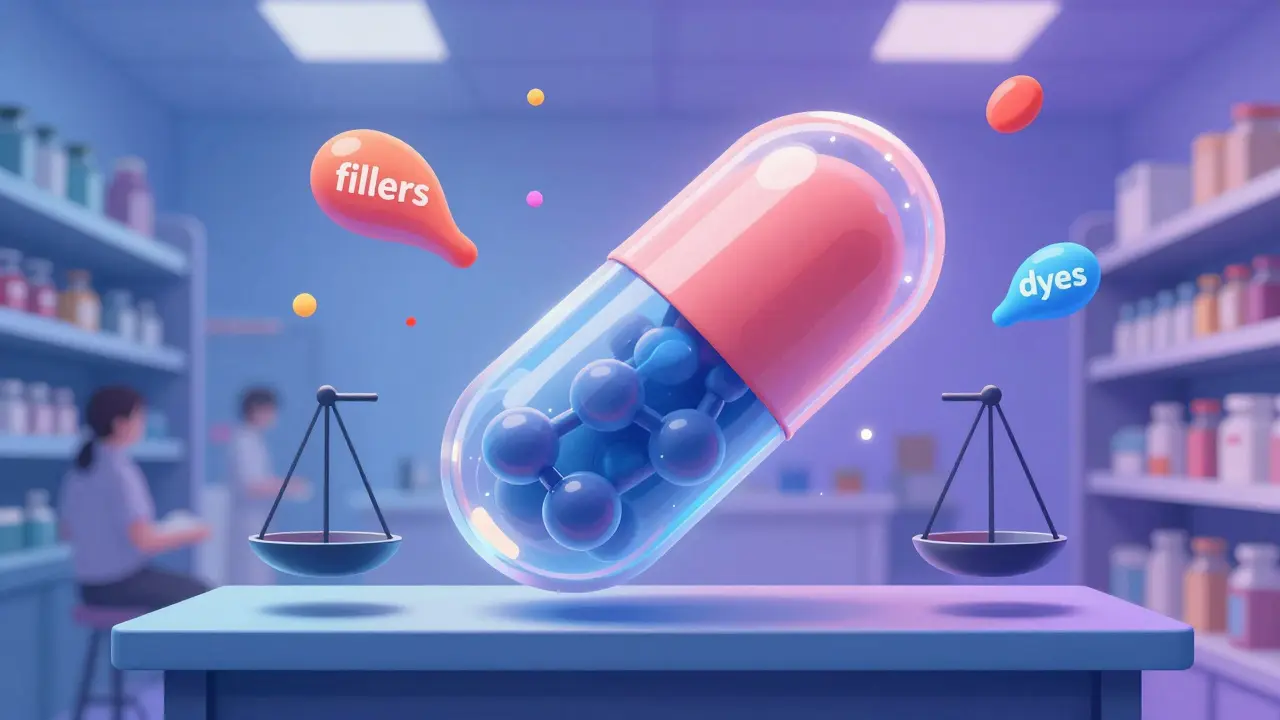
A generic drug is a copy of a brand-name medicine that contains the exact same active ingredient, strength, dosage form, and route of administration. That means if you take a 10mg tablet of lisinopril for blood pressure, whether it’s sold as Zestril (the brand) or just labeled lisinopril, the chemical that works in your body is identical. The FDA requires this match to be perfect - down to the molecule.What’s different? The color, shape, flavor, or inactive ingredients like fillers or dyes. These don’t affect how the drug works. Think of it like buying a plain white T-shirt versus one with a logo. Same fabric, same fit, different label.
How Does the FDA Approve Generic Drugs?
The FDA doesn’t make you repeat every single clinical trial ever done on the original drug. That would be expensive, slow, and unnecessary. Instead, manufacturers use a shortcut called the Abbreviated New Drug Application (ANDA). This process was created in 1984 under the Hatch-Waxman Act to speed up access to affordable medications without lowering safety standards.To get approval, a generic company must prove two big things:
- Pharmaceutical equivalence: The generic has the same active ingredient, dose, and how it’s taken (pill, injection, etc.) as the brand-name drug.
- Bioequivalence: The generic gets into your bloodstream at the same rate and amount as the brand. This is tested in healthy volunteers using blood samples over time. The FDA requires that the generic’s absorption falls within 80-125% of the brand’s - meaning it’s practically identical in how your body handles it.
These tests don’t involve thousands of patients. They’re done in small, tightly controlled studies with 24-36 people. But they’re precise. The FDA doesn’t accept guesses - they demand hard data.
Why Are Generics So Much Cheaper?
Brand-name drugs cost billions to develop. Companies spend years on research, animal testing, and large clinical trials to prove the drug is safe and works. That’s why a new pill might cost $10,000 a year when it first launches.Generic manufacturers don’t have to repeat those expensive studies. They build on the brand’s existing data. Their development costs average $5-10 million - less than 1% of what it takes to launch a new drug. That’s why a 30-day supply of generic lisinopril might cost $4 at Walmart, while the brand version could be $150 or more.
As a result, generics save the U.S. healthcare system over $2 trillion every decade. That money stays in patients’ pockets, lowers insurance premiums, and keeps public programs like Medicare from going broke.
Is Every Generic the Same?
Not always - but the difference isn’t in effectiveness. The FDA approves every generic before it hits the market. But there’s a catch: some drugs are harder to copy than others.Simple pills - like metformin for diabetes or atorvastatin for cholesterol - are easy to replicate. Over 70% of all generic approvals are for these types. But complex products like inhalers, eye drops, creams, or injectables? Those are much trickier. The way the drug is delivered matters. A nasal spray that doesn’t reach the right part of your nose won’t work the same, even if the chemical is identical.
The FDA calls these “complex generics.” They make up only about 15% of applications, but cause nearly 40% of delays in approval. That’s why it took 15 years for the first generic EpiPen to get approved - not because of safety, but because matching the exact spray pattern and dose delivery was incredibly hard.
What About Safety and Side Effects?
You might hear stories about people feeling different after switching from brand to generic. Sometimes it’s real - but usually not because the drug doesn’t work.Patients on narrow therapeutic index (NTI) drugs - like warfarin (blood thinner), levothyroxine (thyroid), or certain seizure meds - are more sensitive to small changes. Even tiny differences in how the drug is absorbed can matter. The FDA still approves these generics, but doctors may recommend sticking with one manufacturer if you’ve been stable on it.
That doesn’t mean generics are unsafe. It just means for these specific drugs, consistency matters more. If your doctor or pharmacist advises you to stay on the same generic brand, it’s not because they doubt the FDA - it’s because they want to avoid any unnecessary changes.
Studies show 87% of patients are satisfied with generic medications. In one survey of 2,500 people, only 18% reported concerns - and most of those were about switching between different generic brands, not about generics in general.
Who Makes These Drugs?
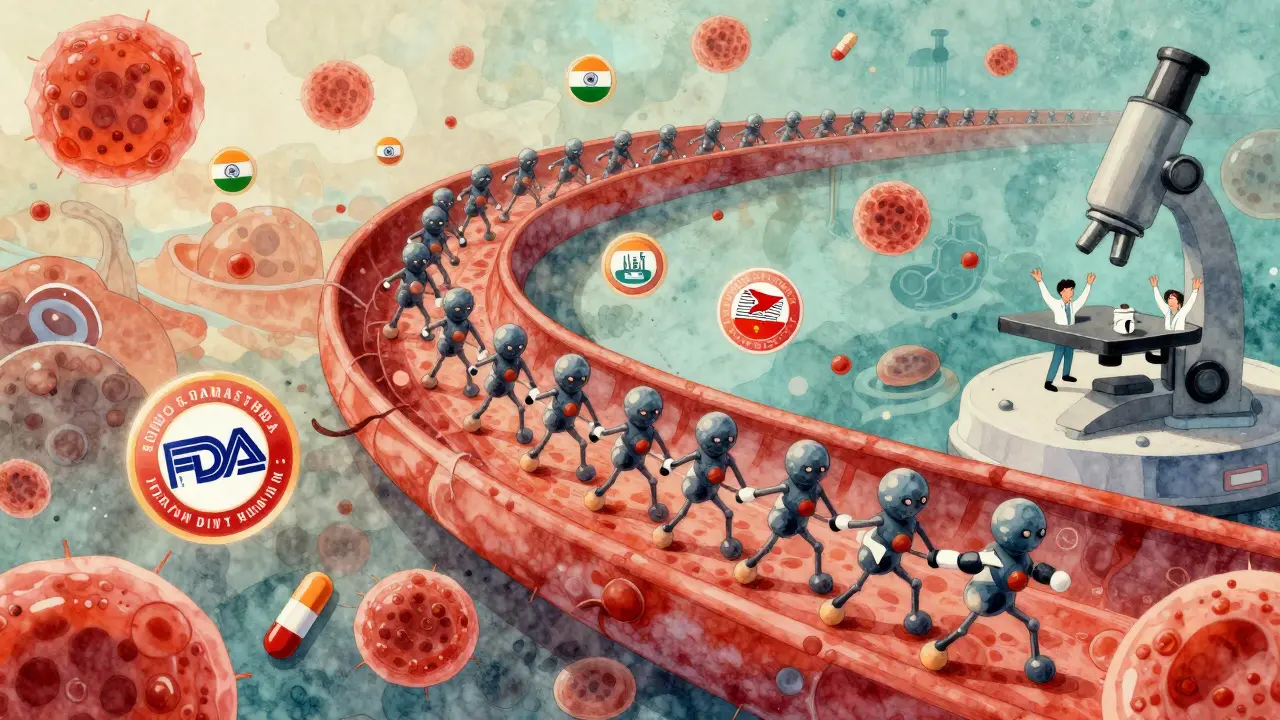
Most people think generics are made in the U.S., but that’s not true. The FDA inspects factories all over the world - in India, China, the U.S., Germany, and beyond. About half of all generic drugs sold in the U.S. come from overseas facilities. And here’s the key: those factories are held to the same standards as U.S. ones.The FDA conducts around 1,500 inspections a year for generic drug plants. If a facility fails inspection, the FDA blocks the drug from entering the market. In 2022, 22% of initial inspections turned up issues - but most were fixed before approval. The FDA doesn’t approve drugs from factories that don’t meet quality rules.
The biggest generic makers are Teva, Viatris, and Amneal - but hundreds of smaller companies also compete. This competition drives prices down. When multiple companies make the same generic, the price can drop by 90% within months.
How Long Does Approval Take?
The FDA aims to review standard generic applications within 10 months. But complex drugs can take over two years. The process includes:- Submitting thousands of pages of data on how the drug is made
- Proving bioequivalence through lab studies
- Waiting for a factory inspection
- Responding to FDA questions
Some companies skip ahead by being the first to file an ANDA for a drug whose patent just expired. They get 180 days of exclusive sales - no other generics can enter during that time. That’s why you might see one generic version appear first, then five others show up later.
What About Patent Delays?
Sometimes, brand-name companies file multiple patents on minor changes - like a new coating or pill shape - to delay generics. This is called “evergreening.” The FDA can’t stop it, but the FTC is watching. Some lawsuits have forced companies to let generics in sooner.The FDA has tools to help. The Pre-ANDA program lets companies meet with regulators early to avoid mistakes. About 78% of successful applicants used this. It saves time, money, and frustration.
Can You Trust Your Generic?
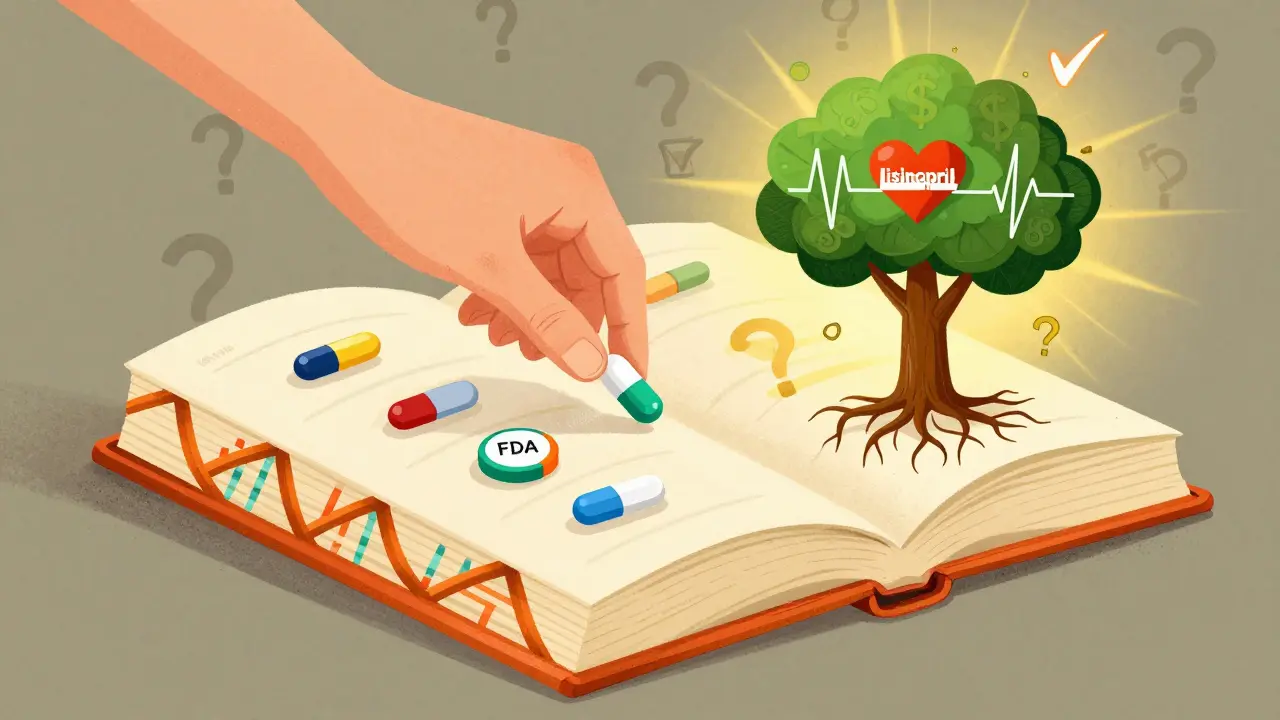
Yes. The FDA doesn’t cut corners. Every generic must meet the same strict standards as the brand. The agency doesn’t approve drugs based on trust - it requires proof. That proof is public. You can look up approved generics in the FDA’s Orange Book, which lists every approved drug and its generic equivalents.Pharmacists are trained to know the difference between generic brands. If you switch from one generic to another and feel different, talk to your pharmacist. It’s not always the drug - sometimes it’s the filler or how your body reacts to a slight change in formulation.
Bottom line: If your doctor prescribes a generic, or your pharmacy fills it with one, you’re getting a safe, effective, FDA-approved medicine. You’re not getting a lesser version. You’re getting the same medicine, at a fraction of the cost.
What Should You Do?
- Ask your doctor or pharmacist if a generic is available for your prescription.
- If you’re on a sensitive medication like warfarin or levothyroxine, stick with the same generic brand unless your provider says otherwise.
- Don’t avoid generics because of cost - they’re often 80-90% cheaper.
- If you notice a change in how you feel after switching, write it down and tell your provider. It’s rare, but worth checking.
The FDA’s generic approval system isn’t perfect - but it’s one of the most successful public health tools ever created. It’s saved trillions, kept millions on their meds, and made healthcare affordable. You don’t need to be a scientist to understand it. Just know this: when you take a generic, you’re getting the same medicine - just without the brand name price tag.
Are generic drugs as effective as brand-name drugs?
Yes. The FDA requires generic drugs to have the same active ingredient, strength, dosage form, and route of administration as the brand-name version. They must also prove bioequivalence - meaning they deliver the same amount of medicine into your bloodstream at the same rate. Thousands of studies and decades of real-world use confirm that generics work just as well.
Why do generic drugs look different from brand-name drugs?
By law, generic drugs can’t look exactly like the brand-name version. That’s to avoid confusion and protect trademarks. So, they may have a different color, shape, or size. But the active ingredient - the part that treats your condition - is identical. The differences in appearance are only in inactive ingredients like dyes or fillers, which don’t affect how the drug works.
Can I switch between different generic brands?
For most people, yes. But if you’re taking a narrow therapeutic index drug - like warfarin, levothyroxine, or certain seizure medications - small changes in how your body absorbs the drug can matter. In these cases, your doctor or pharmacist may recommend sticking with the same generic manufacturer to avoid potential fluctuations. Always talk to your provider before switching.
Are generic drugs made in the U.S.?
Some are, but many are made overseas - in countries like India and China. The FDA inspects all manufacturing facilities, whether they’re in the U.S. or abroad, to ensure they meet the same quality and safety standards. If a factory fails inspection, the FDA blocks the drug from being sold in the U.S. So, where it’s made doesn’t matter as much as whether it passes FDA checks.
How does the FDA ensure generic drugs are safe?
The FDA requires proof of pharmaceutical and bioequivalence before approval. Manufacturers must submit detailed data on how the drug is made, tested, and absorbed. All production facilities are inspected for compliance with strict manufacturing rules. The FDA also monitors side effects after the drug is on the market. If problems arise, they can pull the drug off the shelf - just like they would with a brand-name product.
Katherine Carlock
Just took my generic lisinopril this morning and felt zero difference from the brand. Seriously, why do people pay extra? The FDA isn’t playing around.
Sona Chandra
Ugh another corporate shill post. You think the FDA gives a damn about patients? They’re just letting pharma companies dump cheap junk from India on us while they sip champagne in DC. My cousin had a seizure after switching - no one cares.
Alex Fortwengler
Gen Z thinks generics are magic but they don’t know half the stuff is made in factories with rat droppings in the walls. I’ve seen the reports. The FDA inspects once every 5 years and calls it a day. You’re basically gambling with your life.
Lelia Battle
It’s fascinating how the system balances accessibility with rigor. The bioequivalence thresholds - 80-125% - aren’t arbitrary. They’re grounded in pharmacokinetic science. The fact that this works at scale, across millions of prescriptions, speaks to a quiet triumph of regulatory design.
Still, I wonder if we’re underestimating the psychological impact of switching. The placebo effect isn’t just about branding - it’s about trust in the ritual of care.
Prachi Chauhan
Generic drugs are like buying a plain white bread instead of artisanal sourdough. Same carbs, same calories, but you’re not paying for the hype. The body doesn’t care about logos. It only cares if the molecule fits the lock.
And honestly? If your thyroid meds make you jittery after switching, it’s probably not the drug - it’s your anxiety about switching. Your mind is the real wild card here.
Also, why do we act like ‘made in India’ is a bad thing? We’re not mad at Samsung phones for being made there. But pills? Suddenly it’s a conspiracy.
India makes 40% of the world’s generics. They’ve got more FDA inspections per factory than most U.S. plants. The real villain is the patent games, not the pharmacy shelf.
And yes, I’ve taken generics for 12 years. No side effects. No drama. Just cheaper bills and a healthier bank account.
Stop treating your meds like a status symbol. Your body doesn’t care if it’s branded or not. It just wants to work.
Also, if you’re on warfarin, sure - stick with one maker. But don’t let that scare you away from generics entirely. That’s like refusing to drive because one car had a bad tire.
The system isn’t perfect. But it’s the best we’ve got. And it’s saved trillions. That’s not marketing. That’s math.
And yes, I’m from India. And yes, I’ve seen the factories. They’re clean. They’re regulated. They’re not magic. But they’re not evil either.
Stop the fearmongering. Start the savings.
Amanda Eichstaedt
I used to be scared of generics until I started tracking my blood pressure. Brand: $140/month. Generic: $6. Same numbers on the monitor. Same energy. Same sleep. I now buy all my meds in bulk from Costco’s generic line. My doctor high-fives me every visit.
Also, the Orange Book is your new best friend. Type in your drug. See every approved version. It’s like Yelp for pills.
Cassie Widders
I’ve been on levothyroxine for 8 years. Switched generics twice. Felt nothing. My TSH stayed perfect. I think people panic because they don’t understand how medicine works. It’s chemistry, not branding.
Darryl Perry
Why are we even having this conversation? The FDA approves generics. End of story. If you’re paranoid, take the brand. Pay more. Whatever.
Windie Wilson
So let me get this straight - we’re okay with iPhones made in China but generic pills from India are ‘dangerous’? What even is this double standard? Are we scared of the color of the pill or the color of the country?
Also, if your generic makes you feel ‘off,’ it’s probably the sugar cereal you ate for breakfast.
Konika Choudhury
India makes the best generics in the world and you Americans still act like they’re poisoning you. We’ve been making life-saving medicine for decades. Your system is broken not ours. Stop the fear. Start the respect
jordan shiyangeni
While the FDA’s bioequivalence standards are statistically sound, the assumption that 80-125% absorption variability is clinically insignificant is a dangerous oversimplification. In patients with polypharmacy, renal impairment, or genetic polymorphisms in CYP450 enzymes, even minor pharmacokinetic deviations can cascade into therapeutic failure or toxicity. The literature is replete with case reports - particularly with antiepileptics and anticoagulants - where bioequivalence was technically met, yet clinical outcomes diverged significantly due to inter-individual variability. Regulatory frameworks prioritize population-level efficacy over individualized precision, which is not inherently flawed, but must be acknowledged as a systemic limitation, not a virtue.
Furthermore, the notion that ‘the body doesn’t care about branding’ ignores the neurobiological placebo effect, which modulates neurotransmitter activity, cortisol release, and even pain perception. The ritual of taking a branded pill can activate reward pathways that generics, by design, do not replicate. This is not pseudoscience - it’s neuropharmacology.
And while I appreciate the economic argument, we must not conflate cost-efficiency with ethical responsibility. The FDA’s inspection backlog and reliance on foreign manufacturing without consistent real-time monitoring represent a latent public health vulnerability. Transparency is not marketing - it’s accountability.
So yes, generics work for most. But ‘most’ is not ‘all.’ And to dismiss the minority as paranoid is not just unscientific - it’s negligent.
Jose Mecanico
My grandma takes 7 meds. 6 are generic. She’s 82, sharp as a tack, no hospital visits in 5 years. She says, ‘If it works and doesn’t cost my pension, why fight it?’
Abner San Diego
Generic drugs are just the government’s way of making us take second-rate medicine so they can save a buck. Meanwhile, the CEOs of Teva and Pfizer are flying to the Bahamas. You think they care if your blood pressure is stable? They care about their bonuses.
And don’t even get me started on the Indian factories. I read a report - rats were found in the vats. The FDA just gave them a warning. That’s not oversight. That’s surrender.
Prachi Chauhan
Abner, you’re right that the system’s imperfect - but the rats-in-vats thing? That was one plant in 2014. FDA shut it down. No drug from there ever hit shelves. You’re using a 10-year-old outlier to scare people. That’s not skepticism - that’s fear porn.
And Teva’s CEO? He’s got a salary. So does your dentist. So does your Uber driver. We’re not all billionaires. The point is, your blood pressure pill shouldn’t cost $150. That’s the real scam.
And if you want to pay more for a pill with a logo? Go ahead. But don’t pretend you’re saving lives by doing it. You’re just saving ego.