
Prediabetes Reversal: How to Get Back on Track Before It Turns to Diabetes
When your blood sugar is higher than normal but not high enough for a diabetes diagnosis, you have prediabetes, a condition where your body starts to struggle with insulin, leading to rising blood sugar levels. Also known as impaired glucose tolerance, it’s not a life sentence—it’s a warning sign you can act on. About 1 in 3 adults in the U.S. has it, and most don’t even know. The good news? Prediabetes reversal isn’t about drastic diets or expensive pills. It’s about small, consistent steps that reset how your body handles sugar.
At the heart of this is insulin resistance, when your cells stop responding well to insulin, so sugar builds up in your blood instead of being used for energy. This isn’t caused by eating too much sugar alone—it’s tied to belly fat, inactivity, poor sleep, and chronic stress. The same habits that drive blood sugar control, the body’s ability to keep glucose levels steady throughout the day into chaos also make reversal possible. You don’t need to run marathons. Walking 30 minutes a day, swapping sugary drinks for water, and getting 7 hours of sleep can cut your risk of diabetes by over half. Studies show people who lose just 5-7% of their body weight cut their diabetes risk by 58%—and many keep it off for years.
What works isn’t magic. It’s structure. Knowing which foods spike your sugar. Understanding how stress hormones raise glucose. Realizing that even small weight loss around your waist matters more than the number on the scale. And it’s not just about food and exercise—it’s about your daily rhythm. Skipping meals, eating late at night, or scrolling in bed before sleep all mess with your body’s internal clock and insulin sensitivity.
The posts below aren’t about quick fixes. They’re about the real tools people use to turn things around: how to time meals to avoid sugar crashes, why certain medications can help or hurt your progress, how gut health connects to blood sugar, and what to ask your doctor when you’re told you’re prediabetic. You’ll find no fluff—just clear, practical info from real experiences and science. Whether you’re just starting out or trying to stay on track after a setback, these resources show you exactly what moves the needle—and what doesn’t.
Prediabetes Reversal: Lifestyle Changes That Actually Work to Prevent Type 2 Diabetes
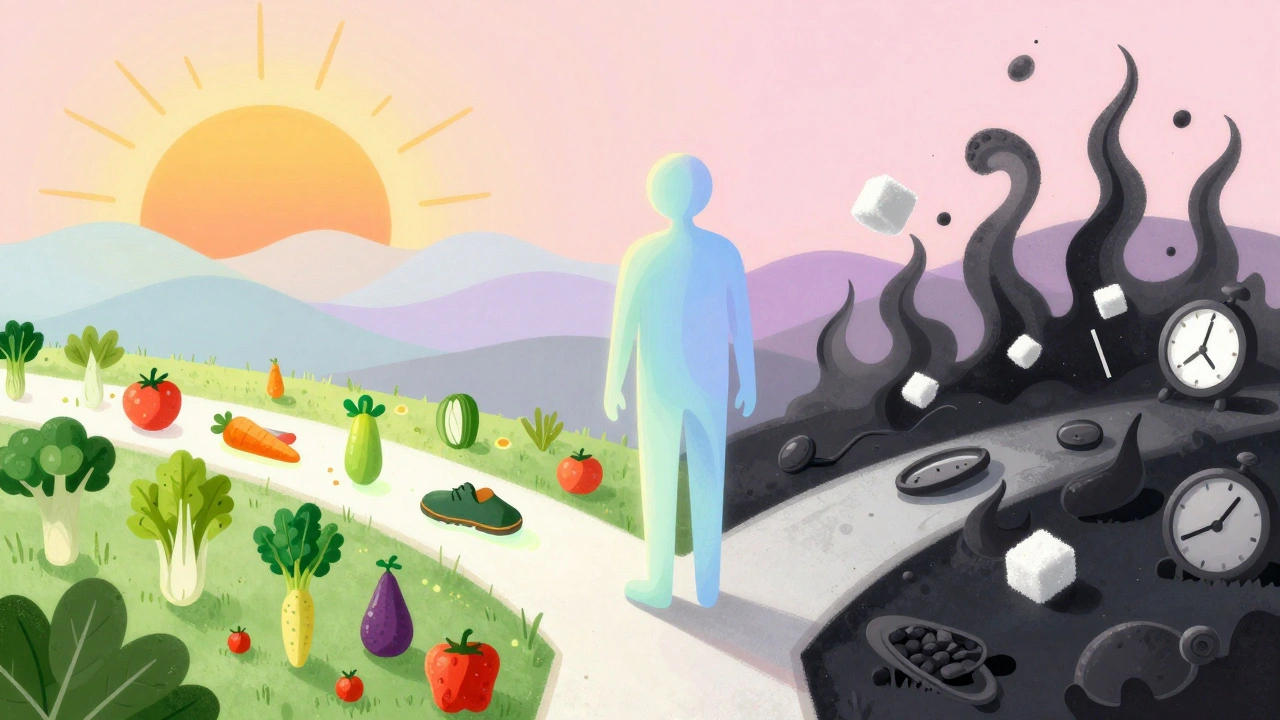
Prediabetes can be reversed with simple, lasting lifestyle changes-no drugs needed. Learn how diet, movement, sleep, and stress management can lower your blood sugar and prevent type 2 diabetes.
More