
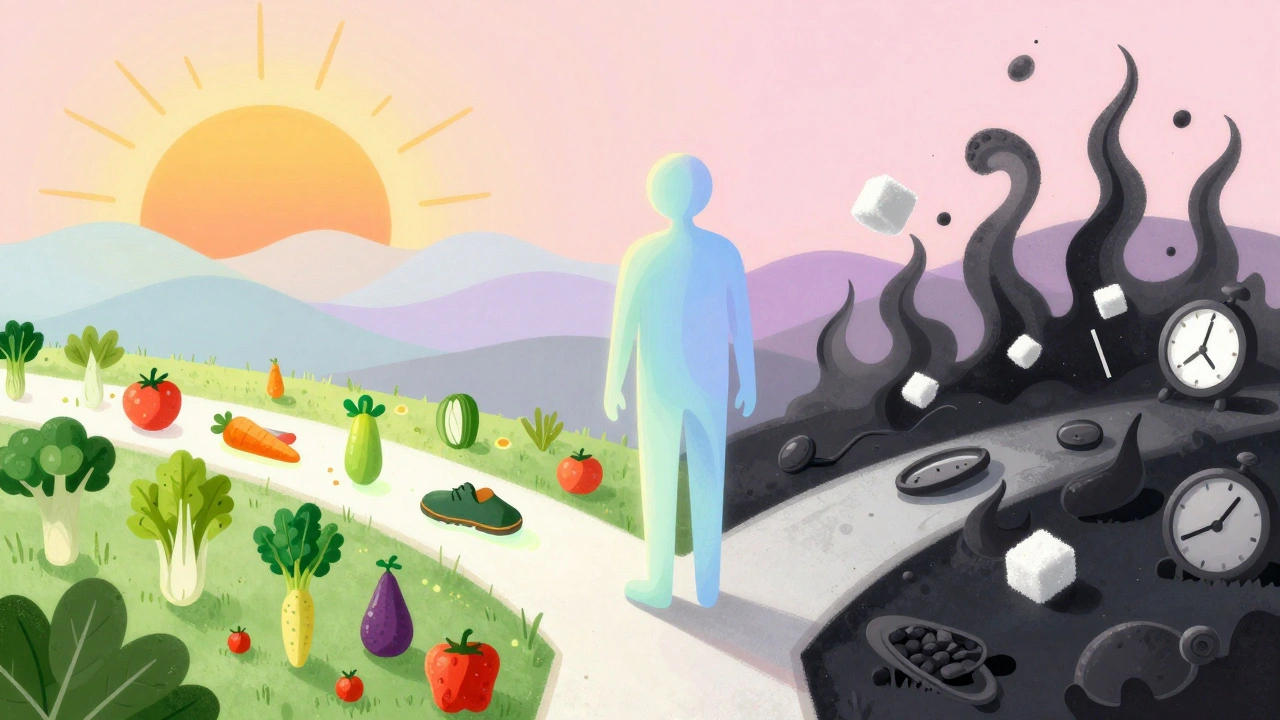
More than 96 million adults in the U.S. have prediabetes. Most don’t even know it. That’s not because they’re not getting checked-it’s because the symptoms are invisible. No fatigue, no thirst, no frequent urination. Just quietly rising blood sugar levels that, if ignored, will likely turn into type 2 diabetes within five years. But here’s the good news: prediabetes reversal isn’t just possible. It’s common-and it doesn’t require drugs, surgery, or extreme diets.
What Prediabetes Really Means
Prediabetes isn’t a warning label. It’s a red flag with an exit ramp. Your body is still able to manage blood sugar, but it’s struggling. Insulin, the hormone that moves glucose into your cells, isn’t working as well as it should. Your cells are becoming resistant. Your pancreas is working overtime to pump out more insulin. Over time, it burns out. That’s when type 2 diabetes kicks in. The diagnosis is simple: fasting blood sugar between 100 and 125 mg/dL, HbA1c between 5.7% and 6.4%, or a 2-hour glucose level of 140-199 mg/dL after a sugar challenge. These numbers aren’t arbitrary. They’re the line between normal function and early breakdown. And crossing that line doesn’t mean you’re doomed. It means you’re in the window to fix it.The Science Behind Reversing Prediabetes
A 2023 review of dozens of studies found that lifestyle changes reversed prediabetes in 18% more people than no intervention at all. That means for every six people who make real changes, one goes back to normal blood sugar levels. That’s better than most medications. And unlike drugs, lifestyle changes don’t come with side effects-they come with extra energy, better sleep, and lower blood pressure. The CDC’s National Diabetes Prevention Program tracked over 10,000 people. Those who lost 5% to 7% of their body weight and moved for 150 minutes a week cut their diabetes risk by 58%. That’s not a guess. That’s data from real people-teachers, truck drivers, nurses, retirees-who changed their habits and reversed their diagnosis. Even more surprising? You don’t always need to lose weight. A 2022 study in Nature Medicine showed people who reversed prediabetes without losing any weight still slashed their future diabetes risk by 70%. How? They reduced visceral fat-the deep belly fat that wraps around your liver and pancreas. That fat is metabolically toxic. It’s the kind that makes insulin less effective. Lose that, and your body regains control-even if the scale doesn’t move much.What Actually Works: The Four Pillars of Reversal
There’s no magic diet. No miracle supplement. No single food that cures prediabetes. But there are four habits that, when done together, change everything.1. Move More-But Not Like You’re Training for a Marathon
You don’t need to run five miles. You need to move consistently. Walking after meals is one of the most effective things you can do. A 15-minute stroll after dinner lowers your blood sugar more than any pill. Why? Movement pulls glucose out of your bloodstream and into your muscles-without insulin. Aim for 150 minutes a week. That’s 30 minutes, five days a week. Break it up. Walk during lunch. Park farther away. Take the stairs. Dance while you cook. The goal isn’t intensity-it’s consistency. Studies show people who move daily, even lightly, have better insulin sensitivity than those who do one intense workout and then sit for the rest of the week.2. Eat Real Food-Not Labels
Your plate should look like a garden, not a grocery receipt. Swap white bread, white rice, and pasta for whole grains like farro, quinoa, barley, and steel-cut oats. These take longer to digest, so your blood sugar doesn’t spike. Add beans, lentils, and chickpeas. They’re packed with fiber and protein-two things that stabilize glucose. Cut out sugary drinks. That’s soda, sweetened tea, juice, energy drinks. One 12-ounce soda can add 40 grams of sugar-more than your body can handle in a day. Replace it with water, sparkling water, or unsweetened tea. If you crave flavor, add lemon, mint, or cucumber. Fill half your plate with colorful vegetables. Green broccoli, red bell peppers, orange carrots, purple eggplant. Each color means different antioxidants and phytonutrients that help your cells respond better to insulin. Eat fruit-but not as a snack. Eat it with protein or fat. An apple with peanut butter slows sugar absorption. A banana alone? That’s a blood sugar rollercoaster. Reduce processed meats. Bacon, sausage, deli meats-they’re loaded with preservatives and saturated fats that worsen insulin resistance. Choose fish, chicken, tofu, or eggs instead.3. Sleep and Stress Matter More Than You Think
Poor sleep raises cortisol, the stress hormone. High cortisol makes your liver pump out more glucose. It also makes you crave sugar and carbs. People who sleep less than six hours a night are 30% more likely to develop type 2 diabetes. Try to get seven to eight hours. Turn off screens an hour before bed. Keep your room cool and dark. If you can’t sleep, try deep breathing or a short walk-not a second cup of coffee. Stress does the same thing. Chronic stress keeps your body in fight-or-flight mode, which means more glucose in your blood. Meditation, yoga, journaling, or even just sitting quietly for 10 minutes a day can lower cortisol and improve insulin sensitivity.4. Find Your Support System
Changing habits is hard. Doing it alone is harder. The most successful people in the CDC’s Diabetes Prevention Program had a coach. Not a doctor. Not a nutritionist. A trained lifestyle coach who helped them set small, realistic goals. You don’t need to pay $500 for a program. Many are covered by Medicare and private insurance. But even if you can’t get one, find your person. A spouse, a friend, a coworker. Text each other daily: “I walked today.” “I skipped the soda.” “I ate veggies with dinner.” Accountability doesn’t have to be fancy. It just has to be real.
What Doesn’t Work
Keto diets? Intermittent fasting? Juice cleanses? These might drop your blood sugar short-term, but they’re not sustainable. Most people go back to old habits-and their numbers go right back up. Supplements like magnesium or cinnamon? They might help a little, but they’re not replacements for food and movement. The evidence is weak. And don’t rely on weight-loss pills. They don’t fix insulin resistance. They just mask it. The truth? There’s no shortcut. But there is a path. And it’s paved with small, daily choices.How to Start Today
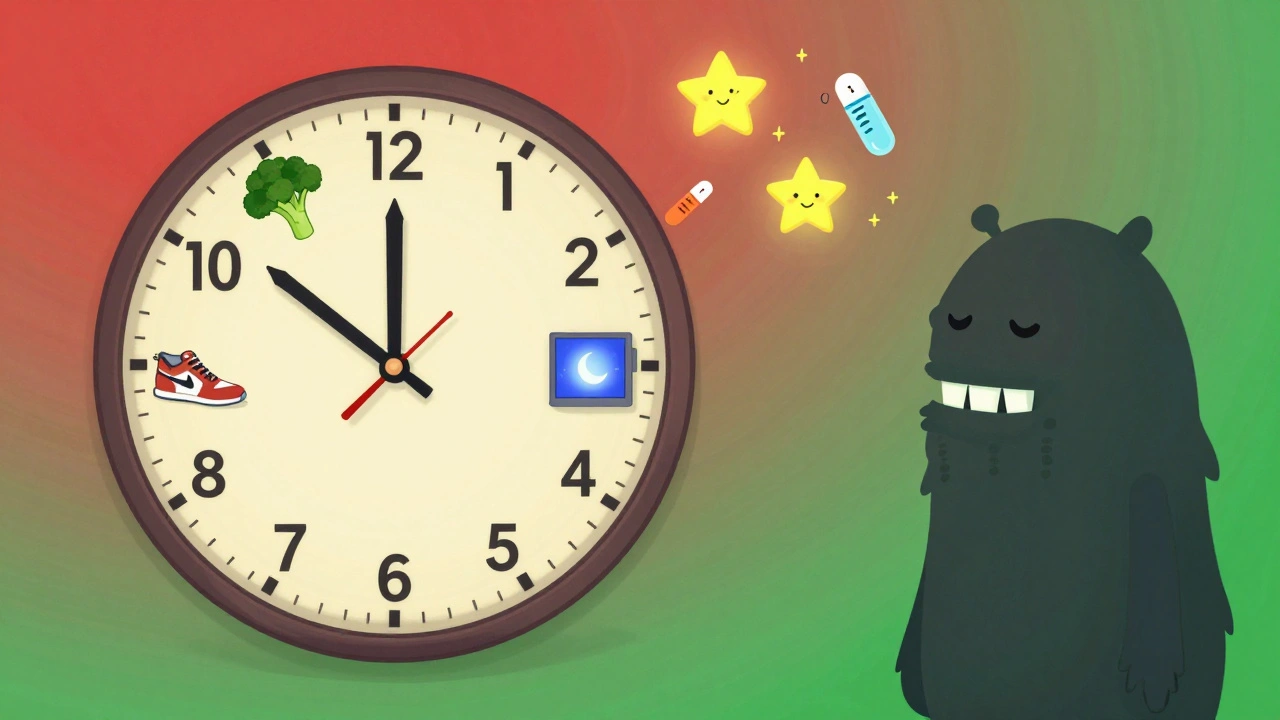
You don’t need to overhaul your life tomorrow. Start with one thing.- Tomorrow morning, walk for 10 minutes after breakfast.
- Swap your morning cereal for oatmeal with a spoon of almond butter.
- Drink water instead of your afternoon soda.
- Put one extra vegetable on your dinner plate.
- Set a bedtime alarm to turn off screens.
Long-Term Success: It’s Not About Perfection
The people who keep their blood sugar normal after reversing prediabetes aren’t the ones who never slipped up. They’re the ones who got back on track fast. Missed a workout? Walk tomorrow. Ate too much pizza? Eat veggies with your next meal. One bad day doesn’t undo progress. One bad month does. Studies show the biggest protection comes from sticking with changes for at least three years. That’s not forever. That’s just long enough for your body to forget how to be insulin resistant. And here’s the best part: when you reverse prediabetes, you don’t just avoid diabetes. You reduce your risk of heart disease, stroke, kidney failure, and nerve damage. You feel better. You sleep better. You have more energy. You live longer.When to See a Doctor
If you’ve been diagnosed with prediabetes, talk to your doctor. Get your HbA1c checked every six months. Ask about the CDC’s National Diabetes Prevention Program. Ask if your insurance covers it. Most do. If you’re not sure if you have prediabetes, ask for a simple blood test. It’s cheap. It’s quick. And it could save your life. You don’t need to wait until you’re tired all the time, or until your feet go numb, or until you need insulin. The time to act is now. Not next month. Not after the holidays. Today.Can prediabetes be reversed without losing weight?
Yes. Research published in Nature Medicine found that people who reversed prediabetes without losing weight still cut their future diabetes risk by 70%. The key was reducing visceral fat-the deep belly fat around organs-even if total body fat didn’t change. Improving diet quality, moving after meals, and lowering stress can reset insulin sensitivity without a number on the scale dropping.
How long does it take to reverse prediabetes?
Many people see improvements in blood sugar within 3 to 6 months of making consistent lifestyle changes. The CDC’s program shows that participants reach significant improvements by 12 months. But reversal isn’t a finish line-it’s a new baseline. The longer you stick with healthy habits, the more stable your blood sugar becomes. Three years of consistent effort offers the strongest protection against future diabetes.
Is medication needed to reverse prediabetes?
No, medication is not required. Lifestyle changes are the first-line treatment recommended by the American Diabetes Association and the CDC. While some drugs like metformin can help, they’re typically used only if lifestyle changes aren’t enough-or for people at very high risk. Most people reverse prediabetes through diet, movement, sleep, and stress management alone.
Can I reverse prediabetes if I’m over 60?
Yes-and studies show people over 50 often benefit the most from lifestyle changes. Aging increases insulin resistance, but it also means you’re more motivated to protect your health. The CDC’s data shows older adults who joined the Diabetes Prevention Program lost weight, improved fitness, and lowered their blood sugar just as effectively as younger participants. It’s never too late to start.
Are there free programs to help reverse prediabetes?
Yes. The CDC’s National Diabetes Prevention Program is offered through hundreds of community centers, YMCAs, and online platforms. Many are covered by Medicare and private insurance at no cost to you. Check with your doctor or visit the CDC’s website to find a program near you. Even if you don’t join a formal program, you can still follow the same principles: eat real food, move daily, sleep well, and find support.
Norene Fulwiler
I used to think prediabetes meant I was doomed. Then I started walking after dinner-just 15 minutes-and my A1c dropped from 6.1 to 5.4 in six months. No meds. No keto. Just moving. My mom did the same thing and now she’s got more energy than I do at 72.
It’s not about perfection. It’s about showing up.
Also, swap soda for sparkling water with lemon. Game changer.
Carole Nkosi
Oh please. This is just Big Pharma’s way of selling you fear. Prediabetes isn’t a disease-it’s a label they invented so you’ll buy their ‘lifestyle programs’ and expensive supplements. My cousin in Johannesburg has a fasting sugar of 118 and he’s a marathon runner who eats only plant-based food. He’s healthier than 90% of Americans.
Stop letting corporations pathologize your life.
Jennifer Patrician
Did you know the CDC’s ‘National Diabetes Prevention Program’ is funded by the same people who profit off insulin? They want you to think you need their program so you don’t question why metformin costs $400 a month in the US but $2 in Canada.
And ‘walk after meals’? That’s what they told people in 1998 too. Meanwhile, glyphosate is in your oatmeal and your water. No amount of walking fixes endocrine disruption.
Wake up. This isn’t health advice. It’s distraction.
Ali Bradshaw
Love this post. Real talk: I’m 58, overweight, and was prediabetic. Started with one thing-swapping my morning cereal for oatmeal with almond butter. Didn’t even think about it as ‘reversing’ anything. Just felt less sluggish. Then added a walk after dinner. Then cut out soda.
Two years later, my A1c is 5.2. I didn’t lose 30 pounds. I lost the constant brain fog.
You don’t need to be perfect. You just need to start. One step. One meal. One day.
an mo
Statistically, the 18% reversal rate cited is statistically insignificant when normalized against confounding variables such as socioeconomic status, baseline metabolic health, and genetic predisposition to insulin resistance. The CDC’s 58% risk reduction is a relative risk reduction-absolute risk reduction is closer to 3.5%.
Also, visceral fat reduction without weight loss? That’s biologically plausible but poorly operationalized in population-level interventions. You can’t measure visceral fat without MRI or DEXA. So how are they measuring compliance?
And don’t get me started on ‘colorful vegetables’-that’s nutritional theater, not evidence-based medicine.
Annie Grajewski
ok so i read this whole thing and like… i didn’t lose weight but my sugar’s better?? 🤯
also i just started walking after dinner and now my dog thinks i’m weird but i don’t care. i feel less like a zombie. also i drank water instead of soda and didn’t die. shocker.
also why is everyone so obsessed with the scale?? my pants fit better and i can climb stairs without wheezing. that’s the win.
Jimmy Jude
This is the most beautiful thing I’ve read all year. Not because it’s scientific. Not because it’s trendy. But because it’s human.
People think healing is about discipline. It’s not. It’s about showing up for yourself when you’re tired. When you’re sad. When you don’t feel like it.
I reversed mine by dancing in the kitchen while cooking. By crying over a bowl of lentils because I finally realized I was worth the effort.
You’re not broken. You’re just tired. And you’re not alone.
Mark Ziegenbein
The notion that lifestyle interventions alone can reverse prediabetes is fundamentally misaligned with the current understanding of metabolic dysregulation as a chronic, progressive, and genetically modulated condition. While behavioral modification may yield transient improvements in glycemic metrics, the underlying pathophysiological trajectory-characterized by beta-cell exhaustion and adipocyte dysfunction-remains largely unaltered absent pharmacologic intervention or bariatric surgery.
Furthermore, the conflation of statistical association with causal efficacy in population-based studies such as the CDC’s DPP is methodologically indefensible. The 58% reduction cited is a relative risk metric derived from a highly selected cohort with intensive behavioral coaching-conditions unreplicable in the general population.
Let us not mistake anecdotal resonance for clinical efficacy.
Rupa DasGupta
ok but what if you live in a food desert and the only thing available is canned corn and fried chicken? 🥲
i walk but it’s 100 degrees and no sidewalks. i sleep 4 hours because my baby cries. i eat veggies when i can but sometimes i just need carbs to survive.
this post feels like someone yelling at me from a yacht while i’m drowning. i love you but i need help not guilt. 💔
Harry Nguyen
Let’s be real-this is just woke medicine wrapped in a yoga mat. The real cause of prediabetes? Government subsidies for corn syrup and the destruction of traditional diets. We used to eat real food. Now we’re fed processed sludge by corporations and told to ‘walk more’ like we’re pets.
My grandfather ate bacon and lard his whole life and never had diabetes. He didn’t have a Fitbit. He had work. He had food that came from the ground or the animal.
Stop blaming the individual. Blame the system.
Deborah Jacobs
I cried reading this. Not because I’m scared. But because for the first time, someone didn’t tell me I was failing. They told me I could heal.
I used to think I had to be ‘disciplined’ to fix my blood sugar. Turns out I just needed to stop hating myself.
I started with one apple with peanut butter after work. Then I danced in the kitchen. Then I told my sister I was trying to feel better. She started doing it too.
It’s not about changing your life. It’s about choosing yourself, one tiny, messy, beautiful moment at a time.
Kylee Gregory
There’s something deeply spiritual about reversing prediabetes through small daily acts. It’s not about control. It’s about listening. To your body. To your hunger. To your exhaustion.
I used to think health was a goal. Now I see it as a rhythm. A quiet dance between movement and rest, food and stillness, connection and solitude.
It’s not about fixing a number. It’s about coming home to yourself.
Lucy Kavanagh
Wait-so you’re telling me the government isn’t secretly adding sugar to everything to make us sick? Because I’ve been noticing my bread tastes sweeter lately… and my water has a weird aftertaste. I think they’re using fluoride to make us crave carbs. I read a blog that said the CDC is owned by Big Sugar. I’m not crazy. I’ve seen the receipts.
Also, I switched to Himalayan salt and my sugar dropped 10 points. Coincidence? I think not.
Michael Dioso
Look I’ve been prediabetic for 4 years. I tried everything. Keto for 6 months. Fasted for 18 hours. Got my blood sugar down to 98. Then I ate a slice of pizza and it jumped to 160. So what’s the point?
Everyone’s like ‘just walk more’ like I’m not already walking to my car from the office. I work two jobs. I have two kids. I don’t have time to ‘eat colorful vegetables’.
So yeah. Maybe it works for people with flex time and a kitchen. For the rest of us? We’re just waiting for the insulin.
Norene Fulwiler
@5625 I hear you. I worked two jobs too. I didn’t have time. So I did this: I put a banana and a handful of almonds in my purse every morning. Ate it on the bus. No prep. No kitchen. No guilt.
And I walked for 5 minutes after my last meal-no matter what. Even if I was tired. Even if I was mad.
Small things. That’s all it took. You’re not failing. You’re just trying to survive. And that’s enough to start.
Ali Bradshaw
@5643 I’m so sorry you feel that way. You’re not alone. Food deserts are a crime. No one should have to choose between rent and broccoli.
But here’s what I’ve learned: even in a food desert, you can find beans. Canned black beans. Rinse them. Add a little cumin. Eat them with a whole wheat tortilla. That’s fiber. That’s protein. That’s a win.
You don’t need a farmer’s market. You need one small choice. And you’re already making it by reading this.
You’re trying. That’s everything.
Deborah Jacobs
@5621 I get why you feel suspicious. I used to think the same. But I stopped looking for conspiracies and started looking for help.
I found a free CDC program at my local library. A woman named Maria, who was a retired nurse, taught me how to read labels. She didn’t sell me anything. She just listened.
Real change doesn’t come from fear. It comes from being seen.
Annie Grajewski
@5642 bro you just wrote a thesis on oatmeal. i read it three times and still don’t know if i should eat it or call the fbi.
also ‘methodologically indefensible’? i just ate a donut. can we go back to human talk pls?
Kylee Gregory
@5625 I used to think the same. Then I started doing one thing: I drank water before every meal. Even if I was in a hurry. Even if I was stressed.
It didn’t fix everything. But it gave me a pause. A breath. A moment where I remembered I was still here.
Maybe that’s the real reversal-not the number on the screen, but the quiet knowing that you’re worth the effort.
You’re not failing. You’re still here. And that’s the first step.
Norene Fulwiler
@5620 You just said what I’ve been trying to say for years. Thank you.
Jimmy Jude
@5618 I didn’t know someone could be a nurse and still be kind. I cried reading that.
I’m going to the library tomorrow.
Mark Ziegenbein
@5640 Your comment is a perfectly valid expression of epistemic resistance to overcomplicated medical narratives. I admire your linguistic minimalism as a form of cultural reclamation. However, I must emphasize that the biochemical pathways of insulin signaling remain objectively verifiable regardless of emotive tone or orthographic deviation.
Annie Grajewski
@5642 i hate you so much right now but also i’m kinda impressed. like… you’re a robot that knows too much. 🤖💔
Norene Fulwiler
One more thing: I didn’t reverse prediabetes because I was strong. I reversed it because I was tired of feeling tired. And that’s enough.