
Otosclerosis: What It Is, How It Affects Hearing, and What You Can Do
When otosclerosis, a condition where abnormal bone growth in the middle ear blocks sound from reaching the inner ear. Also known as stapedial otosclerosis, it’s one of the most common causes of hearing loss in young adults. Unlike hearing loss from aging or noise, otosclerosis starts quietly—often in your 20s or 30s—and gets worse over time. You might notice you’re asking people to repeat themselves, turning up the TV louder than usual, or hearing better in noisy rooms than quiet ones. That’s because the bone around the stapes bone, one of the three tiny bones in the middle ear that transmit sound vibrations hardens and stops moving properly. Sound can’t get through.
It’s genetic. If a parent or sibling has it, your risk goes up. Women are more likely to develop it, especially during pregnancy, when hormones seem to speed up the bone changes. It’s not caused by loud music, ear infections, or poor hygiene—it’s a biological process inside your ear you can’t control. But you can manage it. Many people first turn to hearing aids, devices that amplify sound to compensate for the blocked transmission. They work well for mild to moderate cases and don’t require surgery. But if hearing drops below a certain level, or if you can’t tolerate a hearing aid, the next step is stapedectomy, a surgical procedure where the fixed stapes bone is replaced with a prosthetic. It’s one of the most successful ear surgeries out there, with success rates over 90% in experienced hands.
Not everyone needs surgery. Some people live for years with mild hearing loss and choose to monitor it. Others explore newer options like cochlear implants, devices that bypass the middle ear entirely and stimulate the auditory nerve directly, though those are usually reserved for severe cases where the inner ear is also affected. What’s clear is that early diagnosis matters. If you’re losing hearing slowly and can’t explain why, don’t assume it’s just aging. Get your ears checked by an audiologist or ENT. The right treatment can bring your hearing back to near-normal levels—without drugs, without needles, and without lifelong dependence on pills.
Below, you’ll find real-world guides on managing hearing loss, understanding ear surgery risks, recognizing when medications might worsen symptoms, and how to talk to your doctor about options that actually work. No fluff. Just what you need to know to take control of your hearing.
Otosclerosis: What It Is, How It Affects Hearing, and What You Can Do
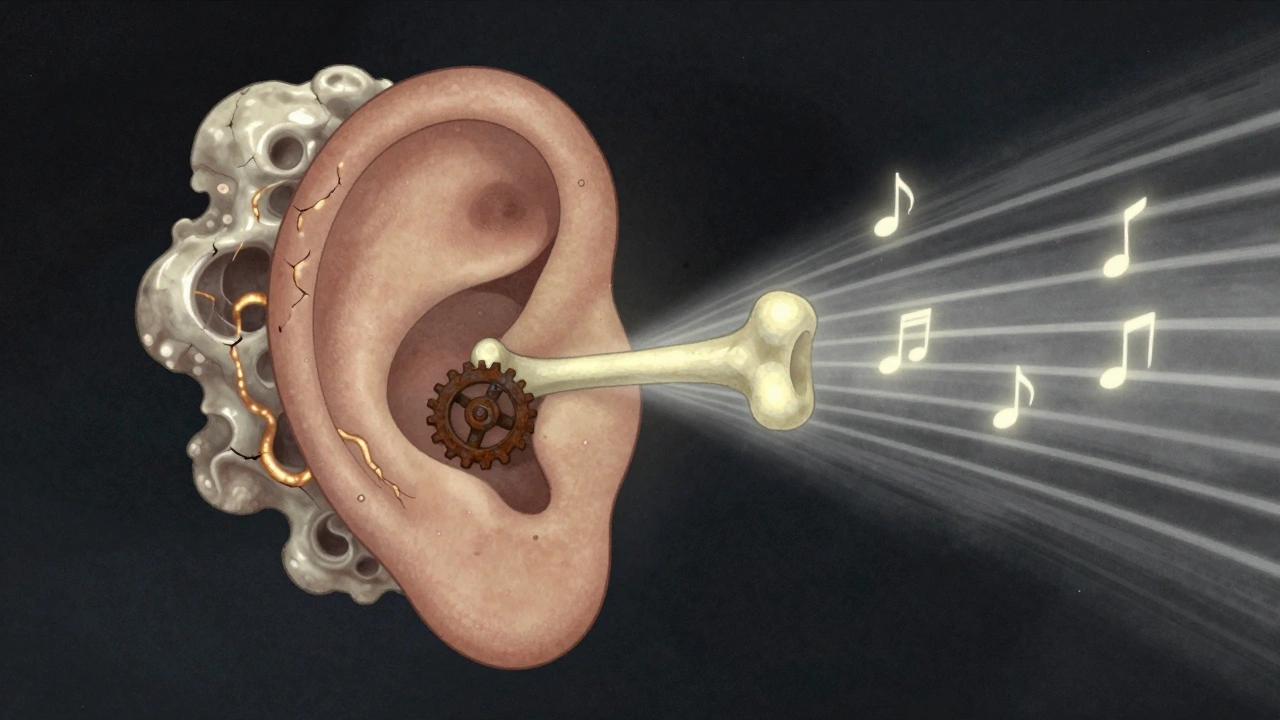
Otosclerosis is a common cause of hearing loss in adults under 50, caused by abnormal bone growth in the middle ear. Learn how it affects hearing, who’s at risk, and what treatments-including surgery and hearing aids-can restore your hearing.
More