
Conductive Hearing Loss: Causes, Treatments, and What You Can Do
When sound can't travel properly through your outer or middle ear, you're dealing with conductive hearing loss, a type of hearing impairment caused by blockages or damage in the ear canal, eardrum, or middle ear bones. It's not permanent hearing damage—it's often fixable. Unlike sensorineural hearing loss, which comes from nerve damage, conductive hearing loss is usually about physical barriers: fluid, wax, infection, or even a collapsed ear canal.
This kind of hearing loss often shows up after a cold, swimmer’s ear, or ear infection. Ear infections, especially in kids, are a top cause—fluid builds up behind the eardrum and muffles sound. Eustachian tube, the small passage that connects your middle ear to your throat can get clogged from allergies or sinus pressure, leading to the same issue. Even something as simple as too much earwax can do it. In adults, it’s often tied to chronic infections or bone growths like otosclerosis.
The good news? Most cases don’t need surgery. Doctors often start with antibiotics, ear drops, or removing wax. If it’s from fluid buildup, a tiny tube placed in the eardrum can drain it—simple, quick, and effective. For people with recurring problems, hearing aids, especially bone-conduction models can help bypass the blocked area entirely. You don’t have to live with muffled sounds if you know what’s causing them.
What you’ll find here are real stories and practical advice from people who’ve been there: how chronic sinus issues lead to hearing problems, why some medications make it worse, how to tell if it’s just wax or something deeper, and what to ask your doctor before jumping to surgery. These aren’t theory pieces—they’re guides written by people who’ve dealt with blocked ears, failed treatments, and finally found relief. If you’ve been told "it’s just fluid" and it won’t go away, you’re not alone. Let’s get you answers that actually help.
Otosclerosis: What It Is, How It Affects Hearing, and What You Can Do
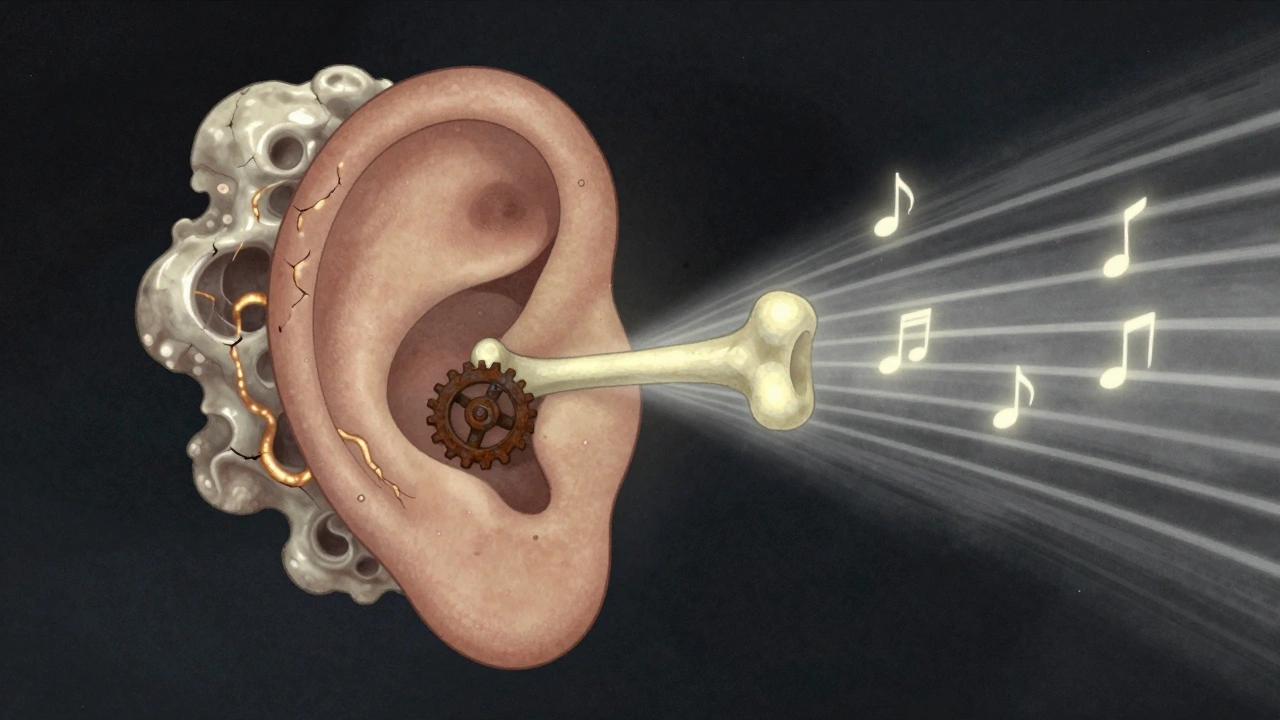
Otosclerosis is a common cause of hearing loss in adults under 50, caused by abnormal bone growth in the middle ear. Learn how it affects hearing, who’s at risk, and what treatments-including surgery and hearing aids-can restore your hearing.
More