
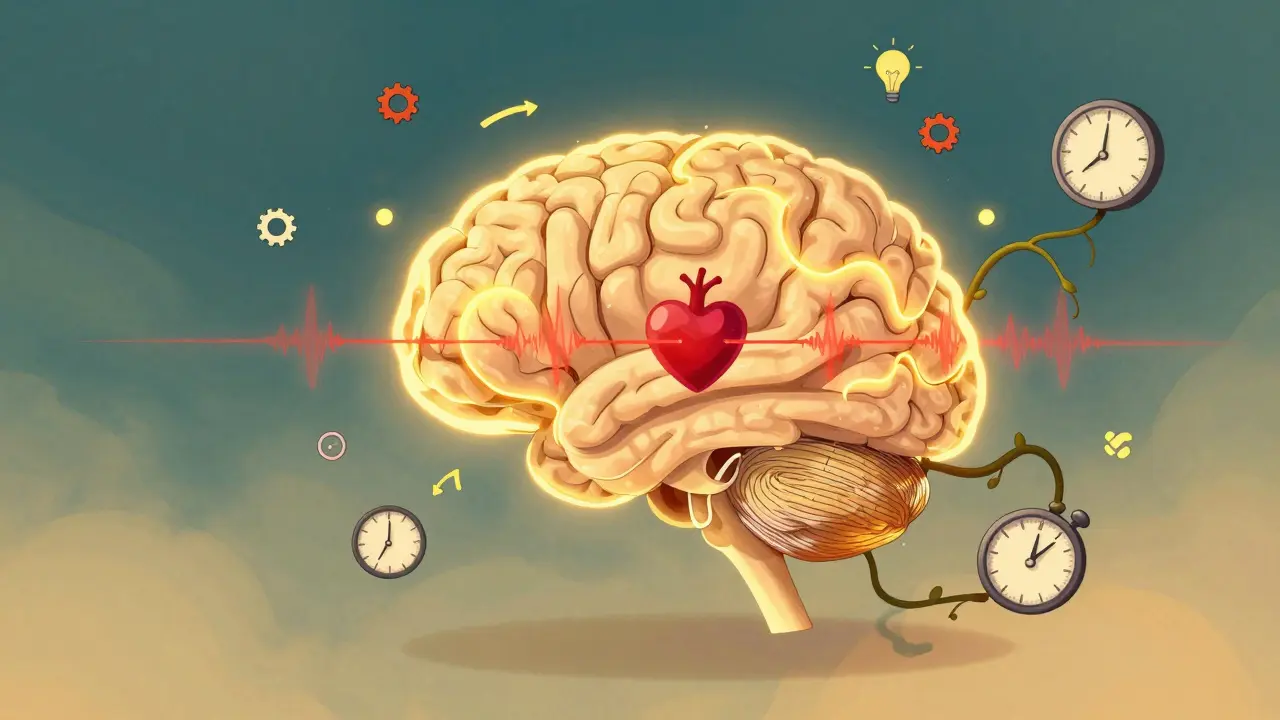
When a child or adult starts taking stimulant medication for ADHD, the goal is simple: focus better, control impulses, and feel more in charge of their day. For many, it works. About 70 to 80% of people see real improvement. But behind that success story are two quiet, persistent concerns: what’s happening to the heart, and why can’t they sleep?
How Stimulants Work - and What They Do to Your Body
Medications like Ritalin, Concerta, Adderall, and Vyvanse are stimulants. That doesn’t mean they make you jittery like coffee. Instead, they boost dopamine and norepinephrine in the brain - chemicals that help with attention and self-control. But these same chemicals also affect your heart and blood vessels. That’s where the side effects come from.
It’s not just about the brain. Your body reacts. Even at normal doses, stimulants can raise your heart rate by 1 to 2 beats per minute and increase systolic blood pressure by 1 to 4 mmHg. These changes are small - often less than what you’d see after climbing a flight of stairs. But over months or years, they add up. And for some, that’s enough to matter.
The Heart Risk: Bigger Than You Think? Smaller Than You Fear?
In 2006, the FDA issued a warning after 25 cases of sudden death in people taking ADHD stimulants. That sent shockwaves through clinics and homes. Parents panicked. Doctors started ordering ECGs. But here’s what the data now shows: the absolute risk is extremely low.
A 2024 study in JAMA Psychiatry followed 14 years of data and found that long-term stimulant use was linked to a 17% higher risk of cardiovascular disease - mostly high blood pressure and artery problems. But that’s a relative increase. The actual number of people affected? Very few. For every 1,000 people taking stimulants for years, maybe one or two will have a serious heart event. Compare that to the risk of untreated ADHD: poor school performance, job loss, car accidents, substance abuse. The benefits still outweigh the risks for most.
There’s another layer. A 2024 study from the American College of Cardiology found that young adults on stimulants were 17% more likely to develop cardiomyopathy after one year - and 57% more likely after eight years. But again, the baseline risk is tiny. Most people won’t develop this. Still, it’s real. And it’s dose-dependent. The higher the dose and the longer the time, the more the risk climbs.
Not all medications are the same. Methylphenidate and amphetamines have similar effects on the heart. But non-stimulants like atomoxetine and viloxazine? They raise blood pressure and heart rate just as much. That’s surprising to many doctors who assume only stimulants cause these changes. Guanfacine, on the other hand, actually lowers both.
People with Long QT Syndrome face a gray area. Some studies say stimulants increase fainting and arrhythmia risk. Others say they don’t. The bottom line? If someone has a known heart rhythm disorder, they need a cardiologist’s input - not a blanket no.
Why Sleep Gets Disrupted - And How to Fix It
If your child can’t fall asleep, or you’re lying awake at 2 a.m. wondering why your ADHD meds aren’t wearing off, you’re not alone. Around 30 to 50% of people report sleep problems when starting stimulants.
The reason? These drugs are activating. Even if you take them at 8 a.m., the extended-release versions can still be working 10 to 12 hours later. That means your brain is still buzzing when it should be winding down. Sleep latency - the time it takes to fall asleep - increases by 15 to 30 minutes on average, according to the American Academy of Sleep Medicine.
It’s not permanent. Most people adjust within a few weeks. But for others, it sticks. And poor sleep makes ADHD symptoms worse - creating a vicious cycle.
Here’s what helps:
- Take the medication earlier in the day - no later than noon if possible.
- Switch from long-acting to short-acting if sleep is a major issue. You can take a small afternoon dose only if needed.
- Try melatonin - 0.5 to 5 mg, 1 to 2 hours before bed. It’s safe, non-habit-forming, and works for many.
- Consider guanfacine or clonidine. These aren’t stimulants, but they help with focus and often improve sleep quality.
- Keep a consistent bedtime routine. No screens. Cool, dark room. Quiet wind-down time.
Who Needs Extra Monitoring?
You don’t need an ECG before every prescription. The American Academy of Pediatrics and the American Academy of Neurology agree: routine heart scans aren’t necessary for most people.
But you do need a conversation. Ask yourself:
- Is there a family history of sudden cardiac death before age 50?
- Has anyone in the family had unexplained fainting, seizures, or heart rhythm problems?
- Do you or your child have chest pain, dizziness, or shortness of breath during exercise?
- Are you already on blood pressure medication or have a history of heart disease?
If the answer is yes to any of these, talk to your doctor. A simple blood pressure check and heart rate measurement before starting - and every 3 to 6 months after - is enough for most. High-risk cases may need an ECG or referral to a cardiologist.
What About Non-Stimulant Options?
If heart or sleep issues are a deal-breaker, there are alternatives. Atomoxetine (Strattera) and viloxazine (Qelbree) are non-stimulants that work differently. They don’t boost dopamine as directly, so they’re less likely to cause jitteriness or sleep disruption. But they take weeks to work - not days.
Guanfacine (Intuniv) and clonidine (Kapvay) are alpha-2 agonists. They calm the nervous system. That means lower heart rate and blood pressure - and often better sleep. They’re not as strong as stimulants for focus, but they’re excellent for impulse control and emotional regulation. Many people use them alongside a low-dose stimulant for a balanced effect.
The Bigger Picture: Risk vs. Reward
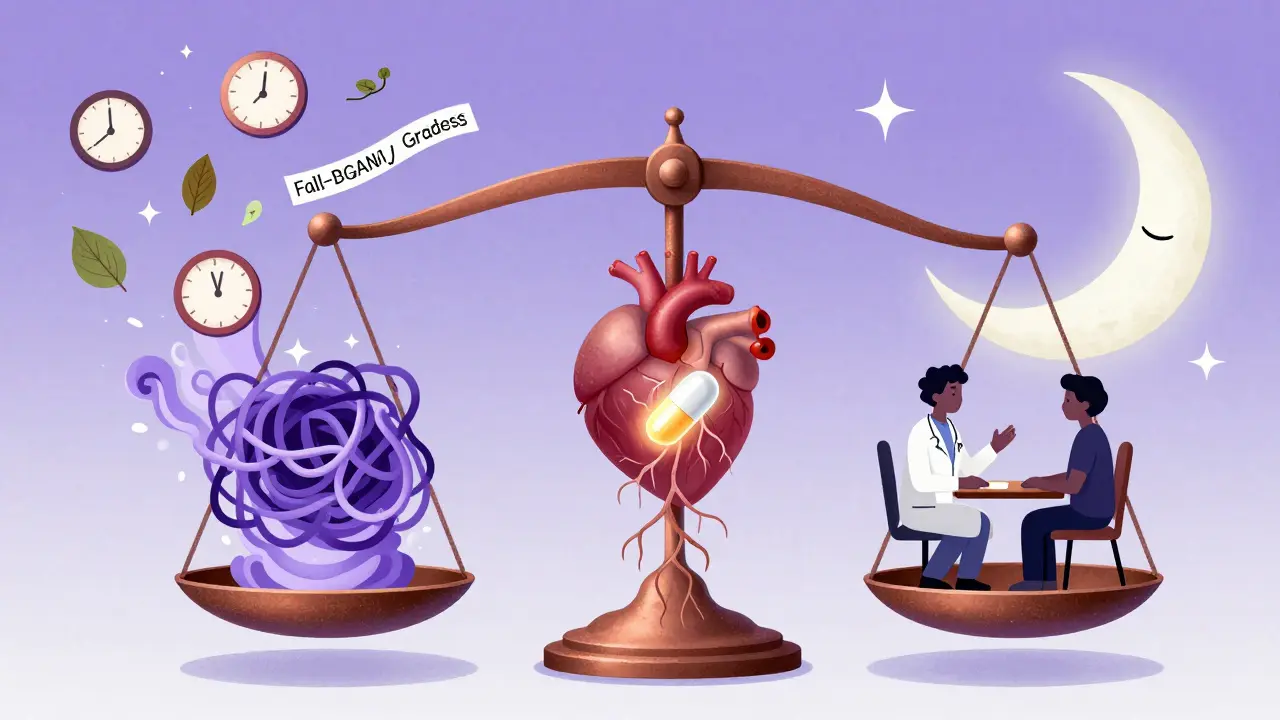
ADHD isn’t just about forgetting your keys. It’s about failing classes, losing jobs, straining relationships, and living with constant self-doubt. Untreated ADHD increases the risk of accidents, substance abuse, and depression. The long-term cost of not treating it is far higher than the small risk of side effects.
Studies show 78% of people on ADHD meds rate their effectiveness as “good” or “excellent” - even when they acknowledge side effects. That’s because the improvement in daily life is real.
The key isn’t avoiding medication. It’s managing it wisely. Start low. Go slow. Monitor blood pressure and sleep. Talk openly with your doctor. Don’t ignore symptoms. Don’t stop without advice. And don’t let fear stop you from getting help.
ADHD medication isn’t perfect. But for millions, it’s life-changing. The goal isn’t to eliminate all risk. It’s to understand it - and make smart choices.
Practical Tips for Safe Use
- Baseline check: Get your blood pressure and heart rate measured before starting any ADHD medication.
- Monitor monthly: Track your heart rate and sleep patterns. Use a simple app or notebook.
- Dose smart: Start with the lowest effective dose. Increase slowly - no more than 5-10 mg per week.
- Timing matters: Take stimulants before noon. Avoid caffeine in the afternoon.
- Watch for red flags: Chest pain, palpitations, fainting, or severe insomnia? Call your doctor immediately.
- Keep records: Bring your blood pressure logs and sleep notes to every appointment.
There’s no one-size-fits-all solution. What works for one person might not work for another. But with the right approach, most people can take ADHD meds safely - and live better because of them.
Do ADHD stimulants cause heart damage?
ADHD stimulants don’t cause heart damage in most people. But long-term use is linked to a small increase in risk for high blood pressure, artery disease, and, rarely, cardiomyopathy. The absolute risk is low - studies estimate over 1,000 people need to be treated for one serious event. Regular monitoring and low-dose strategies reduce this risk significantly.
Can I take ADHD meds if I have high blood pressure?
Yes - but with caution. If your blood pressure is already high, stimulants can make it worse. Your doctor may start you on a lower dose, monitor you more closely, or switch you to a non-stimulant like guanfacine or atomoxetine. In some cases, adding a blood pressure medication helps manage both conditions.
Why do ADHD meds keep me awake at night?
Stimulants increase alertness by boosting brain chemicals that keep you focused. Even extended-release versions can still be active 10-12 hours after taking them. Taking the dose too late, using too high a dose, or having a slow metabolism can make sleep harder. Moving the dose earlier, lowering the dose, or adding melatonin often fixes this.
Are non-stimulant ADHD medications safer for the heart?
Not necessarily. Atomoxetine and viloxazine raise blood pressure and heart rate just as much as stimulants. Guanfacine and clonidine are exceptions - they lower both. So safety depends on the specific drug, not whether it’s a stimulant. Always check the cardiovascular profile of any medication you’re prescribed.
Should my child get an ECG before starting ADHD medication?
Routine ECGs are not recommended by major medical groups like the American Academy of Pediatrics or the American Academy of Neurology. But if there’s a family history of sudden cardiac death, fainting, or heart rhythm problems, or if your child has symptoms like chest pain or dizziness, an ECG and cardiology consult are wise. For most kids, a simple blood pressure and heart rate check is enough.
How long do side effects last?
Heart rate and blood pressure increases usually stabilize within a few weeks. Sleep problems often improve after 2-4 weeks as the body adjusts. If side effects persist beyond a month or get worse, talk to your doctor. It may mean the dose is too high, the timing is off, or a different medication is needed.
Can I stop ADHD meds if I’m worried about side effects?
Don’t stop suddenly. That can cause rebound symptoms - worse focus, irritability, or fatigue. Talk to your doctor first. They can help you taper off safely or switch to a different medication. The goal is to find a treatment that works for your body - not to avoid medication out of fear.
What Comes Next?
Research is moving fast. Scientists are now looking at genetic markers to predict who’s more sensitive to stimulants. A new cardiomyopathy risk calculator is being tested - one that uses age, dose, duration, and blood tests to estimate personal risk. In the next few years, treatment may become more personalized than ever.
For now, the message is clear: ADHD medications are safe for most people when used correctly. The risks are real, but they’re small. The rewards - better focus, better grades, better relationships - are huge. Stay informed. Stay monitored. And don’t let fear silence your voice in the conversation with your doctor.
Jillian Angus
i just take my meds at 7am and call it a day. sleep’s fine, heart’s fine. if you’re worried, talk to your doc. not reddit strangers.
also, melatonin 1mg. works like magic. no drama.
Ademola Madehin
bro this whole thread is so extra. stimulants gave me my life back. yeah my heart races sometimes but i’m 24 and i run 5k’s. you people act like we’re injecting nuclear waste. chill. i’m not dying from adderall. i’m dying from boredom without it.
Diana Alime
okay but like… why is everyone so scared of a little bp spike?? i took vyvanse for 8 years and my doc never even checked my heart. i’m fine.
also i think the sleep thing is bs. i just drink coffee after 2pm and then wonder why i’m awake at 3am. duh.
Bartholomew Henry Allen
The data presented is statistically insignificant when contextualized against the societal costs of untreated ADHD. The risk-benefit calculus favors pharmacological intervention. Any deviation from evidence-based protocol constitutes medical malpractice.
Usha Sundar
My son’s on guanfacine now. Sleeps 9 hours. No jitters. Focus still good. We tried stimulants. Didn’t work. Simple.
claire davies
I’ve been on stimulants for 12 years and I still remember the first week I didn’t feel like a nervous raccoon.
But honestly? The real magic wasn’t the pill - it was the quiet relief of finally being able to finish a sentence without my brain doing backflips.
Sleep issues? Yeah, I used to lie there at 2am with my thoughts doing interpretive dance. Then I started taking it before noon, swapped my 4pm tea for chamomile, and started reading actual paper books before bed. No magic bullets, just… small habits.
And I swear, melatonin is the unsung hero of ADHD parenting. My 11-year-old now asks for it like it’s dessert.
Also - if your doc won’t talk about heart risks, find a new one. Not because it’s scary, but because you deserve someone who treats your whole body, not just your attention span.
Wilton Holliday
Hey everyone - just wanted to say you’re doing great just by asking these questions.
Seriously. ADHD meds aren’t a one-size-fits-all, and it’s okay to tweak, switch, or even pause.
I started on Adderall, hated the sleep thing, switched to methylphenidate ER, then added 2mg melatonin. Now I sleep like a baby and still crush my work meetings.
Your body talks. You just gotta listen. And if your doc doesn’t help you listen? Find someone who does. 💪🧠💤
Joseph Manuel
The assertion that cardiovascular risk is 'low' is misleading. Relative risk increases of 17% over a decade in a population of millions constitute a public health concern, not a statistical footnote. Epidemiological data must be interpreted with clinical gravity, not anecdotal reassurance.