
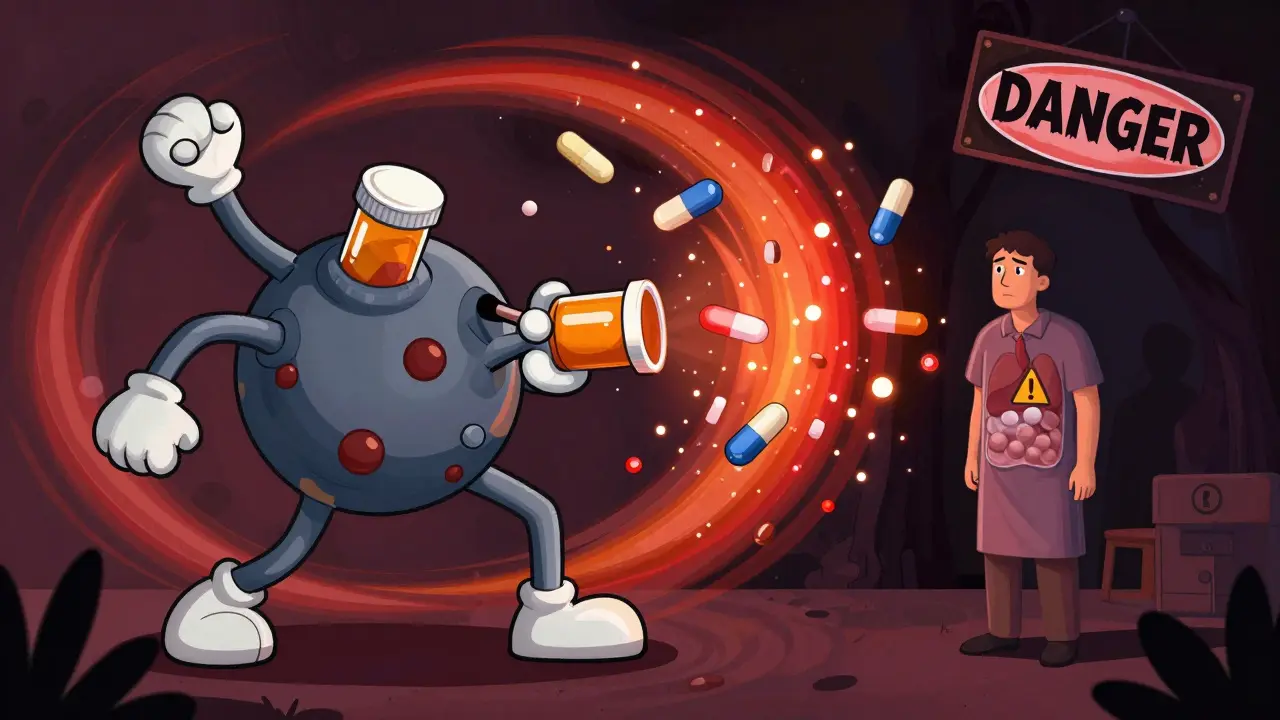
Many people turn to St. John’s Wort because it’s natural, affordable, and widely available. You see it on pharmacy shelves next to vitamins, labeled as a ‘mood support’ supplement. But here’s the truth most don’t tell you: St. John’s Wort isn’t harmless. It can turn your life-saving prescription drugs into useless pills-or worse, cause dangerous side effects you won’t see coming.
How St. John’s Wort Changes How Your Body Handles Medications
St. John’s Wort doesn’t just float through your system quietly. Its main active ingredient, hyperforin, wakes up powerful enzymes in your liver and gut-specifically CYP3A4 and P-glycoprotein. These are the same systems your body uses to break down and clear out most prescription drugs. When St. John’s Wort activates them, your body starts flushing out medications faster than normal.This isn’t a slow, gentle effect. Studies show that after just two weeks of taking 900 mg daily, St. John’s Wort can boost these enzyme systems by up to 40%. That means drugs like warfarin, birth control pills, or antidepressants get cleared out of your bloodstream 30% to 50% faster. Your doctor prescribed a certain dose because it works at that level. When St. John’s Wort kicks in, that dose becomes too low-and your condition can spiral out of control.
Warfarin and Blood Thinners: A Silent Danger
If you’re on warfarin (Coumadin) or phenprocoumon to prevent clots, St. John’s Wort is a ticking time bomb. The Australian Therapeutic Goods Administration documented 22 cases between 1998 and 2000 where patients on warfarin saw their INR levels-how well their blood clots-plummet after starting the herb.One real case: a patient’s INR dropped from 2.5 to 1.3 in just seven days. That’s not a minor fluctuation. It means their blood is clotting too fast. They could develop a stroke, pulmonary embolism, or heart attack without warning. Even after stopping St. John’s Wort, the enzyme surge lingers for up to two weeks. So if you quit the herb, your warfarin dose might suddenly become too strong, raising your risk of internal bleeding.
There’s no safe middle ground. No ‘low dose’ of St. John’s Wort that won’t interfere. If you’re on a blood thinner, skip it entirely.
Birth Control Pills: The Hidden Pregnancy Risk
You’re taking your pill every day. You’re careful. But if you’re also taking St. John’s Wort, you could still get pregnant.Studies show St. John’s Wort reduces ethinyl estradiol-the key hormone in most birth control pills-by 25% to 35%. That’s enough to make the pill ineffective. There are at least 13 documented cases of unintended pregnancy in women who took both. One user on Drugs.com wrote: ‘I had breakthrough bleeding, then found out I was pregnant. I never thought the herb could do this.’
Even if you don’t notice bleeding, your protection is compromised. No birth control method is foolproof, but combining it with St. John’s Wort turns it into a gamble. If you’re using hormonal contraception, don’t risk it.
Antidepressants: The Serotonin Syndrome Trap
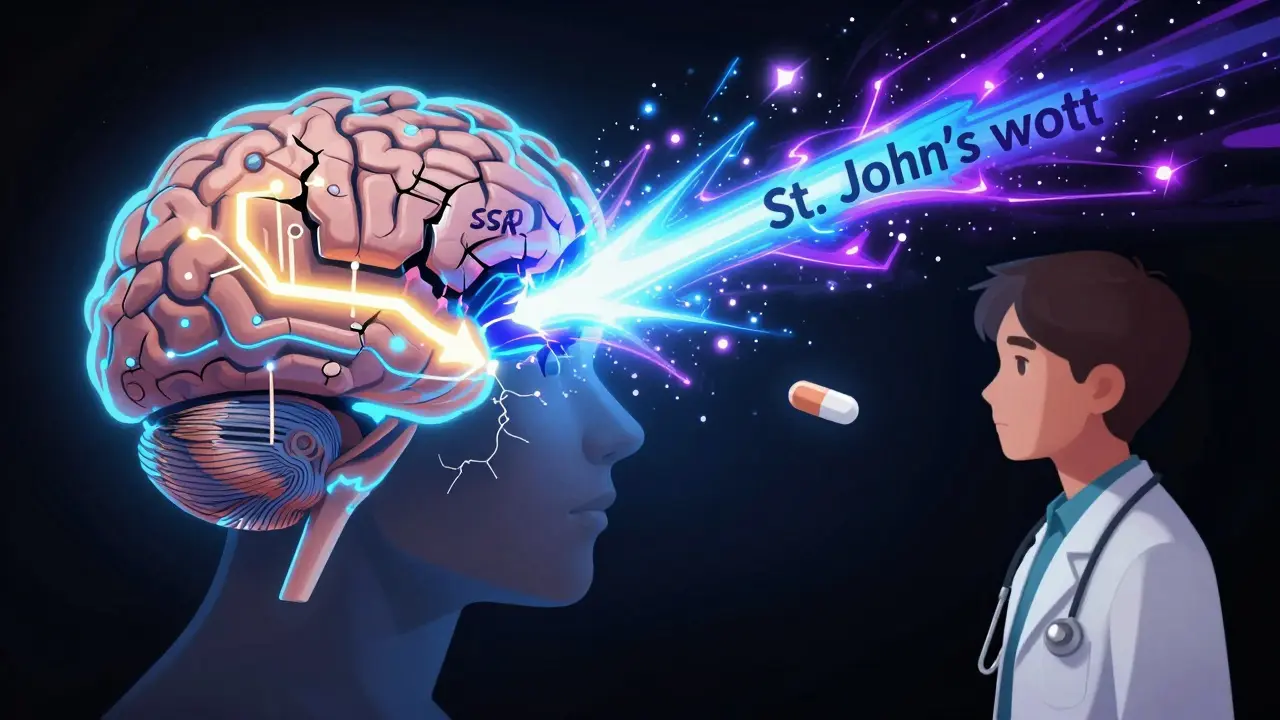
St. John’s Wort isn’t just an herb-it’s a serotonin booster. It works similarly to SSRIs like sertraline or fluoxetine by increasing serotonin levels in your brain. That’s why some people use it for mild depression.But if you’re already on an SSRI, SNRI, or even the antidepressant nefazodone, adding St. John’s Wort can push serotonin levels too high. That’s serotonin syndrome-a rare but life-threatening condition. Symptoms include confusion, rapid heart rate, high blood pressure, muscle rigidity, fever, and seizures.
The TGA recorded six Australian cases of serotonin syndrome from this exact combination. Symptoms showed up within 3 to 7 days. One patient ended up in the ICU. There’s no warning system. No test to predict it. Just a dangerous overlap of two substances that both flood your brain with serotonin.
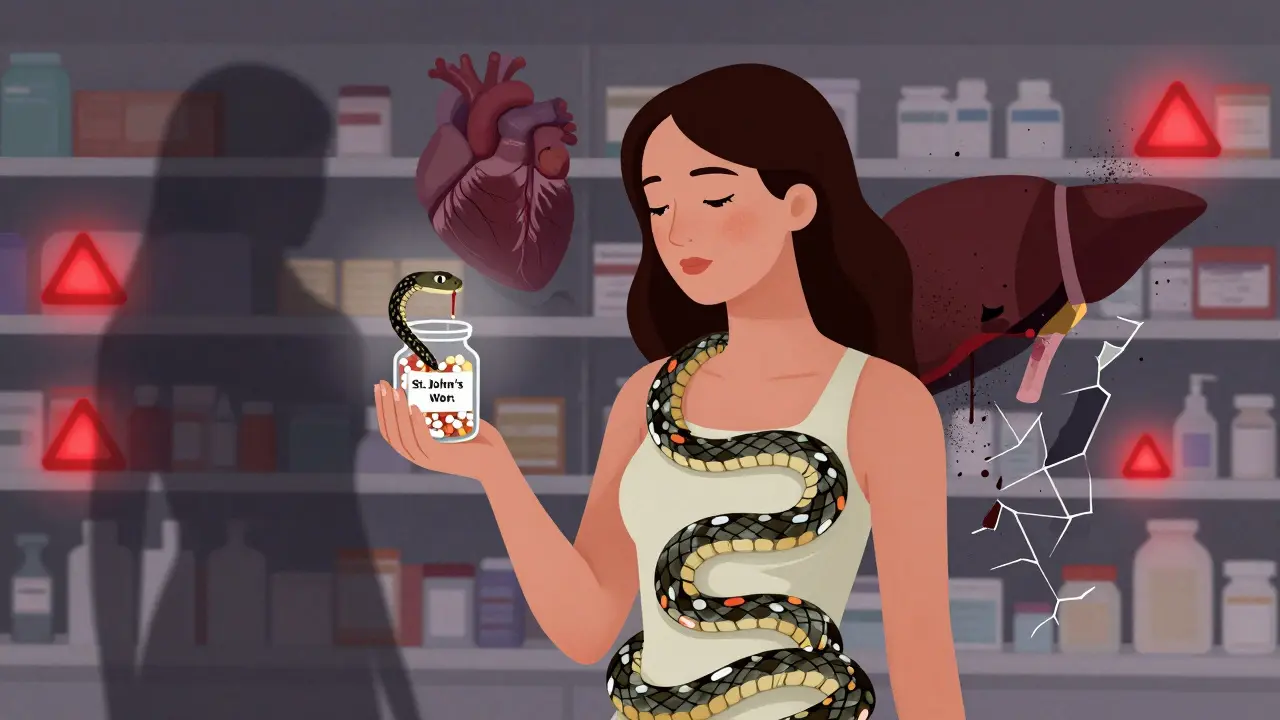
Organ Transplant Patients: A Matter of Life and Death
If you’ve had a kidney, liver, or heart transplant, you’re likely on cyclosporine or tacrolimus to stop your body from rejecting the new organ. These drugs have a very narrow safety window. Too little, and your body attacks the transplant. Too much, and you get kidney damage or nerve problems.St. John’s Wort slashes cyclosporine levels by 30% to 50%. One transplant patient in Australia reported his levels dropped 40% after starting the herb. His doctor told him he was ‘hours away from organ rejection.’
This isn’t theoretical. Hospitals across the U.S. have seen dozens of these cases. The American Society of Health-System Pharmacists says 68% of hospitals have dealt with at least one St. John’s Wort interaction in the last five years. For transplant patients, this isn’t a side effect-it’s a medical emergency.
HIV Medications: Risking Treatment Failure
People living with HIV rely on antiretroviral drugs to keep the virus under control. Protease inhibitors like saquinavir and ritonavir, and non-nucleoside reverse transcriptase inhibitors like efavirenz, are especially vulnerable.St. John’s Wort can reduce their blood concentrations by up to 50%. That means the virus isn’t suppressed. It can mutate, become resistant, and spread. Once resistance develops, your treatment options shrink drastically. Some drugs may no longer work at all.
The FDA issued a safety alert in January 2023 specifically warning about this interaction. Yet, many patients still take St. John’s Wort without telling their doctors. They think it’s ‘just a natural mood booster.’ It’s not. It’s a treatment wrecking ball.
Other Critical Interactions You Can’t Ignore
- Anticonvulsants (phenytoin, carbamazepine): Levels drop 30-40%. Seizures can return unexpectedly. - Digoxin (for heart failure): Concentrations fall by 25%. Could lead to heart rhythm problems or worsening heart failure. - Theophylline (for asthma): Levels drop 30%. Risk of asthma attack increases. - Benzodiazepines (alprazolam/Xanax): Up to 40% reduction in effectiveness. Anxiety returns with force. - Statins: Atorvastatin and simvastatin lose up to 40% of their effect. Cholesterol spikes. Pravastatin and fluvastatin are safer-but only if you know which one you’re on. - Opioids: Some (like oxycodone) become less effective. Others (like methadone) can build up dangerously. - Proton pump inhibitors (omeprazole): Reduced effectiveness means stomach acid comes back with a vengeance.That’s not a short list. It’s a long list of life-altering risks. And it’s not just these drugs. The University of Adelaide’s checklist identifies 57 prescription medications with documented interactions.
Why People Don’t Realize the Risk
You’d think people would ask their doctor before taking something that affects their meds. But a 2022 Johns Hopkins study found that 41% of patients taking prescription drugs didn’t tell their doctor they were using St. John’s Wort.Why? Because they don’t see it as a ‘medication.’ They think, ‘It’s herbal. It’s natural. It’s safe.’ That’s the biggest myth. Natural doesn’t mean harmless. Caffeine is natural. Poison ivy is natural. Neither is safe in the wrong context.
Pharmacists report that when they ask, ‘Are you taking any other medications?’ patients say no. But when they ask, ‘Do you take any herbs, vitamins, or supplements?’-that’s when the truth comes out.
What to Do If You’re Already Taking It
If you’re on any prescription drug and you’re taking St. John’s Wort, don’t stop cold turkey. Talk to your doctor or pharmacist first.Here’s what you need to do:
- Stop taking St. John’s Wort immediately if you’re on warfarin, birth control, immunosuppressants, HIV meds, or antidepressants.
- Give your body at least two weeks to clear it out. The enzyme effects linger.
- Get blood tests for critical drugs: INR for warfarin, cyclosporine levels for transplant patients, drug levels for anticonvulsants.
- Don’t restart it unless your doctor explicitly says it’s safe-and even then, monitor closely.
If you’re using it for depression, there are safer alternatives. Talk therapy, exercise, and FDA-approved antidepressants have proven results without the risk of deadly interactions.
The Bottom Line
St. John’s Wort might help mild depression. But at what cost? It’s not worth risking organ rejection, stroke, unintended pregnancy, serotonin syndrome, or treatment failure for HIV or seizures.Regulators in Australia, Europe, and the U.S. are sounding the alarm. The American Psychiatric Association now says it’s ‘not recommended’ for anyone on prescription drugs. That’s not a suggestion. That’s a warning.
If you’re thinking about trying it-don’t. If you’re already using it-talk to your doctor today. Your meds aren’t just pills. They’re your lifeline. And St. John’s Wort doesn’t just interfere with them. It can break them.
Can I take St. John’s Wort if I’m not on any medications?
If you’re not taking any prescription drugs, vitamins, or supplements, St. John’s Wort may be safe for short-term use in mild depression. But even then, it can cause side effects like dry mouth, dizziness, or increased sun sensitivity. It’s still not risk-free, and long-term safety data is limited. Always consult a healthcare provider before starting any new supplement.
How long does St. John’s Wort stay in your system?
The herb itself clears from your bloodstream in a few days. But the enzyme-inducing effects of hyperforin can last up to two weeks after you stop taking it. That’s why doctors recommend a two-week washout period before starting medications like warfarin or cyclosporine. Don’t assume it’s gone just because you stopped.
Is there a safe version of St. John’s Wort?
Some newer extracts claim to have less than 0.3% hyperforin-the compound that causes most interactions. Early research suggests these may be safer, but they’re not yet widely available or proven in large human trials. No form of St. John’s Wort is currently considered safe if you’re on prescription drugs. The European Food Safety Authority says no safe threshold can be established.
Can I take St. John’s Wort with over-the-counter meds like ibuprofen or cold medicine?
Most common OTC pain relievers like ibuprofen or acetaminophen don’t interact significantly with St. John’s Wort. But many cold and flu products contain dextromethorphan or pseudoephedrine, which can interact with serotonin-boosting herbs. If you’re taking anything regularly-even if it’s ‘just’ an OTC pill-ask your pharmacist. Better safe than sorry.
Why do some people say St. John’s Wort works fine for them?
Some people don’t experience interactions because their enzyme systems respond differently. Genetics, liver health, and other medications play a role. But that doesn’t mean it’s safe for you. One person’s luck isn’t a guarantee. If you’re on critical meds, the risk isn’t worth the potential benefit. The data shows clear, dangerous outcomes in many cases-enough for health authorities to issue strong warnings.
What should I tell my doctor if I’ve been taking St. John’s Wort?
Be direct: ‘I’ve been taking St. John’s Wort for [reason] for [length of time]. I’m on [list of medications].’ Don’t say ‘I take herbs’ or ‘I use natural remedies.’ Name the product, the dose, and how long you’ve used it. Bring the bottle if you can. This helps your doctor assess risk and adjust your treatment safely.
If you’re managing a chronic condition, your medications are carefully balanced. St. John’s Wort doesn’t just add to that balance-it throws it off completely. What feels like a small, natural choice could cost you your health. Don’t gamble with it.
Jim Rice
Yeah right, like anyone actually reads the fine print on these supplements. I took it for three months while on Zoloft and felt fine. My doctor didn’t even blink when I told him. Natural doesn’t mean safe? Tell that to caffeine and nicotine. This article’s just fearmongering with fancy jargon.
Louis Paré
Let’s not pretend this is some groundbreaking revelation. The CYP3A4 induction mechanism has been documented since the 90s. The real issue is the medical system’s failure to educate patients. You don’t just hand someone a pill and assume they know how to navigate the pharmacokinetic minefield. Blaming the herb is lazy. Blaming the lack of pharmacist-led counseling? Now that’s the real scandal.
Marie-Pierre Gonzalez
Thank you for this incredibly important post!! 😊 I’ve been on warfarin for 7 years and had no idea St. John’s Wort could be so dangerous. I’ve been taking it for my ‘low mood’ since last winter… I’m going to stop immediately and call my doctor tomorrow. You saved me from a potential disaster!! 💕
Janette Martens
Can we stop pretending Americans are the only ones who don’t know how medicine works? In Canada we’ve had warnings on these bottles since 2005. But nooo, people still buy it like it’s gummy vitamins. This is why our healthcare system is drowning in preventable ER visits. Stop being lazy and read the label.
Samar Khan
I’m so sad 😭 I took this for 6 months while on Lexapro… I had panic attacks, felt like my brain was melting, and my husband thought I was losing my mind. I didn’t connect it until I read this. I feel so stupid. Why didn’t anyone tell me? I just wanted to feel better…
Russell Thomas
Oh wow, so St. John’s Wort is basically the herbal version of a hacker who breaks into your meds and deletes all your files? Cool. So what’s next? Garlic as a statin destroyer? Ginger for HIV meds? Next article: ‘Why Your Turmeric Latte Is Secretly Killing Your Kidneys’.
Joe Kwon
This is a masterclass in pharmacovigilance. The CYP3A4/P-gp induction cascade is well-characterized, but the real takeaway is the systemic failure in patient-provider communication. The burden of disclosure shouldn’t fall on the patient. We need standardized supplement screening protocols in EHRs and mandatory pharmacist counseling at point of sale. This isn’t about fear-it’s about systems design.
Nicole K.
People are dying because they think ‘natural’ means ‘good’. That’s not just stupid-that’s selfish. If you’re on life-saving meds, you don’t get to play with herbs like they’re toys. You’re risking your life and everyone around you. Stop being irresponsible.
Fabian Riewe
Hey, I get it-natural supplements feel harmless. I used to take them too. But after my cousin had a stroke because her INR dropped while she was ‘just’ taking St. John’s Wort for anxiety, I stopped cold. I now tell everyone I know: if it’s not FDA-approved and your doctor didn’t prescribe it, don’t risk it. Your body’s not a lab experiment.
Amy Cannon
It is truly remarkable how the bioavailability of herbal constituents can interfere with the pharmacokinetic profile of pharmaceutical agents, particularly those with narrow therapeutic indices. The hyperforin-mediated upregulation of hepatic cytochrome P450 isoforms, particularly CYP3A4, represents a clinically significant enzyme induction phenomenon, which, if unmonitored, may lead to subtherapeutic drug concentrations and subsequent therapeutic failure. One must exercise extreme caution, especially when managing chronic conditions requiring precise pharmacodynamic control.
Himanshu Singh
Thanks for sharing this! I was thinking of trying this herb for my stress. Now I’m glad I didn’t. I’ll stick to walking and meditation. Stay safe everyone! 🙏
Jasmine Yule
I’m so glad someone finally said this. I’ve been on birth control for years and took St. John’s Wort because I thought it was ‘gentle’. I got pregnant. It was terrifying. I didn’t know it could do that. Please, if you’re on any hormonal meds-don’t. It’s not worth the risk. I’m sharing this with everyone I know.
Lisa Dore
I’m a nurse and I see this all the time. Patients come in with ‘natural mood boosters’ and don’t even think to mention them. We need to normalize asking: ‘Are you taking any supplements?’-not just ‘meds’. I keep a printed list in my clinic. If you’re on anything important, just skip it. There are safer ways to feel better.
Sharleen Luciano
It’s almost comical how the public confuses ‘natural’ with ‘therapeutic’. You wouldn’t drink poison ivy tea to treat hypertension, but you’ll happily swallow a capsule of hyperforin? This isn’t holistic healing-it’s pharmaceutical ignorance dressed up as wellness. If you’re going to self-treat, at least have the intellectual honesty to call it what it is: reckless.
Alex Ronald
Just want to add: if you’re on transplant meds, DO NOT mess with this. I’m a liver transplant recipient. My levels dropped 40% after a friend ‘recommended’ it. I was hospitalized for 5 days. Your doctor didn’t warn you because they assume you know. But most people don’t. This post? Lifesaving. Thank you.