
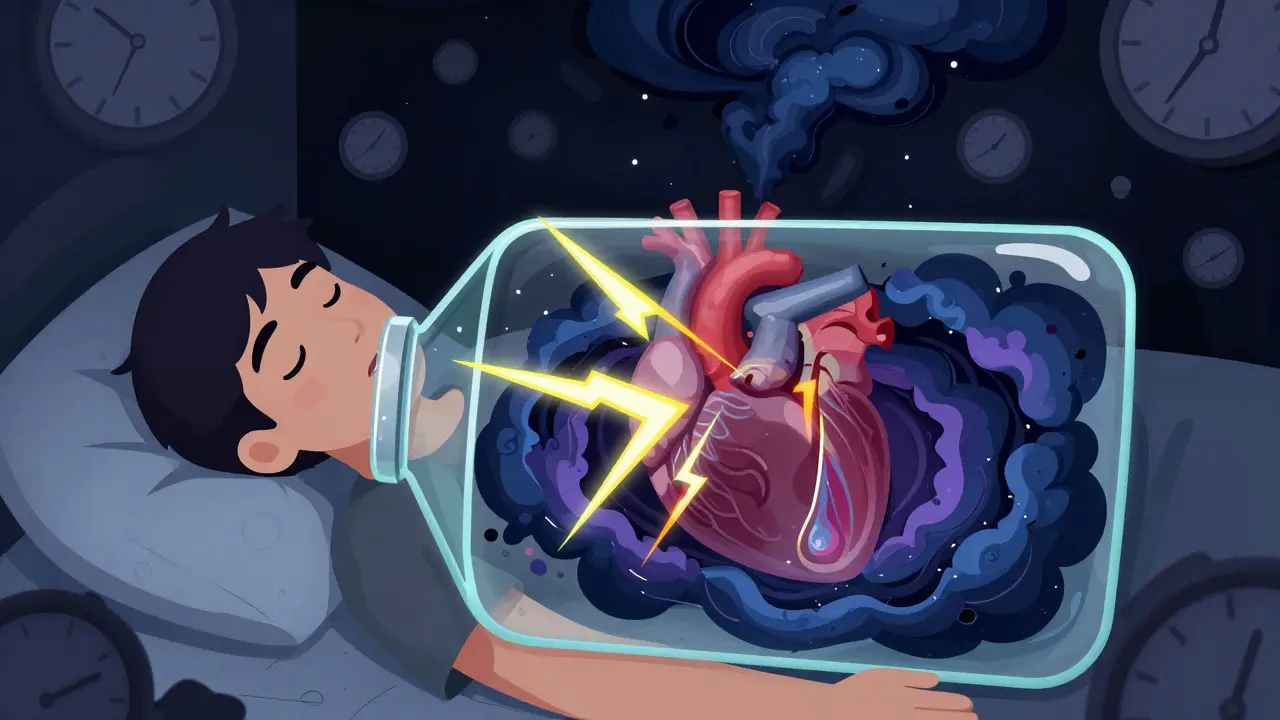
Imagine your heart is a pump that needs a steady, rhythmic flow of oxygen to work. Now, imagine that every few minutes, while you sleep, your airway completely collapses. You stop breathing. Your oxygen levels plummet. Your brain panics and sends a massive surge of adrenaline to wake you up just enough to gasp for air. This isn't just a bad night's sleep; it's a violent physical stress test your heart undergoes hundreds of times a night. This is the reality of obstructive sleep apnea is a sleep disorder where the upper airway narrows or closes, causing repeated stops in breathing during sleep.
For a long time, doctors thought sleep apnea was just a side effect of being overweight. But recent data shows it's an independent driver of heart disease. Whether you're a fit athlete or struggling with weight, the mechanical act of suffocating during sleep puts a devastating strain on your cardiovascular system. If you've been struggling with blood pressure that won't budge or a heart that feels like it's skipping beats, the culprit might actually be your sleep quality.
The Invisible Connection to High Blood Pressure
When you stop breathing during an apneic episode, your body enters a state of crisis. Your chemoreceptors detect a drop in oxygen, triggering the sympathetic nervous system-the "fight or flight" response. This causes a massive spike in adrenaline, which can increase sympathetic tone by 200-300%. For your heart, this is like slamming on the gas pedal while the car is in park.
These episodes cause blood pressure to jump by 20-40 mmHg every single time you stop breathing. The real danger is that this doesn't just happen at 3 AM. This nocturnal hypertension bleeds into your daytime hours, making it nearly impossible to keep your numbers in a healthy range. In fact, the American Heart Association suggests that if you have "resistant hypertension"-meaning your blood pressure stays above 140/90 mmHg even with three different medications-you likely have undiagnosed sleep apnea.
The physical strain is also immense. To fight for air, your chest creates massive negative pressure (sometimes -60 to -80 cm H2O). This creates a heavy load on the left ventricle of your heart, leading to what doctors call diastolic dysfunction. Essentially, your heart becomes less efficient at relaxing and filling with blood, which can eventually lead to heart failure.
Why Sleep Apnea Triggers Heart Arrhythmias
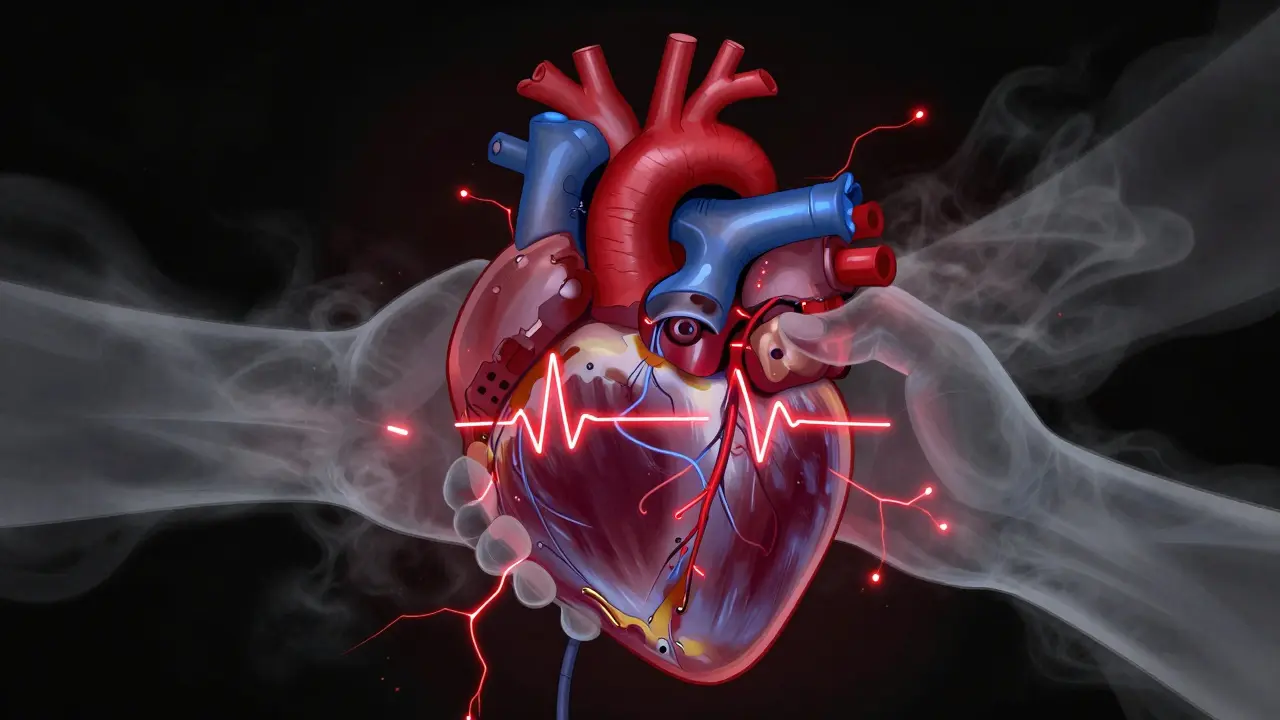
An arrhythmia is essentially an electrical glitch in the heart. Sleep apnea is the perfect storm for these glitches. The constant cycle of oxygen deprivation (hypoxia) followed by a sudden rush of oxygen when you wake up creates electrical instability in the heart muscle.
The most common result is atrial fibrillation is an irregular and often rapid heart rate occurring in the top chambers of the heart, or AFib. Research from UT Southwestern Medical Center indicates that people with sleep apnea are 3 to 5 times more likely to experience AFib episodes than those without it. While high blood pressure increases AFib risk by about 50%, severe sleep apnea can increase that risk by a staggering 140%.
It isn't just about the sudden spikes in heart rate. Long-term sleep apnea promotes atrial fibrosis-essentially scarring of the heart tissue. Recent cardiac MRI studies show that those with sleep apnea have 2.3 times more of this scarring, which creates a permanent "home" for irregular rhythms to thrive.
Comparing the Risks: OSA vs. Other Factors
It's a common misconception that sleep apnea is just "another risk factor" like high cholesterol. In reality, its impact is often more aggressive because it affects the heart mechanically, chemically, and electrically all at once. Unlike genetic risks, however, the damage from sleep apnea is often reversible or manageable with the right intervention.
| Risk Factor | Impact on AFib Risk | Primary Mechanism | Reversibility |
|---|---|---|---|
| Hypertension | ~50% Increase | Vessel Wall Tension | Manageable (Medication/Diet) |
| Severe OSA (AHI 30+) | ~140% Increase | Intermittent Hypoxia & Pressure Swings | Highly Treatable (CPAP/Surgical) |
| Central Sleep Apnea | Lower than OSA | Neurological Signal Failure | Variable |
Breaking the Cycle with Treatment
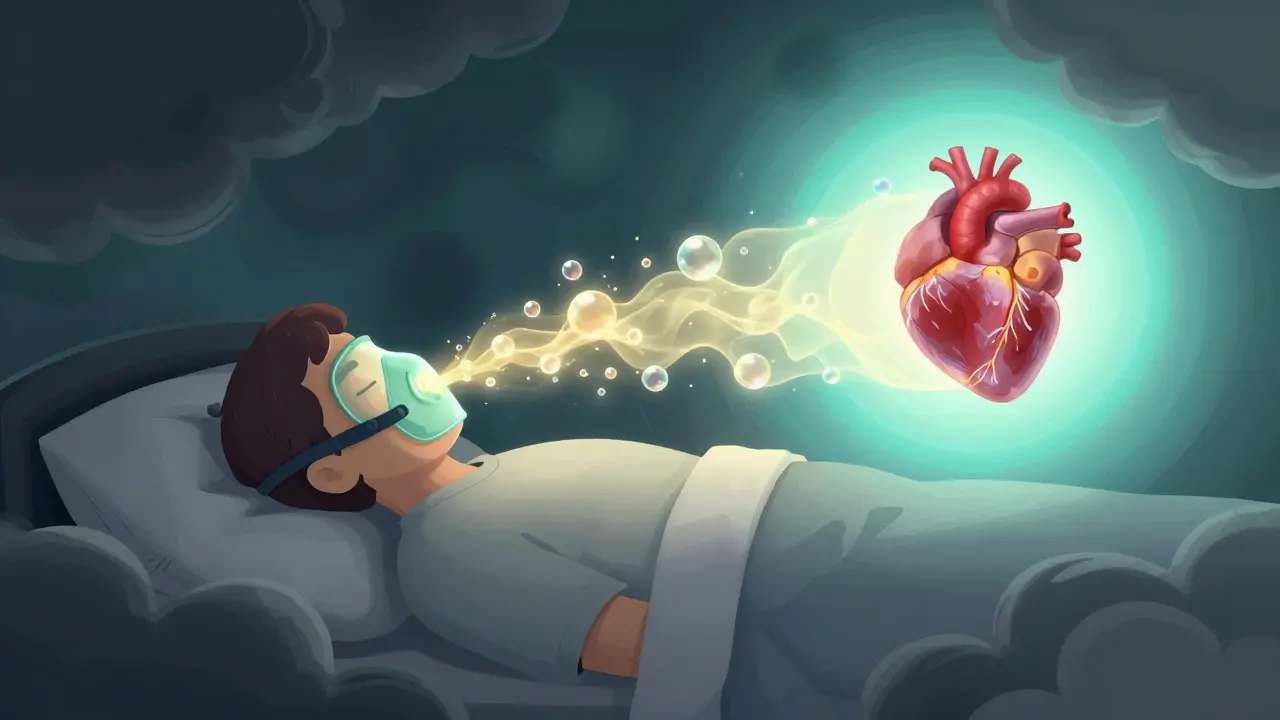
The good news is that you can actually "unplug" this risk. The gold standard for treatment is CPAP therapy is Continuous Positive Airway Pressure, a machine that keeps the airway open by delivering a steady stream of pressurized air. By preventing the airway from collapsing, CPAP stops the oxygen drops and the adrenaline surges.
The results are often immediate and dramatic. On average, consistent CPAP use can drop systolic blood pressure by 5-10 mmHg. For those suffering from AFib, the recurrence of episodes can drop by as much as 42% after a year of treatment. There are also newer options for those who can't tolerate masks, such as hypoglossal nerve stimulation (Inspire Therapy), which uses a small implanted device to keep the tongue from blocking the airway.
However, the biggest hurdle isn't the technology-it's the habit. Many people quit because the mask feels uncomfortable or the air feels too strong. Pro tips for sticking with it include using a ramp setting (which starts the pressure low and gradually increases it) and replacing mask cushions every three months to ensure a tight, comfortable seal.
How to Know if You Need a Sleep Study
You shouldn't wait until you have a heart attack to get screened. If you notice you're exhausted despite eight hours of sleep, or if your partner complains about your snoring and "silent gaps" in breathing, it's time to act. The American Academy of Sleep Medicine recommends screening for anyone with a history of stroke, heart failure, or resistant hypertension.
Diagnosis usually happens in one of two ways. In-lab polysomnography is the most comprehensive, where you spend a night in a clinic wired to monitors. For most people, however, a home sleep apnea test is sufficient. These tests measure your Apnea-Hypopnea Index (AHI), which is simply the number of times your breathing stops or becomes shallow per hour. An AHI of 5 or more is considered apnea; 30 or more is classified as severe.
Can sleep apnea cause a heart attack?
While sleep apnea doesn't always cause a heart attack directly, it significantly increases the risk. It raises the risk of coronary artery disease by 30% and stroke by 60% by causing inflammation, damaging the lining of the blood vessels, and straining the heart muscle through repeated blood pressure spikes.
Will my blood pressure go down if I use a CPAP machine?
Yes, for many people. Because CPAP prevents the adrenaline surges caused by oxygen deprivation, it reduces the nocturnal hypertension that often lingers during the day. Many users report a significant drop in blood pressure and some are even able to reduce their medication dosage under a doctor's supervision.
Is there a difference between obstructive and central sleep apnea?
Yes. Obstructive sleep apnea is a physical blockage of the airway (like the tongue or soft palate falling back). Central sleep apnea is a communication problem where the brain fails to signal the muscles to breathe. Obstructive apnea generally has a stronger link to cardiovascular risks like AFib and hypertension due to the mechanical pressure changes in the chest.
How do I know if my AHI score is dangerous?
An AHI (Apnea-Hypopnea Index) of 5-14 is considered mild, 15-29 is moderate, and 30 or more is severe. Those in the severe category (30+) face a 40-50% higher risk of major cardiovascular events compared to those without the condition.
Can young people get sleep apnea heart risks?
Absolutely. Recent research from UT Southwestern shows that the cardiovascular risks of OSA are present even in adults under 40. Early intervention is crucial because the longer the heart is subjected to these nightly stress tests, the more likely permanent damage like atrial fibrosis occurs.
Write a comment