
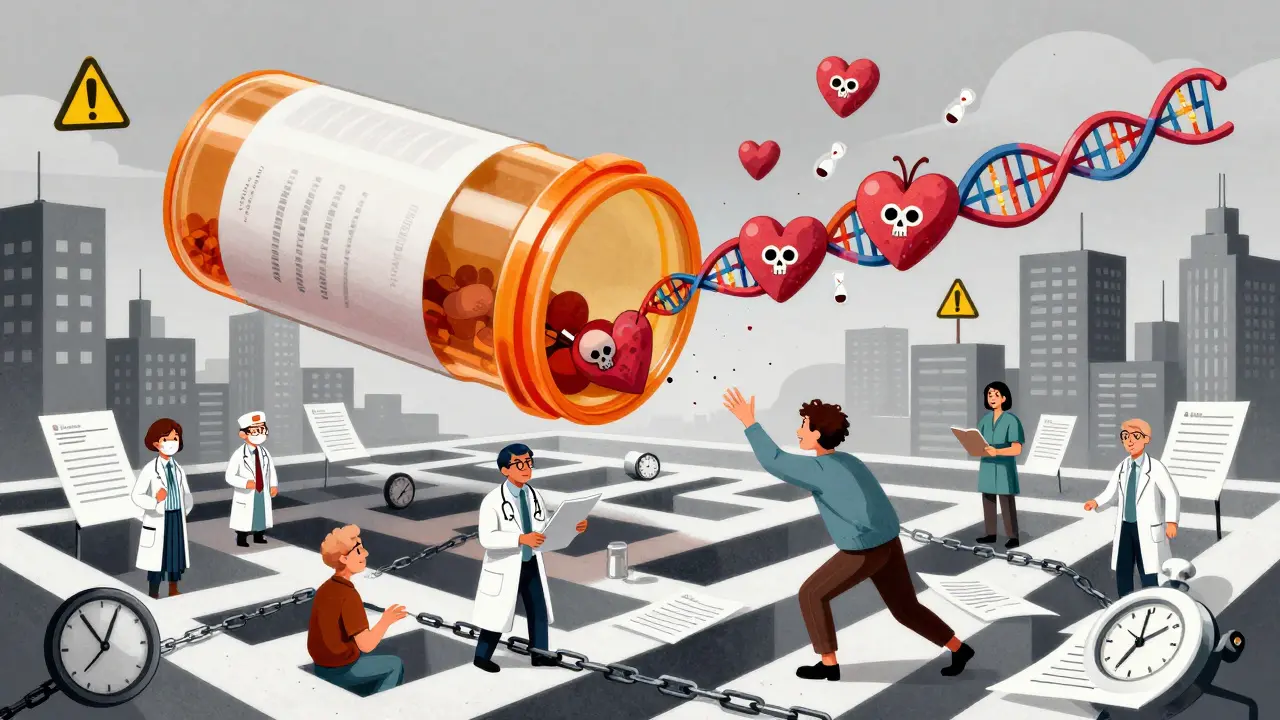
When a drug can save your life-but also seriously harm you if used wrong-how do you make sure it’s used safely? That’s the exact problem the FDA solved with REMS programs. These aren’t just extra labels or warnings. They’re legally required safety systems built into the use of certain high-risk medications. If you’ve ever waited days to fill a prescription for isotretinoin, had your doctor jump through hoops to prescribe clozapine, or seen a pharmacist spend 20 minutes verifying paperwork before handing over a shot of Zyprexa Relprevv, you’ve seen REMS in action.
What Exactly Is a REMS Program?
REMS stands for Risk Evaluation and Mitigation Strategies. It’s a formal system created by the U.S. Food and Drug Administration in 2007 under the Food and Drug Administration Amendments Act (FDAAA). The goal isn’t to block access to dangerous drugs-it’s to make sure the benefits outweigh the risks. Some medications are too risky to be sold without extra safeguards. REMS ensures those safeguards are in place.
Think of it this way: most drugs come with a label that lists side effects. That’s standard. REMS kicks in when those side effects are severe enough that the label alone isn’t enough. For example, isotretinoin (Accutane) can cause life-threatening birth defects. Clozapine can wipe out white blood cells, leaving patients vulnerable to deadly infections. Thalidomide, once infamous for causing severe birth defects in the 1950s, is still used today to treat leprosy and multiple myeloma-but only under strict controls.
REMS doesn’t apply to every drug. Only about 5% of FDA-approved medications require one. But for those that do, it’s non-negotiable. The FDA can require a REMS at the time a drug is approved-or years later, if new safety data emerges. It’s not a one-size-fits-all system. Each REMS is custom-built for the specific risks of the drug.
How REMS Programs Work: The Key Elements
Every REMS program includes at least one of three core components, and often a mix of them:
- Medication Guides: Printed handouts given to patients explaining the risks in plain language. These are the most common element and required for drugs like isotretinoin and clozapine.
- Communication Plans: Letters, emails, or training materials sent to doctors and pharmacists to make sure they understand the risks and how to manage them.
- Elements to Assure Safe Use (ETASU): These are the heavy-duty controls. They’re only used when the risk is serious and preventable only through direct intervention.
ETASU can include:
- Prescriber certification: Doctors must complete training and register before they can prescribe.
- Pharmacy certification: Only certain pharmacies can dispense the drug.
- Patient enrollment: Patients must sign up in a registry so their use can be tracked.
- Special dispensing: The drug can only be given in a hospital or clinic, not a regular pharmacy.
- Lab monitoring: Blood tests, imaging, or other checks before each dose.
Take Zyprexa Relprevv, an injectable antipsychotic. Because it can cause sudden sedation or delirium right after injection, the FDA requires it to be administered only in certified clinics. Patients must be monitored for at least three hours after each shot. That’s not a suggestion-it’s a legal requirement. Skip it, and the pharmacy can’t legally fill the prescription.
Who’s Responsible for Running REMS Programs?
The FDA sets the rules, but the drugmaker pays for and runs the program. That means pharmaceutical companies must build and maintain the systems: training portals, registries, verification websites, and reporting tools. For example, the iPLEDGE program for isotretinoin is managed by a third-party contractor hired by the manufacturer. Doctors and pharmacists log in to verify patient eligibility, confirm birth control use for women of childbearing age, and submit monthly reports.
This puts a heavy burden on companies. The FDA estimates that REMS programs cost the industry about $1.2 billion a year. Simple programs with just medication guides can cost $500,000 annually. Complex ones with registries, certified providers, and monitoring-like those for clozapine or certain cancer drugs-can cost over $15 million per year.
And it’s not just about money. Compliance is monitored closely. In 2022, the FDA issued 17 warning letters to drugmakers for failing to meet REMS requirements. One generic manufacturer paid a $2.1 million settlement for not properly managing clozapine’s blood monitoring system.
Why REMS Programs Are Controversial
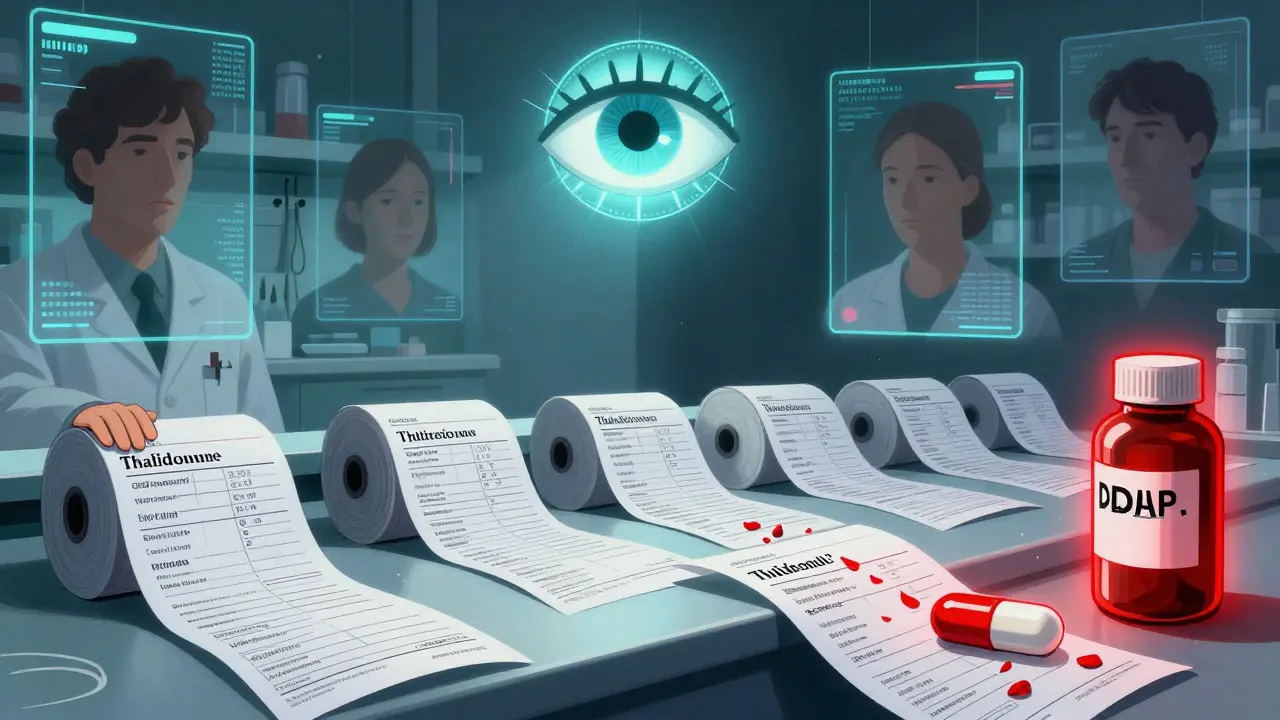
REMS saves lives. But it also delays care.
A 2019 study in JAMA Internal Medicine found that REMS drugs took an average of 5.4 days longer to be prescribed for the first time compared to non-REMS drugs. For patients with rare diseases who live far from specialty clinics, that delay can mean worsening symptoms or hospitalization.
Doctors report the same thing. A 2022 survey by the American Medical Association found that 68% of physicians experienced delays in starting REMS-required medications. Forty-two percent said those delays hurt patient outcomes.
Pharmacists are on the front lines. One hospital pharmacist told Pharmacy Times they spend 2-5 extra hours a week just on REMS paperwork. For clozapine, patients need weekly blood tests for the first six months. Each result must be checked, logged, and verified before the next prescription can be filled. That’s a lot of calls, faxes, and portal logins.
On Reddit’s r/pharmacy community, pharmacists share stories of patients waiting 3-7 days just to get isotretinoin because of iPLEDGE’s multiple verification steps. Some patients give up. Others end up with worse acne, scarring, or depression.
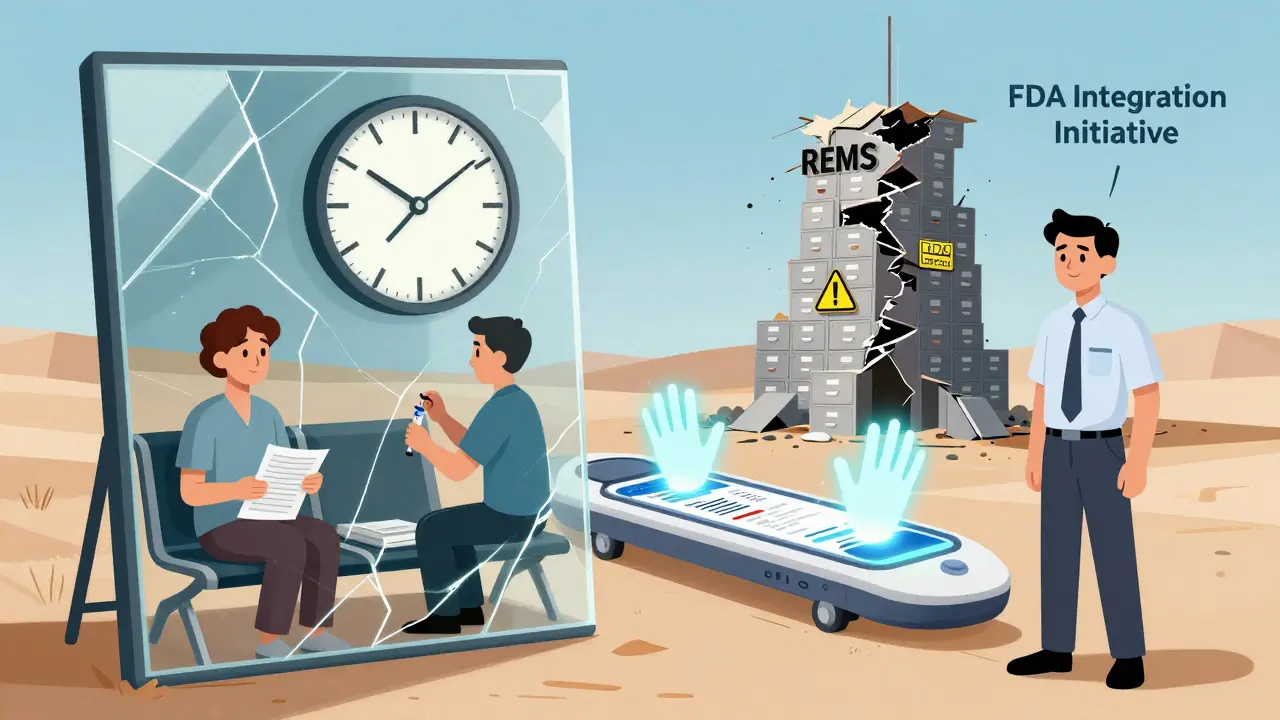
Even the FDA admits the system isn’t perfect. Former Acting Commissioner Dr. Janet Woodcock said in 2022, “Not all REMS programs have been equally effective.” In response, the agency launched the REMS Integration Initiative in 2023, standardizing 22 of the 78 active programs onto a single platform to reduce duplication and paperwork.
REMS vs. Other Safety Systems
REMS isn’t the only way the world manages drug risks. The European Union requires all new drugs to have a Risk Management Plan (RMP). That’s broader and more routine. In the U.S., REMS is only used for drugs with the most serious, preventable risks.
Also, REMS is different from post-market surveillance. Most drugs are monitored through voluntary adverse event reports from doctors and patients. That’s how we catch rare side effects after approval. REMS is proactive-it stops problems before they happen.
And unlike drug recalls, which pull a medication off the market entirely, REMS keeps it available-just under tighter control. It’s a middle ground between banning a drug and letting it go unchecked.
What’s Changing in REMS Today?
The system is evolving. The FDA now requires drugmakers to prove that their REMS isn’t creating unnecessary barriers-especially for patients with rare diseases or those in rural areas.
In August 2023, the FDA made history by lifting the REMS for thalidomide after 20 years. Why? Because better education, safer alternatives, and improved prescribing practices made the old system redundant. That’s the goal: to remove REMS when it’s no longer needed.
Technology is also changing the game. Pilot programs are testing smartphone apps to monitor patients taking anticoagulants in real time. Instead of requiring monthly blood draws, patients might use a connected device that sends lab results automatically to their doctor. If successful, this could cut down on visits and delays.
By 2027, experts predict 45% of new cancer drugs will need REMS-up from 38% in 2023. As drugs get more targeted and powerful, the risks increase. REMS is becoming more common, not less.
But there’s still a big gap: 63% of current REMS programs don’t have clear metrics to measure if they’re actually improving safety-or just adding bureaucracy. The FDA and drugmakers are working together to fix that.
What This Means for Patients and Providers
If you’re prescribed a REMS drug:
- Expect delays. The system is slow by design.
- Ask your doctor: “Is this drug under REMS? What do I need to do?”
- Keep your paperwork organized. Registration numbers, lab results, and certification codes matter.
- If you’re having trouble getting your medication, contact the REMS program’s patient support line. Most have one.
If you’re a provider:
- Know which drugs in your practice require REMS. Keep a list.
- Don’t assume your EHR system automatically handles REMS. Only 35% of REMS programs integrate with electronic health records.
- Use the FDA’s REMS Dashboard to check the latest requirements. It’s updated monthly.
REMS isn’t perfect. It’s clunky, expensive, and sometimes frustrating. But for drugs that could kill you if used carelessly, it’s the best tool we have to keep people safe without taking away access.
What drugs require a REMS program?
REMS applies to prescription drugs with serious, preventable risks. Examples include isotretinoin (for acne), clozapine (for schizophrenia), thalidomide (for leprosy and cancer), Zyprexa Relprevv (an injectable antipsychotic), and certain extended-release opioids. As of October 2023, there are 78 active REMS programs covering about 150 medications, mostly in oncology, neurology, and immunology.
Who pays for REMS programs?
The pharmaceutical company that makes the drug pays for and runs the REMS program. This includes building websites, training systems, registries, and hiring staff to manage compliance. The FDA doesn’t fund these programs-it only requires them.
Can a REMS program be removed?
Yes. In August 2023, the FDA lifted the REMS for thalidomide after 20 years because better education and alternative safety practices made the program unnecessary. The FDA now requires sponsors to prove that REMS still provides value before it’s renewed.
Do REMS programs delay patient care?
Yes, often. Studies show REMS drugs take an average of 5.4 days longer to be prescribed. Pharmacists report spending 2-5 extra hours per week on REMS paperwork. For patients in rural areas or with rare diseases, delays can mean worse health outcomes.
How do I know if my medication has a REMS program?
Your doctor or pharmacist will tell you. You can also check the FDA’s REMS Dashboard online, which lists all active programs and their requirements. If your prescription comes with a Medication Guide or requires special paperwork, it’s likely under REMS.
Are REMS programs the same as drug recalls?
No. A drug recall removes a medication from the market because it’s unsafe or defective. REMS allows the drug to stay on the market but adds strict controls to reduce risk. It’s about managing risk, not eliminating access.
Next Steps for Patients and Providers
If you’re a patient: Don’t let REMS delays discourage you. Contact the REMS program’s patient support line. Most have dedicated staff to help navigate the system. Keep copies of every form, test result, and certification code.
If you’re a provider: Know your REMS drugs. Keep a printed or digital list in your office. Train your staff on how to handle verification. Don’t rely on your EHR to do it all-most REMS systems still work separately.
REMS isn’t going away. As drugs get more powerful, the need for precision safety will grow. The goal isn’t perfection-it’s balance. Keeping life-saving drugs available while preventing avoidable harm. That’s what REMS is for.
Sumler Luu
REMS is one of those systems that feels like a necessary evil. I’ve had to wait over a week for isotretinoin because of iPLEDGE, and honestly? I get why it exists-but it’s exhausting. My dermatologist spent 45 minutes just verifying my birth control docs. Meanwhile, my acne kept getting worse. At least they’re trying to fix it with that new integration platform. Hope it helps.
sakshi nagpal
As someone from India where access to specialized care is already limited, REMS programs feel like a double-edged sword. On one hand, safety is critical-especially with drugs like clozapine. On the other, the bureaucracy can be deadly for patients in rural areas who can’t easily access certified clinics or frequent lab tests. Maybe a hybrid model-digital monitoring + remote verification-could bridge the gap without compromising safety?
Fabio Raphael
I’ve worked in oncology for 12 years, and REMS is the reason some of my patients are still alive. But I also see the toll it takes. One woman with multiple myeloma missed her third dose because the pharmacy couldn’t verify her lab results in time. She ended up in the ER. We’re not talking about minor inconveniences here-we’re talking about real human consequences. The FDA’s push to standardize is long overdue. If we can make this less of a paperwork nightmare, we win.
Sophia Daniels
Oh my god, this whole REMS thing is a corporate circus. Big Pharma pays for it, so of course they make it as complicated as possible-more paperwork = more billing codes = more profit. And now they want us to believe it’s about patient safety? Please. I’ve seen pharmacies refuse to fill prescriptions because a patient forgot to click ‘I read the guide’ on some 20-page PDF. Meanwhile, the drug company makes millions. The FDA’s ‘integration initiative’? Just repackaging the same garbage into a shinier box. #PharmaLies
Steven Destiny
Look, I get the frustration-but let’s not throw the baby out with the bathwater. REMS saved my sister’s life. She was on clozapine, and without that weekly blood draw, she’d have had agranulocytosis and died. Yeah, it’s annoying. Yeah, it takes time. But when the alternative is death? I’ll wait 5 days. If you’re mad, channel that energy into pushing for better tech-not blaming the system that keeps people alive.
Natasha Sandra
OMG I JUST GOT MY ZYPREXA Relprevv INJECTION TODAY 😭😭😭 Like… I had to sit there for 3 HOURS after the shot?? And they wouldn’t let me leave even if I felt fine?? Like… I get it?? But also?? Can we PLEASE make this less traumatic?? 😩 I cried in the waiting room. My mom had to drive 2 hours. This isn’t healthcare-it’s a hostage situation. 🥲💉
Erwin Asilom
REMS programs are not perfect, but they are the most robust framework currently available for mitigating severe, preventable drug risks. The data shows a reduction in adverse events for REMS-regulated medications, particularly in cases involving teratogenicity and hematologic toxicity. While administrative burden is high, the solution lies not in elimination but in optimization: interoperable digital systems, automated verification, and standardized patient education modules. The FDA’s 2023 initiative is a step in the right direction.
Sandeep Jain
my cousin got clozapine in delhi and they just gave it to him without any blood test… i mean… i know rems is usa thing but like… what if we just trained doctors better instead of making websites and forms? i think the system is too american. too much paper. too little trust.