
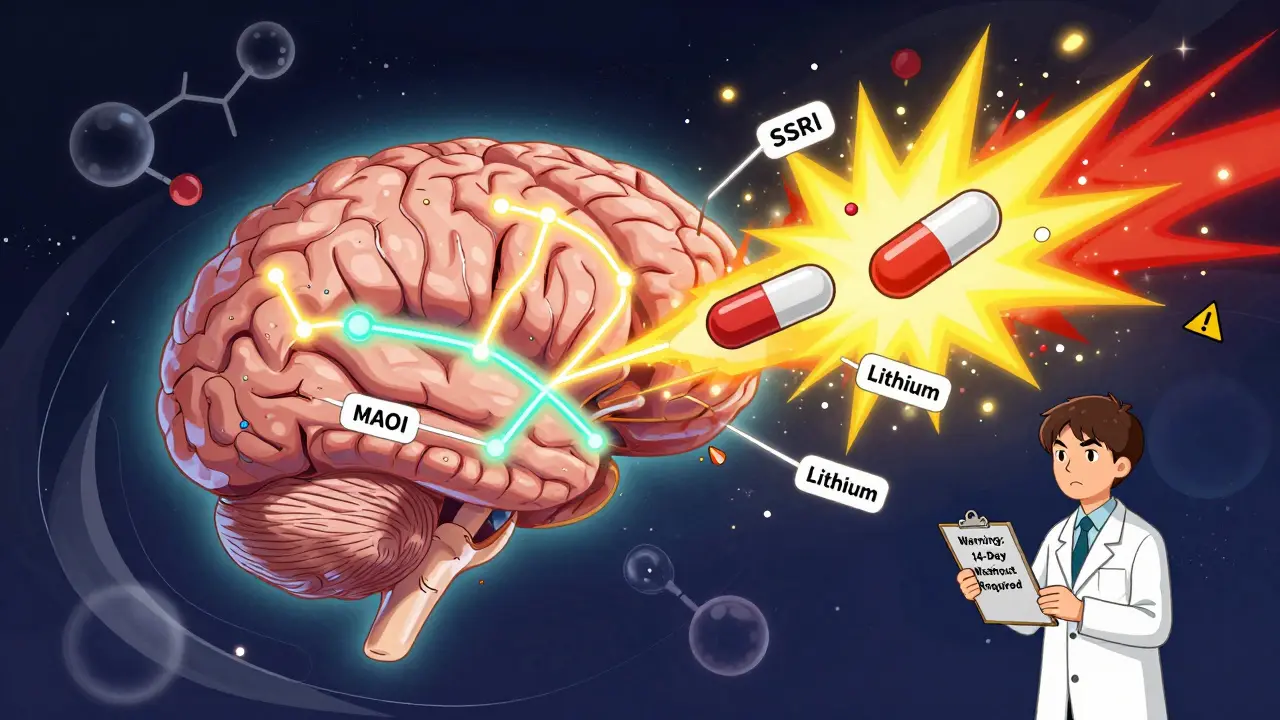
Psychiatric Medication Interaction Checker
Check Medication Combinations
Select your current medications to see potential dangerous interactions. Based on Australian hospital data showing 47% of psychiatric adverse events come from drug interactions.
DANGER: SERIOUS INTERACTION RISK
Combining these medications can cause serotonin syndrome or other life-threatening reactions.
- Confusion
- Rapid heartbeat
- Muscle rigidity
- High fever
- Seizures
Avoid this combination. Immediate medical attention required if symptoms occur.
WARNING: MODERATE INTERACTION RISK
This combination may increase side effects or reduce effectiveness. Consult your doctor before taking together.
Possible effects: Increased bleeding risk, reduced medication effectiveness, or excessive drowsiness
SAFE: NO SIGNIFICANT INTERACTION
This combination is generally safe when used together. However, always monitor for unusual side effects.
Still check with your doctor before combining any new medications.
Critical Safety Information
- Never skip washout periods: Wait at least 14 days between SSRI and MAOI. For fluoxetine, wait 5-6 weeks.
- Lithium warning: NSAIDs like ibuprofen can increase lithium levels by 25-50%. Use acetaminophen instead for pain relief.
- Alcohol risk: Combined with TCAs or antipsychotics, can cause dangerous breathing problems and low blood pressure.
- St. John's Wort: Can cause serotonin syndrome when combined with SSRIs, SNRIs, or MAOIs.
When you're managing mental health with medication, it's easy to focus on one pill at a time. But what happens when you add another? Or when a cold medicine, painkiller, or even a supplement enters the mix? The truth is, psychiatric medications don't work in isolation. They interact - sometimes harmfully - with other drugs, and those interactions can be life-threatening. This isn't theoretical. In Australian hospitals, nearly half of all adverse drug events in psychiatric care come from unexpected combinations. You need to know which ones to avoid.
Why These Interactions Matter
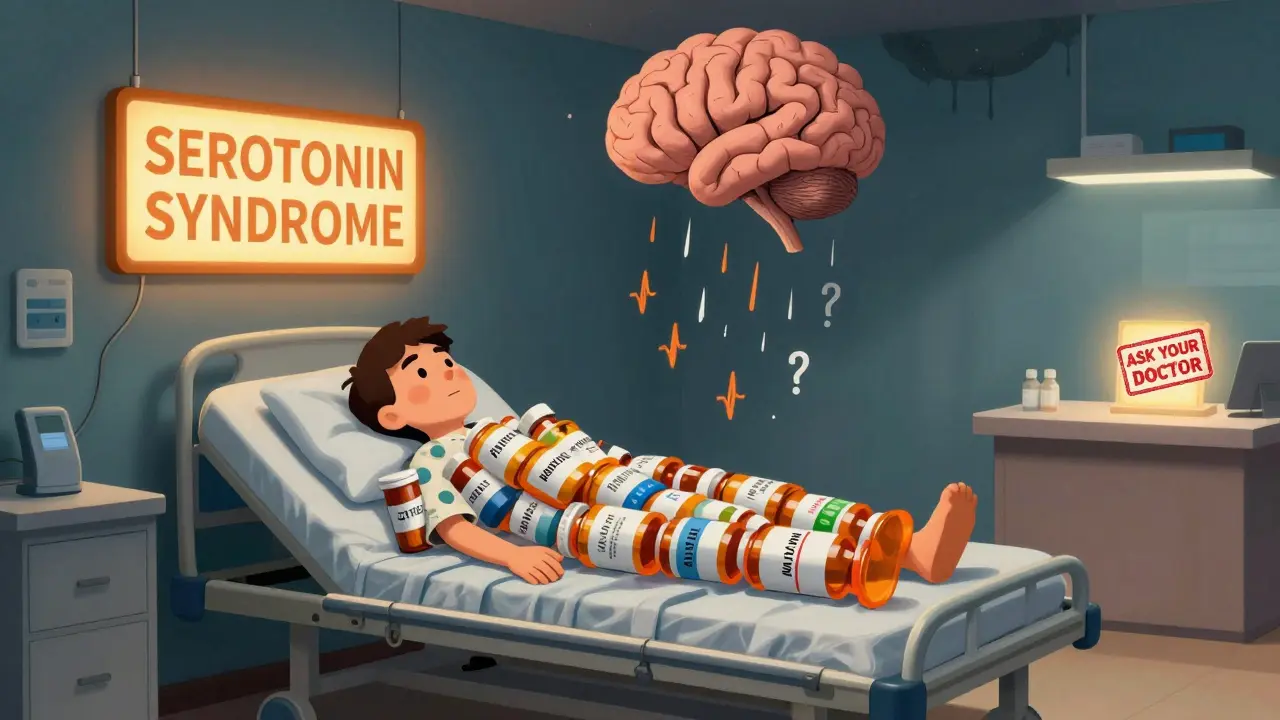
Psychiatric medications affect your brain’s chemistry. They change levels of serotonin, norepinephrine, and dopamine. That’s how they help with depression, anxiety, psychosis, and bipolar disorder. But when two drugs hit the same system, they can overdo it. Or they might block each other. Or worse - they might trigger a reaction your body can’t handle. Take serotonin, for example. Many antidepressants boost it. So do some pain meds, migraine treatments, and even herbal supplements like St. John’s Wort. If you take two of these together, serotonin can flood your system. That’s not a good thing. It can lead to serotonin syndrome - a condition with symptoms like confusion, rapid heartbeat, muscle rigidity, high fever, and seizures. In severe cases, it kills. Studies show 2% to 12% of people with serious serotonin syndrome don’t survive. The biggest danger? Starting a new medication. The first few days are the riskiest. Your body hasn’t adjusted. Your doctor might not know everything you’re taking. And if you’re on multiple prescriptions, the chance of a bad combo goes up fast.High-Risk Drug Classes
Not all psychiatric drugs are equal when it comes to interactions. Some are safer. Others? Not so much.- MAO inhibitors (MAOIs) like phenelzine (Nardil) and tranylcypromine (Parnate) are the most dangerous. They block enzymes that break down neurotransmitters. Combine them with SSRIs, SNRIs, or even certain cough syrups, and you’re playing Russian roulette with serotonin. You need a full 14-day washout period before switching to or from an MAOI. No exceptions.
- SSRIs like fluoxetine (Prozac) and sertraline (Zoloft) are common. But not all SSRIs are the same. Fluoxetine and fluvoxamine are strong inhibitors of liver enzymes (CYP450), which means they slow down how your body processes other drugs. This can cause toxic buildup. Sertraline and citalopram? Lower risk. That’s why many doctors pick them when someone’s already on other meds.
- SNRIs like venlafaxine (Effexor) and duloxetine (Cymbalta) affect both serotonin and norepinephrine. They’re less likely to interfere with liver enzymes than SSRIs, but they still raise serotonin levels. That means they can still trigger serotonin syndrome if paired with the wrong drug.
- TCAs - tricyclic antidepressants like amitriptyline - are older. They’re effective, but they have strong anticholinergic effects. That means they dry you out, slow your heart, and make you drowsy. Combine them with antihistamines (like diphenhydramine in Benadryl), antipsychotics, or alcohol, and you’re asking for confusion, low blood pressure, or even heart rhythm problems.
- Atypical antipsychotics like quetiapine (Seroquel) and risperidone (Risperdal) vary. Quetiapine has fewer interactions. Others, especially when combined with drugs that affect liver enzymes, can cause dangerous spikes in blood levels. Lithium is especially risky when paired with these - it can push levels into toxic range.
- Lithium is a classic. It’s used for bipolar disorder. But its therapeutic window is tiny: 0.6 to 1.0 mmol/L. Too little? No effect. Too much? Seizures, kidney damage, coma. NSAIDs like ibuprofen or naproxen can increase lithium levels by 25% to 50%. Even a common cold medicine with a decongestant can mess with your sodium balance and make lithium more dangerous.
Real-World Danger Zones
Here are the combinations you need to avoid - and why.- SSRI + MAOI: This is the textbook example of a deadly combo. Serotonin skyrockets. Symptoms can start in hours. If you’ve been on an SSRI, wait at least 5 weeks before starting an MAOI. For fluoxetine, wait 6 weeks - it sticks around longer.
- SSRI/SNRI + Tramadol or Meperidine: These painkillers also raise serotonin. Tramadol, especially, has been linked to multiple serotonin syndrome deaths. Even if you’re on a low dose of an SSRI, adding tramadol isn’t worth the risk.
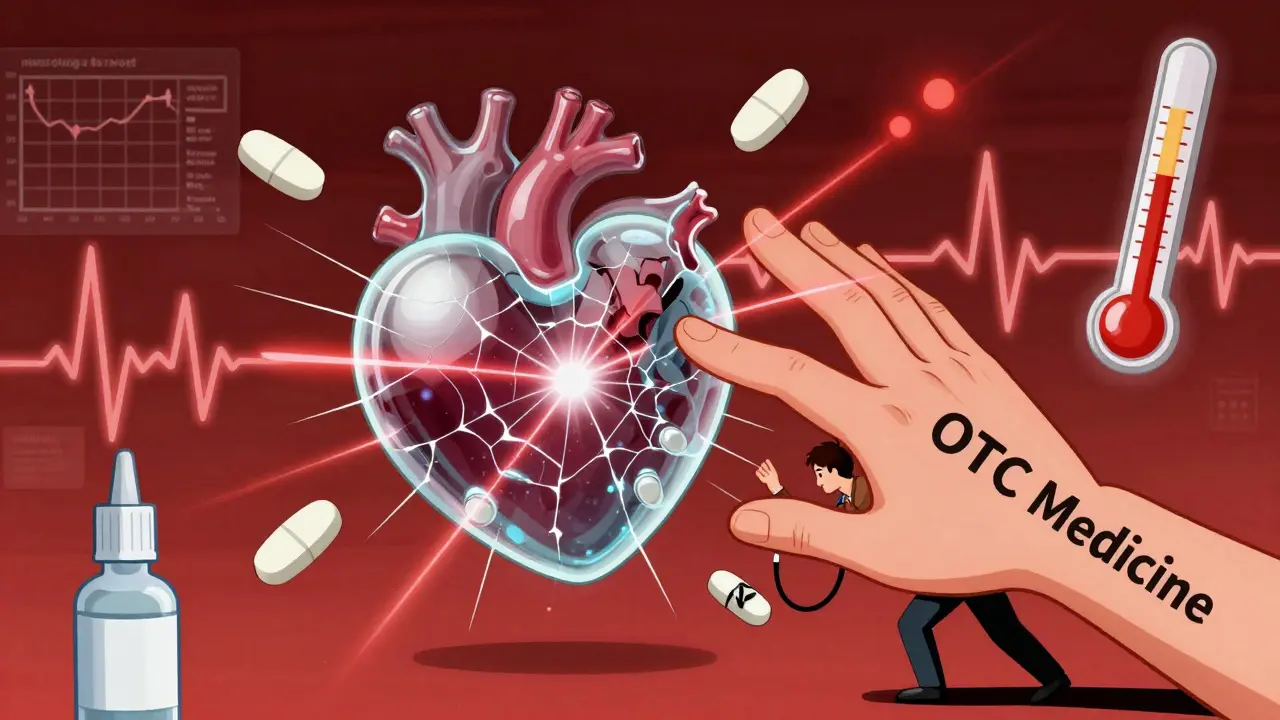
- Lithium + NSAIDs or Diuretics: Ibuprofen, naproxen, or hydrochlorothiazide can all spike lithium levels. If you’re on lithium and need pain relief, acetaminophen (paracetamol) is safer. Always check with your doctor before taking any new OTC medicine.
- TCAs + Alcohol: This combo doesn’t just make you sleepy. It depresses your breathing and heart rate. People have died from this mix. If you’re on a TCA, skip the wine, beer, or spirits.
- Antipsychotics + Antihistamines: Diphenhydramine (Benadryl), hydroxyzine, or even some sleep aids can add to the anticholinergic load. That means dry mouth, constipation, blurred vision - and worse, urinary retention or heart rhythm issues.
What Your Doctor Should Be Checking
Good psychiatric care doesn’t just mean prescribing a pill. It means knowing what else you’re taking. Every time you start a new medication - even something as simple as a statin or a beta-blocker - your doctor should check for interactions. They should use tools like the Quick Reference to Psychotropic Medications or drug interaction databases. They should know your full list: prescriptions, supplements, herbal products, and even recreational substances. They should also monitor you. That means:- Checking lithium levels before and after starting a new drug
- Monitoring INR if you’re on warfarin and an SSRI (levels can jump 20-30%)
- Running liver tests every 3 months if you’re on valproate or certain antipsychotics
- Doing weekly blood counts for the first 6 months if you’re on clozapine
- Using scales like PHQ-9, GAD-7, or AIMS to track both symptoms and side effects
What You Can Do
You’re not powerless here. You have a role.- Keep a complete list: Write down every medication, supplement, and herb you take. Include dosages and why you take them. Update it every time something changes.
- Ask before you take anything new: Even if it’s OTC. Even if it’s “natural.” Say: “I’m on [medication]. Is this safe to take with it?”
- Know your warning signs: If you feel agitated, confused, sweaty, shaky, or your muscles lock up after starting a new drug - get help immediately. Don’t wait. Call your doctor or go to the ER.
- Use one pharmacy: It sounds simple, but it helps. Your pharmacist can flag dangerous combos before you even leave the counter.
- Consider genetic testing: Tests for CYP2D6 and CYP2C19 enzymes can show how your body processes certain drugs. If you’ve had bad reactions before, it’s worth asking about.
The Future: Safer Prescribing
We’re getting better at this. Digital tools now alert doctors in real time when a dangerous combo is prescribed. Studies show a 37% drop in serious events when these systems are used properly. The National Institute of Mental Health is testing AI models that predict your personal risk based on your genetics, age, kidney function, and current meds. In the next few years, this could become standard. But right now? The responsibility still falls on you and your care team. No algorithm replaces a conversation. No app replaces knowing your own body. If you’re on psychiatric medication, don’t assume it’s safe. Don’t assume your doctor knows everything. Ask. Double-check. Speak up.Can I take over-the-counter painkillers if I’m on an SSRI?
It depends. Acetaminophen (paracetamol) is generally safe. Avoid NSAIDs like ibuprofen or naproxen - they can raise the risk of bleeding and interfere with how your body clears the SSRI. Always check with your doctor or pharmacist before taking any OTC painkiller.
How long should I wait between stopping an SSRI and starting an MAOI?
For most SSRIs, wait at least 14 days. But for fluoxetine (Prozac), which stays in your system longer, wait 5 to 6 weeks. Never skip this waiting period. The risk of serotonin syndrome is too high.
Is it safe to drink alcohol while on psychiatric medication?
It’s rarely safe. Alcohol can worsen drowsiness, dizziness, and low blood pressure. With TCAs or antipsychotics, it can cause dangerous breathing problems. With MAOIs, it can trigger a hypertensive crisis. Even with SSRIs, alcohol can make depression worse. Best to avoid it unless your doctor says otherwise.
What should I do if I think I’m having serotonin syndrome?
Seek emergency help immediately. Symptoms include high fever, rapid heartbeat, muscle rigidity, confusion, seizures, or loss of consciousness. Don’t wait. Call an ambulance or go to the nearest emergency room. Tell them you’re on psychiatric medication and suspect serotonin syndrome.
Can herbal supplements like St. John’s Wort interact with antidepressants?
Yes - and dangerously so. St. John’s Wort increases serotonin and can trigger serotonin syndrome when taken with SSRIs, SNRIs, or MAOIs. It can also interfere with birth control, blood thinners, and heart medications. Never take it without discussing it with your prescriber.
Khaya Street
Look, I get that interactions are a big deal, but half the time doctors don't even ask about supplements. I took St. John’s Wort for months with my SSRI and felt fine. Maybe it’s just me, but I think we’re over-scaring people with stats that don’t reflect real life.
Also, why is everyone so afraid of OTC meds? I’ve taken Advil with sertraline for years. No issues. Maybe the real problem is overmedication, not interactions.
Christina VanOsdol
OMG I JUST HAD SEROTONIN SYNDROME 😱😱😱 It was terrifying. One day I was fine, next day I was in the ER with a temp of 104, muscles locked like a statue, and my brain felt like it was melting. 🤯 They said it was from mixing fluoxetine + tramadol + a ‘natural’ energy pill. NO MORE NATURAL PILLS FOR ME. EVER.
Also, why do people think ‘natural’ = safe??? 🤦♀️
Brooke Exley
You’re not alone. I’ve been on lithium for 8 years, and I’ve learned to treat every new pill like a bomb. 🧨 Even a simple cold medicine? I call my pharmacist first. It’s not paranoia - it’s survival.
And yes, one pharmacy? ABSOLUTELY. My pharmacist flagged a dangerous combo before I even left the counter. She saved my life. Don’t underestimate the power of a good pharmacist - they’re the unsung heroes of mental health care.
Also, if you’re on meds, please keep a list. Write it down. Take a photo. Share it. Your life depends on it.
Alfred Noble
Yeah i agree with the pharmacist thing. I had this one doc who never checked my meds. I was on citalopram and started taking diphenhydramine for sleep. Next thing i know i was dizzy as hell and my heart was racing.
Turns out the benadryl + tca combo was the issue. I didn’t even know i was on a tca until i asked. My doc just assumed i knew.
Lesson: always ask. even if you think you know.
also lol at ‘natural’ = safe. my cousin took ginkgo with warfarin and ended up in the hospital. 🤦♂️
Matthew Brooker
Let’s be real - the system is broken. Doctors are overworked. Pharmacies are understaffed. Patients are left to guess.
I’ve been on 5 different meds in 3 years. Every time I start something new, I feel like I’m playing Russian roulette. I keep a spreadsheet. I call my pharmacist. I read every warning label.
But why should I have to do all the work? This isn’t rocket science. We have the tech. We have the data. Why aren’t we using it?
AI tools that flag risks? YES. Mandatory interaction checks? YES. But until then, stay vigilant. You’re your own best advocate.
Emily Wolff
Most of you are overreacting. Serotonin syndrome is rare. Lithium toxicity? Only if you’re dumb enough to take NSAIDs without monitoring. This article reads like fear porn for people who don’t understand pharmacology.
Stop scaring people. Just follow the guidelines. It’s not that complicated.
Jacob Carthy
Why are we even talking about this? In America we got the best meds in the world. If you can’t handle your meds, maybe you shouldn’t be on them. I’ve been on Zoloft for 10 years. Never had a problem. Stop being weak.
Also, St. John’s Wort? That’s a hippie drug. You want real treatment? Take the prescription. Not some tea from a yoga studio.
Anil bhardwaj
My cousin in India was on fluoxetine and took paracetamol for fever. Doctor said it was fine. No interaction. But I’ve seen people die from mixing meds without knowing. Maybe it’s different here, but I still check everything.
Also, I always tell my family: if you’re on mental health meds, treat every new pill like a stranger. Ask before you trust it.
lela izzani
Just wanted to say - I’ve been on lithium for 12 years. I take my levels every 3 months. I use acetaminophen. I avoid NSAIDs. I tell every new provider I see - even dentists - about my meds.
It’s not fear. It’s responsibility. And honestly? I’d rather be cautious than end up in a coma.
Also, one pharmacy? Best decision I ever made. My pharmacist remembers my entire med history. She’s like my personal guardian angel.
Stephen Archbold
So I had this moment last year - started a new antidepressant, took ibuprofen for a headache, and felt like my brain was vibrating. Not fun.
Turns out the doc didn’t check my med list. I had to Google it myself.
Now I carry a printed med list in my wallet. I show it to every provider. I even have a QR code that links to my full list. It’s not weird - it’s smart.
And if you’re on psychiatric meds? You owe it to yourself to be this careful. You’re not being paranoid. You’re being proactive.
Nerina Devi
As someone from India, I’ve seen how hard it is to get consistent care. Many people here don’t even know what their meds are called. I’ve helped friends write down their prescriptions, translate labels, and call clinics for advice.
This article is so important. Not just for the West. For everyone.
Don’t wait until you’re in crisis to learn this. Learn it now. Share it. Teach your family. It could save a life.
Dinesh Dawn
I didn’t know about the washout periods until I almost messed up my switch from sertraline to venlafaxine. My doc didn’t mention it. I found it on a Reddit thread.
That’s when I realized - we’re all just trying to figure this out. No one’s coming to save us. We have to save each other.
So if you’re reading this and you’re on meds? Talk to someone. Ask questions. Don’t be shy. We’re all in this together.
Vanessa Drummond
I’m tired of being told to ‘be careful.’ I’ve been gaslit by doctors who dismissed my symptoms as ‘anxiety.’ Then I ended up in the hospital because my SSRI and migraine med were cooking my serotonin.
Why is it always the patient’s job to catch the mistakes? Why don’t systems fix this?
I’m not overreacting. I’m surviving.
Nick Hamby
There is a profound ethical imperative here: if we accept that psychiatric medications alter the very architecture of subjective experience, then we must also accept that their interactions are not merely pharmacological, but existential.
To treat these interactions as mere technicalities is to reduce human suffering to a spreadsheet. The body does not lie. The brain does not forget. And when we fail to honor the complexity of neurochemistry - we fail the person.
Perhaps the real crisis is not in the drugs themselves, but in the systems that treat them as disposable variables rather than sacred instruments of healing.
Let us not mistake vigilance for fear. Let us recognize it as reverence - for life, for mind, for the fragile, brilliant machinery of being.