
What Psoriasis Really Is - And Why Treatment Can’t Be One-Size-Fits-All
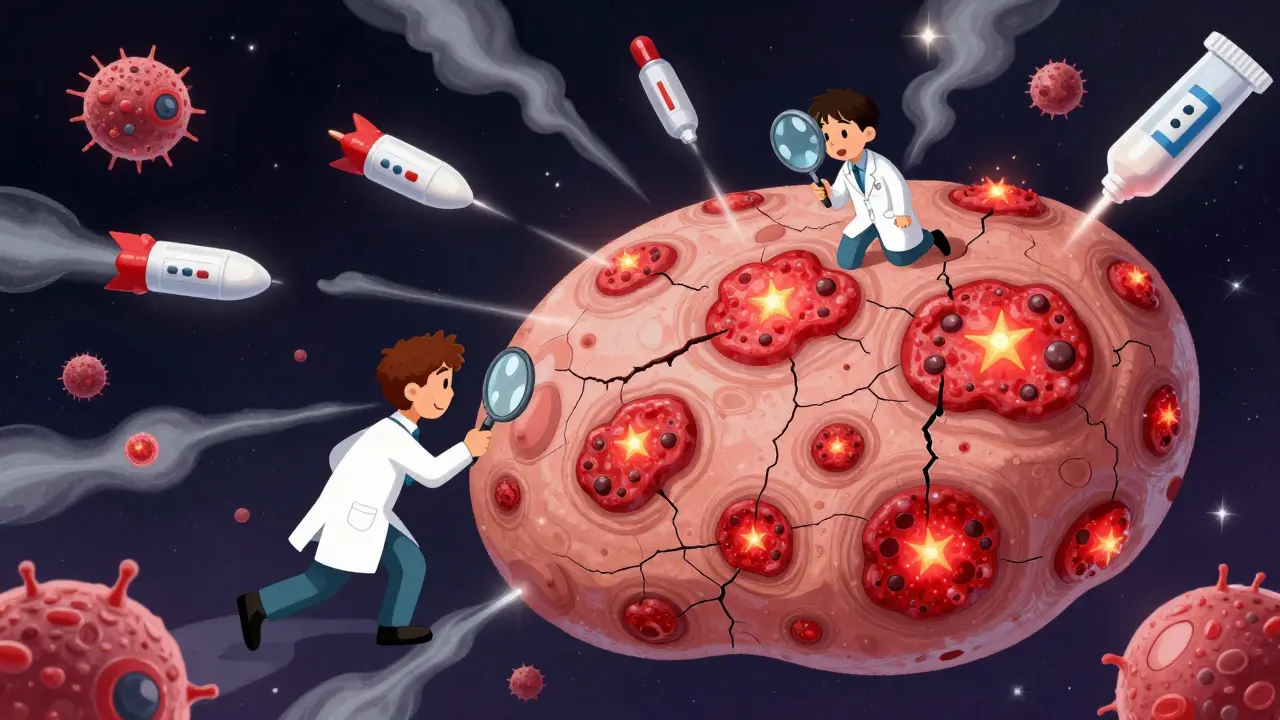
Psoriasis isn’t just dry, flaky skin. It’s an immune system glitch that makes skin cells multiply too fast, stacking up into thick, red, itchy plaques. About 125 million people worldwide live with it. The most common type - plaque psoriasis - affects 80 to 90% of those people. But there’s also guttate psoriasis, which shows up as small, drop-like spots, often after a strep throat infection. And then there’s the systemic side: psoriasis doesn’t just sit on the skin. It raises your risk for heart disease, diabetes, and psoriatic arthritis. That’s why treating it isn’t just about creams. It’s about controlling inflammation inside your body.
Topical Treatments: The First Line, But Not Enough for Severe Cases
If your psoriasis covers less than 5% of your skin, topical treatments are where you start. Steroid creams and ointments are the most common. They work fast - often reducing redness and scaling in days. But using them long-term can thin your skin, especially on the face or genitals. That’s why doctors often pair them with calcipotriol, a vitamin D analog. Together, they’re more effective and safer than either alone.
Newer topicals like tapinarof cream (1%) are changing the game. In clinical trials, about 35% of users saw 75% clearer skin after 12 weeks. It’s non-steroidal, so it’s safe for long-term use on sensitive areas. For stubborn plaques, applying steroid creams under plastic wrap (occlusion) can boost results. For scalp psoriasis, foams like calcipotriol/betamethasone work better than lotions because they don’t drip or leave residue.
But here’s the catch: if your psoriasis covers more than 10% of your body, or if it’s on your nails, scalp, or genitals, topicals alone won’t cut it. That’s when you need systemic treatments - medicines that work from the inside out.
Oral Systemic Drugs: Slower, But Still Useful
When creams aren’t enough, doctors turn to pills. Methotrexate has been around for decades. Taken once a week, it suppresses the immune system and clears plaques in about half of patients within 16 weeks. But it can hurt your liver and lower your blood counts, so you need regular blood tests.
Cyclosporine works faster - often showing results in 4 to 8 weeks. But it can damage your kidneys, so it’s only used short-term, usually for 6 to 12 months. Acitretin, a vitamin A derivative, helps with thick plaques and nail psoriasis. But it can dry out your skin and lips, and it’s dangerous during pregnancy.
Newer oral options like apremilast and deucravacitinib are easier to tolerate. Apremilast (Otezla) reduces inflammation without suppressing your whole immune system. About 33% of users hit 75% skin clearance after 16 weeks. Deucravacitinib (Sotyktu) is even better - nearly 60% of patients clear 75% of their plaques. It’s taken as a single daily pill and doesn’t need blood monitoring. That’s why many dermatologists now start here instead of jumping straight to injections.

Biologics: Targeting the Root Cause
Biologics are the most powerful tools we have. They’re injected or infused medicines that block specific parts of the immune system driving psoriasis. Unlike older drugs that suppress everything, biologics are like precision missiles.
There are three main types:
- TNF inhibitors (like adalimumab): First-generation biologics. They clear about 78% of plaques at 75% improvement (PASI 75). But they’re slower - it can take 8 to 12 weeks to see results.
- IL-17 inhibitors (like secukinumab): Faster and stronger. Around 79% of users hit PASI 90 (90% clearer skin) in 16 weeks. They’re great for rapid relief, especially if you need quick results before a big event.
- IL-23 inhibitors (like guselkumab, risankizumab, tildrakizumab): The current gold standard. These block the upstream trigger of inflammation. About 84 to 90% of patients achieve PASI 90. And they last longer - you only need an injection every 8 to 12 weeks. Some users stay clear for over a year between doses.
Studies show IL-23 inhibitors have the highest patient retention. In real-world data, 78% of people are still using risankizumab after a year. That’s because they work better and have fewer side effects. They’re especially good for scalp and nail psoriasis, where other treatments often fail.
Choosing the Right Treatment: It’s Not Just About Efficacy
What works for one person might not work for another. Here’s what really matters when choosing:
- Disease severity: If your PASI score is over 10 or your DLQI (quality of life score) is above 10, start with a biologic. Don’t waste months on pills or creams.
- Comorbidities: If you have Crohn’s disease or ulcerative colitis, avoid IL-17 inhibitors. They can flare gut inflammation. IL-23 inhibitors are safer here.
- Lifestyle: Can you handle weekly injections? Or do you need quarterly dosing? Guselkumab’s 8-week schedule fits better with busy lives.
- Speed: Need results fast? IL-17 inhibitors clear skin in 2 to 4 weeks. IL-23 inhibitors take 4 to 8 weeks. TNF inhibitors? 8 to 12 weeks.
- Cost: Biologics cost $30,000 to $35,000 a year. But 85% of insured patients pay under $150 a month thanks to manufacturer assistance programs. Always ask - you might qualify for free medication.
One patient on Reddit said: “After failing methotrexate and adalimumab, guselkumab cleared 95% of my plaques in 3 months. Quarterly injections? Life-changing.” That’s the kind of outcome we’re seeing now.
What’s Coming Next: Oral Biologics and Functional Cures
The next big leap isn’t another injection. It’s pills that work like biologics. Oral peptide drugs targeting IL-23 are in phase 3 trials. They’re hitting 82% skin clearance - matching injectables - but taken as a daily tablet. That could replace most biologics for mild-to-moderate cases by 2030.
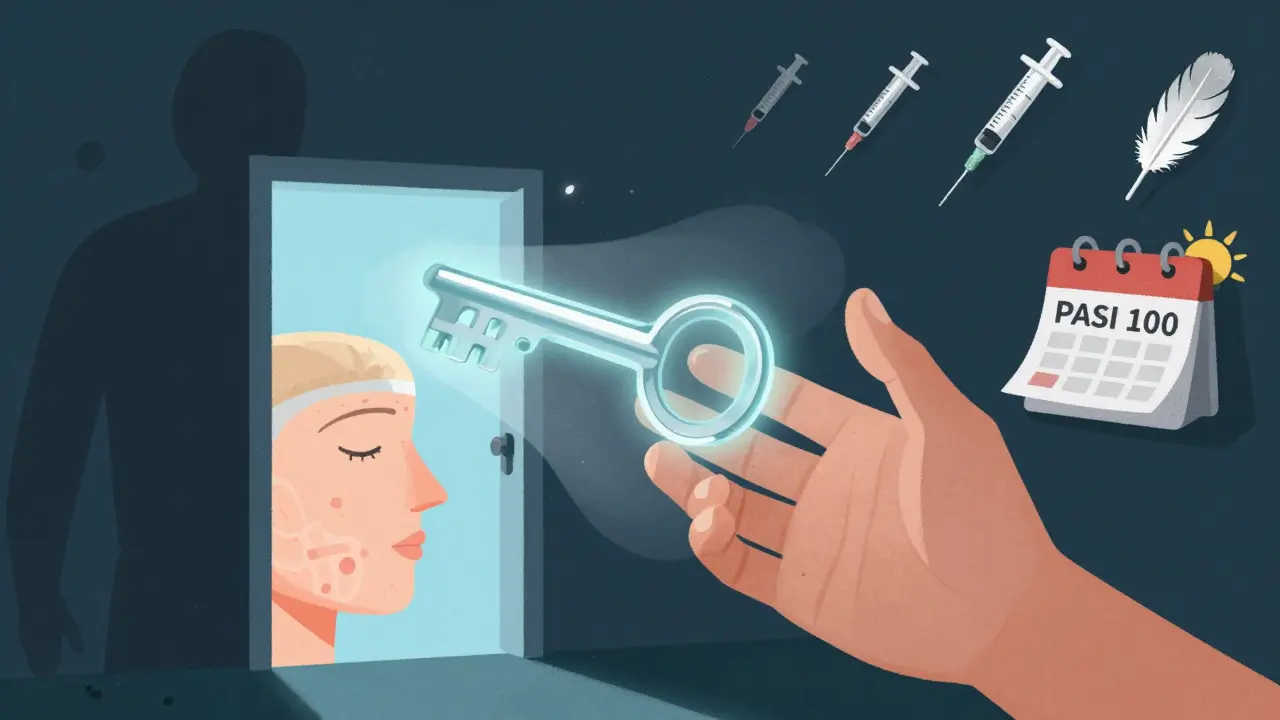
Another exciting development: stopping treatment after early success. The GUIDE trial is testing whether patients who get 100% clearance with guselkumab can stop injections entirely and stay clear for years. Early results suggest it’s possible. If proven, this could mean psoriasis isn’t just managed - it’s cured.
For pustular psoriasis, new drugs like spesolimab are offering relief within days. One user reported pustules disappearing in two weeks. That’s unheard of five years ago.
Real Talk: What Patients Wish They Knew Sooner
From forums and patient reviews, here’s what keeps coming up:
- Don’t wait. If your skin is affecting your confidence, sleep, or job, don’t wait for your doctor to “see how it goes.” Push for a referral to a dermatologist who specializes in psoriasis.
- Insurance takes time. Biologic approval can take 4 to 6 weeks. Start the process early. Use tools like the National Psoriasis Foundation’s Biologics Navigator to help.
- Injection anxiety is normal. Most clinics offer free training videos. Practice on an orange. You’ll get used to it.
- Side effects are rare. The biggest risk is infection. Watch for fever, chills, or persistent cough. Don’t ignore them.
- Topical steroid withdrawal happens in 5-10% of long-term users. If your skin burns or flares after stopping a steroid, talk to your doctor. It’s not a relapse - it’s a rebound.
Final Thoughts: Hope Is Real
Ten years ago, psoriasis meant lifelong flares, embarrassment, and limited options. Today, over 80% of patients can get 90% clearer skin. The goal isn’t just to cover up - it’s to erase the disease. With IL-23 inhibitors, oral pills on the horizon, and the possibility of stopping treatment entirely, psoriasis is moving from a chronic condition to a manageable, even curable, one.
If you’re still on creams and steroids, and your skin isn’t improving - it’s not you. It’s the treatment. Talk to your doctor about systemic options. You deserve more than just masking symptoms. You deserve clear skin, and it’s within reach.
Can guttate psoriasis turn into plaque psoriasis?
Yes, in about 30% of cases, guttate psoriasis evolves into chronic plaque psoriasis, especially if it doesn’t fully clear after a strep infection. Early treatment with light therapy or low-dose biologics can help prevent this progression.
Do biologics weaken your immune system too much?
They target specific immune pathways, not your whole system. Your risk of infection is slightly higher than average, but not like chemotherapy. Routine vaccines (flu, pneumonia, shingles) are safe and recommended. Avoid live vaccines while on biologics.
Why does my psoriasis flare in winter?
Cold, dry air strips moisture from your skin, and less sunlight means less natural vitamin D - both trigger flares. Use a humidifier, moisturize daily, and consider phototherapy. Some patients see major improvement just by adding daily vitamin D3 supplements (2,000-5,000 IU).
Can I stop biologics if my skin clears?
Some patients can - especially those who achieve complete clearance (PASI 100) early. The GUIDE trial shows that 40% of patients remain clear for over a year after stopping guselkumab. But this isn’t guaranteed. Never stop without your doctor’s guidance. Relapse is common, and restarting may be less effective.
Are there natural remedies that actually work?
Aloe vera and oatmeal baths can soothe itching. Fish oil and turmeric have mild anti-inflammatory effects. But none replace medical treatment. Don’t skip your prescribed therapy for supplements. They might help as add-ons, but not as stand-alone solutions.
How do I know if I need a biologic?
If your psoriasis covers more than 5-10% of your body, affects your nails or scalp, or impacts your quality of life (sleep, work, relationships), it’s time to consider systemic therapy. Your doctor can calculate your PASI and DLQI scores to confirm. Don’t wait until it’s severe - early treatment gives you better long-term outcomes.
Jaqueline santos bau
I tried EVERYTHING. Steroids? My skin turned into parchment paper. Methotrexate? I was dizzy for weeks. Then I got guselkumab. 3 months later, I wore a tank top in public for the first time in 12 years. I cried. Not because it hurt-because it didn’t.
PSA: if your dermatologist says 'just moisturize more,' find a new one. This isn't eczema. This is war.
Kunal Majumder
Bro, in India, most people just use neem oil and turmeric paste. It’s not magic, but it helps with the itch. Still, I got on apremilast last year after my nails turned to dust. No more hiding my hands at family dinners. Worth every rupee.
chandra tan
In my village, they say psoriasis is karma from eating too much spicy food. I laughed until I saw my cousin’s legs covered in scales. Then I bought him a bottle of calcipotriol. He’s been clear for 8 months. Sometimes science beats tradition. Not always, but sometimes.
Dwayne Dickson
It is both statistically and clinically significant that IL-23 inhibitors demonstrate superior PASI 90 retention rates compared to TNF-alpha antagonists, as evidenced by real-world observational cohorts from the PSOLAR registry. The pharmacoeconomic burden, however, remains non-trivial, particularly in uninsured populations where copay assistance programs are inconsistently accessible. One must also consider the risk-benefit calculus vis-à-vis latent tuberculosis screening protocols prior to initiation.
Ted Conerly
If you're still on steroids and your skin is burning, stop. Seriously. Go see a derm who specializes in psoriasis. Don't wait for it to get worse. You don't need to suffer. There are better options, and they work. I’ve seen it with my own patients. Clear skin isn't a fantasy-it's a treatment plan.
Faith Edwards
I find it utterly gauche that so many people are still clinging to 'natural remedies' like oatmeal baths as if they were some kind of spiritual panacea. This is an autoimmune disease, not a spa day. If you’re not willing to invest in evidence-based medicine, you’re not just wasting your time-you’re disrespecting the science that’s literally saving lives.
Saumya Roy Chaudhuri
I had guttate psoriasis after my son got strep. I thought it would go away. It didn’t. I waited a year. Then my scalp started bleeding. I went to a doctor who said, 'Try this cream.' I cried in the parking lot. Then I found out about biologics. Now I’m on risankizumab. My skin is smoother than my baby’s. And I’m not even trying.
anthony martinez
I love how people act like biologics are some kind of miracle drug. They’re not. They’re expensive, you still have to get blood work, and yes, you might get a cold more often. But honestly? It’s still better than looking like a walking ashtray. I’d rather inject myself than wear long sleeves in July.
Mario Bros
Just got my first guselkumab shot. Nailed it. No tears. No drama. Just a tiny pinch and now I’m 3 weeks away from seeing if my elbows look like normal skin again. If you’re scared of needles, practice on an orange. I did. Now I’m basically a medical superhero. 🦸♂️