
Lithium-NSAID Interaction Checker
Check Your Medication Safety
This tool helps you understand the risks of taking pain medications while on lithium. Based on your input, you'll receive a personalized risk assessment and recommendations.
When you're managing bipolar disorder with lithium, even a simple pain reliever like ibuprofen can become a silent threat. This isn't a hypothetical risk-it's a well-documented, life-threatening interaction that sends hundreds of people to the hospital every year. Many patients don't know about it. Even some doctors overlook it. And when it hits, it doesn't just cause temporary discomfort-it can permanently damage your kidneys and push lithium levels into toxic territory, leading to confusion, tremors, seizures, or worse.
Why Lithium and NSAIDs Don't Mix
Lithium has been used for over 50 years to stabilize mood in bipolar disorder. It works, and for many people, it's the most effective treatment available. But it has a narrow safety window. The difference between a therapeutic dose and a toxic one is small. Your kidneys are responsible for filtering lithium out of your blood. When they slow down, lithium builds up-and fast. NSAIDs like ibuprofen, naproxen, and indomethacin are common painkillers. They reduce inflammation and relieve headaches, arthritis, or back pain. But they also interfere with how your kidneys handle lithium. They block prostaglandins, natural chemicals that help keep blood flowing through your kidneys. Less blood flow means less lithium gets cleared. Studies show lithium levels can jump by 20% to 60% within just two days of starting an NSAID. That’s not a small change. That’s enough to trigger toxicity.Who’s Most at Risk?
It’s not just about taking both drugs. Certain people are far more vulnerable. Age matters. People over 65 are at the highest risk because kidney function naturally declines with age. A 2023 study found that over half of all lithium-related kidney injuries from NSAIDs occurred in patients 65 and older. Dehydration makes it worse. So do preexisting kidney problems. If your estimated glomerular filtration rate (eGFR) is below 60 mL/min/1.73 m², you already have reduced kidney function. Adding an NSAID is like turning up the volume on a warning alarm you didn’t know was already sounding. Another hidden risk is seeing multiple doctors. Someone might get lithium from a psychiatrist, then go to their primary care provider for a sore knee and get an NSAID prescription without the provider even knowing about the lithium. A 2023 study found that only 58% of primary care doctors correctly identified NSAIDs as dangerous with lithium. That’s a massive gap in communication.How Bad Can It Get?
The consequences aren’t theoretical. In a 2022 case series of 17 patients hospitalized for lithium toxicity, 14 of them (82%) had taken an NSAID shortly before their symptoms started. Six of those patients suffered permanent kidney damage, with their eGFR dropping more than 40%. That’s not reversible. It means they now live with chronic kidney disease for the rest of their lives. Symptoms of lithium toxicity don’t always appear slowly. They can hit hard and fast:- Hand tremors that won’t stop
- Slurred speech or confusion
- Nausea, vomiting, diarrhea
- Dizziness or loss of balance
- Seizures or coma in severe cases
Not All NSAIDs Are the Same
The risk isn’t equal across all NSAIDs. Some are far more dangerous than others. Indomethacin is the worst-it can raise lithium levels by 40% to 60%. Piroxicam and ibuprofen are next, increasing levels by 25% to 30%. Even naproxen, often thought of as "gentler," still carries significant risk. Aspirin and celecoxib are the exceptions. They raise lithium levels by less than 10%, so they’re considered lower risk. But even celecoxib can be dangerous if you already have kidney issues. And aspirin, while safer, isn’t always the best choice for long-term pain-it can cause stomach bleeding or interact with other medications.
What About Acetaminophen?
If you need pain relief while on lithium, acetaminophen (Tylenol) is the safest option. Multiple studies show it doesn’t affect lithium levels at all. It doesn’t interfere with kidney function the way NSAIDs do. The catch? You can’t overdo it. The maximum safe daily dose is 3,000 mg. Higher doses can damage your liver-especially if you drink alcohol or have existing liver disease. For chronic pain, guidelines from Canada’s mood and anxiety network recommend acetaminophen as first-line. If that’s not enough, tramadol is a second option. It’s an opioid-like painkiller that only raises lithium levels by 10% to 15%, mostly due to dehydration risk. Even then, it needs careful dosing and monitoring.What If You’ve Already Taken Them Together?
If you’ve taken an NSAID while on lithium-even once-you need to act. Don’t wait for symptoms. Contact your doctor immediately. They’ll likely order a blood test to check your lithium level and kidney function (creatinine and eGFR). If your lithium level is rising, they may lower your lithium dose by 25% to 50% temporarily. You’ll also need to drink plenty of fluids-aim for at least 3 liters a day-to help your kidneys flush out excess lithium. Even after you stop the NSAID, the risk doesn’t disappear right away. The effect on your kidneys can last 7 to 10 days. So if you took ibuprofen for a week and then stopped, you’re still at risk for the next week or more. That’s why monitoring should continue for at least two weeks after stopping the NSAID.What Should Your Doctor Be Doing?
There are clear guidelines from the American Psychiatric Association and the American Society of Nephrology. If an NSAID must be used, here’s what should happen:- Lithium levels checked within 48 to 72 hours after starting the NSAID
- Renal function (creatinine, eGFR) checked weekly for the first month
- Hydration emphasized-drink at least 2.5 to 3 liters of water daily
- NSAID use limited to no more than 7 days unless absolutely necessary
- Documented warning in your medical record and patient education materials
What’s Being Done to Fix This?
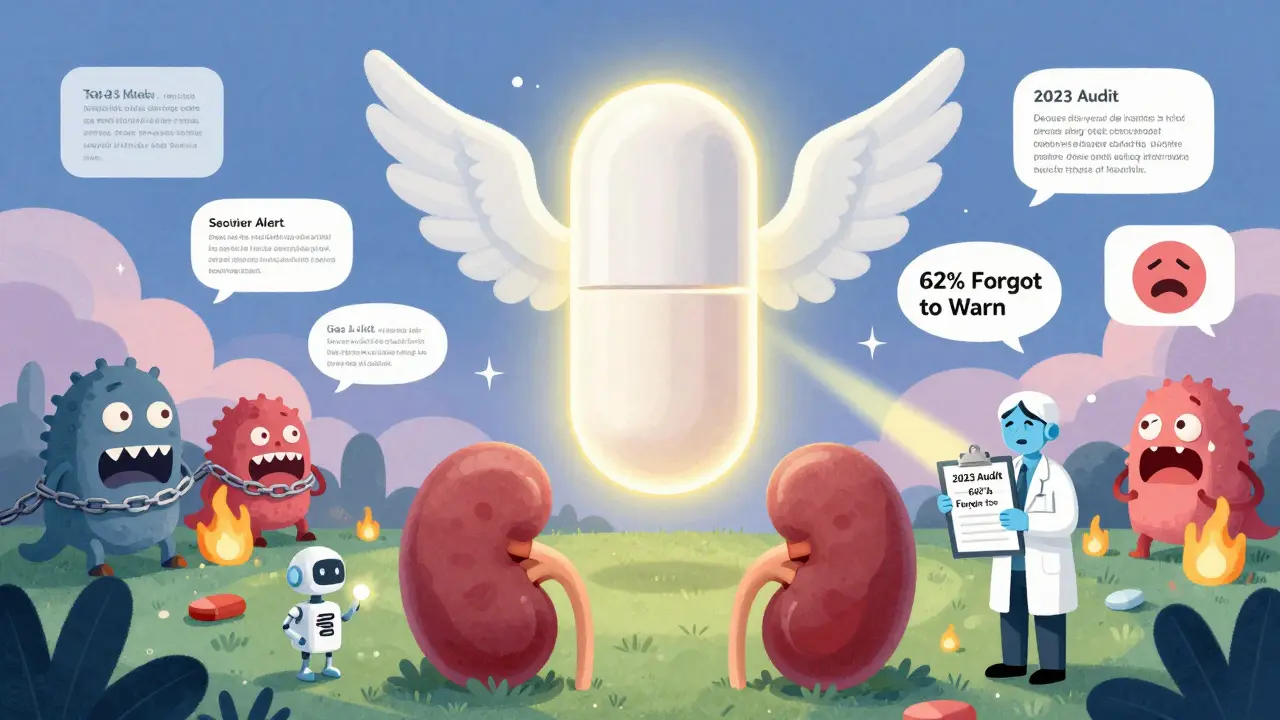
The FDA added a boxed warning to lithium labels in 2021, the strongest type of warning they issue. The European Medicines Agency now recommends electronic prescribing systems block NSAID prescriptions for lithium users unless a nephrologist has approved it. Some health systems are making progress. Kaiser Permanente cut co-prescribing by more than 60% using automated alerts and mandatory provider training. But the Veterans Health Administration saw only a 15% drop-showing how inconsistent the response has been. A new drug is in early trials-a prostaglandin E1 analog designed to protect kidney blood flow during NSAID use without affecting lithium clearance. Early results are promising, with an 87% reduction in lithium spikes. But it’s still years away from being available.What Should You Do Now?
If you’re on lithium:- Never take an NSAID without talking to your psychiatrist or pharmacist first
- Always tell every doctor you see that you’re on lithium-especially when you visit for pain, injuries, or colds
- Keep a list of all your medications and share it at every appointment
- Use acetaminophen for pain, but never exceed 3,000 mg per day
- Stay well-hydrated-especially in hot weather or if you’re sick
- Know the signs of lithium toxicity and act fast if they appear
Cassandra Collins
i swear the government knows about this and lets it happen so we all get kidney failure and then they sell us dialysis machines lmao 🤡💊 #lithiumconspiracy
Mike Smith
This is an exceptionally well-researched and vital piece of information for anyone managing bipolar disorder with lithium. The clinical data presented here underscores the critical importance of interdisciplinary communication in patient care. I urge all healthcare providers to implement mandatory electronic alerts and patient education protocols to prevent these preventable tragedies.
Ron Williams
I’ve been on lithium for 12 years and never knew NSAIDs were this risky. I’ve taken ibuprofen for migraines like it was candy. Guess I’m switching to Tylenol now. Thanks for the heads-up. 🙏
Kitty Price
this is wild 😳 i just took naproxen last week for my back 😭 i’m gonna call my doc tmrw 💪
Billy Poling
It is imperative to recognize that the confluence of pharmacological agents within the context of chronic psychiatric management demands a paradigm shift in clinical practice. The integration of nephrological monitoring protocols into standard psychiatric care is not merely advisable-it is ethically obligatory. The data presented herein, while compelling, remains insufficiently disseminated across primary care and emergency departments, resulting in a systemic failure of harm reduction.
Souhardya Paul
I’ve been a pharmacist for 18 years and I’ve seen this happen too many times. One guy came in with tremors and confusion-turned out he’d been taking Advil daily for his arthritis and didn’t tell his psych doc. We got his lithium down in time, but his kidneys took a hit. Always ask the simple questions. Always.
Josias Ariel Mahlangu
In my country, we don’t have this problem because people don’t take pills for every little ache. You need to learn discipline. Pain is a teacher. If you can’t handle a headache without drugs, maybe you shouldn’t be on lithium at all.
Arun ana
I’m from India and we use paracetamol for everything. Never heard of this issue till now. My cousin is on lithium and he takes crocin daily. So glad I found this. Will share with my family. 🙏❤️
Kayleigh Campbell
so basically the medical system is a game of russian roulette with your kidneys and your brain? cool. i’ll just keep drinking cold brew and hoping my kidneys don’t quit. 🤷♀️☕
Joanna Ebizie
you people are so dramatic. just don’t take the ibuprofen. problem solved. stop making everything a crisis.
Elizabeth Bauman
This is exactly why we need to stop letting foreign drug companies dictate our healthcare. The FDA did the right thing with the boxed warning-but why didn’t Congress ban NSAIDs for lithium patients outright? We’re letting corporations profit off our suffering. America deserves better.