
Stimulant Risk Calculator
Enter Your Details
When you have hyperthyroidism, your body is already running on high. Your heart beats faster, you might feel jittery, lose weight without trying, and struggle with anxiety that feels like it’s coming out of nowhere. Now imagine adding a stimulant medication like Adderall or Ritalin into the mix. What should be a helpful tool for focus can turn into a dangerous trigger for heart problems, panic attacks, or even a trip to the ER.
Why Your Thyroid and Stimulants Don’t Mix
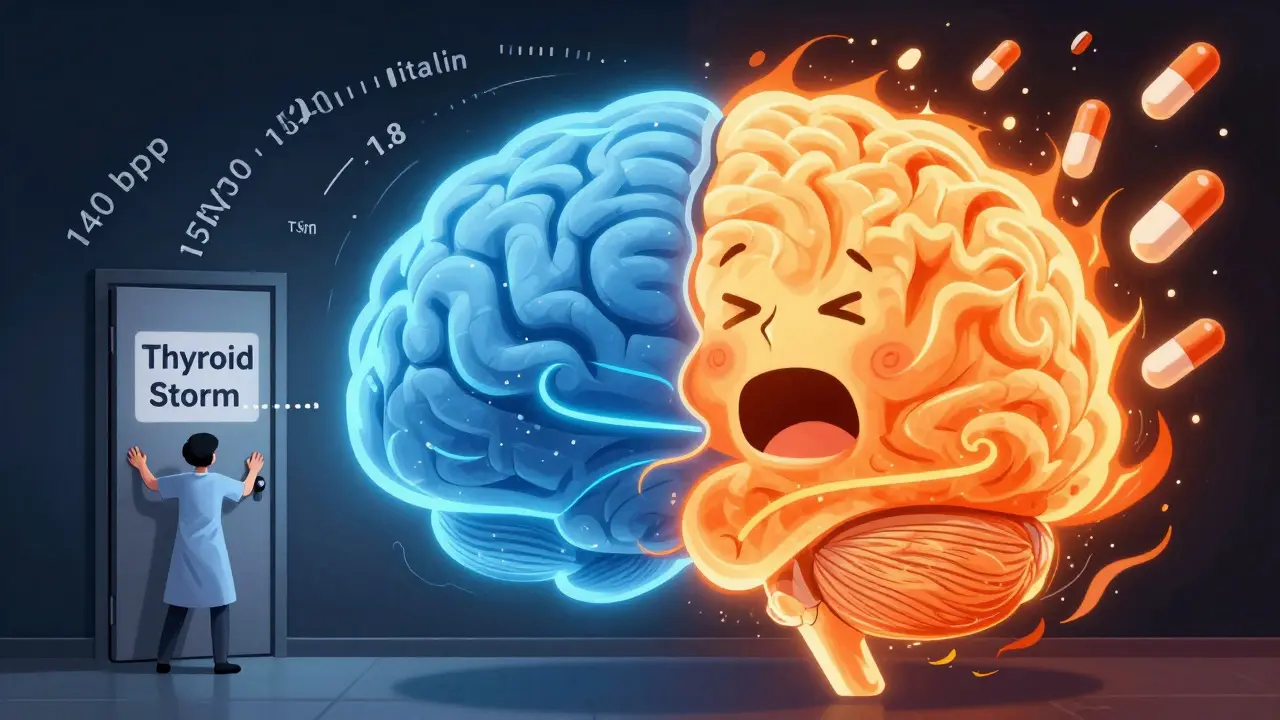
Hyperthyroidism means your thyroid gland is pumping out too much T3 and T4 hormone. These hormones control your metabolism - how fast your body uses energy. When they’re too high, your heart races, your nerves are on edge, and your body feels like it’s stuck in overdrive. Stimulant medications like Adderall and methylphenidate do something similar: they flood your brain with dopamine and norepinephrine, which speeds up your heart rate, raises your blood pressure, and amps up your alertness.Here’s the problem: hyperthyroidism makes your body extra sensitive to these effects. A 2021 study in the Journal of Clinical Endocrinology & Metabolism found that people with untreated hyperthyroidism have 30-40% higher sensitivity to adrenaline-like chemicals. So when you take Adderall, your body doesn’t just react - it overreacts. Resting heart rate can jump from 80 bpm to 140 bpm in hours. Blood pressure spikes. Panic hits fast and hard.
The American Thyroid Association warns that up to 20% of adults with undiagnosed hyperthyroidism are mistakenly diagnosed with ADHD because the symptoms look so similar: trouble focusing, restlessness, weight loss, insomnia, and irritability. That’s why doctors now recommend checking thyroid levels before starting any stimulant. If you’re prescribed Adderall for ADHD but your thyroid is overactive, you’re not treating ADHD - you’re fueling a medical emergency.
The Real Numbers: Heart Risks You Can’t Ignore
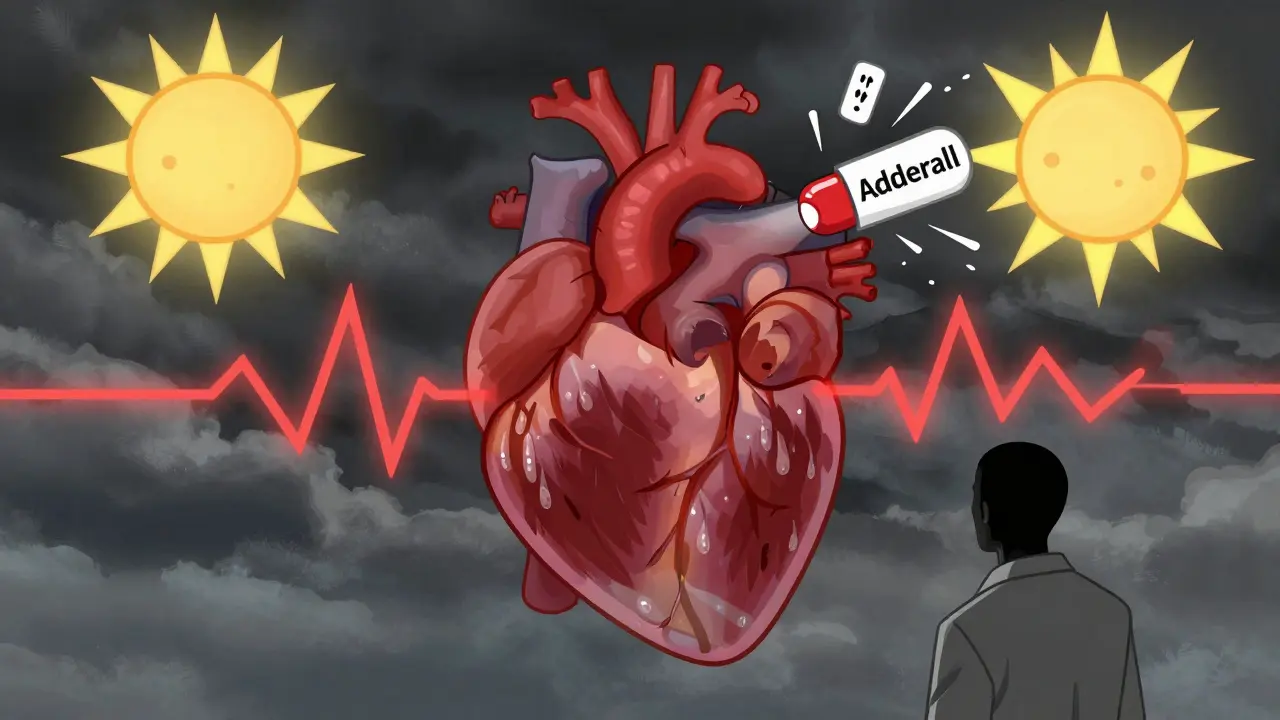
It’s not just theory. Real people are having real cardiac events because of this combo.According to the American Heart Association, people with hyperthyroidism who take stimulants have a 3.2 times higher risk of developing atrial fibrillation - a dangerous irregular heartbeat that can lead to stroke. A 2022 meta-analysis in the Journal of Clinical Psychiatry showed Adderall increases heart rate 28% more than methylphenidate at the same dose. That difference matters. For someone with hyperthyroidism, even a 10mg dose of Adderall can push heart rate into dangerous territory.
High-dose Adderall (>30mg/day) is especially risky. The American College of Cardiology reports a 4.7-fold increase in ventricular tachycardia - a rapid, life-threatening heart rhythm - in hyperthyroid patients compared to those with normal thyroid function. One Reddit user, 'AnxiousThyroidWarrior,' shared: "Adderall made my heart race at 140 bpm constantly. I ended up in the ER." That’s not rare. On ThyroidUK.org, 83% of 127 threads about stimulants described severe heart palpitations or anxiety attacks.
Even methylphenidate, often seen as "safer," isn’t risk-free. In healthy people, it raises systolic blood pressure by 2-4 mmHg. In someone with hyperthyroidism? That jump can hit 10-15 mmHg - enough to push someone into hypertensive crisis (>140/90). And it’s not just heart rate and pressure. Tremors, sweating, chest pain, and fainting are common reports on Drugs.com and WebMD from hyperthyroid patients on stimulants.
Why Anxiety Gets Worse - Fast
Anxiety isn’t just a side effect. It’s a direct result of the chemical overload.Thyroid hormones and stimulants both activate the same part of your nervous system: the sympathetic fight-or-flight response. When your thyroid is already overstimulating it, adding a drug that does the same thing is like turning up the volume on a siren that’s already blaring. A 2023 survey by Thyroid UK found that 78% of hyperthyroid patients on stimulants reported severe anxiety - compared to just 22% of hyperthyroid patients not taking them.
Many describe panic attacks within 30 minutes of taking their morning dose. Others say they feel like they’re having a heart attack - chest tightness, dizziness, shaking - even though their ECG looks normal. The body doesn’t distinguish between stress from thyroid hormones and stress from drugs. It just reacts. And in hyperthyroidism, the reaction is amplified.
One Healthgrades review from July 2023 captured it: "I thought I was just anxious. Turns out, I had hyperthyroidism. Adderall made me feel like I was going to die. I didn’t know it was my thyroid."
Not All Stimulants Are Equal - Here’s the Difference
If you absolutely need a stimulant for ADHD and have hyperthyroidism, not all options are the same.Adderall (amphetamine salts) - Highest risk. It releases large amounts of norepinephrine and dopamine all at once. The 75% dextroamphetamine component is especially potent. It’s the most likely to cause rapid heart rate spikes and anxiety crashes.
Methylphenidate (Ritalin, Concerta) - Lower risk than Adderall, but still dangerous. It doesn’t release neurotransmitters - it blocks their reuptake. That means the effect is more gradual. Still, in hyperthyroid patients, even low doses (10-18mg/day) can raise blood pressure and heart rate beyond safe limits.
Vyvanse (lisdexamfetamine) - A prodrug that converts to dextroamphetamine slowly. It has a smoother onset, reducing peak heart rate spikes by 15-20% compared to immediate-release Adderall. Still not recommended for active hyperthyroidism, but sometimes considered in stable, controlled cases under strict monitoring.
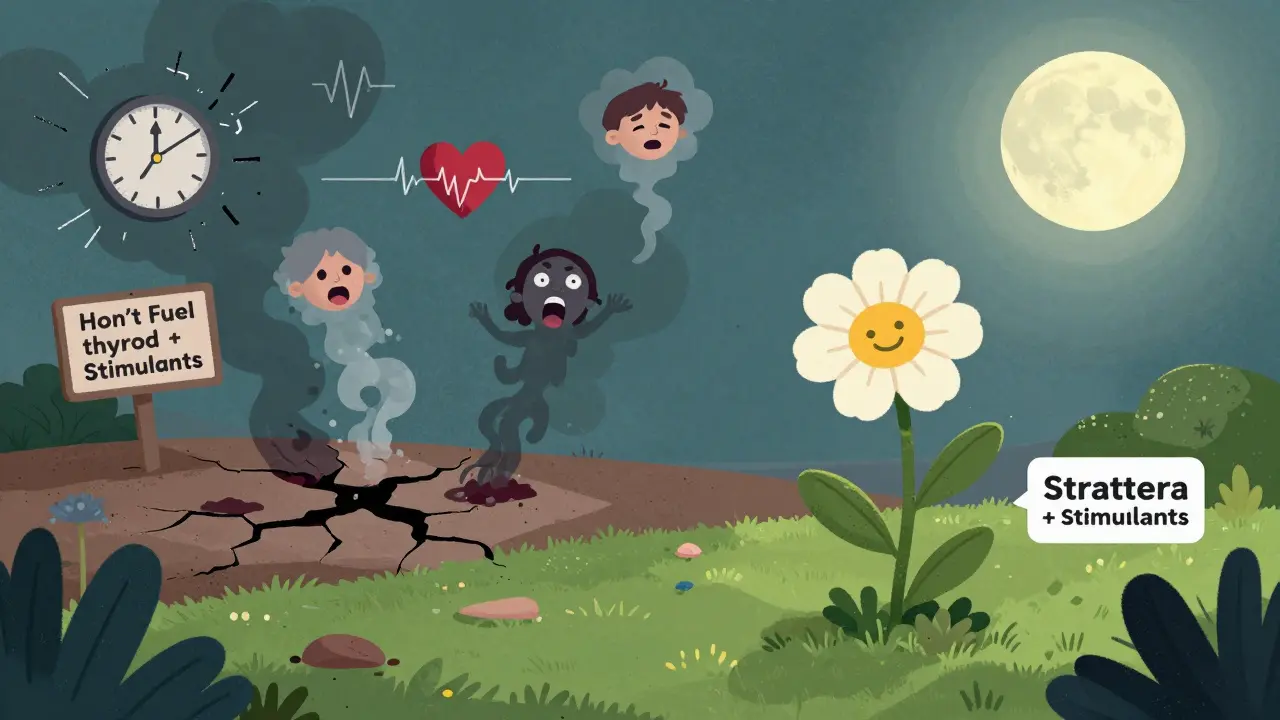
Non-stimulants like Strattera (atomoxetine) - This is the safest alternative. It works differently - targeting norepinephrine without the same adrenaline surge. Studies show it increases heart rate by only 2-3 bpm, regardless of thyroid status. For someone with hyperthyroidism, Strattera is often the only viable option.
And then there’s the emerging option: centanafadine. Still in Phase III trials, this new drug shows 40% less heart rate elevation than Adderall. It may be a game-changer in the next few years.
What to Do If You Have Both Conditions
If you’ve been diagnosed with hyperthyroidism and your doctor suggests a stimulant, here’s what you need to know.- Get your thyroid levels tested first - TSH, free T3, free T4. Don’t assume your symptoms are ADHD. A 2022 Paloma Health survey found 41% of adults diagnosed with ADHD had undiagnosed thyroid problems. Treating the thyroid often fixes the "ADHD" symptoms.
- Never start a stimulant without clearance from your endocrinologist - Your thyroid doctor needs to know what you’re taking. Adderall can interfere with levothyroxine absorption and make your thyroid meds less effective.
- If you must use a stimulant, start low and go slow - 5mg of methylphenidate once daily. Monitor your heart rate daily. If it stays above 100 bpm at rest, stop and call your doctor.
- Get a baseline ECG and 24-hour Holter monitor - The American College of Cardiology recommends this before starting any stimulant in hyperthyroid patients. You need to know your heart’s baseline.
- Watch for warning signs - Heart rate over 110 bpm at rest, chest pain, shortness of breath, dizziness, or anxiety that doesn’t fade after 2 hours. These aren’t "just side effects." They’re red flags.
Also, timing matters. If you’re on levothyroxine, take it on an empty stomach, at least 4 hours before or after calcium, iron, or antacids. These can block absorption. Some people take their thyroid med at bedtime to avoid interference.
What Happens If You Ignore the Warning?
Ignoring this interaction isn’t just risky - it’s life-threatening.There are documented cases of hyperthyroid patients on Adderall developing:
- Thyroid storm - a rare but deadly surge of thyroid hormones triggered by stress or stimulants
- Cardiac arrest from sustained tachycardia
- Stroke from atrial fibrillation with clot formation
- Severe anxiety disorders requiring long-term psychiatric care
And the problem is growing. ADHD diagnoses have jumped 42% since 2016. Levothyroxine is one of the most prescribed drugs in the U.S. - over 114 million prescriptions in 2022. That means millions of people are potentially on both. The FDA added thyroid monitoring recommendations to ADHD guidelines in 2022. The Endocrine Society now recommends routine TSH screening every 6 months for anyone on long-term stimulant therapy.
This isn’t a niche concern. It’s a public health blind spot. Too many doctors still treat ADHD without checking thyroid function. Too many patients assume their jitteriness is "just stress." But when your thyroid is out of balance, stimulants don’t help - they break you.
Bottom Line: Safety First
If you have hyperthyroidism, stimulant medications are not your friend. The risks to your heart and mental health are too high. The safest path is to treat your thyroid first. Once your TSH is stable (between 0.5 and 2.5 mIU/L), then - and only then - can you consider alternatives like Strattera under close supervision.Don’t let ADHD symptoms mask a thyroid problem. Don’t let a prescription for focus become a trigger for crisis. Your body is already working hard. Don’t make it work harder with drugs that push it past its limit.
Ask your doctor: "Have you checked my thyroid?" If the answer is no, insist. Your heart will thank you.
Can I take Adderall if I have hyperthyroidism?
No. Adderall is generally contraindicated in people with hyperthyroidism. It can cause dangerous spikes in heart rate and blood pressure, increase the risk of atrial fibrillation, and worsen anxiety to the point of panic attacks or ER visits. The Endocrine Society and FDA both warn against its use in this population. If you have hyperthyroidism and ADHD, non-stimulant options like Strattera are safer.
Can untreated hyperthyroidism be mistaken for ADHD?
Yes. Symptoms like restlessness, poor concentration, weight loss, irritability, and insomnia are common to both. A 2022 study found that 41% of adults diagnosed with ADHD had undiagnosed thyroid abnormalities. Treating the thyroid condition often resolves the "ADHD-like" symptoms without needing stimulants. Always get a full thyroid panel before starting ADHD medication.
Is methylphenidate safer than Adderall for hyperthyroidism?
Methylphenidate carries a lower cardiac risk than Adderall, but it’s still not safe for active hyperthyroidism. It can raise blood pressure and heart rate significantly in these patients. Low doses (<18mg/day) may be cautiously used only after thyroid levels are stabilized and with cardiac monitoring. Adderall is not recommended under any circumstances.
What are the signs my stimulant is making my hyperthyroidism worse?
Watch for: heart rate over 110 bpm at rest, chest pain, palpitations, dizziness, extreme anxiety or panic attacks, tremors, sweating, or unexplained weight loss. If these start or worsen after taking a stimulant, stop the medication and contact your doctor immediately. These are not normal side effects - they’re signs of a dangerous interaction.
How often should thyroid levels be checked if I’m on stimulants?
The Endocrine Society recommends checking TSH every 6 months for anyone on long-term stimulant therapy. If you’ve just started or changed your stimulant dose, check TSH within 2-3 months. Thyroid hormone levels can shift due to medication interactions, stress, or aging, and stimulants can mask symptoms of worsening thyroid function.
Can Strattera (atomoxetine) be used safely with hyperthyroidism?
Yes. Strattera is a non-stimulant medication that works differently than Adderall or Ritalin. It doesn’t trigger adrenaline surges or significantly raise heart rate. Studies show it increases heart rate by only 2-3 bpm, regardless of thyroid status. It’s the preferred option for ADHD in patients with hyperthyroidism, especially when thyroid levels are stable.
Doreen Pachificus
I didn't even know thyroid issues could look like ADHD. I thought I was just bad at focusing until my doctor checked my TSH and it was through the roof. No stimulants for me after that.
Cassie Tynan
So let me get this straight - we’re giving people with overactive thyroid a drug that makes their body feel like it’s been shot out of a cannon… and calling it ‘treatment’? 🤡
Next they’ll prescribe espresso for hypothyroidism and call it ‘energy optimization.’
Rory Corrigan
we’re all just atoms trying to find balance in a chaotic universe 🌌
adderal is just a temporary glitch in the matrix… thyroids are the real OS.
Charlotte N
so i had this weird thing where i’d get panic attacks after my morning coffee and adderall… i thought it was anxiety… turns out my TSH was 0.08… my endo was like ‘ohhhhh that’s why’
and now i’m on strattera and it’s like my brain finally stopped screaming
bob bob
Man, I wish more doctors knew this. My cousin was on Adderall for two years before anyone checked her thyroid. She ended up in the ER with AFib. Now she’s on levothyroxine and Strattera - feels like a whole new person. Don’t ignore the basics.
Terri Gladden
OMG I JUST REALIZED I’M THAT PERSON 😭 I’VE BEEN ON ADDERALL FOR 5 YEARS AND MY THYROID IS WILD AND I’VE BEEN HAVING HEART PALPITATIONS EVERY MORNING I THOUGHT IT WAS JUST STRESS BUT NOW I’M SCARED AND I NEED TO CALL MY DOCTOR RIGHT NOW
Jennifer Glass
This is such an important post. I’ve seen so many people dismissed as ‘just anxious’ when their body was screaming for help. Thyroid health is so overlooked in mental health care. It’s not just about neurotransmitters - it’s about the whole system.
en Max
It is imperative to recognize that the pharmacodynamic interplay between exogenous stimulants and endogenous thyrotoxicosis creates a synergistic catecholaminergic overload, thereby significantly elevating the risk of arrhythmogenic events, particularly atrial fibrillation and ventricular tachycardia. Routine TSH screening is not merely advisable - it is a clinical imperative in the context of stimulant initiation.
Jacob Milano
Imagine your body’s like a car with the gas pedal stuck to the floor - that’s hyperthyroidism. Now someone hands you a turbocharger labeled ‘focus booster.’ You don’t need more speed. You need to fix the pedal. Strattera? That’s the gentle hand on the wheel. Let your thyroid chill first - then you can think clearly without your heart trying to escape your chest.