
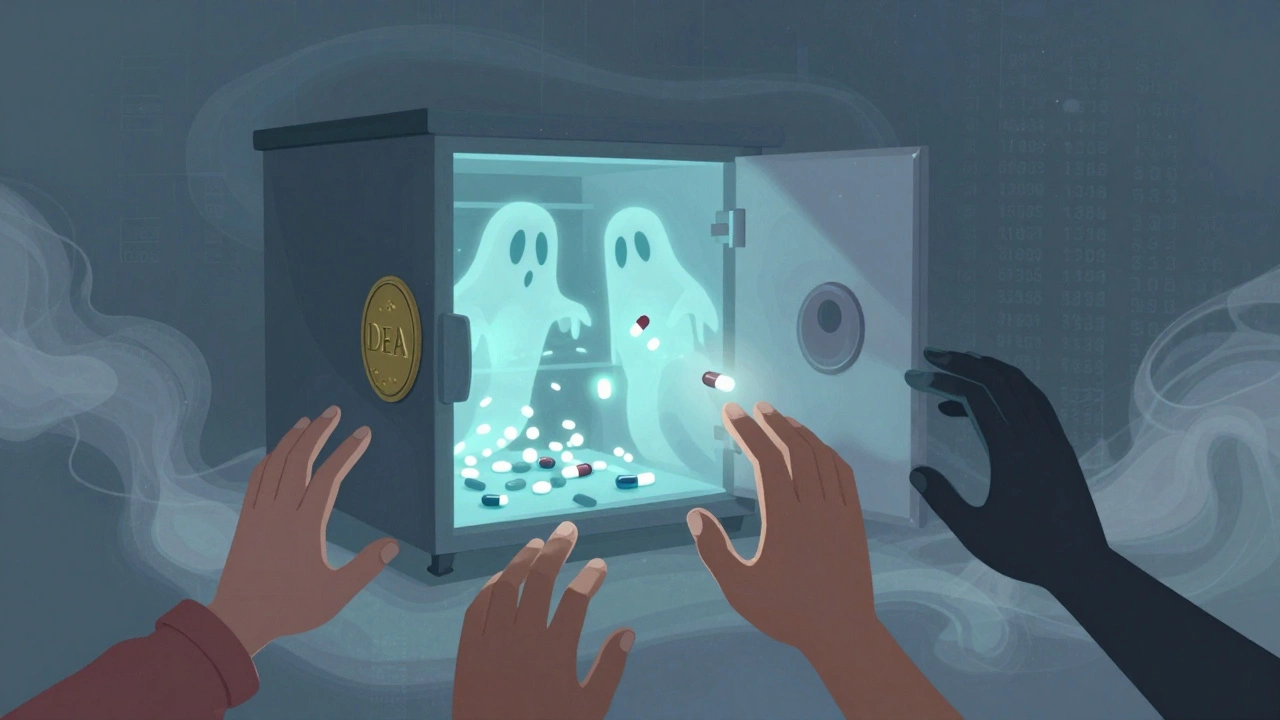
Every year, thousands of opioid overdoses happen because someone found leftover pills in a medicine cabinet - a friend’s, a relative’s, or even their own. It’s not a myth. The CDC says nearly 70% of misused prescription opioids come from unused medications stored at home. If you’ve been prescribed opioids for pain after surgery or an injury, and now those pills are sitting in your drawer, you’re holding a potential danger. Not for you - but for your kids, your teens, your neighbors, or someone who might break in. The good news? You can stop that before it starts. Disposing of unused opioids properly isn’t just a good idea - it’s a life-saving step.
Why Proper Disposal Matters
Think about it: you wouldn’t leave a loaded gun in an unlocked drawer. Opioids are just as dangerous if they’re not being used. In 2021, over 107,000 people in the U.S. died from drug overdoses, and opioids were involved in most of them. Many of those deaths weren’t from street drugs - they were from pills that were legally prescribed but never properly thrown away.
Children accidentally ingest these pills. Teens find them at parties. Adults struggling with addiction turn to them when they can’t get other drugs. The data is clear: when unused opioids are removed from homes, overdose rates drop. A 2023 study showed communities with strong disposal programs saw 37% fewer cases of opioid diversion. That’s not a small number. That’s hundreds of lives saved every year in just one state.
Four Safe Ways to Get Rid of Unused Opioids
You don’t need to guess how to do this. There are four proven, science-backed methods - and one of them is almost always the best choice.
1. Use a Drug Take-Back Program (Best Option)
This is the gold standard. Take-back programs collect unused medications and destroy them safely through high-temperature incineration. No toxins. No contamination. Just zero risk of anyone getting to them.
There are over 16,900 DEA-registered collection sites across the country. You’ll find them at:
- Pharmacies (Walgreens, Walmart, CVS, and many local ones)
- Police stations and sheriff’s offices
- Hospitals and clinics
Most of these sites are open during regular business hours. No ID needed. No questions asked. Just drop your pills in the box. Some pharmacies even have kiosks you can use anytime, day or night.
Want to find the nearest one? Go to the DEA’s website or text your ZIP code to 855-448-2523. It takes 30 seconds. And it’s free.
2. Use a Deactivation Pouch (Great Alternative)
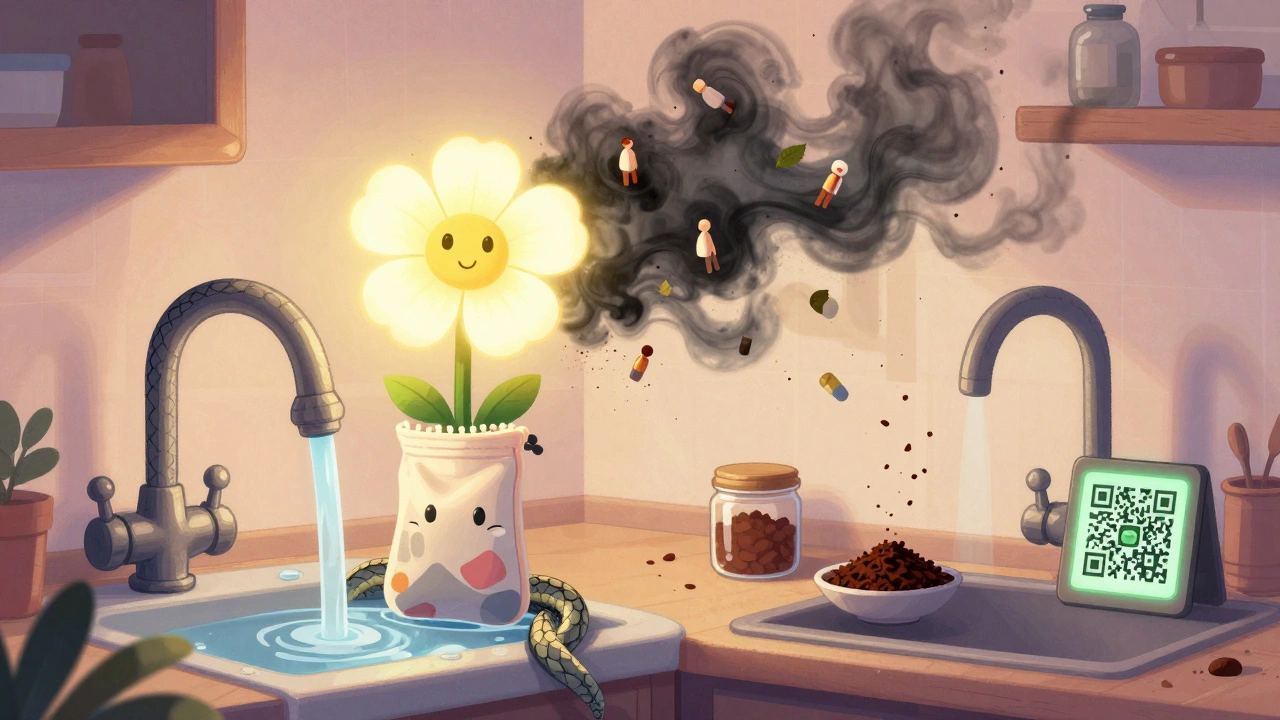
If there’s no take-back site nearby, or if you can’t get to one right away, deactivation pouches are your next best option. Brands like Deterra and SUDS use activated carbon and special chemicals to neutralize opioids within 30 minutes.
Here’s how they work:
- Put your pills in the pouch.
- Add warm water (not hot, not cold).
- Seal it and shake for 15 seconds.
- Throw the pouch in the trash.
These pouches deactivate 99.9% of the drug. They’re safe for kids and pets because the medication can’t be pulled out or dissolved. You can buy them at most major pharmacies for $2.50 to $5.00. Some health systems even give them out for free when they prescribe opioids.
Pro tip: Don’t skip the water. One study found nearly 30% of users failed to add enough water - and that means the pills won’t fully deactivate.
3. Household Disposal (When Nothing Else Is Available)
If you can’t get to a take-back site and don’t have a pouch, this method works - but only if you do it right.
Here’s the FDA-approved way:
- Take the pills out of their original bottle.
- Mix them with something unappetizing - used coffee grounds, cat litter, or dirt.
- Put the mixture in a sealed container - a jar, a plastic bag, or an old food container.
- Cover your name and prescription info on the bottle with a permanent marker.
- Throw the sealed container in the trash.
Why do this? It makes the pills look disgusting and unusable. A 2020 study in Lake County, Indiana, showed this method reduced diversion by 82% - but only when people followed all the steps. Most don’t. They just toss the pills in the trash or flush them. That’s why this method is less reliable than the others.
4. Flushing (Only for Specific Opioids)
This one is tricky. The FDA says you should only flush a few high-risk opioids if no other option is available. Why? Because flushing can pollute water supplies. But for some drugs, the risk of someone getting them is worse than the environmental risk.
Only flush these specific medications:
- Fentanyl patches
- Oxycodone (OxyContin, Percocet)
- Morphine sulfate
- Hydromorphone (Dilaudid)
- Other drugs on the FDA’s official Flush List (only 15 total)
If your pill isn’t on that list, don’t flush it. Ever. Use a pouch or take-back instead. The FDA updated this list in 2020 after studies showed flushing these specific drugs prevented 95% of accidental poisonings in young children.
What NOT to Do
Some things sound like they’d work - but they don’t. And they’re dangerous.
- Don’t just throw pills in the trash. Someone can dig them out. Even if you crush them, they can still be extracted.
- Don’t flush everything. Only the 15 FDA-approved drugs. Everything else harms the environment.
- Don’t try to deactivate pills in their original bottle. That’s a common mistake. The container isn’t designed to neutralize the drug - and it’s still childproof, which means someone might still get to it.
- Don’t wait. The longer unused opioids sit around, the higher the chance someone will use them. Don’t say “I’ll deal with it later.” Do it now.
What If You’re in a Rural Area?
One in five Americans lives in a place where the nearest take-back site is more than 50 miles away. That’s not a small problem. It’s a public health gap.
But you’re not out of options. In rural areas:
- Deactivation pouches are your best friend. They’re shipped to your home and work anywhere.
- Ask your pharmacy if they offer mail-back programs. Some do - just put the pills in a prepaid envelope and drop it in the mailbox.
- Check with your county health department. Many now run mobile collection events or partner with local libraries and churches to host drop-offs.
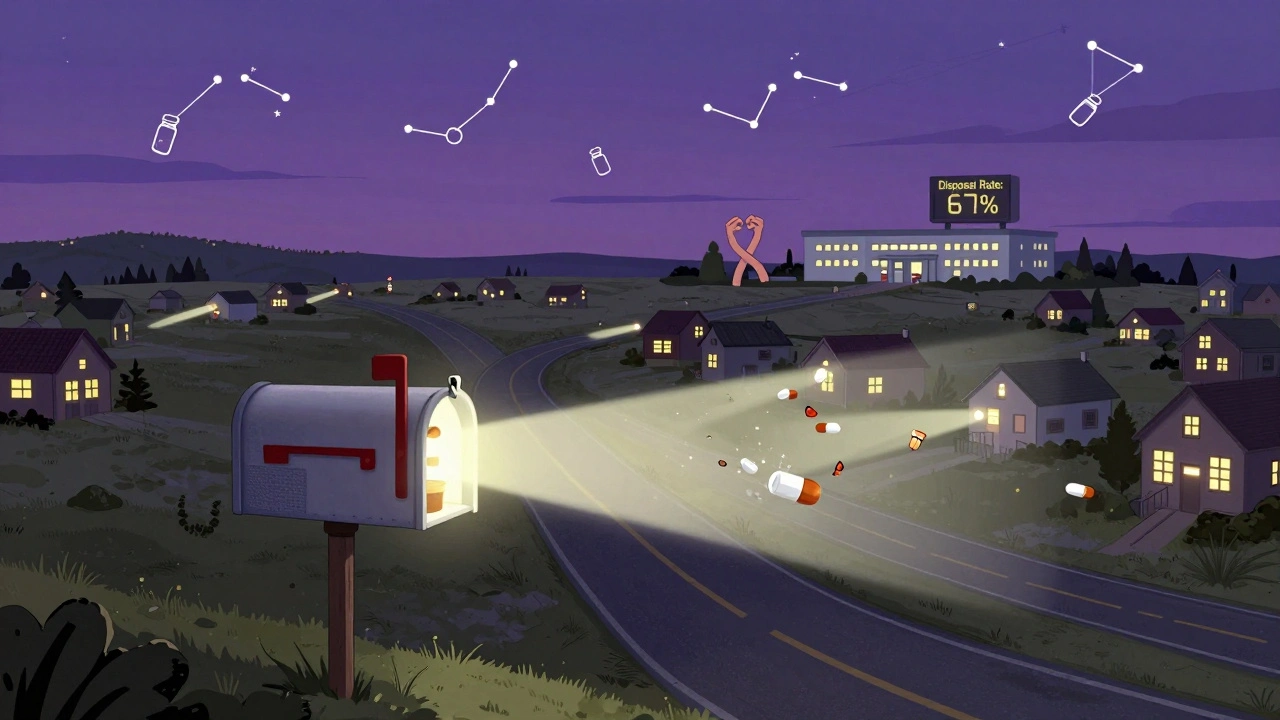
Wyoming and Montana have seen huge success with this approach. After distributing free pouches and running education campaigns, proper disposal rates jumped from 22% to 67% among opioid users.
How Doctors and Pharmacies Are Helping
It’s not just up to you. More prescribers are now required to give disposal instructions with every opioid prescription. The American Society of Regional Anesthesia says all opioid prescriptions should include disposal info - and 59.7% of Americans still have unused opioids at home because they never got that info.
But progress is happening. Mayo Clinic’s program gives patients a deactivation pouch at discharge. Their compliance rate? 89%. That’s nearly 9 out of 10 people doing the right thing.
Pharmacies are also stepping up. Walgreens has over 8,000 disposal kiosks. Walmart has 5,100. CVS and Rite Aid are adding more every year. Nine out of ten major chains now offer some form of disposal - up from just 35% in 2015.
What’s Changing in 2025?
Things are getting better. The DEA added 1,200 new collection sites in 2023, mostly in Native American communities that had almost no access before. The FDA is testing QR-code pouches that let health officials track usage without knowing who used them - early results show disposal rates jumped 45% in pilot areas.
By 2025, hospitals will be scored on how well they help patients dispose of opioids. That’s right - your hospital’s rating might include whether they gave you disposal instructions. And by 2030, experts predict comprehensive disposal programs could prevent 8,000 to 12,000 opioid deaths every year.
This isn’t just about cleaning out your medicine cabinet. It’s about protecting your family, your community, and your future.
Take Action Today
Here’s your simple checklist:
- Find all unused opioids in your home - including old prescriptions, leftover painkillers, or pills from past injuries.
- Check if any are on the FDA Flush List. If yes, and you can’t get to a take-back site, flush them.
- If not, use a deactivation pouch if you have one.
- If you don’t have a pouch, mix them with coffee grounds or cat litter, seal them, and throw them away.
- Find your nearest take-back site and plan to drop off the rest. Do it this week.
You don’t need to be a doctor or a policymaker to make a difference. You just need to act. One bottle. One pouch. One trip to the pharmacy. That’s all it takes to stop a tragedy before it starts.
Andrew Frazier
lol so now we’re babysitting everyone’s medicine cabinets? Next they’ll make us check your fridge for expired milk too. You’re not a cop, you’re not a nanny. Just don’t be an idiot and you’ll be fine.
Mayur Panchamia
This is what happens when you give people a manual instead of a moral compass!! People are NOT responsible for the sins of others-stop acting like your medicine cabinet is a crime scene!! If your kid is dumb enough to eat pills, that’s on YOU-not the system!!
Karen Mitchell
I find it deeply troubling that this article frames the disposal of legally prescribed pharmaceuticals as a civic duty. It implies that individuals are inherently untrustworthy with their own medication, and that society must intervene to prevent hypothetical harm. This is paternalism dressed as public health.
Geraldine Trainer-Cooper
we’re all just trying to survive and this is the energy we’re putting into pills in a drawer? like... we got wars and climate collapse and still y’all wanna debate trash disposal? chill. breathe. live.
Nava Jothy
I just cried reading this 😭💔 my cousin died from a pill he found in his uncle’s bathroom... I begged him not to touch it... he said it was just a little white pill... I still hear his voice... please... just use the pouches... I beg you...
olive ashley
They say ‘take-back programs’ but you know what they really mean? ‘We’re watching you.’ DEA kiosks? Police stations? Yeah right. They’re collecting data. Every pill you drop off gets logged. Your name, your prescription, your ZIP code. This isn’t safety-it’s surveillance with a smiley face.
Ibrahim Yakubu
In Nigeria, we don’t have these programs. We don’t even have proper pharmacies in 70% of villages. So what? We burn them. Or throw in pit latrines. You think your ‘deactivation pouch’ is the pinnacle of civilization? We survive without your fancy science. Stop lecturing.
Dan Cole
The article is fundamentally flawed. It assumes that opioid misuse is primarily driven by accidental access, when the overwhelming majority of addiction stems from pre-existing psychological trauma, socioeconomic deprivation, and systemic failure of mental health infrastructure. Disposal protocols are a Band-Aid on a hemorrhaging artery.
Max Manoles
I used to hoard leftover oxycodone after my surgery. Thought I’d need it again. Then I saw my 14-year-old niece holding one like a candy. That was the day I got a Deterra pouch. Best $4 I ever spent. If this saves one kid? Worth it.
Clare Fox
i think we’re missing the point. it’s not about the pills. it’s about how we treat pain. how we treat people in pain. if we had better access to non-opioid care, fewer people would get prescribed these in the first place. disposal is just damage control.
Akash Takyar
This is a truly commendable and well-researched guide. I encourage every household to implement this checklist immediately. Small actions, when multiplied across communities, create seismic shifts in public safety. Thank you for your clarity and compassion.
Arjun Deva
Who’s behind this? Pharma companies? They profit from prescriptions AND disposal products. Pouches cost $5? They sell 100 million a year. That’s half a billion dollars. And the DEA gets more control. This isn’t safety-it’s a cash cow with a heartwarming slogan.