

Imagine this: you’re halfway through a 10-day cruise, the sun is out, the ocean is calm, and then your blood pressure pill runs out. Or you’re driving across state lines and a cop asks to see your prescription for your ADHD medication - but it’s in a plastic bag with no label. These aren’t hypotheticals. They happen. And they can turn a dream trip into a medical emergency.
Why Medication Packing Isn’t Just About Convenience
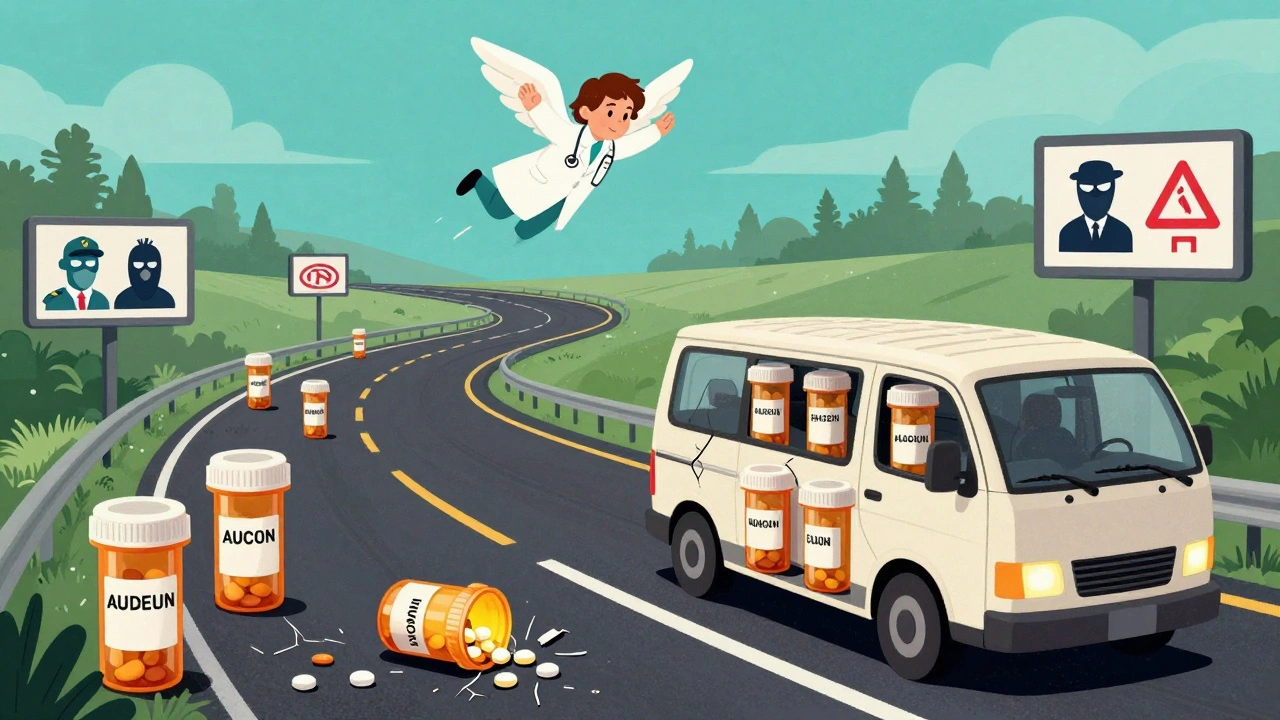
Packing meds for a long trip isn’t like packing socks. It’s not about fitting things in a suitcase. It’s about legal compliance, safety, and avoiding delays that could cost you time, money, or worse - your health. The U.S. Transportation Security Administration (TSA) lets you bring unlimited prescription meds on planes, but only if they’re in their original bottles with the pharmacy label. Same goes for most international flights. Cruise lines like Royal Caribbean and Norwegian require the same. If your pills are in a pill organizer with no label, you risk being denied boarding, having meds confiscated, or worse - getting stuck in a foreign country without your treatment. And it’s not just air travel. On road trips, state laws vary wildly. In 13 U.S. states, even medical marijuana is illegal, even if it’s legal in your home state. Insulin, thyroid meds, and even some painkillers can trigger border checks. The RV Industry Association reported a 15% confiscation rate for improperly packaged meds during cross-state travel in 2023.What You Need Before You Pack
Start 30 days before your trip. That’s not overkill - it’s necessary. First, talk to your doctor. Not just to refill prescriptions. Ask: "Are all my meds legal in every country we’ll visit?" Some antidepressants, ADHD medications, and sleep aids are banned or restricted in places like Japan, Dubai, and parts of the Caribbean. The International Association for Medical Assistance to Travellers (IAMAT) found that 42% of common medications need special permits for at least one popular cruise destination. Second, get documentation. Carry a copy of your prescription and a letter from your doctor. It should list: your name, the medication name (brand and generic), dosage, frequency, and why you need it. This isn’t optional - it’s your insurance policy if customs asks questions. Third, make a digital backup. Take a photo of your prescription, doctor’s note, and medication list. Save it in your email, cloud storage, and phone notes. One in eight travelers face language barriers abroad, and having this info ready can mean the difference between getting help and being turned away.How to Pack: The Exact System That Works
There’s no magic trick. But there is a proven system used by travel nurses, cruise medical staff, and experienced road trippers.- Keep everything in original containers. The pharmacy bottle with your name, drug name, dosage, and prescription number. No exceptions. Even if it’s ugly or bulky.
- Bring at least 3 extra days’ supply. Flights get delayed. Cruises change ports. Road trips hit traffic jams. OAG Aviation found 23% of international flights experience delays longer than 4 hours. Don’t risk running out because you packed just enough.
- Use a clear, quart-sized Ziploc bag. Put all your original bottles in one clear plastic bag. That’s what TSA and cruise security expect. No need to remove them at checkpoints - just pull the bag out when asked.
- Store your doctor’s note and prescriptions in a separate waterproof sleeve. Keep it with your passport. This isn’t for show - it’s for proof.
Cruise vs. Road Trip: Key Differences
Cruises and road trips have different rules. On a cruise, you’re entering multiple countries. Each port has its own laws. Royal Caribbean requires passengers to declare controlled substances (like opioids or stimulants) 30 days before sailing. Carnival requires a physician’s note for any medication with codeine or similar substances. And if you’re sailing to the Caribbean, 65% of destinations restrict certain psychotropic meds, according to former Royal Caribbean medical director Dr. Michael Thompson. Road trips? The challenge is state-by-state laws. The American Automobile Association found 67% of drivers had medication issues crossing state lines. It’s not just marijuana. Some states regulate how you carry benzodiazepines or even certain cough syrups. If you’re driving through the U.S., know your route. Check state pharmacy boards’ websites before you go. The upside? On a road trip, you can usually find a pharmacy within 5 miles. On a cruise, your only option is the ship’s medical center - and they won’t give you meds unless you have proof you’re supposed to take them.Special Cases: Insulin, Liquid Meds, and Refrigerated Drugs
Some meds need extra care. Insulin? Keep it in your carry-on. Never check it. Temperature changes in cargo holds can ruin it. Use a cooling pack or insulated travel case. The FDA says 41% of biologic drugs (like insulin, some cancer meds, and injectables) require temperature control. UV-protective cases that maintain stable temps for 72 hours are now sold by CVS and Walgreens - and they’re free with a prescription. Liquid meds? Same rules. Keep them in original containers. TSA allows more than 3.4 oz if it’s a necessary medication. You don’t need to put it in the quart bag - just tell the agent at security. Bring a doctor’s note if it’s unusual. Refrigerated meds? Bring a small cooler with ice packs. Don’t rely on the ship’s fridge. Most cabins don’t have them. And don’t assume the cruise line will store them for you - they won’t.What Not to Do
Here’s what gets people into trouble:- Don’t transfer pills to unlabeled containers. Reddit user u/TravelMedNurse, a travel nurse with 12 years’ experience, says 90% of medication issues she’s seen came from this. 37% of those cases led to denied port entry.
- Don’t pack meds in checked luggage. SITA reports a 0.02% lost luggage rate - small, but when it’s your heart medication, that’s 100% of your problem.
- Don’t assume your home country’s rules apply everywhere. A pill that’s legal in Sydney might be illegal in Dubai. Always check.
- Don’t forget backups. If you take a daily pill, bring an extra week’s supply. If you use an inhaler, bring two. If you take an injection, bring an extra pen and needles.
What to Bring Beyond Pills
Pack these too:- Hand sanitizer and disinfectant wipes (for cleaning pill organizers)
- Small scissors (to cut open blister packs if needed)
- Waterproof labels or tape (to re-label organizers)
- A small notebook to log when you took each dose - especially if you’re on a complex regimen
- Emergency contact info for your doctor and pharmacy
Final Checklist: 5 Minutes Before You Leave
Do this last, right before you lock your bag:- Are all prescriptions in original bottles with labels?
- Do you have 3+ extra days’ supply?
- Is your doctor’s letter and prescription copies in a waterproof sleeve with your passport?
- Is your digital backup saved on your phone and email?
- Are your meds in your carry-on - not checked luggage?
What Happens If Something Goes Wrong?
If your meds are lost, stolen, or confiscated:- On a cruise: Go to the ship’s medical center immediately. They can often provide a short-term supply if you have documentation.
- On a road trip: Find the nearest pharmacy. Show your doctor’s letter and prescription copy. Most will fill it if you’re a legitimate patient.
- Abroad: Contact your country’s embassy. They can help you find a local pharmacy or doctor.
Can I put my medications in a pill organizer for a cruise?
Yes - but only if you also keep the original pharmacy bottles with you. Cruise lines require proof that the meds are prescribed to you. A pill organizer alone isn’t enough. Tape the organizer shut and label it clearly with your name, the medication, and the time to take it. Always carry the original bottles in your carry-on.
Do I need a doctor’s note for my medications on a cruise?
It’s not always required, but it’s strongly recommended - especially for controlled substances like opioids, ADHD meds, or antidepressants. Some ports, especially in the Caribbean and Asia, have strict rules. A doctor’s note with your name, medication details, and dosage can prevent delays or denial of entry. Many cruise lines now ask for it during online check-in.
Can I bring my insulin on a plane or cruise?
Absolutely. Insulin is considered a necessary medication and is exempt from liquid restrictions. Keep it in your carry-on, preferably in a temperature-controlled case. Bring your prescription and a doctor’s note. TSA and cruise security are trained to recognize insulin - but having documentation makes the process smoother.
What if my medication is banned in a country I’m visiting?
Don’t bring it. Some medications legal in Australia or the U.S. are illegal in countries like Japan, Singapore, or the UAE. Check the International Association for Medical Assistance to Travellers (IAMAT) database or your country’s travel advisory site before you go. If your med is banned, talk to your doctor about alternatives before your trip.
Should I pack extra meds for a road trip?
Yes - at least one extra day’s supply. Road trips can be delayed by weather, traffic, or detours. The RV Industry Association found that 15% of travelers faced medication issues during long drives, mostly because they didn’t have backups. If you’re crossing state lines, extra meds also help if you need to refill in a different pharmacy.
Larry Lieberman
This is literally the most important post I've read all year. 🙏 I used to toss my pills in a Ziploc like it was candy. Now I carry the bottle, the note, and a backup on my phone. Life changed.
Lisa Whitesel
If you're not packing meds in original bottles you're not just irresponsible you're endangering others. End of story.
Sabrina Thurn
The 3-day buffer rule is non-negotiable. I'm a clinical pharmacist and I've seen too many patients stranded abroad because they 'didn't think they'd need it.' The OAG delay stats are real. Also, for insulin users: the UV-protective cases from CVS? Free with Rx. Don't overpay for them online. The FDA's 41% temp failure stat is underreported.
Courtney Black
We treat our medications like disposable consumer goods in this culture. We don't think of them as biological lifelines. We don't think of the molecular structure of levothyroxine or the precise pharmacokinetics of sertraline. We think 'pill' and move on. But when you're on a cruise in the Mediterranean and your thyroid crashes because you trusted a pill organizer, you realize-your body doesn't care about your convenience. It only cares about the dose. And if you didn't bring it? There's no algorithm for that.
iswarya bala
this help me so much!! i forgot my insulin case last time and had to buy a new one in dubai for $200 😭 thank u for the tips!!
Simran Chettiar
It is a profound paradox of modern travel that the very substances which sustain our physiological equilibrium are simultaneously regarded as potential contraband by sovereign states. One's access to life-sustaining pharmacotherapy is contingent upon bureaucratic compliance, documentation, and the whims of international pharmacopeias. The commodification of health has reached a nadir when an individual must prove their medical necessity to a customs agent in order to remain alive. This is not travel. This is survival under duress.
Anna Roh
Wow. So much text. I just put my meds in a pillbox and hope for the best. I mean, how often does it really go wrong?
Tiffany Sowby
I can't believe you're telling Americans to carry doctor's notes. What is this, Canada? We don't need permission to be healthy. The government already has enough control over us. I'm not letting some TSA agent tell me what I can carry in my pocket.
Asset Finance Komrade
Interesting. But in Australia, we're not required to carry original bottles for most meds. We have a national e-script system. I've flown with 14 different prescriptions in a pill organizer and never been questioned. Maybe this is a US-specific paranoia?
Stacy Tolbert
I used to think this was overkill until I watched my mom get denied boarding in Cancun because her blood thinner was in a plastic bag. She cried for an hour. I now carry everything in original bottles, the letter, and a printed copy of the IAMAT database entry for each med. I even laminated the damn thing. I'm not sorry.
Iris Carmen
i just put all my stuff in my purse and go lol. no biggie. but hey if u need a checklist i guess?
Noah Raines
I'm a trucker and I drive cross-country every week. You want to know what saves you? A printed copy of your state's pharmacy board rules for controlled substances. I keep one for each state I hit. Also, never, ever put meds in your glovebox. Heat ruins them. Always keep 'em on you. 💪
Katherine Rodgers
so you're telling me i can't just throw my adderall in my sock drawer for a weekend trip? what a nightmare. next you'll say i need to bring my birth certificate to buy coffee.
Lauren Dare
The fact that this level of documentation is necessary is a failure of systemic healthcare infrastructure. We've outsourced medical authority to airport security and cruise line compliance officers. The real issue isn't how you pack your pills-it's that your access to them is contingent on bureaucratic theater. But hey, at least you've got a laminated doctor's note. That's progress, right?