
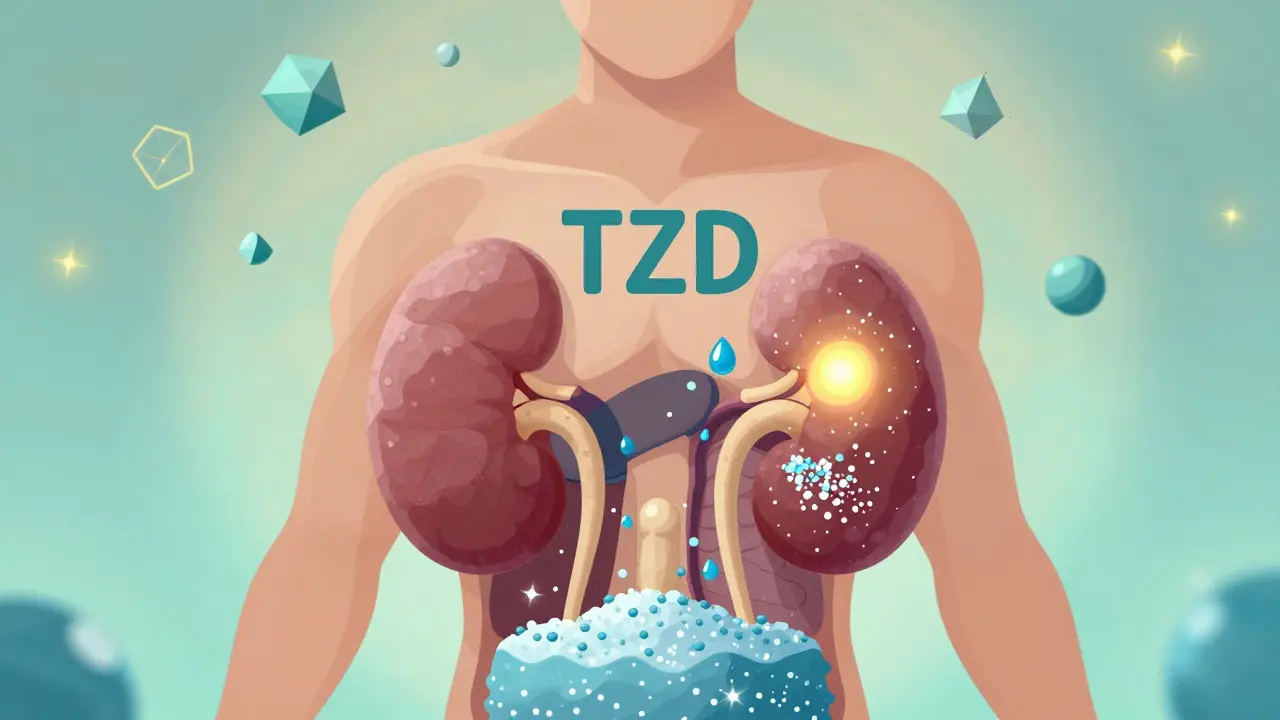
TZD Fluid & Weight Monitoring Tool
Weight Tracker
Symptom Checker
Finding a diabetes medication that actually works for your blood sugar can feel like a win, but then the scale starts climbing and your ankles begin to swell. If you're taking Thiazolidinediones (TZDs), this isn't just in your head. These drugs are powerful tools for improving insulin sensitivity, but they come with a specific set of challenges that can make your shoes feel too tight and your clothes feel too small. The good news is that while weight gain and fluid retention are common, they aren't inevitable, and there are concrete ways to manage them.
| Attribute | Pioglitazone (Actos) | Rosiglitazone (Avandia) |
|---|---|---|
| Typical Weight Gain | ~3.0 kg (avg) | ~2.7 kg (avg) |
| Edema Rate (Monotherapy) | 3-5% | 3-5% |
| Edema Rate (with Insulin) | Up to 16.2% | Up to 16.2% |
| Primary Risk | Heart Failure / Bladder Cancer | Heart Failure / CV Risk |
Why TZDs Make You Gain Weight and Hold Water
To fix a problem, you have to understand what's actually happening in your body. Thiazolidinediones is a class of insulin-sensitizing medications that activate peroxisome proliferator-activated receptor gamma (PPAR-γ). While this helps your muscles and liver use glucose better, it also tells your kidneys to hold onto sodium. When your body keeps sodium, it keeps water. This isn't just a little bit of bloating; in some cases, 65-70% of the weight gain seen on these drugs is actually just fluid.
The process is a bit of a chain reaction. TZDs cause your blood vessels to dilate, which sounds good, but it actually triggers the kidneys to reabsorb more sodium. This increases your extracellular volume-basically, you're carrying more water in your tissues. This is why you might notice "pedal edema," which is the medical term for swelling in the feet and ankles. If you're also taking insulin, this effect is amplified, significantly increasing the risk of fluid buildup.
Spotting the Warning Signs: More Than Just a Full Scale
Not all weight gain is created equal. While gaining a couple of pounds over a few months might be a slow shift in body fat, "rapid" weight gain is a red flag. If you notice you've gained 2-3 kg (roughly 5-7 pounds) in a single week, that's usually water, not fat.
Keep an eye out for these specific signs:
- Socks leaving deep indentations around your ankles.
- Shoes feeling tighter by the end of the day.
- Shortness of breath when lying flat or during light activity (a sign that fluid may be affecting your lungs).
- A sudden increase in nighttime urination.
Because Pioglitazone and Rosiglitazone can put a strain on the heart by increasing fluid volume, the FDA has a strict warning: these drugs should not be used by anyone with NYHA class III or IV heart failure. If you have a history of heart issues, this is a critical conversation to have with your doctor.
Smart Strategies to Reduce Edema and Weight Gain
You don't necessarily have to stop your medication if it's keeping your A1c in check. Instead, you can combine it with other strategies to offset the fluid retention. One of the most effective modern approaches is adding an SGLT2 Inhibitor (like Empagliflozin) to your regimen. These drugs work by flushing excess glucose and sodium through your urine. Data suggests that combining a TZD with an SGLT2 inhibitor can reduce the incidence of edema by as much as 45%.
If SGLT2s aren't an option, here are other practical ways to keep the swelling down:
- Watch Your Salt: Aim for less than 2,000 mg of sodium per day. Salt acts like a sponge, holding onto the water that TZDs already want to keep in your system.
- The Elevation Rule: Whenever you're sitting or lying down, keep your legs above the level of your heart. This uses gravity to move fluid away from your ankles and back toward your core.
- Timing Matters: Some patients find that taking their dose in the morning helps reduce the nocturnal fluid retention that makes waking up feel "puffy."
- Diuretic Support: In some cases, a doctor might prescribe a thiazide diuretic to help your kidneys flush out the extra sodium.
Dosage and Monitoring: The "Low and Slow" Approach
More medication doesn't always mean better results. High doses of TZDs are linked to much higher rates of edema. For example, taking 15 mg of pioglitazone daily has a significantly lower rate of swelling (around 2.1%) compared to the 45 mg dose (4.8%).
The goal should be to find the lowest effective dose that controls your blood sugar. If you're starting a TZD, ask your doctor about a slow titration schedule. This gives your body time to adjust and allows you to monitor how you react before hitting a higher dose. A daily weight check-first thing in the morning after using the bathroom-is the best way to catch fluid spikes before they become a medical emergency.
Comparing TZDs to Other Diabetes Medications
It helps to see how TZDs stack up against other common options. While TZDs are amazing for people with severe insulin resistance, they have a very different side-effect profile than other classes.
| Drug Class | Weight Impact | Fluid Retention? | Primary Cause of Weight Change |
|---|---|---|---|
| TZDs | Increase | Yes (High) | Sodium retention & fat redistribution |
| Metformin | Neutral/Loss | No | Improved insulin sensitivity |
| GLP-1 Agonists | Decrease | No | Reduced appetite/slowed digestion |
| Sulfonylureas | Increase | No | Hypoglycemia-induced eating |
The Path Forward: New Options and Future Hope
The medical world is moving toward "selective" modulators. Newer drugs, like Saroglitazar (available in some regions like India), aim to provide the glucose-lowering benefits of TZDs without the heavy fluid baggage. Early trials show a 60% lower rate of edema compared to traditional TZDs. Researchers are also looking into genetic markers-specifically the rs1801282 variant-which might one day tell your doctor if you're genetically predisposed to swelling before you even take your first pill.
Is the weight gain from TZDs permanent?
Much of the weight gain is fluid-based, which can be reversed by adjusting the dose or adding a diuretic or SGLT2 inhibitor. However, TZDs also cause a redistribution of fat to subcutaneous areas, which may take longer to resolve after stopping the medication.
Can I take a water pill (diuretic) with Pioglitazone?
Yes, diuretics are often used to manage TZD-induced edema. Thiazide diuretics are frequently preferred in observational studies for reducing swelling, but you must consult your doctor to ensure they don't negatively impact your kidney function or electrolyte balance.
Why do TZDs make my ankles swell specifically?
This is called pedal edema. Because water follows gravity, the excess fluid caused by sodium retention in the kidneys tends to pool in the lowest parts of your body, which are typically your ankles and feet.
Do all TZDs cause the same amount of weight gain?
Pioglitazone and Rosiglitazone have very similar profiles. Clinical data shows average weight gains of about 3.0 kg and 2.7 kg respectively. The amount you gain depends more on your dosage and whether you are combining the drug with insulin than on which specific TZD you use.
What should I do if I suddenly gain 5 pounds in a week?
Contact your healthcare provider immediately. Rapid weight gain is a primary indicator of fluid overload and can be an early warning sign of heart failure, especially for those on TZD therapy.
Next Steps for Patients
If you're currently struggling with side effects, don't just stop your medication, as this can cause your blood sugar to spike dangerously. Instead, start a weight log today. Note your weight every morning and track your salt intake for one week. Take this data to your next appointment and ask your doctor specifically about SGLT2 inhibitors or a dose reduction. If you have any shortness of breath, seek medical attention immediately, as this is the most critical sign that fluid is moving from your legs to your lungs.
Write a comment