

When you have a headache, a sore back, or swollen knees, you reach for the medicine cabinet. But which OTC pain reliever should you pick? Acetaminophen? Ibuprofen? Naproxen? It’s not just about what’s on sale-it’s about what actually works for your pain and what’s safest for your body.
Acetaminophen: The Gentle Pain Reliever
Acetaminophen, sold as Tylenol and many generic brands, is the most common OTC painkiller in the U.S. and Australia. It doesn’t reduce swelling, but it does lower fever and ease pain. It works inside your brain and spinal cord, blocking pain signals before they reach your awareness. It doesn’t touch inflammation at the source-so if your knee is red, hot, and swollen from arthritis, acetaminophen won’t calm that down.
It’s gentle on the stomach. You can take it on an empty stomach without worrying about ulcers or bleeding. That’s why doctors often recommend it first-especially for older adults, people on blood thinners, or pregnant women. In fact, it’s the only OTC painkiller approved for babies under six months. The standard dose is 500-1,000 mg every 4-6 hours, with a strict daily limit of 4,000 mg. But here’s the catch: many experts now say 3,000 mg per day is safer. Why? Because liver damage can happen even if you don’t overdose intentionally.
Most acetaminophen-related liver injuries aren’t from suicide attempts. They’re from people taking cold medicine, sleep aids, or prescription painkillers that also contain acetaminophen-and not realizing they’re doubling up. One extra-strength Tylenol tablet has 500 mg. A common cold tablet might have another 325 mg. Add them together, and you’re over 800 mg in one go. Do that four times a day, and you’re at 3,200 mg. Add a prescription opioid with acetaminophen? You’re flirting with danger.
NSAIDs: The Inflammation Fighters
NSAIDs-nonsteroidal anti-inflammatory drugs-include ibuprofen (Advil, Motrin), naproxen (Aleve), and aspirin. These work differently. They stop your body from making prostaglandins, chemicals that cause pain, fever, and inflammation. That means they don’t just mask pain-they actually reduce swelling. If you’ve sprained your ankle, have arthritis, or are battling menstrual cramps, NSAIDs often work better than acetaminophen.
Studies show NSAIDs reduce osteoarthritis pain by 30-50%, while acetaminophen only helps by 10-20%. For muscle strains, back pain from inflammation, or period pain, NSAIDs are the clear winner. Naproxen lasts longer-up to 12 hours per dose-so you don’t have to take it as often as ibuprofen, which wears off in 4-6 hours.
But here’s the trade-off: NSAIDs can hurt your stomach. About 2-4% of regular users develop ulcers each year. That’s why you’re told to take them with food. Some people even take them with an acid reducer like famotidine to protect their lining. And if you’re over 60, have high blood pressure, or have heart disease, NSAIDs can raise your risk of heart attack or stroke. Ibuprofen carries the highest risk. Naproxen is considered safer for your heart-especially at low doses.
When to Choose Acetaminophen
Go with acetaminophen if:
- You have a headache or mild migraine (70% of users report relief)
- You’re pregnant or breastfeeding
- You’re giving medicine to a child under 12
- You have a history of stomach ulcers or bleeding
- You’re on blood thinners like warfarin
- You want something that won’t irritate your stomach
It’s also the best choice for fever. If you or your kid has a fever from a cold or flu, acetaminophen is the go-to. It doesn’t interfere with your immune response the way NSAIDs sometimes can.
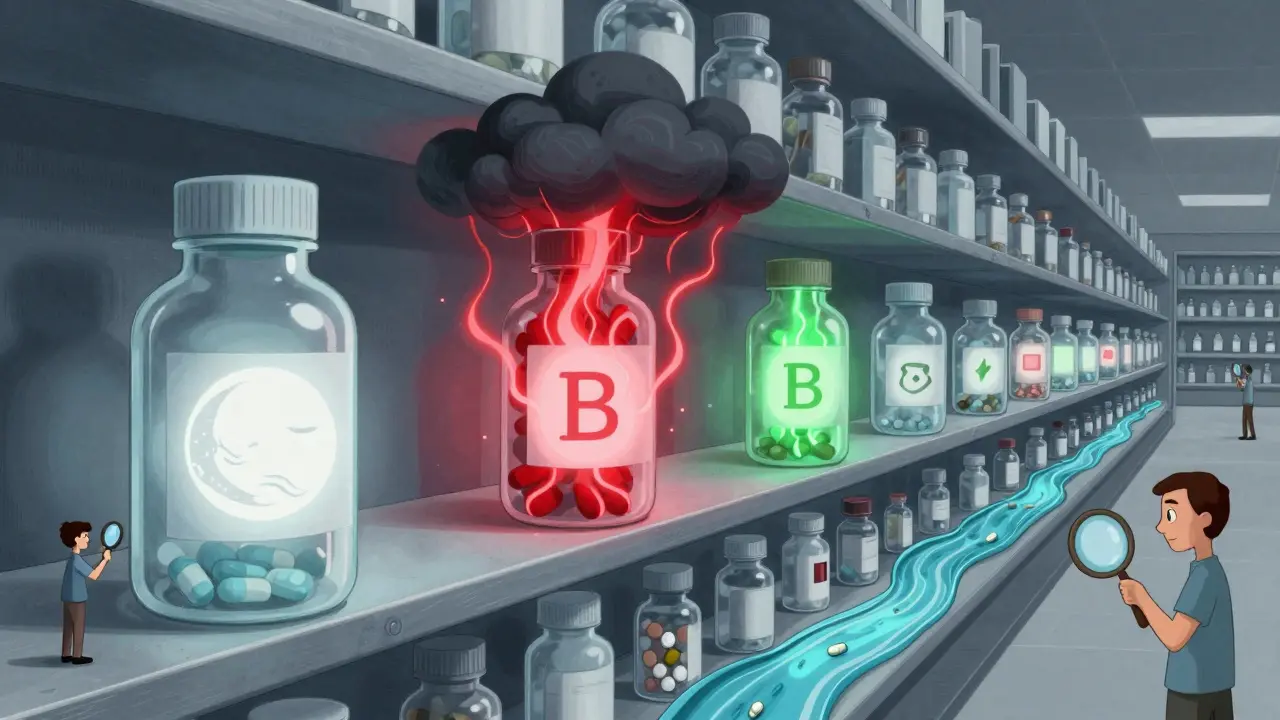
When to Choose NSAIDs
Reach for an NSAID if:
- Your joint pain is accompanied by swelling or stiffness (arthritis)
- You have tendonitis, bursitis, or a recent injury
- You’re dealing with menstrual cramps
- You have a toothache with gum inflammation
- You’ve tried acetaminophen and it didn’t help enough
NSAIDs are also better for pain that comes with inflammation. Think: runner’s knee, tennis elbow, or post-surgery swelling. If your pain feels deep and achy-not just sharp-you’re likely dealing with inflammation. That’s where NSAIDs shine.
Dosing and Safety: What You Must Know
Here’s a quick reference for OTC dosing (adults):
| Medication | Typical Dose | Max Daily Dose | How Often |
|---|---|---|---|
| Acetaminophen | 500-650 mg | 3,000-4,000 mg | Every 4-6 hours |
| Ibuprofen | 200-400 mg | 1,200 mg | Every 4-6 hours |
| Naproxen | 220 mg | 660 mg | Every 8-12 hours |
Never mix two NSAIDs. Taking ibuprofen and naproxen together doesn’t make pain go away faster-it just increases your risk of stomach bleeding by 300%. And don’t assume "natural" or "herbal" pain relievers are safer. Some, like willow bark, contain salicin-a compound similar to aspirin-and can interact with NSAIDs.
Also, check every medicine you take. Cold remedies, sleep aids, and even some prescription painkillers contain acetaminophen. Read the label. If it says "acetaminophen" or "APAP," it’s the same thing. Keep a log if you’re taking multiple meds.
Can You Take Both Together?
Yes-and sometimes, you should. Harvard Health and the Mayo Clinic both say combining acetaminophen and an NSAID can give you better pain control with lower doses of each. That means less risk of side effects.
For example: take 650 mg of acetaminophen at 8 a.m., then 400 mg of ibuprofen at 2 p.m. That’s within safe limits for both. You’re not doubling up on one drug-you’re using two different pathways to block pain. This approach works well for chronic back pain, post-surgery recovery, or arthritis flare-ups.
Just don’t take them at the same time. Space them out by at least 2-3 hours. And never exceed the daily maximum for either.
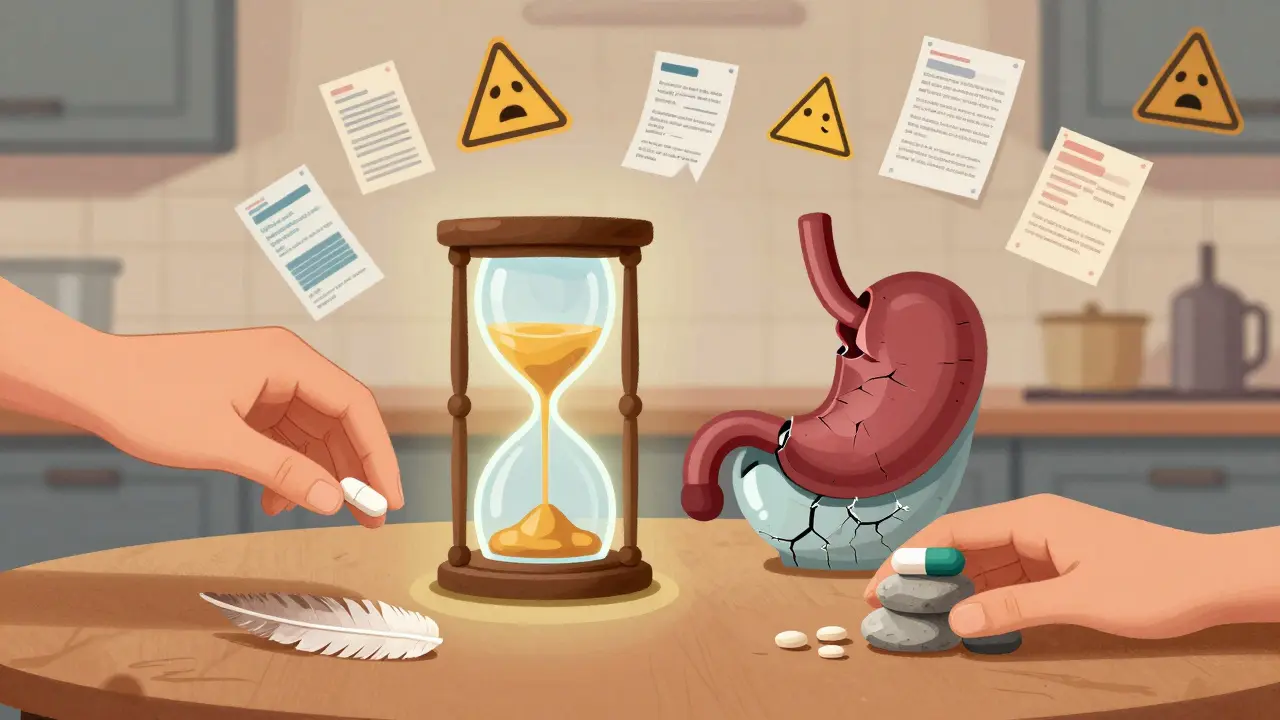
Who Should Avoid These Medications?
Don’t take acetaminophen if you:
- Have severe liver disease
- Drink three or more alcoholic drinks daily
- Have had a bad reaction to it before
Don’t take NSAIDs if you:
- Have a history of stomach ulcers or bleeding
- Have heart failure, high blood pressure, or kidney disease
- Are in the third trimester of pregnancy
- Have asthma that gets worse with aspirin
- Take blood thinners or corticosteroids
And if you’re over 65, talk to your doctor before using NSAIDs regularly-even at OTC doses. Your body processes them slower, and side effects sneak up faster.
What’s the Bottom Line?
There’s no single "best" OTC pain reliever. It depends on your pain, your health, and your risks.
For most people with mild pain, fever, or headaches-start with acetaminophen. It’s safer for your stomach and liver, if used correctly. If it doesn’t help enough after a day or two, try an NSAID. If you have swelling, joint pain, or muscle inflammation, NSAIDs are more likely to work.
And if you’re still unsure? Mix them. Take half of each. You’ll get better relief, with fewer side effects. Just keep track of what you’re taking. Write it down. Or use a pill organizer. Don’t guess.
OTC doesn’t mean harmless. These are powerful drugs. Used right, they help. Used wrong, they hurt.
Can I take acetaminophen and ibuprofen together?
Yes, you can take acetaminophen and ibuprofen together, and it’s often recommended for better pain control. Space them out by 2-3 hours to avoid overwhelming your body. For example, take 650 mg of acetaminophen at 8 a.m., then 400 mg of ibuprofen at 2 p.m. This approach lowers the dose of each drug, reducing side effects while keeping pain under control. Just make sure you don’t exceed the daily maximum for either: 3,000 mg for acetaminophen and 1,200 mg for ibuprofen.
Which is safer for the stomach: acetaminophen or ibuprofen?
Acetaminophen is much safer for your stomach. Ibuprofen and other NSAIDs block protective enzymes in the stomach lining, increasing the risk of ulcers and bleeding-about 2-4% of regular users develop these issues each year. Acetaminophen doesn’t affect the stomach lining at all. You can take it on an empty stomach without worry. That’s why doctors recommend it first for people with sensitive stomachs or a history of ulcers.
Is naproxen better than ibuprofen for arthritis?
Yes, naproxen is often preferred for arthritis. It lasts longer-up to 12 hours per dose-so you take it fewer times a day. It also carries a lower risk of heart problems compared to ibuprofen, according to research in the European Heart Journal. For chronic joint pain, naproxen’s longer action and better cardiovascular safety profile make it a top choice among NSAIDs. However, both are effective at reducing inflammation and pain.
Why is acetaminophen the only OTC option for kids under 12?
NSAIDs like ibuprofen and aspirin carry higher risks for children. Aspirin can cause Reye’s syndrome-a rare but deadly condition affecting the liver and brain. Ibuprofen can affect kidney function in young children, especially if they’re dehydrated. Acetaminophen has been studied for decades in children and is considered the safest option. Dosing is based on weight: 10-15 mg per kilogram every 4-6 hours. Always use the measuring tool that comes with the medicine, not a kitchen spoon.
Can I take NSAIDs if I have high blood pressure?
NSAIDs can raise blood pressure and interfere with blood pressure medications. If you have hypertension, avoid ibuprofen and naproxen unless your doctor says it’s okay. Acetaminophen is the safer alternative. Even occasional use of NSAIDs can cause your blood pressure to spike. If you need pain relief and have high blood pressure, stick with acetaminophen and check your pressure regularly. Always talk to your doctor before using NSAIDs long-term.
How do I know if my pain is from inflammation?
Inflammation usually means swelling, warmth, redness, or stiffness that lasts more than a day or two. If your knee is puffy and hot after a fall, or your shoulder aches and won’t move without grinding, that’s inflammation. Arthritis, tendonitis, and sprains are classic examples. Acetaminophen won’t reduce the swelling-it only dulls the pain. NSAIDs reduce both pain and swelling. If you’re unsure, try an NSAID for a day. If the swelling goes down, inflammation was likely the cause.
What’s the risk of liver damage from acetaminophen?
Liver damage from acetaminophen is real and preventable. The FDA estimates 15,000 hospitalizations in the U.S. each year are due to accidental overdose. Most cases happen when people take multiple products containing acetaminophen without realizing it. A single dose over 7,000 mg can cause serious harm. Even doses as low as 4,000 mg can damage the liver in people who drink alcohol regularly, are malnourished, or have existing liver disease. Stick to 3,000 mg per day if you’re unsure. Always check labels. When in doubt, skip it.
Are generic brands as good as name brands like Tylenol or Advil?
Yes. Generic acetaminophen and ibuprofen contain the exact same active ingredients as Tylenol and Advil. They’re required by law to meet the same FDA standards for safety and effectiveness. The only differences are in fillers, coatings, and price. Generic acetaminophen costs as little as $0.03 per 500 mg tablet. Name brands might cost 3-5 times more. Save your money. The pain relief is identical.
What to Do Next
Keep a small pain journal for a week. Write down what hurts, when, how bad (1-10 scale), and what you took. Did acetaminophen help? Did ibuprofen make it worse? Did you feel nauseous? Did the swelling go down? This simple habit gives you clarity.
Don’t wait until your pain is unbearable. Start with the lowest effective dose. Don’t take it longer than 10 days without talking to a doctor. And if you’re taking OTC pain relievers daily for more than three weeks, you need a medical review. Chronic pain isn’t something you should manage alone.
Both acetaminophen and NSAIDs have their place. Knowing when to use each one-and when to avoid them-is the real power. You don’t need to be a doctor. Just be informed.
Melodie Lesesne
Just wanted to say this post saved me last week when I was stuck between Tylenol and Advil for my back pain. I had no idea NSAIDs could help with inflammation like that. Took the naproxen after reading this and wow, the swelling went down in hours. Thanks for laying it out so clearly.
john Mccoskey
Let’s be honest here. The entire OTC painkiller industry is a carefully constructed illusion designed to keep you dependent on pharmaceuticals while pretending they’re harmless. Acetaminophen is a silent killer masked as a safe alternative. The liver damage statistics are not accidents-they’re predictable outcomes of a system that prioritizes profit over prevention. The FDA’s 4,000 mg limit is a joke. Anyone who takes more than 2,000 mg daily is playing Russian roulette with their hepatocytes. And don’t get me started on the placebo effect of "generic equals name brand." The fillers matter. The coatings matter. The manufacturing tolerances matter. You think your $0.03 tablet is identical? It’s not. It’s a chemically identical ghost of the real thing.
Joie Cregin
Y’all are overcomplicating this. I’ve been mixing acetaminophen and naproxen for my arthritis since my doc told me to, and it’s been a game-changer. I take 650 mg at breakfast, then 220 mg naproxen at lunch. No stomach issues, no liver panic. Just steady relief. I used to be the person who took three Advils at once and then cried because my gut felt like it was on fire. This combo? Pure magic. Also, I keep a little notebook in my purse now. Write it down. Your future self will thank you.
Rob Deneke
Good info here seriously
Been taking ibuprofen for years without thinking
Now I know to space it out with Tylenol
And check labels
My mom had a bad reaction once
So this hits home
Thanks for the clarity
kanchan tiwari
THEY’RE LYING TO YOU. EVERY SINGLE ONE OF THEM. ACETAMINOPHEN ISN’T SAFE IT’S A SLEEPING TIME BOMB IN YOUR LIVER AND NSAIDS ARE JUST A SLOW POISON FOR YOUR HEART. THEY WANT YOU DEPENDENT. THEY WANT YOU BUYING MORE. THEY WANT YOU TO THINK IT’S JUST A PAINKILLER WHEN IT’S A CONTROL MECHANISM. THE FDA IS IN BED WITH PHARMA. THE DOCTORS ARE PAID TO SAY IT’S FINE. READ THE LABELS AGAIN. APAP ISN’T A BRAND IT’S A TRAP. I’VE SEEN PEOPLE TURN INTO HOSPITAL STATISTICS BECAUSE THEY DIDN’T KNOW. DON’T BE NEXT.
Allen Davidson
Some of you are treating this like a life-or-death crisis. It’s not. It’s about informed choices. If you’re healthy and not drinking daily, acetaminophen at 3,000 mg is fine. If you’ve got arthritis and no stomach issues, naproxen is a tool-not a threat. The real danger is fearmongering and misinformation. Use the data. Track your intake. Talk to your pharmacist. You don’t need to be paranoid. You just need to be aware. This post gives you the facts. Use them.
Ryan Hutchison
Why are we even talking about this like it’s complicated? In America, we’ve got the best damn medicine in the world. If you can’t figure out which pill to take after reading this, maybe you shouldn’t be medicating yourself. Take Tylenol if you’re a normal person. Take Advil if you’ve got inflammation. Don’t overthink it. We’re not in Europe where they make you fill out a 12-page form to buy aspirin. This post is basic health literacy. If you’re still confused, go see a doctor. Stop scrolling Reddit for medical advice.
Samyak Shertok
Oh wow. So acetaminophen is "gentle" because it quietly murders your liver while you think you’re being safe? And NSAIDs are "better for inflammation" but only if you’re okay with your stomach lining becoming a crime scene? And we’re supposed to be grateful for this "balanced" take? What a joke. The real question is why the hell do we still have OTC painkillers that can kill you if you breathe wrong? This isn’t medicine. It’s a survival game where the rules are written in fine print by guys in suits who’ve never had a headache.
Stephen Tulloch
Ugh. So basic. Like, I get it. You’re trying to be helpful. But did you really need to write a 2,000-word essay on Tylenol? I mean, come on. The real takeaway? Don’t be a dumbass. Don’t mix random pills. Don’t take more than you need. And if you’re taking OTC meds daily for more than 3 days? You’re not managing pain-you’re avoiding a real diagnosis. Also, generics are fine. I buy the $4 bottle from the dollar store and it works just as well as the fancy blue box. Stop overthinking. Just chill. 🤙
Corey Sawchuk
Been using naproxen for my knee for years. Never had an issue. But I always take it with food. And I never mix it with anything else. I just read the label. That’s it. Simple. No drama. No conspiracy. Just respect the dose. If you’re worried, talk to your pharmacist. They’re the real MVPs. They don’t sell you fear. They sell you facts.
Bobbi-Marie Nova
Okay but can we just appreciate how much this post didn’t sugarcoat anything? Like, I’ve read a dozen "pain relief guides" and half of them sound like pharmaceutical ads. This one? It’s like a friend who actually knows what they’re talking about and isn’t trying to sell you anything. Also, the part about checking every cold medicine? That’s the one I missed. Now I keep a list in my phone. Thanks for not talking down to us.
evelyn wellding
This is so helpful!! 🙌 I’ve been taking ibuprofen for my period cramps and didn’t realize naproxen lasts longer. Going to try it next cycle. Also, the combo tip? Genius. I’m gonna start spacing them out like you said. And yes, generics are totally fine-I’ve been buying them for years and never had a problem. You’re all doing great just by reading this. Keep being smart 💪❤️
Chelsea Harton
acetaminophen is fine if you dont drink. ibuprofen is fine if you dont have stomach issues. just dont mix them. read labels. done. why is this so hard to understand
Bianca Leonhardt
People who take acetaminophen daily are just asking for liver failure. And anyone who thinks NSAIDs are safe for long-term use is either naive or lying to themselves. This post pretends to be helpful but it’s just giving people permission to self-medicate dangerously. If you need pain relief this badly, you need a doctor-not a Reddit post. Stop treating your body like a chemistry experiment.