

Forgetting to take your pills isn’t just annoying-it’s dangerous. One missed dose of blood pressure medicine can spike your numbers. Skipping antibiotics can turn a simple infection into a life-threatening one. And for seniors juggling five or more medications a day, forgetfulness isn’t a minor slip-it’s a daily risk. The CDC estimates that nearly half of Americans don’t take their meds as prescribed, costing the healthcare system over $300 billion a year. But there’s a practical, proven way to fix this: smart pill caps and dispensers.
Why Forgetfulness Is a Silent Health Crisis
Most people think forgetfulness is just part of aging. But it’s more complex than that. It’s not always memory loss. Sometimes it’s confusion from too many pills, fear of side effects, or simply being too busy. A 2023 Hero Health report found that 54% of seniors over 65 take more than four prescription drugs daily. That’s a lot to keep track of. No wonder nearly 40% miss at least one dose per week. The problem isn’t just health-it’s safety. Missing doses of insulin, heart meds, or anticoagulants can land you in the ER. And once you start skipping, it’s easy to spiral. One missed pill leads to another, then another. Before you know it, your condition is worsening, and your doctor doesn’t even know why. Smart pill devices don’t guess what you forgot. They track it. They remind you. And in many cases, they actually dispense the right dose at the right time. No more rummaging through pill organizers. No more wondering if you already took your 10 a.m. pill.How Smart Pill Caps Work (No App Required)
Not all smart pill devices are the same. Some are fancy robots. Others are just caps that screw onto your existing bottles. The simplest and most effective ones don’t need you to download an app, set alarms, or tap a screen. Take Tenovi’s Cellular Pillbox. It’s a plastic box with compartments for each dose of the day. Inside, sensors detect when you open a compartment. When it’s time for your morning pills, a bright red light turns on. When you open it, the light turns green. No phone. No Bluetooth. No passwords. Just a light that tells you: you did it. This design works because it fits into your routine, not the other way around. You don’t need to learn how to use it. You just open the box like you always have. The tech is invisible. And that’s the point. AdhereTech’s Aidia Smart Bottle works similarly but attaches to standard prescription bottles. It uses weight sensors to detect when you open the cap and how much medicine you took. If you miss a dose, it sends a text, a call, and flashes a red light. It even asks you why you skipped-"Was it too expensive? Side effects?" That feedback helps caregivers and doctors adjust your plan.Dispensers That Actually Give You the Pills
If you’re the type who opens the bottle but forgets to swallow, you need more than reminders. You need a dispenser that releases the pills automatically. Hero Health’s automatic dispenser is built for exactly this. It holds up to 28 doses. At the scheduled time, it lights up, beeps, and opens a tray with your pills inside. If you don’t take them within 30 minutes, it repeats the alarm. And if you still don’t respond, it calls a family member or caregiver. One user on Reddit shared how this saved their mother’s life. She had a UTI and was supposed to take antibiotics every 8 hours. She kept forgetting. After installing the Hero dispenser, her adherence jumped from 60% to 98%. The repeating alarms meant she couldn’t ignore it. The MedQ Electronic Programmable Pill Dispenser does something similar but with a twist: it repeats the alarm every 30 minutes until you take the pill. It’s loud, it’s persistent, and according to the manufacturer, it makes forgetting "virtually impossible." It’s not fancy, but for someone with dementia or severe forgetfulness, that’s exactly what’s needed.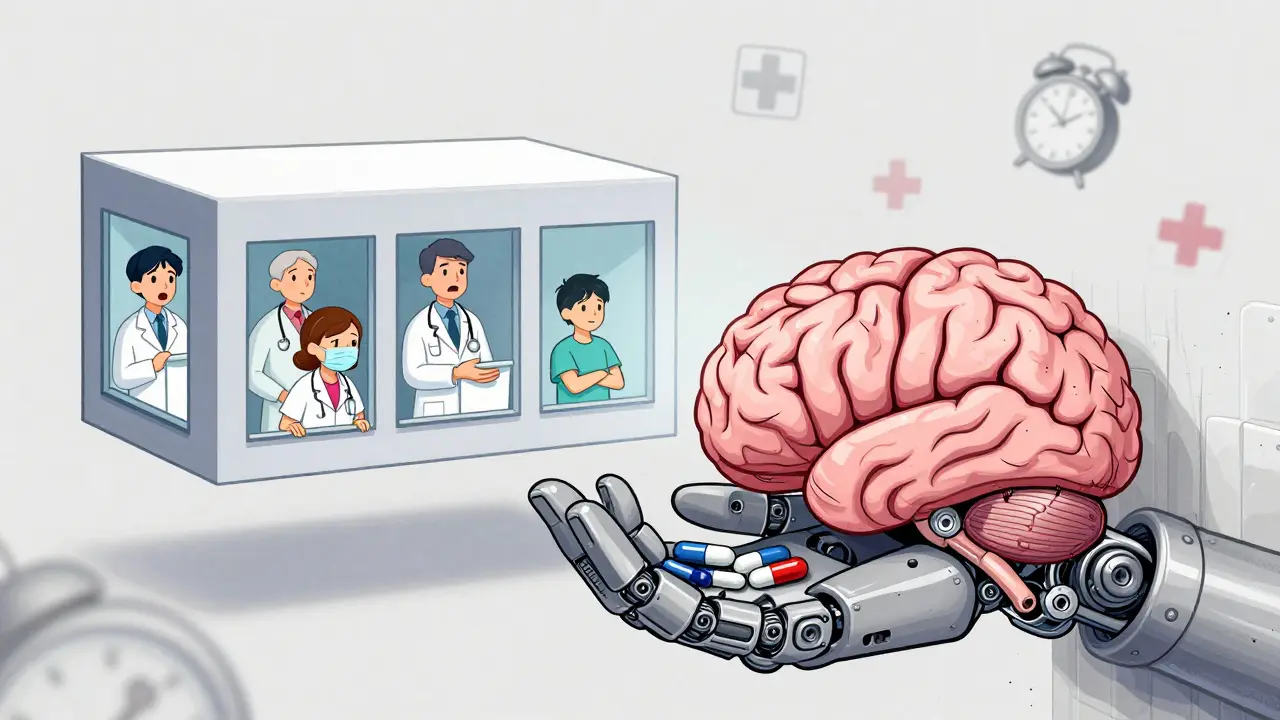
Cost, Subscription Fees, and What’s Really Affordable
Let’s be honest: price matters. These aren’t cheap gadgets. But they’re cheaper than a hospital stay. Here’s how the top models stack up:| Device | Price | Monthly Fee | Key Feature | Best For |
|---|---|---|---|---|
| Tenovi Cellular Pillbox | $199 | $29 | No app, cellular connectivity | Seniors who hate tech |
| Aidia Smart Bottle (ex-AdhereTech) | $149 | $39 | Tracks dose amount, asks why you missed | Chronic illness, caregivers |
| Hero Health Automatic Dispenser | $499 | $0 | Auto-dispenses, repeating alarms | Severe forgetfulness, dementia |
| MedQ Dispenser | $129-$249 | $0 | Alarm repeats every 30 min | High-risk meds, no internet |
| AARDEX Pill Connect | $299 | $49 | Clinical-grade analytics | Research trials, doctors |
What the Experts Say-And What They Warn
Doctors and researchers agree: smart pill devices work. A 2022 study in the Journal of Medical Systems found patients using Aidia had 92.3% adherence-up from 67.8% without it. That’s not a small gain. That’s life-changing. Dr. Michael George from the CDC called these devices "one of the most promising interventions" for fixing medication non-adherence. And it’s not just about numbers. It’s about peace of mind. Caregivers can sleep better. Seniors feel more in control. But there’s a catch. Dr. Rebecca Chen from Johns Hopkins warns that tech alone won’t fix everything. If someone skips pills because they can’t afford them, or because the side effects are unbearable, a flashing light won’t help. The device needs to be part of a bigger plan-regular check-ins, affordable meds, open conversations with your doctor. And here’s something few people talk about: people can cheat the system. One Reddit user admitted to opening their AARDEX pill cap without taking the pill. The device recorded "taken," but they never swallowed it. No tech can force ingestion. That’s why the best systems combine reminders with human support.Choosing the Right Device for Your Needs
Not everyone needs a $500 robot. Here’s how to pick:- If you’re forgetful but still independent → Tenovi or Aidia. Simple, reliable, no app needed.
- If you often miss doses even after being reminded → Hero Health. The repeating alarm is your safety net.
- If you’re on high-risk meds like blood thinners or insulin → Hero Health or MedQ. The backup calls and alarms are critical.
- If you’re on a tight budget → MedQ. No subscription. Just a loud alarm that won’t quit.
- If you’re a caregiver managing multiple people → Aidia or AARDEX. They give you real-time reports on who took what.
- Visual alerts (bright lights)
- Audio alarms (adjustable volume)
- Backup power (in case of outage)
- Easy refilling (no complex assembly)
- Family access (so someone else can check in)

What Happens When the Battery Dies?
Battery life varies. Tenovi lasts 90 days. Aidia lasts 30. Hero Health has a rechargeable battery that lasts 45 days. But what if the power goes out? Most devices have a backup battery. Hero Health and MedQ include it. Some cheaper models don’t. If you live in an area with frequent outages, this matters. A pill dispenser that stops working during a storm is worse than none at all. Always check: Does it have a backup? Can you still open the compartment manually? Can you still see the time and dose without power?Real Stories, Real Results
On Trustpilot, Tenovi has a 4.7-star rating from nearly 200 reviews. One daughter wrote: "Mom has early dementia. She used to hide pills in her sock drawer. Now she takes them without being asked. The red light is magic." On Reddit, a diabetic user said: "I used to skip my insulin because I was scared of low blood sugar. The Aidia bottle asked me why I missed. I wrote ‘scared.’ My doctor changed my dose. I haven’t missed one since." And in Sydney, a 78-year-old man with Parkinson’s and hypertension started using a Hero dispenser after his wife passed away. His daughter, who lives overseas, gets a daily report. She no longer worries. He feels less alone.What’s Next? The Future of Pill Tech
The next wave of smart pill tech won’t just remind you. It will know you’re about to forget. AARDEX Group’s new AI system predicts missed doses with 89% accuracy by analyzing your habits. If you usually take your pill at 8 a.m. but haven’t moved from bed by 8:15, it sends a nudge before the alarm even sounds. MIT’s AgeLab is testing edible sensors that confirm you swallowed the pill-not just opened the cap. That’s coming by 2025. And more insurers are paying for it. UnitedHealthcare’s pilot with Tenovi cut hospital visits by nearly 19%. That’s real savings. That’s real health. The goal isn’t to turn everyone into a tech user. It’s to make taking your medicine as natural as brushing your teeth. No thought required. No stress. Just done.Forgetfulness doesn’t have to be your enemy. With the right tool, it can be handled-quietly, reliably, and without shame.
Do smart pill dispensers really work?
Yes, studies show they improve adherence from 60-70% to over 90% in people who struggle with forgetfulness. Devices like Aidia and Hero Health have been proven in clinical trials to reduce missed doses by more than 20 percentage points. The key is choosing one that matches your lifestyle-whether that’s a simple light system or an automatic dispenser.
Can I use a smart pill dispenser if I’m not tech-savvy?
Absolutely. Devices like Tenovi’s Cellular Pillbox require zero apps, no passwords, and no Wi-Fi. You just open the box when the light turns red. When you take your pill, the light turns green. That’s it. Many seniors over 80 use these without help. The simpler the design, the better it works.
Are smart pill dispensers covered by Medicare?
Some Medicare Advantage plans now cover smart pill dispensers if they’ve been shown to reduce hospital visits. In 2024, CMS expanded coverage for devices that lower hospitalizations by 15% or more. Check with your plan-many now offer them at no extra cost. Original Medicare (Parts A and B) still doesn’t cover them, but supplemental plans might.
What if I open the dispenser but don’t take the pill?
Some devices only track when you open the compartment, not whether you swallowed the pill. That’s a known limitation. The best systems, like Aidia, ask you why you missed a dose. That feedback helps caregivers and doctors adjust your treatment. But no device can force you to swallow. That’s why human support-calls from family or nurses-is still critical.
How often do I need to refill a smart pill dispenser?
It depends on the model. Hero Health and MedQ need weekly refills, which takes about 15 minutes. Tenovi’s pillbox uses standard pill organizers-you fill it once a week or every two weeks. Aidia’s smart bottle doesn’t store pills; it just fits on your existing bottle, so you refill when your pharmacy delivers. Choose based on how often you want to handle your meds.
Do these devices work for dementia patients?
Yes, but you need the right type. Locked dispensers like MedQ prevent overdosing and are ideal for advanced dementia. Automatic dispensers like Hero Health help with routine and repetition. Avoid devices that require apps or complex settings. Stick to loud alarms, bright lights, and simple physical buttons. Many families report dramatic improvements in adherence when using these.
What’s the biggest mistake people make when buying a smart pill dispenser?
Buying the fanciest one instead of the simplest one that fits their life. Many people choose devices with apps, Bluetooth, and cloud sync because they sound impressive. But if the user can’t use the app, it’s useless. The most successful systems are the ones that disappear into daily life-no learning curve, no setup, no stress. Look for devices with physical cues: lights, sounds, and automatic dispensing.
Kimberly Reker
I got my mom a Tenovi last year. She used to hide pills in her sock drawer. Now she just opens the box when the light turns red. No fuss. No apps. Just works.
She even says it feels like the box is cheering her on.
Diksha Srivastava
This is so needed. My uncle in Delhi forgets his blood pressure meds all the time. He thinks it's 'just one day'. But one day turns into weeks. I'm ordering the MedQ for him. No subscription. Just loud beeps. Perfect.
Sidhanth SY
Honestly, the real win here isn't the tech-it's the peace of mind. My grandma used to panic every time she saw a pill bottle. Now she just looks at the light. Green = done. Red = not yet. No guilt. No confusion. Just clarity.
Adarsh Uttral
i got the aidia bottle for my dad. he’s 82 and hates tech. but he loves how it asks why he missed. he wrote ‘too many pills’ and his doc cut his med list by 3. game changer.
Sheila Garfield
I work in elder care and we’ve started using these in our facility. The difference is night and day. Before, we’d have to do pill checks every 2 hours. Now? We just glance at the dashboard. Saves hours. And reduces stress for everyone.
Shawn Peck
You people are overcomplicating this. Just put the pills in a pill organizer and set a phone alarm. Done. No need to spend $500 on a robot. This is just tech bros selling fear.
Niamh Trihy
I’ve seen this in clinical practice. The real issue isn’t the device-it’s the follow-up. A smart pillbox won’t help if someone can’t afford their meds or is scared of side effects. Tech is a tool, not a cure. You still need human connection.
Yanaton Whittaker
AMERICA NEEDS THIS. We spend billions on ER visits because people are too lazy to take their pills. This is the kind of innovation we should be funding. Not fancy electric cars. Not crypto. THIS. 🇺🇸🔥
Holly Robin
Wait… so you’re telling me the government wants us to trust a black box that records when we open a pill cap? What if it’s spying? What if it’s linked to Big Pharma? What if the light is a hidden camera? I’m not falling for this surveillance scam.
KATHRYN JOHNSON
The data suggests that adherence technology reduces hospitalizations. However, the ethical implications of mandatory monitoring for elderly populations require immediate legislative review. This is not a consumer product. It is a clinical intervention.
Sazzy De
my aunt uses the hero one. she’s 86. doesn’t talk much. but she nods when the light goes on. i get a text every morning saying she took her meds. that’s all i need.
Lily Steele
i bought the medq for my dad after he missed his blood thinner twice. it beeps every 30 mins until he takes it. he hates it. but he’s alive. so i’m not taking it back.
Amy Insalaco
The ontological framing of adherence as a technological problem is deeply reductive. The phenomenology of forgetfulness is not merely a failure of memory but a symptom of systemic alienation within late-stage capitalist healthcare. The smart pill dispenser, as a fetishized object of biopower, displaces the responsibility of care onto the individual while obscuring structural inequities in pharmaceutical access.
Natasha Plebani
It’s interesting how we treat medication adherence as a technical glitch rather than a human one. We’re trying to automate away the discomfort of chronic illness. But maybe the real problem isn’t forgetting the pill-it’s forgetting why it matters. The light turns green, but the soul still feels empty.
calanha nevin
Thank you for this comprehensive and evidence-based overview. The integration of adherence technology into Medicare Advantage plans represents a critical step forward in value-based care. I strongly encourage all clinicians to advocate for these devices as part of a holistic care plan. The data is unequivocal.