
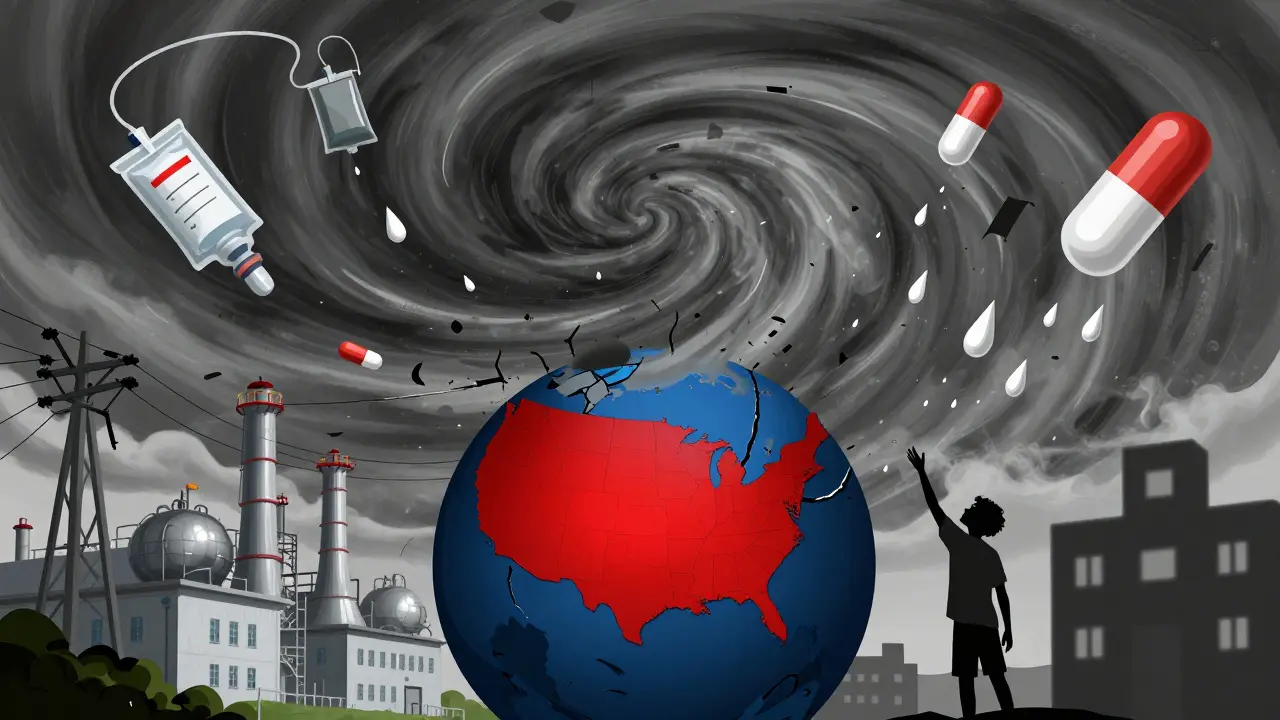
When a hurricane hits, it doesn’t just knock out power and flood homes-it can also cut off your life-saving medication. In 2017, Hurricane Maria destroyed power grids in Puerto Rico, where 10% of all FDA-approved drugs were made. Insulin, saline bags, and antibiotics vanished from hospital shelves. Some patients waited 18 months for supplies to return. That wasn’t an accident. It was a warning.
Why Your Medicine Vanishes After a Storm
Most people think drug shortages happen because of money, pricing, or manufacturing mistakes. But increasingly, they’re caused by weather. Between 2017 and 2024, nearly one-third of all U.S. drug shortages were linked to climate disasters, according to the FDA. Hurricanes, floods, and wildfires are now top causes-not just background risks. The problem isn’t just the storm. It’s where drugs are made. Over 65% of U.S. pharmaceutical manufacturing facilities sit in counties hit by at least one major weather disaster between 2018 and 2023. Puerto Rico alone had 55 FDA-approved drug plants before Maria. One of them made 80% of the country’s insulin. When the power went out, it took 11 months to fix the grid. No electricity? No sterile production. No sterile production? No insulin for diabetics.The IV Fluid Crisis: A Case Study in Fragility
In September 2024, Hurricane Helene slammed into North Carolina. It didn’t just damage buildings-it crippled Baxter International’s plant in North Cove. That one facility made 60% of the U.S. supply of IV fluids: the clear bags hung in hospital rooms for dehydration, chemotherapy, surgery, and emergency care. Within 72 hours, hospitals nationwide started rationing. Elective surgeries were canceled. Cancer patients waited for fluids. Emergency rooms turned away non-critical cases. The FDA warned the shortage could last until mid-2025. Why? Because it takes 6 to 12 months to build a new sterile manufacturing line. You can’t just order more bags from China overnight. The machines that fill them are custom-built, expensive, and take years to install. This isn’t the first time. After Hurricane Maria, saline shortages lasted 14 months. Hospitals had to reuse bags or dilute them dangerously. Nurses had to choose who got fluids and who didn’t. That’s not healthcare. That’s triage.Why Concentration Is a Death Trap
The pharmaceutical industry loves efficiency. It’s cheaper to make drugs in one big plant than spread production across ten. But that efficiency is a vulnerability. Seventy-eight percent of sterile injectable drugs in the U.S. have only one or two manufacturers. That means one tornado, one flood, one fire-and the entire country loses access. Take Spruce Pine, North Carolina. It’s not a drug factory. It’s a quartz mine. And 90% of the world’s high-purity quartz for medical devices comes from there. No quartz? No IV bags. No ventilators. No dialysis machines. The supply chain doesn’t just stop at the drug-it stops at the raw material. Compare that to Iran’s 2018 earthquake. Over 700 died. Thousands were injured. But because Iran’s drug manufacturing was spread across dozens of smaller plants, shortages were minimal. The U.S. system is fragile because it’s centralized. And climate change is making storms stronger and more frequent.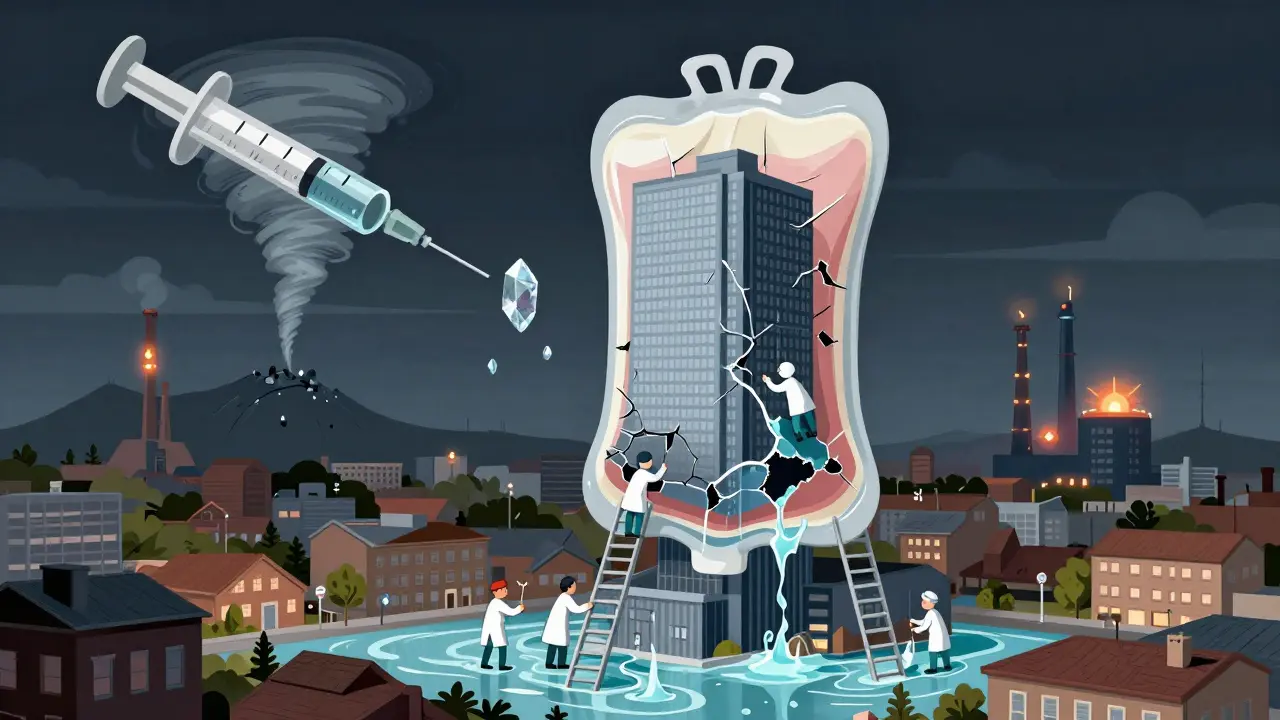
What Types of Disasters Hit Drugs the Hardest
Not all disasters are equal when it comes to medicine. - Hurricanes: Cause 47% of climate-related drug disruptions. They knock out power for weeks, flood factories, and destroy transportation routes. They hit broad categories-fluids, insulin, antibiotics-and last 6 to 18 months. - Tornadoes: Account for 28% of disruptions. They’re faster but more focused. In 2023, a tornado hit Pfizer’s plant in Rocky Mount, North Carolina. Twenty-seven specific medicines vanished. Recovery took 3 to 9 months. - Floods: Made up 19% of events. In 2022, flooding in Michigan hit Abbott’s infant formula plant. That worsened an already critical shortage, pushing families into panic for eight extra weeks. - Wildfires and Heat: Less common, but growing. Smoke can contaminate drug batches. Extreme heat can degrade medications in storage or during transport. The pattern is clear: the bigger the storm, the longer the shortage. And the more concentrated the manufacturing, the worse the impact.What’s Being Done-and Why It’s Not Enough
Some solutions are emerging. After Hurricane Maria, the FDA created an emergency pathway to import drugs from overseas. But it took 28 days to approve saline from Europe. In a crisis, that’s too slow. Now, the FDA is pushing a new rule: manufacturers of critical drugs must keep 90-day emergency stockpiles and submit climate risk plans by 2025. That’s a start. But only 31% of big drug companies have implemented real resilience strategies. The rest are still betting on luck. Some hospitals are getting smarter. Mayo Clinic spent nine months mapping every supplier-from the raw chemical to the shipping truck. When a shortage hit, they found alternatives 65% faster. But most small hospitals can’t afford that kind of work. AI is helping too. One company, Sensos.io, used weather models to predict Hurricane Helene’s impact on IV fluids 14 days in advance. A few hospitals used that warning to stockpile. Others didn’t. The difference? Lives.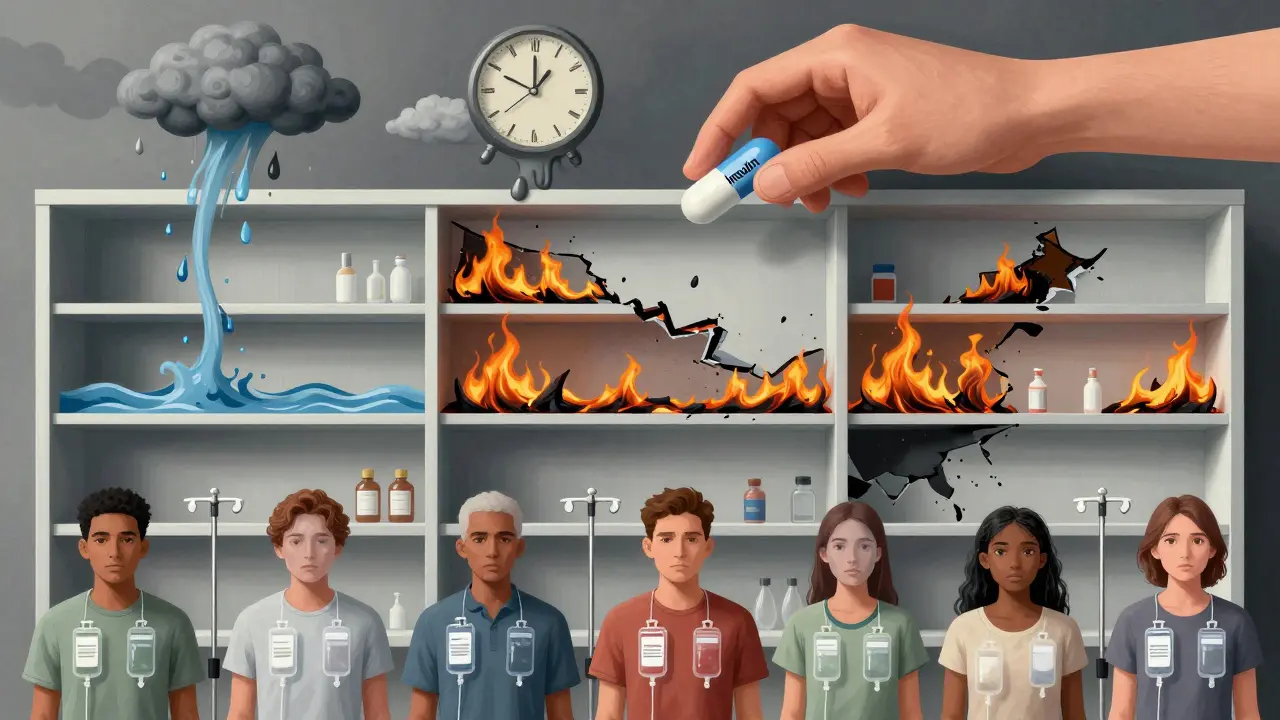
Who Gets Left Behind
The system isn’t just broken-it’s unfair. Hospitals with 500+ beds are over three times more likely to have supply chain maps than small clinics. That means rural hospitals, community health centers, and nursing homes are the last to know when a drug is running out. Cancer patients in Appalachia. Diabetics in the Gulf Coast. Elderly people in flood-prone towns-they’re not just inconvenienced. They’re put at risk. And it’s not just about drugs. When IV fluids run out, so do chemotherapy drips. When insulin disappears, so does the ability to manage diabetes. When antibiotics are rationed, infections spread. The American Society of Clinical Oncology warns that by 2027, cancer patients will face treatment delays during 8 to 10 major climate disasters every year-if nothing changes.What Needs to Happen Next
There’s no magic fix. But here’s what’s needed:- Geographic diversification: Make drugs in more places. Not just in hurricane zones. Not just in one state.
- Strategic stockpiles: The government needs to store critical drugs in secure, climate-resistant warehouses across the country-not just in one bunker.
- Faster approvals: The FDA needs to cut approval times for alternative suppliers during emergencies-from weeks to days.
- Investment in resilience: Experts say $12 to $15 billion spent now could prevent 70% of future shortages. That’s less than what the U.S. spends on antibiotics in a single year.
What You Can Do
You can’t build a new drug plant. But you can be prepared.- If you take a critical drug-like insulin, heart medication, or chemotherapy-ask your pharmacist: Is there a backup source if this runs out?
- Keep a 30-day supply on hand if possible. Many insurers allow early refills during disaster warnings.
- Sign up for local emergency alerts. If a hurricane is coming, your drug supply might be next.
- Support policies that fund drug supply resilience. Contact your representative. Ask: Will my medication be safe when the next storm hits?
Can climate change really cause drug shortages?
Yes. Between 2017 and 2024, 32% of all U.S. drug shortages were caused by climate-related disasters like hurricanes, floods, and wildfires. Hurricane Maria in 2017 knocked out 30% of U.S. pharmaceutical manufacturing, leading to 18-month shortages of insulin and IV fluids. The FDA now lists natural disasters as a top cause of drug shortages.
Why do hurricanes cause the worst drug shortages?
Hurricanes cause the most damage because they knock out power for weeks, flood manufacturing plants, and destroy transportation routes. They hit concentrated production hubs-like Puerto Rico and North Carolina-that make large portions of the country’s drugs. Over 47% of climate-related drug disruptions come from hurricanes, and their effects last 6 to 18 months because rebuilding sterile production lines takes years.
Which drugs are most at risk during natural disasters?
Sterile injectables are the most vulnerable: IV fluids, insulin, antibiotics, chemotherapy drugs, and emergency medications like epinephrine. These require sterile, electricity-dependent manufacturing and often have only one or two producers in the U.S. Generic drugs are especially at risk because they’re made by fewer companies with tighter profit margins.
Are there enough drug stockpiles for emergencies?
No. The Strategic National Stockpile has limited supplies of critical injectables, and most hospitals don’t keep emergency reserves. After Hurricane Helene in 2024, only a few hospitals had pre-positioned IV fluid stocks. A pilot program in hurricane-prone areas reduced shortage duration by 40%, but nationwide stockpiling is still underfunded and inconsistent.
What’s being done to fix the drug supply chain?
The FDA is requiring manufacturers of critical drugs to maintain 90-day emergency inventories and submit climate risk plans by 2025. Some companies are using AI to predict storm impacts, and a few hospitals have mapped their supply chains to find alternatives faster. But only 31% of top pharmaceutical companies have implemented real resilience measures. Most are still relying on just-in-time manufacturing, which works until it doesn’t.
How can I protect myself if my medication runs out?
If you rely on a critical medication, keep a 30-day supply on hand when possible. Ask your pharmacist about backup options or alternative brands. Sign up for local emergency alerts. During storm warnings, contact your provider early to request early refills. Don’t wait until the pharmacy is empty. And advocate for policy changes that prioritize drug supply resilience-it’s a matter of life and death.
Vinayak Naik
bro this is wild-india’s got like 200+ small pharma plants scattered all over, and we still make insulin cheaper than the US. one flood? no biggie. u got one factory in PR that makes 80% of the nation’s insulin? that’s not capitalism, that’s russian roulette with needles. 🤯
Tom Swinton
Let me tell you something-I’ve been diabetic for 22 years, and I remember Hurricane Maria like it was yesterday. My insulin? Gone. For 14 months. I had to drive 3 hours every other week to a clinic that had a tiny, rationed supply. Nurses cried. Patients screamed. And the FDA? They sent out a press release. I’m not mad-I’m just… tired. We’ve been screaming into the void for years. Now it’s not just diabetics-it’s cancer patients, heart patients, moms with newborns needing saline. This isn’t a ‘supply chain issue.’ It’s a moral failure. And if you think your insurance will save you? Honey, it won’t. They don’t even know where your drugs come from. 😔
Wesley Pereira
so let me get this straight… we spend $1.2 trillion on defense but can’t spend $15 billion to keep people alive? 🤡 the same people who scream about ‘socialism’ when someone suggests universal healthcare are the ones who don’t blink when a hurricane kills their insulin. just say it: capitalism is a death sentence with a co-pay.
Kelly Beck
Y’all. I work in a rural ER. We’ve had to turn away asthma patients because we didn’t have albuterol. We’ve had to dilute IV fluids so a 70-year-old with sepsis could get half a bag instead of a full one. It’s not theoretical. It’s happening RIGHT NOW. But here’s the thing-we can fix this. We just need to care enough to act. Talk to your reps. Demand stockpiles. Push for diversified manufacturing. Don’t wait until it’s your kid’s life on the line. We’ve got the tech. We’ve got the money. We just need the will. 💪❤️
Mukesh Pareek
Manufacturing concentration is a classic case of efficiency fetishism. The neoliberal model optimizes for profit, not resilience. When externalities like climate disasters are externalized, the system collapses under its own weight. The failure is systemic, not circumstantial. The U.S. pharmaceutical model is a brittle monoculture. Analogous to agricultural monocropping. The solution requires decentralization, redundancy, and public-private risk-sharing mechanisms. Without structural intervention, recurrence is inevitable.
Venkataramanan Viswanathan
In India, we don’t have one big plant. We have hundreds of small ones, spread across states. When floods hit Gujarat, we just shifted production to Tamil Nadu. No crisis. No panic. No rationing. The U.S. model is like putting all your eggs in one basket… and then building the basket right next to a volcano. Why? Because it’s cheaper. But cheaper is not better when people die.
Jeane Hendrix
Wait-so the FDA is making companies keep 90-day stockpiles by 2025? That’s… actually kinda good? I mean, I know it’s late, but at least they’re not pretending this isn’t happening. I just hope they don’t just make them store it in a warehouse in Texas that floods every year. 😅
Kiran Plaha
my grandma takes blood pressure meds. she lives in florida. last year, the power went out for 3 weeks. her meds were in the fridge. they went bad. she didn’t know. she kept taking them. she ended up in the hospital. no one told her the drugs might be ruined. we need to tell people this stuff. not just the doctors. everyone.
Matt Beck
we’re living in the future where your life depends on whether a hurricane missed a factory in North Carolina… 🤖💧 and yet we still argue about TikTok bans. the world is a glitch. and we’re all just waiting for the next patch…
Joann Absi
AMERICA ISN’T BROKEN-IT’S BEING SABOTAGED! WHO DO YOU THINK IS BEHIND THIS? CHINA? BIG PHARMA? THE CLIMATE ZOMBIES?! THEY WANT YOU WEAK. THEY WANT YOU DEPENDENT. THEY WANT YOU PANICKING OVER INSULIN WHILE THEY LAUGH IN THEIR VENTILATOR-PROOF BUNKERS. THIS ISN’T A SHORTAGE-IT’S A CONTROL STRATEGY. STOP BEING A SHEEP. BUY A GENERATOR. STOCKPILE. FIGHT BACK. 🇺🇸💥