
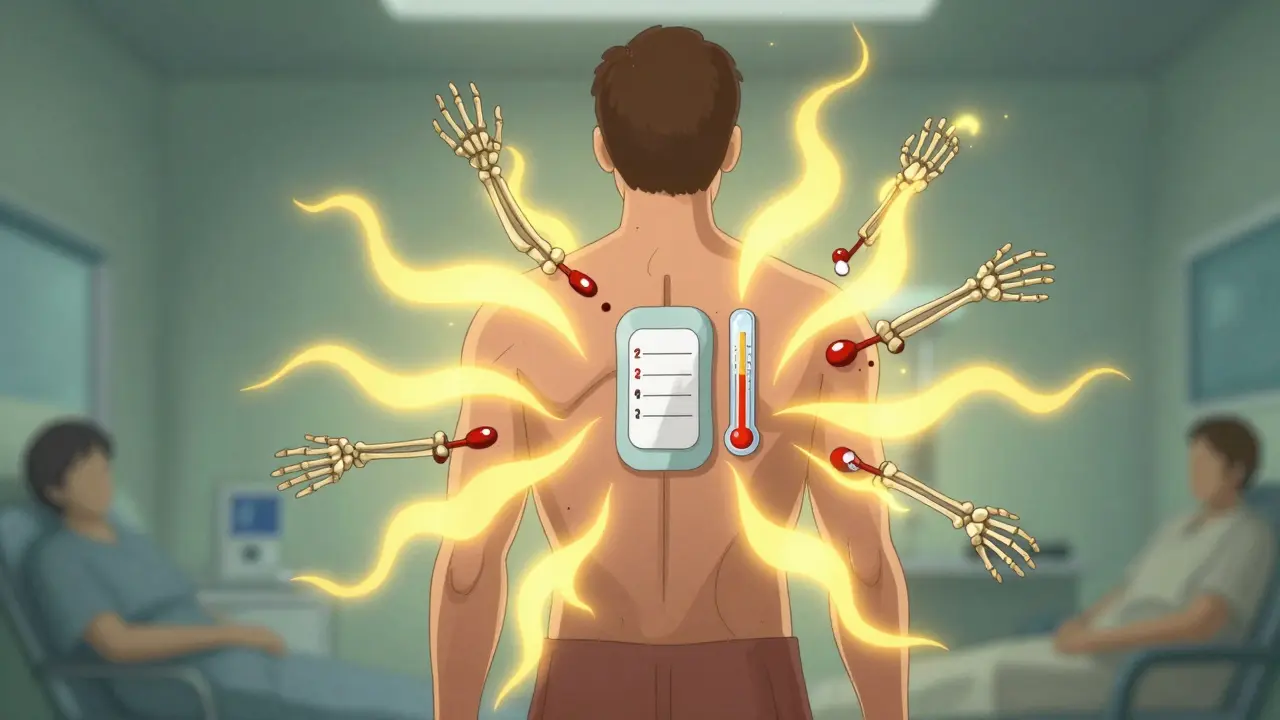
Fentanyl Patch Heat Safety Checker
Is Your Activity Safe?
Check if your current activity could dangerously increase fentanyl absorption from your patch. Heat can cause deadly overdose even from normal patch use.
Why Heat Can Turn a Fentanyl Patch Into a Death Trap
Imagine wearing a patch on your skin to manage chronic pain-simple, quiet, effective. But if that patch gets warm, even a little, it can start pumping out deadly amounts of fentanyl without you knowing. This isn’t science fiction. It’s happening right now to people who don’t realize how dangerous heat can be with these patches.
Fentanyl patches, like Duragesic, are designed to release a steady, low dose of fentanyl over 72 hours. They’re meant for people with severe, long-term pain who already take opioids regularly. But heat changes everything. When your skin gets warm-whether from a heating pad, a hot shower, or even a fever-the patch starts leaking fentanyl faster. And that’s when things go wrong.
How Heat Makes Fentanyl Patches More Dangerous
These patches work by slowly pushing fentanyl through your skin into your bloodstream. The system is finely tuned. Too much heat, and that control breaks down.
Studies show that raising skin temperature to just 40°C (104°F) can increase fentanyl levels in your blood by 33%. In one experiment, researchers used a special heating patch over a fentanyl patch and saw serum levels jump nearly three times higher than normal. That’s not a small bump. That’s enough to stop your breathing.
Heat doesn’t just make the patch leak more-it also wakes up your blood vessels. Warmer skin means more blood flow right under the patch. That pulls fentanyl into your system faster. It’s like turning up the faucet while someone’s already drinking from a hose. You’re not just getting more-you’re getting it too fast for your body to handle.
Real Cases Where Heat Killed People
There are documented deaths. Not hypotheticals. Real people.
- A patient with cancer used a heating pad for back pain while wearing a fentanyl patch. He slipped into respiratory failure and died.
- Another patient had surgery and was wrapped in a warming blanket. His fentanyl levels spiked. He stopped breathing on the operating table.
- Someone with a fever from an infection didn’t tell their doctor about the patch. Their body temperature rose, absorption sped up, and they overdosed.
These aren’t rare accidents. They’re predictable. And they’re preventable-if people know the risk.
What Counts as ‘Heat’? It’s More Than You Think
You don’t need to be in a sauna to be in danger. Heat comes in many forms:
- Heating pads or electric blankets
- Hot tubs, long hot showers, or baths
- Saunas or steam rooms
- Sunbathing or tanning lamps
- Heated car seats or warm car interiors in summer
- Fever from infection or illness
- Strenuous exercise-even walking fast on a hot day
- Wearing tight clothing that traps heat against the patch
Even something as simple as lying on a warm mattress after a hot shower can push your skin temperature high enough to trigger dangerous absorption. And if you’re wearing the patch on your back, and you’re curled up under blankets? You’re creating your own heat trap.
What Happens After You Remove the Patch?
Many people think once they peel off the patch, the danger is over. It’s not.
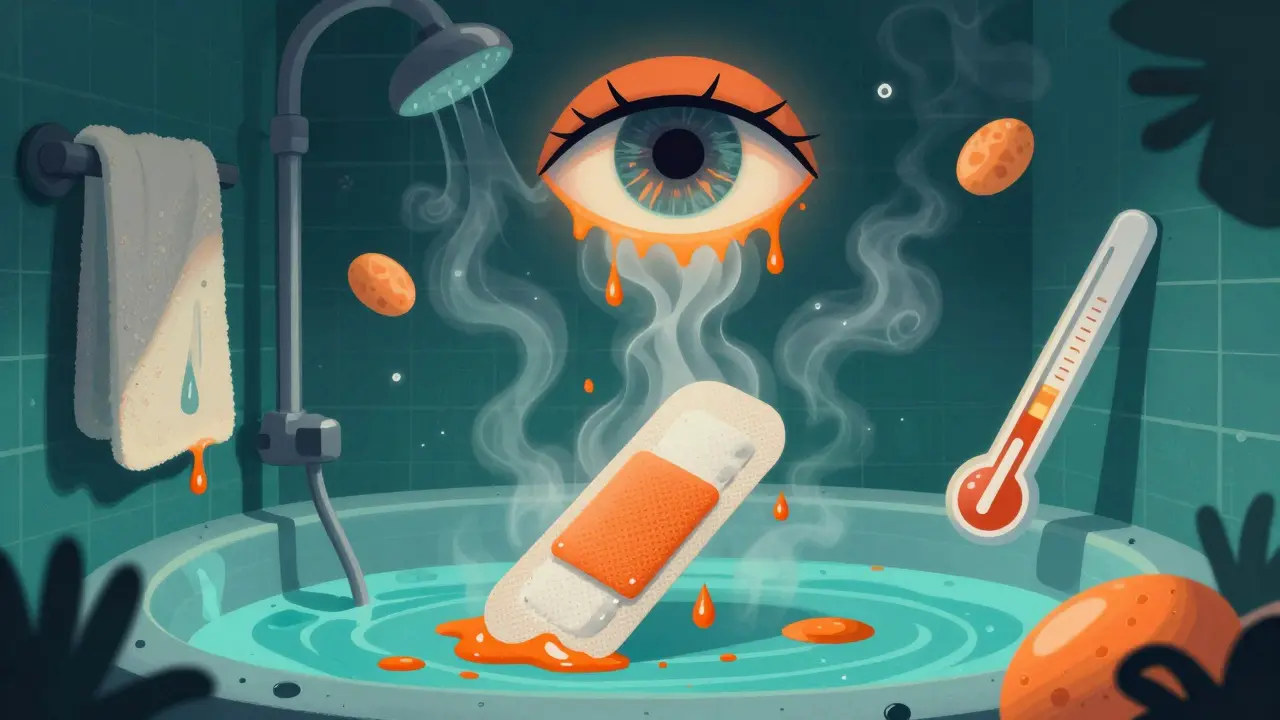
Fentanyl stays in your skin for hours-even days-after removal. That leftover drug keeps seeping into your bloodstream. If you then take a hot shower, go for a run, or get a fever, you’re still at risk. The patch may be gone, but the drug isn’t.
Doctors say it can take up to 24 hours after patch removal for fentanyl levels to drop significantly. That’s why you can’t just toss the patch and forget it. You still need to avoid heat for at least a full day after taking it off.
Who Should Never Use Fentanyl Patches
Fentanyl patches are not for everyone. They’re not for:
- People who have never taken opioids before
- Those managing acute pain (like after surgery)
- Anyone with breathing problems or sleep apnea
- Patients taking medications that interfere with liver enzymes (like ketoconazole or erythromycin)
These patches contain enough fentanyl to kill someone who isn’t opioid-tolerant. One patch can be lethal to a child or an adult who’s never used opioids. That’s why they’re only prescribed to people with severe, chronic pain who’ve already built up tolerance to other opioids.
What to Do If You’re Using a Fentanyl Patch
If you’re on a fentanyl patch, here’s exactly what you need to do:
- Never apply heat to the patch area-no heating pads, no hot water bottles, no saunas.
- Avoid hot showers or baths. Keep water warm, not hot.
- Check your temperature if you feel sick. If you have a fever, call your doctor. Don’t wait.
- Don’t exercise hard in hot weather. Walk slowly. Stay cool.
- Remove the patch after exactly 72 hours. Don’t leave it on longer.
- Dispose of used patches safely. Fold it in half with sticky sides together, and flush it down the toilet-or take it to a drug take-back program.
- Tell every doctor, dentist, and nurse you’re using a fentanyl patch-even for a simple procedure.
Warning Signs You’re Overdosing
Know the red flags. If you or someone you care about is on a fentanyl patch and shows any of these, call emergency services immediately:
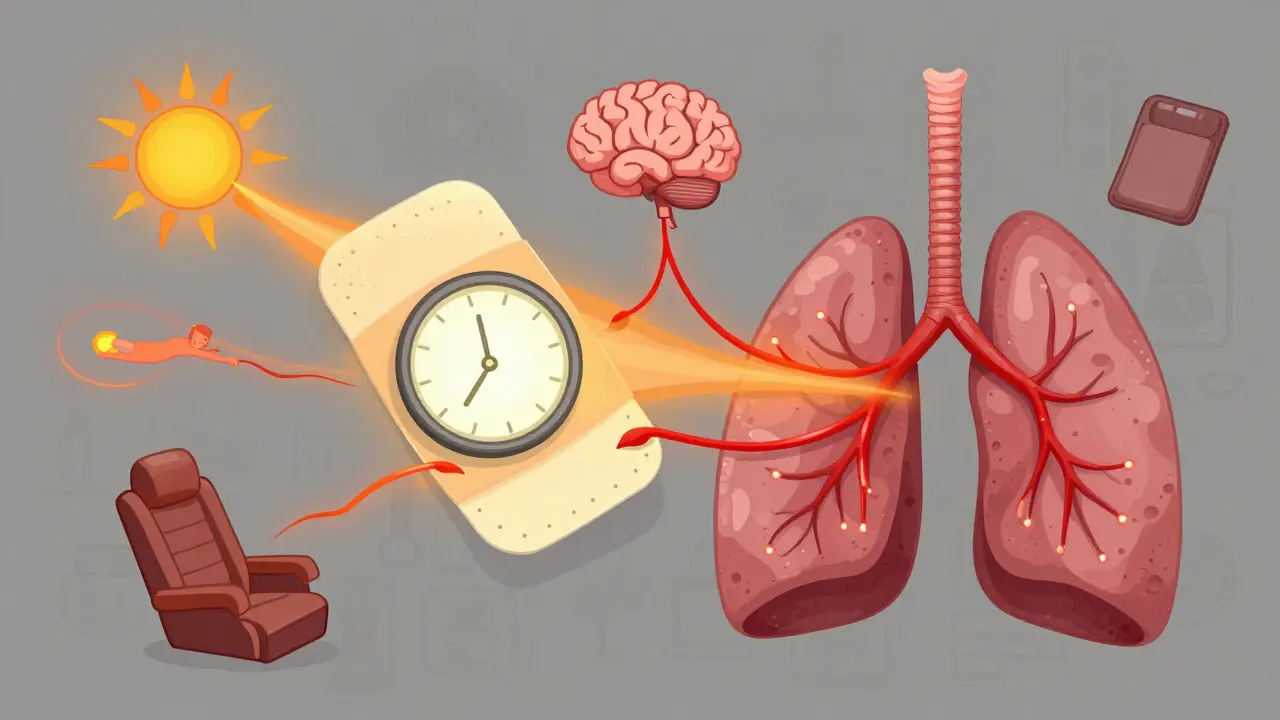
- Slow, shallow, or stopped breathing
- Extreme drowsiness or inability to wake up
- Blue lips or fingernails
- Cold, clammy skin
- Confusion or dizziness
- Unusual muscle stiffness or spasms
- Fast heartbeat, sweating, or fever (could be serotonin syndrome)
These aren’t side effects. They’re signs your body is shutting down. Don’t wait. Don’t assume it’s just tiredness. Fentanyl overdose kills fast.
What Your Doctor Should Be Asking You
Doctors aren’t always trained to ask the right questions. You have to speak up.
Ask your doctor:
- “Is this patch right for me, given my health and other meds?”
- “What should I do if I get sick or run a fever?”
- “Can I still take a warm shower or use a heating pad for my pain?”
- “Are any of my other medications going to make this more dangerous?”
And if your doctor dismisses your concerns about heat? Get a second opinion. This isn’t a minor warning. It’s a life-or-death rule.
The Bottom Line: Heat + Fentanyl = Deadly Mix
Fentanyl patches can help people live with chronic pain. But they’re not safe unless you treat them like a loaded gun. Heat doesn’t just make them work better-it makes them lethal.
If you’re using one, assume every source of warmth is a threat. No exceptions. No compromises. Your life depends on it.
And if you’re caring for someone on a fentanyl patch? Watch for heat. Watch for signs of overdose. And never, ever assume they’re safe just because they’re not in pain.
Can I use a heating pad if I have a fentanyl patch?
No. Never use a heating pad, electric blanket, hot water bottle, or any other heat source directly on or near a fentanyl patch. Heat can cause the patch to release up to three times more fentanyl than intended, leading to respiratory failure or death.
What if I get a fever while wearing a fentanyl patch?
Call your doctor immediately. Even a mild fever can increase how fast your body absorbs fentanyl. Your doctor may advise you to remove the patch temporarily or adjust your dose. Never ignore a fever when you’re on this medication.
How long after removing the patch is it still dangerous?
Fentanyl can continue to be absorbed from your skin for up to 24 hours after removing the patch. Avoid heat, hot showers, exercise, or fever during this time. Dispose of the patch properly by folding it in half (sticky sides together) and flushing it down the toilet or taking it to a drug disposal site.
Can I take a hot shower with a fentanyl patch?
No. Hot water can raise your skin temperature enough to increase fentanyl absorption. Keep showers warm, not hot. Avoid soaking in baths or using steam rooms. If you’re unsure, ask your pharmacist or doctor for safe bathing guidelines.
Are fentanyl patches safe for someone who’s never taken opioids before?
No. Fentanyl patches are extremely dangerous for people who haven’t built up tolerance to opioids. A single patch can be fatal to someone opioid-naïve. They are only prescribed for chronic pain in patients already taking regular opioid medication under medical supervision.
What should I do if someone overdoses from a fentanyl patch?
Call emergency services immediately. If naloxone is available, administer it right away. Fentanyl overdoses often require multiple doses of naloxone because the drug is so potent. Stay with the person until help arrives. Do not leave them alone.
Can I use a fentanyl patch if I’m taking antibiotics or other medications?
Some medications, like ketoconazole, erythromycin, or certain antidepressants, can slow down how your body clears fentanyl. This can cause dangerous buildup in your blood. Always tell your doctor and pharmacist about every medication you’re taking before starting a fentanyl patch.
Manoj Kumar Billigunta
This is one of those posts that should be printed and handed out with every prescription. I work with chronic pain patients, and not one in ten knows how dangerous heat can be with these patches. It’s not just about saunas-it’s about lying on a warm car seat after a long drive, or taking a hot shower after a long day. People think they’re being careful, but they’re not thinking about the little things. This needs to be louder.
sagar sanadi
So let me get this straight… the government gives you a patch that can kill you if you get too warm… but they won’t let you use cannabis for pain? Hmm. Sounds like a profit-driven trap. Next they’ll say sunlight is a fentanyl amplifier. What’s next? Breathing too hard?
clifford hoang
🔥 Fentanyl patches + heat = government-controlled opioid death clock. 🕰️ They want you dependent, then they want you scared. Why do you think they don’t warn you about infrared saunas? 🤔 The real agenda? Keep the pharma profits flowing while making you paranoid about your own body. You think this is about safety? Nah. It’s about control. 🧠💀
Arlene Mathison
If you're on a fentanyl patch, treat it like a live grenade with a temperature sensor. 🚨 I’ve seen too many people downplay this. Heat isn't just 'a little warm'-it's a silent killer. Please, please, please share this with someone you love. This isn't fearmongering. This is survival.
Carolyn Rose Meszaros
I had a cousin on these patches. She never told anyone she used a heating pad for her arthritis. She didn't even know it was a problem until she passed out in the shower. 🥲 This post saved my life. I just told my mom to stop using her electric blanket. Thank you for writing this.
Greg Robertson
I appreciate the clarity here. I’ve had a patch for years and never thought about the 24-hour window after removal. I always just tossed it and moved on. Now I’m going to keep my room cool and avoid the gym for a full day after switching patches. Small changes, big difference.
Crystal August
Why do people even get these patches if they can’t even take a hot shower? If you’re that sensitive to heat, maybe you shouldn’t be on opioids at all. This isn’t a medical issue-it’s a personal responsibility issue. Stop blaming the patch and start blaming the person who didn’t read the damn label.
thomas wall
The pharmacological kinetics of transdermal fentanyl absorption under thermal stress are not merely a clinical footnote-they represent a systemic failure in patient education and pharmaceutical risk communication. One must question the ethical imperative of disseminating such a potent agent without mandatory in-person counselling and thermal exposure advisories embedded in the packaging.
Jacob Cathro
so like… fentanyl patches are basically time bombs with a temp sensor?? 😭 i had no idea. i thought the ‘don’t use heat’ thing was just a suggestion. my aunt’s on one and she’s always in the jacuzzi… i’m gonna text her rn. this is wild.
kumar kc
Heat kills. Simple.
Thomas Varner
I didn’t realize… the 24-hour window after removal… is that… really accurate? I mean, I’ve seen studies… but also, the skin retains drug molecules… and the dermal reservoir effect… yeah, it’s legit. I’m going to stop my post-patch sauna routine immediately. Good call.
Art Gar
The assertion that fentanyl patches are exclusively for opioid-tolerant individuals is empirically valid; however, the proliferation of these devices in outpatient settings, coupled with inadequate prescriber oversight, constitutes a public health liability of considerable magnitude. Regulatory bodies must mandate pre-prescription competency assessments for prescribers.
Edith Brederode
I’m so glad this exists. I’ve been on these for 3 years and never knew about the post-removal risk. I’m telling my whole family now. And I’m folding my used patches like this 😊❤️ Thank you for being so clear. This isn’t scare tactics-it’s care.
Emily Leigh
so… like… if you’re on one of these… can you even go outside in the summer? 😅 i mean… i guess you can’t… but also… what’s the point of living if you can’t feel the sun? 🤔 i’m just saying… maybe the real problem is that we’re giving people drugs that make them afraid of their own skin…