
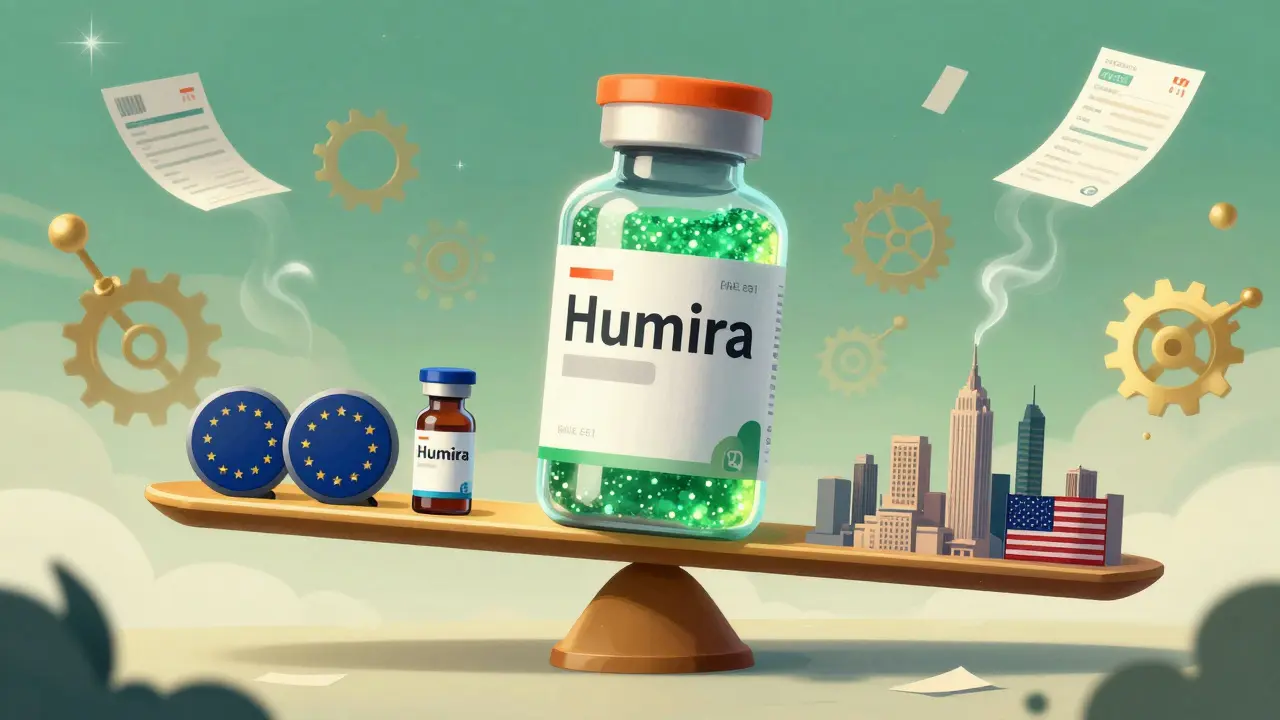
The cost of biologic drugs has been one of the biggest drivers of healthcare spending over the last two decades. Drugs like Humira, Enbrel, and Remicade each brought in billions annually, but their patents are now falling. Enter biosimilars - drugs that are nearly identical to these expensive biologics but cost significantly less. The question isn’t whether biosimilars work - they do. The real issue is why Europe adopted them so quickly while the US lagged, and what’s changing now.
How Biosimilars Are Different from Generics
Generics are copies of small-molecule drugs, like aspirin or metformin. They’re chemically identical to the original. Biosimilars? They’re copies of complex biologic drugs made from living cells - proteins, antibodies, hormones. Think insulin, cancer treatments, or autoimmune therapies. Because they’re made in living systems, no two batches are exactly alike. That’s why regulators don’t call them "identical." They call them "highly similar." And as long as there’s no clinically meaningful difference in safety or effectiveness, they’re approved.
The first biosimilar ever approved was Omnitrope, a growth hormone, in Europe in 2006. The FDA didn’t approve its first biosimilar, Zarxio (a copy of filgrastim), until 2015. That nine-year gap wasn’t accidental. It was built into the rules.
Europe: The Early Leader
Europe didn’t just get ahead - it built the playbook. The European Medicines Agency (EMA) created a clear, science-based pathway for biosimilars in 2005. No need for massive clinical trials. Instead, they focused on rigorous analytical testing, animal studies, and limited human data. If the biosimilar matched the original in structure, purity, and function, it was approved.
That simplicity created momentum. By 2024, Europe had over 100 approved biosimilars. Germany, France, and the UK led the charge. Hospitals there started using tender systems - bulk buying programs that automatically favored cheaper biosimilars. In some countries, pharmacists could swap a biologic for a biosimilar without asking the doctor. That kind of policy doesn’t exist in the US.
By 2024, Europe’s biosimilar market hit $13.16 billion in revenue, according to Precedence Research. Oncology and rheumatology drugs saw adoption rates over 80% in many markets. Sandoz, Fresenius Kabi, and Amgen became household names in European pharmacies. The system worked because regulators, payers, and doctors were all on the same page.
The US: A Slow Start
The US passed the Biologics Price Competition and Innovation Act (BPCIA) in 2009, but it took years for anything to happen. Why? Three big roadblocks.
First, patent thickets. Originator companies piled on dozens of secondary patents - for delivery methods, packaging, dosing schedules - making it legally risky for biosimilar makers to enter. A company could spend millions on development, only to get sued for years.
Second, the "patent dance." The BPCIA required biosimilar makers to share their manufacturing data with the original drug maker. But it wasn’t mandatory. Many originators refused to engage, dragging out negotiations for years.
Third, interchangeability. The FDA required biosimilars to prove they could be swapped with the original drug without any risk - even if the patient had been on the biologic for years. To do that, companies had to run costly switching studies. Most didn’t bother. As a result, by 2024, only 12 biosimilars had launched in the US - compared to over 100 in Europe.
Even when biosimilars were approved, they didn’t sell. Payers didn’t push them. Doctors didn’t prescribe them. Patients didn’t ask for them. The system was broken.
The Turning Point: 2022 and Beyond
Everything started to change with the Inflation Reduction Act of 2022. It eliminated the Medicare Part D coverage gap - the "donut hole" - which meant seniors no longer faced sky-high out-of-pocket costs for biologics. Suddenly, biosimilars became financially attractive.
Then came the FDA’s June 2024 guidance. They dropped the requirement for switching studies to get interchangeable status. That was huge. No more need to prove a patient could safely switch from Humira to its biosimilar after 10 years on the drug. The FDA now said: if the biosimilar is highly similar, it’s interchangeable. Just like Europe.
Companies rushed in. Humira, once the world’s top-selling drug, lost its patent in 2023. Fourteen biosimilars were approved in the US - six were available. By 2025, that number jumped to over 10. Pfizer, Merck, and Samsung Bioepis started dominating the market. The US biosimilar market hit $10.9 billion in 2024, up from $7.1 billion in 2020.
Market Size: Europe Still Leads, But the US Is Catching Fast
As of 2024:
- Europe: $13.16 billion (Precedence Research)
- United States: $10.9 billion (Alira Health)
- Global market: $30.3 billion (Alira Health)
Europe still has the largest market share - 34% of global biosimilar revenue in 2020, and still leading in 2024. But the US growth rate is faster. IMARC Group projects the US market will hit $30.2 billion by 2033 at an 18.5% annual growth rate. Europe’s growth is projected at 17.34%. North America as a whole could overtake Europe in total market value by 2027.
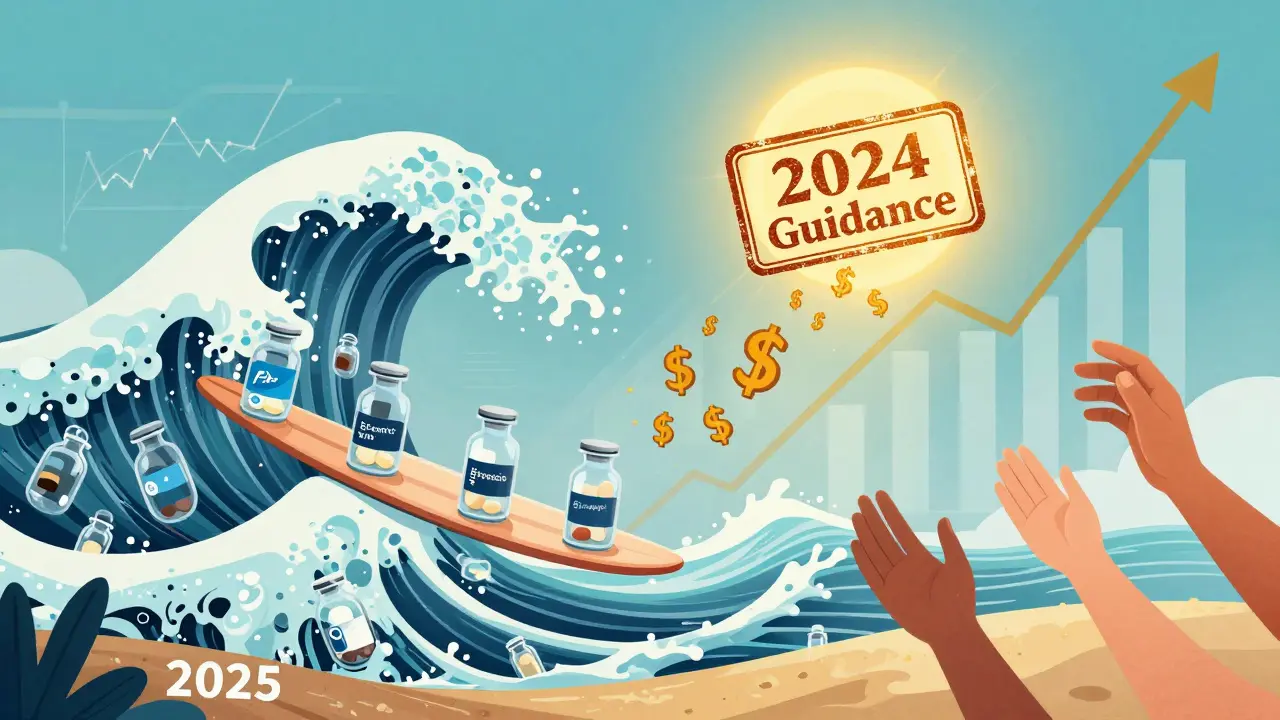
Why? Because the US has more high-value biologics coming off patent. IQVIA estimates 118 biologics will lose exclusivity between 2025 and 2034 - worth $232 billion in sales. That’s a tidal wave of opportunity. Europe has already captured much of its early wave.
Therapeutic Areas: Where Each Market Leads
Europe’s strength has been in autoimmune diseases. Biosimilars for adalimumab (Humira), infliximab (Remicade), and etanercept (Enbrel) now dominate treatment in Germany and France. Hospitals routinely prescribe them as first-line therapy.
The US started slower. Early biosimilars were in supportive care - drugs like filgrastim (used after chemotherapy) or epoetin (for anemia). They were easier to develop and less controversial. But now? The big shift is happening in oncology and rheumatology. With Humira biosimilars finally on the market, doctors are prescribing them for psoriasis, Crohn’s disease, and rheumatoid arthritis. Patient acceptance is growing.
Manufacturing: Europe’s Hidden Advantage
Europe doesn’t just lead in adoption - it leads in production. Germany is a biosimilars manufacturing powerhouse. Companies from Asia and the US set up production facilities there because of its skilled workforce, strong regulatory alignment, and centralized supply chains.
The US is catching up. Pfizer and Merck have invested billions in biosimilar manufacturing. But Europe still has the edge in scale, experience, and infrastructure. That means biosimilars made in Europe often cost less - and reach global markets faster.
What’s Next?
The regulatory gap between Europe and the US is closing. The FDA’s 2024 rule change was the biggest signal yet: they’re adopting the European model. No more unnecessary trials. No more legal delays. Just science.
Payers are catching up too. Medicare, Medicaid, and private insurers are starting to require biosimilars before approving the more expensive originals. Pharmacy benefit managers are adding biosimilars to preferred lists. Doctors are getting more comfortable. Patients are asking for them.
The future? Biosimilars will capture 50% or more of the market for key biologics by 2030. That means billions in savings - for patients, hospitals, and governments. Europe showed it could be done. The US is proving it can be done faster.
The lesson? Regulation matters. Incentives matter. And when the rules are clear, innovation follows.
Are biosimilars as safe as the original biologic drugs?
Yes. Both the EMA and FDA require biosimilars to show no clinically meaningful differences in safety, purity, or potency compared to the reference product. This is backed by extensive analytical testing, animal studies, and targeted human trials. Thousands of patients have used biosimilars in Europe for nearly 20 years with no new safety concerns. The FDA’s approval process is just as strict - even if it took longer to get there.
Why did Europe adopt biosimilars faster than the US?
Europe created a clear, science-based regulatory pathway in 2006 and backed it with policies that encouraged use. Hospitals used bulk purchasing (tenders), pharmacists could substitute biosimilars automatically, and doctors were educated early. The US had a more complex system - patent lawsuits, unclear interchangeability rules, and fragmented payer systems slowed adoption. It wasn’t that Americans didn’t want biosimilars - the system made it hard to use them.
Can a pharmacist switch me from a biologic to a biosimilar without my doctor’s permission?
In Europe, yes - in many countries, substitution is allowed by law. In the US, it depends. Only if the biosimilar is designated as "interchangeable" can a pharmacist switch you without asking your doctor. As of 2025, only a few biosimilars have that status - but more are getting it after the FDA dropped switching study requirements in 2024. So the answer is slowly becoming yes.
Do biosimilars really save money?
Yes - and significantly. Biosimilars typically launch at 15% to 30% lower prices than the original biologic. In Europe, where adoption is high, some drugs cost 70% less after biosimilars entered. In the US, Humira biosimilars cut the price from over $7,000 per year to around $3,500. That’s not just savings - it’s access. Many patients who couldn’t afford the original drug can now get treatment.
What’s stopping biosimilars from being used more widely in the US?
Two things: patent settlements and payer inertia. Some originator companies pay biosimilar makers to delay entry - a practice called "pay for delay." That’s still happening. Also, some insurers still favor the original drug because they have long-term contracts. But that’s changing fast. With Medicare now incentivizing biosimilar use and more interchangeable products approved, barriers are falling.
Aisling Maguire
Just had my rheumatologist switch me to a biosimilar last month. My monthly bill dropped from $800 to $220. No side effects, no drama. Honestly? I’m shocked it took this long for the US to catch up. Europe’s been doing this since before I graduated college.
Ben Estella
Let’s be real-the US didn’t lag because of regulation. It lagged because Big Pharma bought Congress. Patent thickets? That’s just corporate greed in a lab coat. Meanwhile, Europe just said ‘enough’ and got it done. We’re not behind because we’re dumb-we’re behind because we’re corrupted.
Jimmy Quilty
you know what i think? this whole biosimilar thing is a big pharma psyop. they want us to think its safe but really theyre just testing new ways to kill people with cheaper drugs. i read on a forum that one guy got a rash and then his cat disappeared. coincidince? i think not. also the fda is run by ex-pfizer execs. just saying.
Miranda Anderson
I’ve been following this for years, and honestly, the shift in 2024 feels like a turning point. It’s not just about the FDA’s rule change-it’s the cultural shift. Doctors who used to say ‘stick with the original’ are now saying ‘have you tried the biosimilar?’ Patients are asking for them. Payers are finally incentivizing them. It’s not perfect, but it’s moving. And that’s huge. This isn’t just about cost-it’s about dignity. People shouldn’t have to choose between rent and insulin anymore.
Gigi Valdez
The regulatory alignment between the EMA and FDA is noteworthy. The elimination of mandatory switching studies represents a significant refinement of the approval paradigm, aligning with evidence-based principles rather than procedural overreach. This development portends a more efficient and equitable pharmaceutical landscape.
Sneha Mahapatra
It’s beautiful how science can transcend borders when it’s not drowned in profit motives. 🌍 In India, we’ve seen how expensive biologics can break families. Biosimilars aren’t just drugs-they’re hope with a price tag that doesn’t demand a second mortgage. Europe showed the path. Now the US is walking it. Slowly, but surely.
bill cook
wait so you’re telling me the government is letting people save money on medicine? that’s literally socialism. next they’ll give us free wifi and ask us to ‘share the pain’. i’m not taking a copy of my drug. what if it gives me nightmares? what if it makes me cry at 3am? i want the original. the original has feelings.
Byron Duvall
you think this is about science? nah. this is about who owns the patent. i heard the FDA approved biosimilars so they could force everyone onto Medicaid. and then they’ll track your bloodwork and tell you what you’re allowed to eat. next thing you know, they’ll ban coffee. this is step one. i’ve seen the documents. they’re coming for your insulin.
Katherine Farmer
Europe’s dominance is unsurprising. Their regulatory framework is the gold standard-rigorous, transparent, and devoid of the American penchant for litigation-driven stagnation. The U.S. market’s growth, while impressive, remains a function of late-stage regulatory catch-up rather than visionary policy. One must ask: why did it take 15 years to do what the EU accomplished in five?
Full Scale Webmaster
Let me tell you what’s REALLY happening. Biosimilars are being pushed because the original drug companies are losing money and they’re desperate. They’re not trying to help you-they’re trying to get you hooked on a cheaper version so they can keep selling you the same thing under a different name. And don’t get me started on the ‘interchangeable’ label. That’s just a fancy word for ‘we don’t care if you switch back and forth.’ I’ve been on Humira for 8 years. My body knows it. My immune system has a relationship with that drug. You think a biosimilar is just as good? That’s like saying a copy of Mona Lisa is the same as the original because it has two eyes and a smile. I’m not your lab rat. I’m not switching.
Brandie Bradshaw
It’s not about Europe vs. America. It’s about whether we value human life over shareholder value. The fact that we allowed 15 years of delay-while patients suffered, went bankrupt, or died-is a moral failure. The FDA’s 2024 guidance? A long-overdue correction. But we still have pay-for-delay deals. We still have insurers that refuse to cover biosimilars. We still have doctors who don’t know the difference. This isn’t a win. It’s a bare minimum. And we still have a long way to go.
Angel Wolfe
they say biosimilars are safe but what if they’re not? what if the FDA is just lying to us? what if the real drug is made in a lab in germany but the copy is made in a basement in china? i heard one guy’s biosimilar made his hair fall out. and his dog. and his wifi stopped working. and then the government started sending him bills for ‘health compliance fees’. this is all a setup. they want us dependent. they want us weak. they want us to forget what real medicine is.
Sophia Rafiq
Humira biosimilars hit the market and suddenly everyone’s talking about cost. Funny how that works. The drug’s been $7K for years. No one blinked. Now that there’s a $3.5K option? Suddenly it’s a national conversation. The real win? More people getting treated. Not the savings. Not the stock prices. The people. That’s what matters.
Brandon Vasquez
This is one of those rare moments where policy actually worked. Europe didn’t rush. They built a system that trusted science, not lawsuits. The U.S. is finally catching up-not because we’re smarter, but because we had to. The cost of inaction was too high. And now, for the first time, I feel like we’re doing the right thing-not because it’s profitable, but because it’s right.