
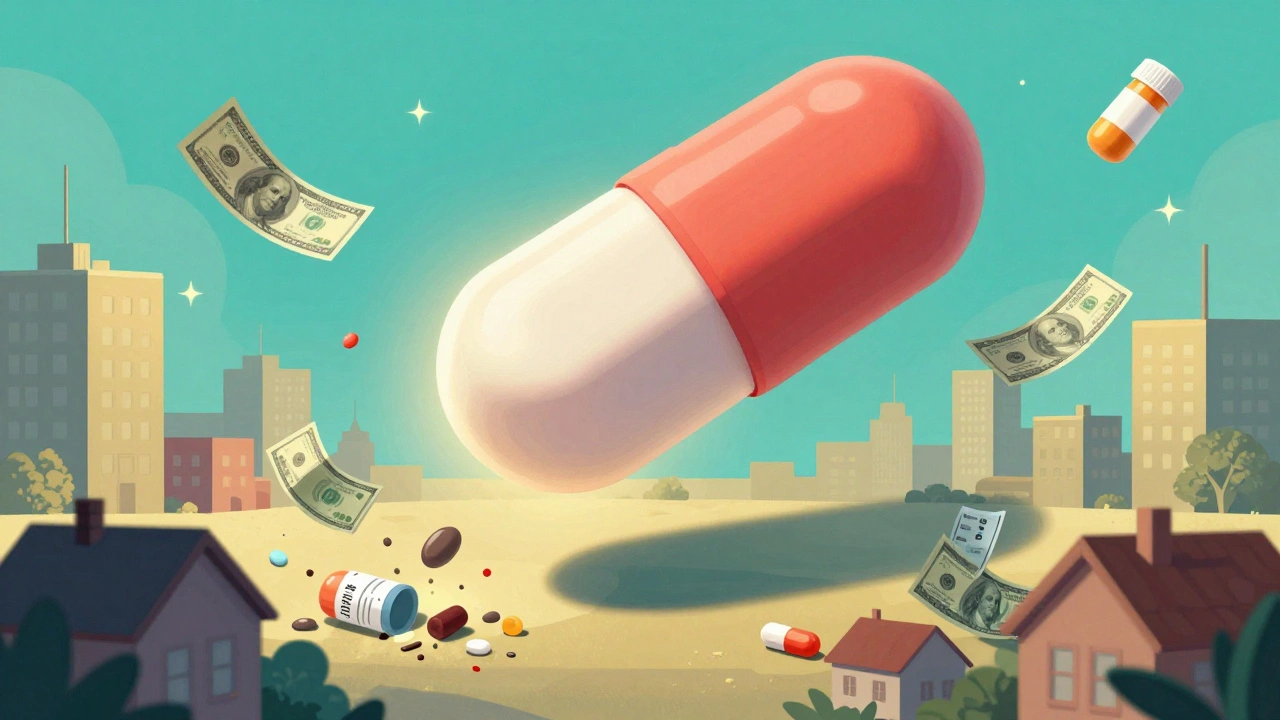
When you pick up a prescription at the pharmacy, you might not realize how much money you’re saving just because the pill in your hand isn’t made by the original brand. Generic drug savings aren’t just a marketing buzzword-they’re a massive, real-world force that keeps healthcare affordable for millions. In 2024 alone, generic and biosimilar medicines saved the U.S. healthcare system $467 billion. That’s not a guess. It’s not an estimate from a single study. It’s the official number from the Association for Accessible Medicines and The IQVIA Institute, backed by billions of prescription records.
How Much Do Generics Actually Save You?
Let’s break it down to your wallet. In 2024, the average out-of-pocket cost for a generic prescription was $6.95. For a brand-name drug? $28.69. That’s more than four times as much. If you take three prescriptions a month, switching from brand to generic could save you over $700 a year. For someone on Medicare, the savings are even bigger. In 2024, generics saved Medicare beneficiaries an average of $2,643 per person. That’s like getting a free vacation every year just by choosing the generic version.
And it’s not just about pills. The volume of generic oral solids-pills and capsules-has grown from 167 billion units in 2015 to nearly 197 billion in 2024. More people are using generics, and they’re paying less. Since 2019, total spending on all generic drugs in the U.S. has dropped by $6.4 billion-even as more generics hit the market. That’s the opposite of inflation. It’s deflation. And it’s happening in a sector where most other prices keep rising.
Brand-Name Drugs Are Getting More Expensive
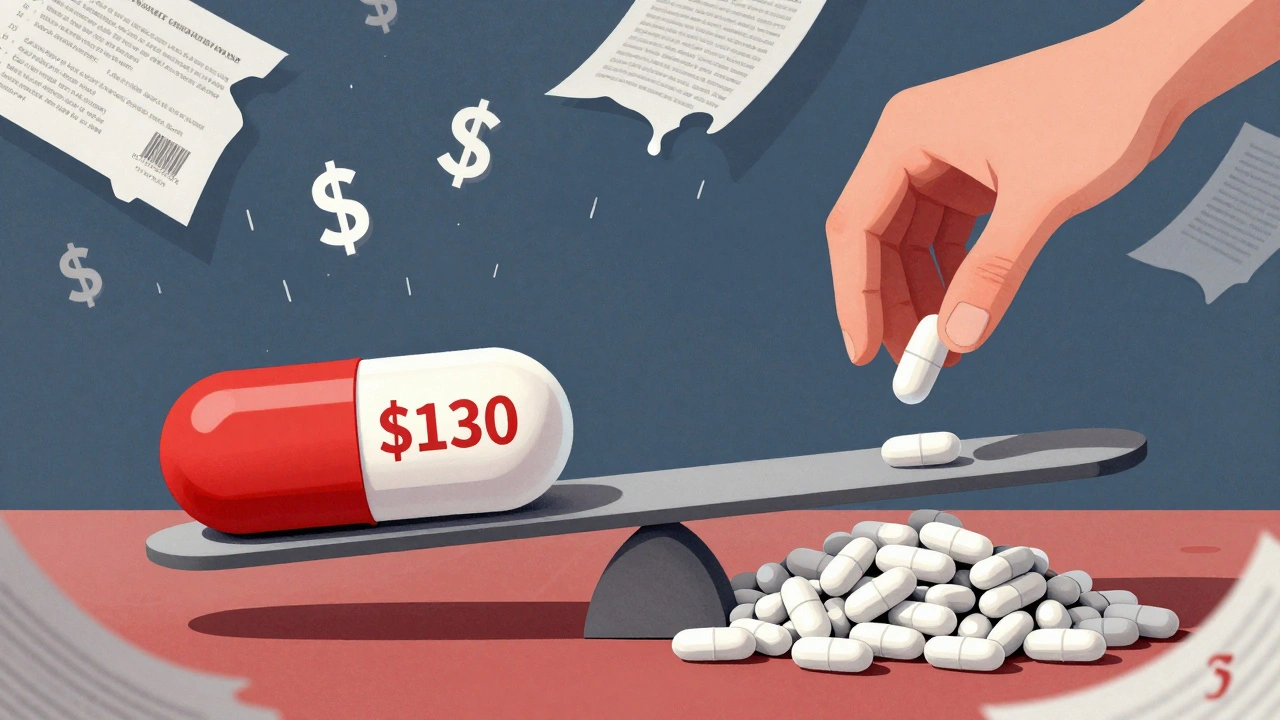
While generics keep getting cheaper, brand-name drugs are doing the opposite. Since 2019, the cost of brand-name prescriptions for uninsured Americans has jumped by about 50%, hitting $130.18 per script. Meanwhile, the average cost of a generic dropped by $2.45. That’s not a coincidence. It’s the result of competition. When a generic enters the market, manufacturers of the brand-name drug often lower their prices to stay competitive. But many don’t. Instead, they raise prices.
In January 2025, major pharmaceutical companies raised prices on 250 drugs by a median of 4.5%. That’s nearly double the overall U.S. inflation rate. Some drugs saw hikes of 10%, 20%, even 50%. And there’s no rule saying they can’t do it again next year. But if you’re taking a generic, you’re shielded from most of that. Generics don’t get price hikes because they’re not tied to patents or marketing campaigns. They’re made by multiple companies competing on price. That’s why the same drug can cost $3 at one pharmacy and $6 at another-because the market is driving the price down.
Biosimilars: The Next Big Wave of Savings
There’s another layer to this story: biosimilars. These are not exact copies like generics-they’re highly similar versions of complex biologic drugs used for conditions like rheumatoid arthritis, cancer, and Crohn’s disease. They’ve been around since 2015, but their impact is accelerating. In 2024, biosimilars saved $20.2 billion-nearly double the savings from the year before. Since their launch, they’ve saved the system $56.2 billion total.
And they’re being used more than ever. Over 3.3 billion days of patient therapy have been covered by biosimilars with no new safety concerns reported. That’s not just cost savings-it’s proven safety. The FDA has approved dozens of biosimilars, and doctors are prescribing them more confidently. In fact, 60% of all biosimilar savings happened in just the last two years. That means the market is still in its early stages. The biggest savings are still ahead.
Why Are Generics So Much Cheaper?
It’s simple: no marketing, no patents, no R&D costs. When a brand-name drug’s patent expires, other companies can make the same medicine. They don’t have to spend billions testing it again. They just prove it works the same way. That cuts their costs dramatically. They don’t run TV ads. They don’t pay doctors to promote it. They don’t need fancy packaging. They just make the pill and sell it for less.
Here’s the kicker: the same active ingredient, the same dosage, the same effectiveness. The FDA requires generics to be bioequivalent-meaning they deliver the same amount of medicine into your bloodstream at the same rate as the brand. There’s no difference in how they work. The only difference is the price.
The Hidden Threat: Generic Drug Shortages
But here’s the problem: the very thing that makes generics cheap-low prices-is also making it hard for manufacturers to stay in business. The average profit margin on a generic pill is less than 10 cents. Some cost just pennies to make. When a company can’t make money, they stop making the drug. And that’s happening more often.
The Biosimilars Council warns that the price deflation of the last 30 years is now threatening patient access. If manufacturers can’t cover production costs, they’ll stop making certain generics. And when that happens, shortages follow. In 2024, over 300 drugs faced shortages in the U.S., many of them generics. Some are critical medicines-antibiotics, blood pressure pills, insulin. When a generic disappears, the brand-name version is often the only option left. And that’s expensive.
There’s also a darker side: pay-for-delay deals. Sometimes, brand-name companies pay generic makers to delay bringing their version to market. A 2025 study found these deals cost the system $12 billion a year, with $3 billion of that hitting Medicare. Banning these deals could save $45 billion over 10 years.
What You Can Do Right Now
Don’t assume your prescription is set in stone. Ask your pharmacist: "Is there a generic version?" If your doctor wrote "dispense as written," ask them to change it to "allow substitution." Most states allow pharmacists to swap in a generic unless the doctor specifically says no.
Use price comparison tools. Prices for the same generic can vary wildly between pharmacies. A 30-day supply of metformin might cost $4 at Walmart and $25 at a local pharmacy. Use GoodRx, SingleCare, or your insurer’s app to find the lowest price.
Consider mail-order pharmacies. Many insurers offer 90-day supplies of generics at lower copays. That’s two months’ worth of pills for the price of one.
If you’re on Medicare, check your plan’s formulary. Some plans have lower copays for certain generics. Switching plans during open enrollment could save you hundreds.
The Bigger Picture
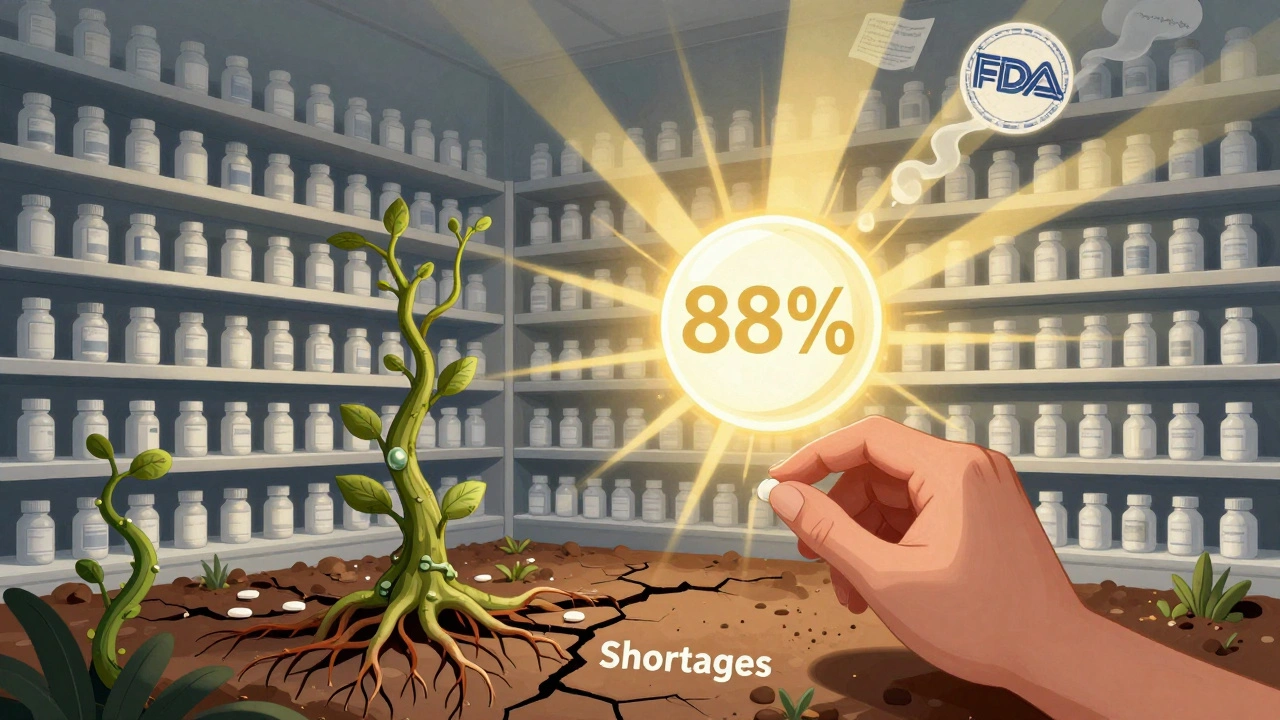
Generics and biosimilars make up 90% of all prescriptions filled in the U.S. But they account for only 12% of total drug spending. Brand-name drugs? Just 10% of prescriptions-but 88% of the cost. That’s the power of competition. It’s not magic. It’s economics. When multiple companies can make the same thing, the price drops. That’s how markets work.
And yet, the system is fragile. Generic manufacturers are squeezed. Brand-name companies keep raising prices. Policymakers are debating patent reforms, Medicare price controls, and PBM reforms. None of these changes will happen overnight. But your choices today matter. Choosing a generic isn’t just about saving money. It’s about keeping the system alive.
Every time you pick a generic, you’re helping keep the price low for the next person. You’re supporting the companies that make affordable medicine possible. You’re preventing shortages. And you’re making sure that the $467 billion in savings this year doesn’t turn into $0 next year because no one’s left to make the pills.
What’s Next?
The trend is clear: generics will keep saving money. Biosimilars will keep growing. But the system needs protection. Without policy changes-like ending pay-for-delay deals, cracking down on patent abuse, and ensuring fair reimbursement for manufacturers-the savings could vanish.
For now, the numbers speak for themselves. Generics aren’t "good enough." They’re the best option. And they’re the reason millions of Americans can afford their medicine at all.
Are generic drugs really as effective as brand-name drugs?
Yes. The FDA requires generic drugs to have the same active ingredient, strength, dosage form, and route of administration as the brand-name version. They must also be bioequivalent-meaning they work the same way in your body. Thousands of studies confirm this. Generics aren’t cheaper because they’re weaker. They’re cheaper because they don’t carry the marketing and R&D costs of the original.
Why do some generics look different from the brand-name version?
By law, generics can’t look exactly like the brand-name drug because of trademark rules. That’s why the shape, color, or imprint might be different. But the active ingredient is identical. The inactive ingredients (like fillers or dyes) might vary slightly, but these don’t affect how the drug works. If you’re concerned about allergies or intolerances, talk to your pharmacist.
Can I switch from a brand-name drug to a generic without my doctor’s approval?
In most cases, yes. Pharmacists are allowed to substitute a generic unless the prescription says "dispense as written" or "no substitution." If you’re unsure, ask your pharmacist. If you want to switch, you can also ask your doctor to write "allow substitution" on the prescription. It’s a simple change that can save you money.
Why are some generics not available even when the patent expired?
Sometimes, there’s only one manufacturer making the generic, or none at all. This can happen if the drug is low-profit, hard to make, or if brand-name companies use legal tactics to delay competition. Other times, raw materials are hard to source, or manufacturing issues arise. These are called shortages. If your generic isn’t available, your pharmacist can often suggest another generic version or help you find the lowest price on the brand-name drug.
Do generic drugs cause more side effects?
No. The FDA monitors adverse events for both brand-name and generic drugs. Studies show no significant difference in side effect rates. If you notice a change after switching, it could be due to different inactive ingredients-like dyes or fillers-that affect people differently. Talk to your doctor or pharmacist. Rarely, a different formulation might affect how the drug is absorbed, but this is uncommon.
How do I know if a generic is approved by the FDA?
All FDA-approved generics are listed in the Orange Book, which is publicly available. Your pharmacist can confirm whether a generic is approved. You can also check the FDA’s website for drug approvals. If a pharmacy is selling a "generic" that’s not FDA-approved, it’s not legal. Stick to licensed pharmacies.
Are biosimilars the same as generics?
No. Generics are exact copies of small-molecule drugs, like pills for blood pressure or diabetes. Biosimilars are highly similar versions of complex biologic drugs-like injectables for cancer or autoimmune diseases. They can’t be exact copies because biologics are made from living cells. But they’re proven to work the same way with no increased risk. Biosimilars are newer and more expensive to develop than generics, but they still save billions.
Deborah Andrich
Generics saved my mom $3k last year on her diabetes meds. She’s on fixed income and this isn’t just convenience-it’s survival. No fluff, no hype, just facts that keep people alive.
Emma Sbarge
Don’t let the pharma lobbyists fool you. Generics aren’t some charity project-they’re proof that competition works. The system’s rigged to keep brand names profitable, but people are waking up. The $467 billion number? That’s real money staying in people’s pockets instead of CEO bonuses.
And don’t get me started on pay-for-delay. That’s not capitalism-it’s corruption with a prescription pad.
Tommy Watson
bro i switched to generic adderall and now i feel like a zombie. not the same at all. maybe its the fillers?? idk but my brain feels like mush now. why is this so hard??
Karen Mccullouch
They’re not cheaper because they’re better-they’re cheaper because we let corporations strip everything down to the bare minimum. And now we’re paying for it with shortages. When your blood pressure med disappears because the factory in India shut down for lack of profit, you’ll wish you’d fought harder.
This isn’t about saving $700 a year. It’s about letting the system collapse so we can all pretend we’re frugal.
Michael Gardner
Actually, the 90% prescription stat is misleading. Most of those are for antibiotics or OTC equivalents. The real cost drivers are the 10% of drugs that are brand-only-and those are the ones that are skyrocketing. Generics aren’t the hero here, they’re the distraction.
Shelby Ume
Tommy, your experience with generic Adderall isn’t uncommon. Some people are sensitive to the fillers-talc, lactose, dyes. It doesn’t mean the active ingredient is different. It just means your body reacts to the packaging. Talk to your pharmacist-they can try a different manufacturer’s version. Same drug, different inert ingredients. It’s like switching from Coca-Cola to store-brand cola. Taste might vary, but caffeine? Still there.
Lauren Scrima
Oh wow, so the government lets drug companies charge $130 for a pill… and then we’re supposed to be impressed that generics are $7? That’s like being proud your landlord lowered rent from $3,000 to $2,995. Congrats, you’re still getting robbed.
sharon soila
Every time you choose a generic, you vote for a world where medicine isn’t a luxury. You don’t need to be a hero. You just need to say yes to the cheaper pill. That’s how change happens-not in Congress, but in the pharmacy line. One person. One prescription. One less person choosing between food and their heart medicine.