
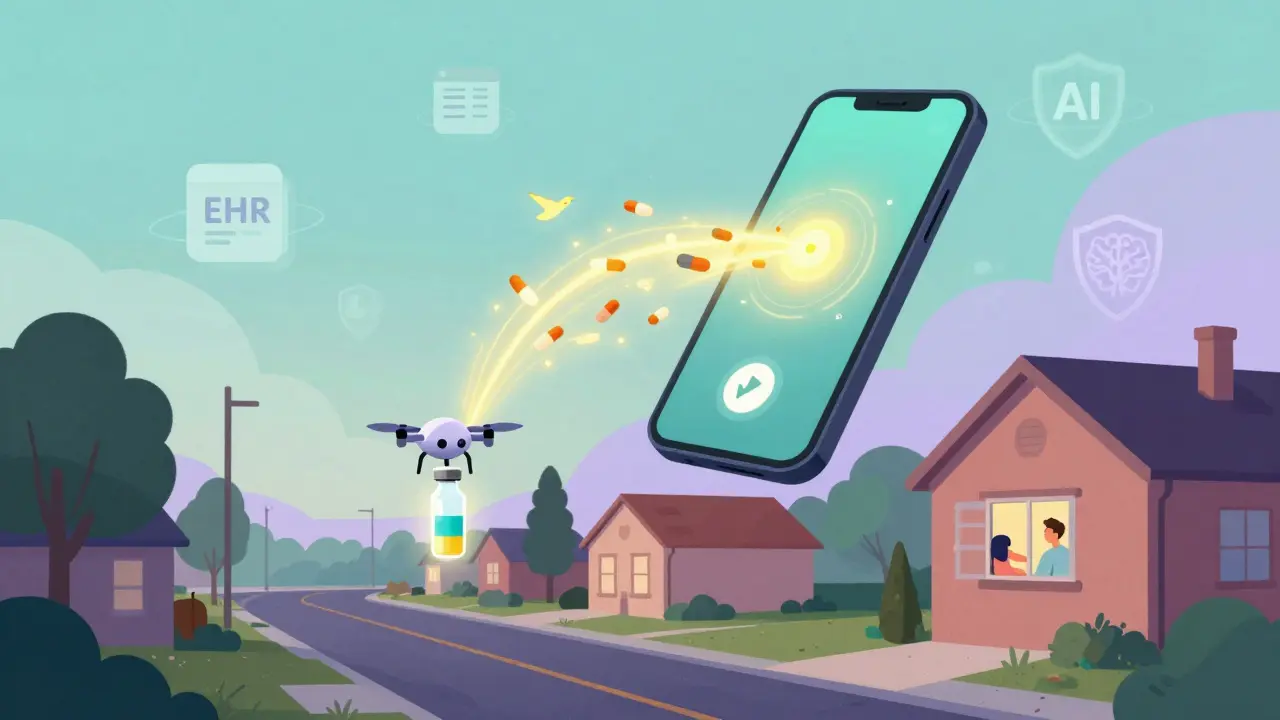
By 2026, getting your generic meds won’t mean waiting in line at the corner pharmacy. It’ll mean tapping a button on your phone and having your prescription delivered before lunch. The shift isn’t coming - it’s already here. In the U.S., nearly 90% of prescriptions are for generic drugs, and digital platforms now handle over 31% of those fills. That number is climbing fast. By 2027, Deloitte predicts digital channels will deliver nearly half of all generic medications. This isn’t just convenience. It’s a system built to cut costs, boost access, and reduce errors - but only if it’s done right.
How digital pharmacy works today
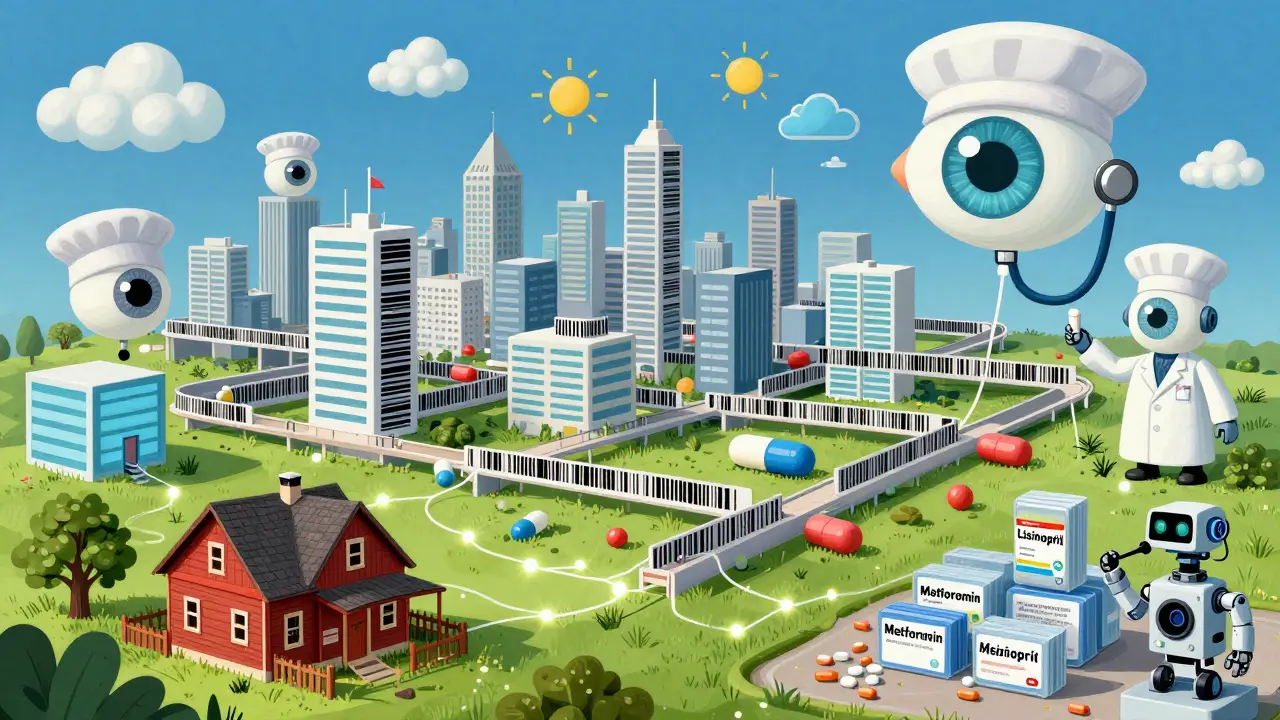
Modern digital pharmacies aren’t just websites that sell pills. They’re integrated systems connecting telehealth visits, AI-driven inventory, automated insurance checks, and same-day delivery networks. Take Truepill: they process over 10,000 prescriptions daily. How? Their platform links directly to EHRs like Epic and Cerner. When a doctor prescribes a generic blood pressure med during a Zoom visit, the system auto-checks insurance coverage, confirms therapeutic equivalence, and routes the order to the nearest fulfillment center. No phone calls. No faxing. No waiting three days.
The tech behind this is simpler than you think. Cloud-based systems with AES-256 encryption keep data secure. AI predicts demand with 89.7% accuracy - not just based on past sales, but local flu outbreaks, seasonal allergies, even weather patterns. If a heatwave hits Texas, the system knows more people will need antihistamines. It preps inventory before the spike hits. CVS Health’s 2024 Rx Report shows fulfillment time dropped from 48 hours to just 5.2 hours for same-day services. Order accuracy jumped to 92.3%, beating brick-and-mortar pharmacies by nearly 5 percentage points.
Why generics are the focus
Generic drugs make up 90% of prescriptions filled in the U.S., but they only cost 15% of what brand-name drugs do. That’s why digital pharmacies zero in on them. A single generic medication can save a patient over $200 a year. GoodRx’s 2024 report found digital platforms cut generic prices by an average of 22.7% compared to retail pharmacies. For someone on multiple maintenance meds - say, metformin, lisinopril, and atorvastatin - that’s hundreds in savings every month.
But savings aren’t just about price. They’re about access. In rural America, 36.7 million people live in pharmacy deserts - areas with no nearby pharmacy. Digital delivery closes that gap. A diabetic patient in rural Kansas can get their insulin refill delivered in 12 hours. In a traditional setting, they’d drive 90 minutes, wait an hour, and still risk the pharmacy running out. Now, the system knows exactly how many vials are in stock across five fulfillment hubs and ships from the closest one.
What’s changing by 2025-2026
The next leap isn’t faster shipping - it’s smarter prescribing. CVS Health’s SmartDUR™ system, launching in late 2024, uses AI to assess therapeutic equivalence between generic versions. Not all generics are created equal. A 2023 JAMA study found error rates jumped to 8.7% for complex regimens on digital platforms, mostly because AI auto-substituted a generic that didn’t match the patient’s previous version. SmartDUR™ will flag those mismatches before the order ships.
By 2025, 52% of prior authorization requests for generics will be handled entirely by AI, cutting approval time from 72 hours to under 4. The University of Florida’s pharmacy school is training all new pharmacists to interpret AI-generated substitution recommendations - not just accept them. They’re teaching students to ask: “Does this generic have the same fillers? The same release profile? Did the patient have a reaction to a previous version?”
Even more advanced: by 2026, 74% of platforms will start using pharmacogenomic data. That means your DNA - if you’ve tested for it - will guide which generic version you get. Some people metabolize certain drugs slower. AI can match you to a generic that’s chemically optimized for your biology. It’s not sci-fi. It’s already being piloted by Blink Health and Honeybee Health.
The hidden flaws
But it’s not perfect. A Reddit user named PharmaPatient87 posted in March 2024: “Saved $83/month - until they auto-substituted a generic my insurance didn’t cover.” That’s the dark side of automation. Insurance systems don’t always talk to pharmacy platforms. One mismatch, and you’re stuck with a $150 bill for a drug you thought was covered.
Then there’s the human factor. AARP’s 2023 survey found 24% of seniors over 65 struggle to use digital platforms. Phone calls still matter. Many patients don’t want to chat with a chatbot. They want to talk to a pharmacist. But only 43% of digital pharmacies offer comprehensive medication therapy management - the kind of counseling that catches drug interactions, side effects, or adherence issues. Traditional pharmacies? 89% do.
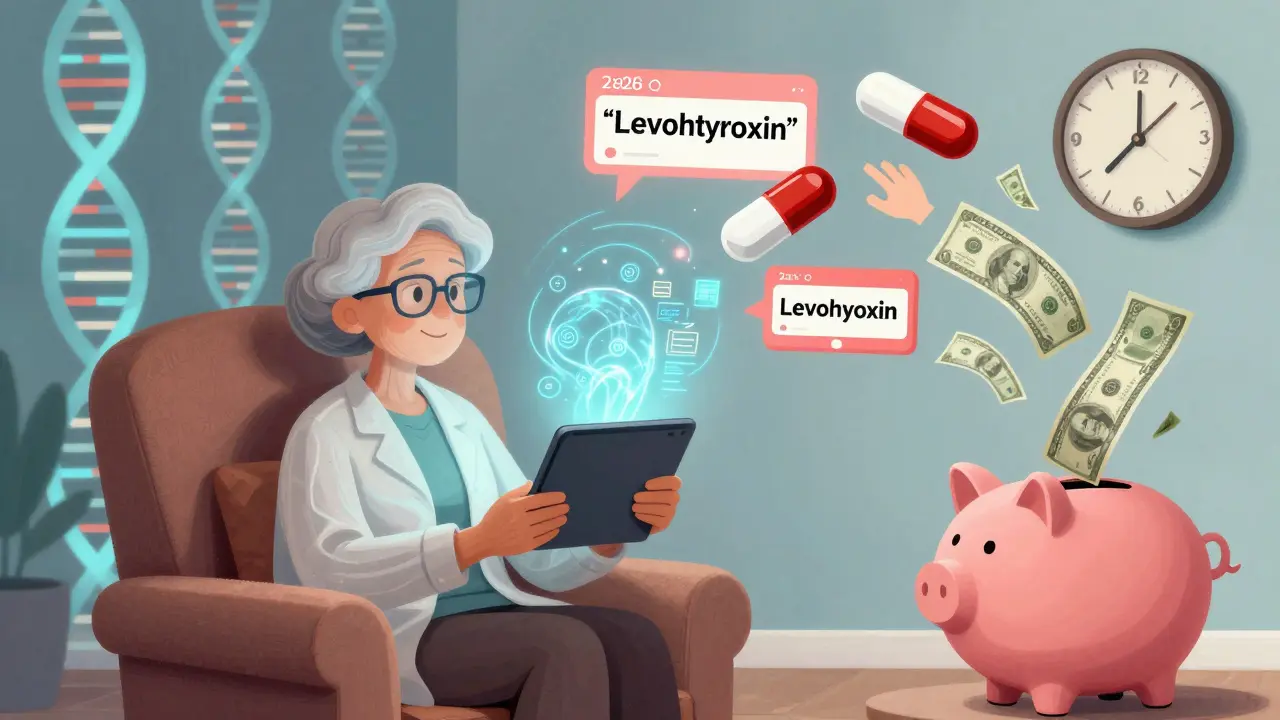
And the errors? Real. In 2023, the FDA issued a safety alert after a digital platform auto-substituted a different levothyroxine generic. The change in bioavailability caused 217 patients to have thyroid fluctuations. That’s not a glitch. It’s a system flaw: AI didn’t account for the fact that not all levothyroxine generics are interchangeable.
Who’s winning the market
Three models dominate:
- Integrated retailers: CVS Health (28.4% market share), Walgreens. They use their physical stores as fulfillment hubs. If you order online, they pick it from your local pharmacy. Fast, reliable, familiar.
- Pure digital players: Ro, Honeybee Health, Truepill. They’re lean, tech-first, and focused on convenience. They excel at routine meds but struggle with complex regimens.
- Specialty platforms: Blink Health. Their whole pitch? Price transparency. You see the cost upfront - no insurance maze. They’re growing fast among cash-paying patients.
CVS leads because they combine digital speed with human touch. Their support team resolves 92% of issues on the first call. Smaller startups? Only 67%. That gap matters when you’re managing chronic illness.
What patients really want
Trustpilot reviews of top digital pharmacies show a pattern: 63% praise price transparency. 59% love convenience. But 41% complain about insurance errors. 38% say they miss pharmacist advice.
A 2024 GoodRx survey of 5,000 users found 78% took their meds more consistently using digital delivery. But 62% said they wanted to speak with a pharmacist before their first refill. Not after. Not in a chat. Before.
That’s the missing piece. The system is fast. It’s cheap. It’s accurate. But it’s still impersonal. The best digital pharmacies aren’t just the ones with the fastest delivery - they’re the ones that blend automation with human insight. A pharmacist reviewing your history. A quick video call to check for side effects. An alert that says: “Your new generic has a different inactive ingredient. Are you okay with that?”
The road ahead
By 2026, digital pharmacy won’t replace your local pharmacist - it’ll empower them. Pharmacists will shift from counting pills to interpreting AI insights, managing complex cases, and guiding patients through substitution choices. The role is evolving, not disappearing.
Regulation is catching up. 17 states have passed laws on digital generic substitution. The FDA’s 2023 Digital Health Innovation Action Plan now requires platforms to log every substitution decision and notify patients in writing. That’s a start.
But the real win? When a 72-year-old in rural Ohio gets her generic metformin delivered before noon, without having to drive 60 miles. When she saves $100 a month. When she doesn’t skip a dose because the cost was too high. That’s not innovation. That’s healthcare working as it should.
The future of digital pharmacy isn’t about robots. It’s about making sure the right generic gets to the right person - at the right time - without a single barrier in the way.
Are digital pharmacies safe for generic medications?
Yes - but with caveats. Digital pharmacies use encrypted, HIPAA-compliant systems and have higher order accuracy rates (92.3%) than traditional pharmacies (87.6%). However, automated substitution errors have occurred, such as the 2023 FDA alert involving levothyroxine generics. Platforms now require patient notification before switching generics, and AI systems are being trained to flag bioequivalence risks. Always review substitution alerts and ask for pharmacist consultation if unsure.
Can I use digital pharmacy if I’m over 65?
Yes, but it may require extra support. While 68% of adults under 45 use digital pharmacies, only 23% of those over 65 do - mostly because of tech barriers. AARP found 24% of seniors struggle with apps or websites. Many platforms now offer phone-based ordering and free tech support. CVS Health and Walgreens allow you to call in prescriptions and still get same-day delivery. Look for services with live pharmacist access and simple interfaces.
How much can I save with digital generic delivery?
On average, you’ll save 22.7% compared to retail prices, according to GoodRx’s 2024 report. For common generics like metformin, lisinopril, or atorvastatin, savings range from $50 to $200 per month. Rural patients save an additional $17.30 per prescription on transportation. Platforms like Blink Health show prices upfront - no insurance surprises. Combine that with mail-order discounts and you could cut your annual medication costs by hundreds.
Do digital pharmacies accept Medicare Part D?
Most do - but reimbursement rules are changing. CMS reduced mail-order reimbursement rates by 8.2% in 2024, which pushed some smaller platforms to stop accepting Medicare. Larger players like CVS and Walgreens still fully support it. Always check if the platform is in your plan’s network. Some digital pharmacies offer cash prices that are lower than your Medicare copay - especially for generics. Compare both options before ordering.
What happens if my insurance denies a generic substitution?
A good digital pharmacy will catch this before you pay. Systems now auto-check insurance formularies and alert you if the generic isn’t covered. If it slips through, you’ll get a refund or credit. But the bigger issue is when the system auto-substitutes a generic your doctor didn’t approve. Always review the substitution notice before confirming. If you’re unsure, call the pharmacy - most have 24/7 pharmacist lines. You have the right to request the original brand or a specific generic.
Liam Crean
Really solid breakdown. I’ve been using Truepill for my dad’s meds since last year, and the consistency has been wild. No more driving 45 minutes just to find out they’re out of stock. The AI demand prediction actually saved us last winter when his blood pressure med spiked in demand after a cold snap.
What’s wild is how much simpler it made his life. He’s 74, doesn’t use apps, but he just calls a number and gets a text confirmation. No more faxing prescriptions. No more arguing with insurance bots. Just… works.
Freddy King
Let’s be real - this whole ‘digital pharmacy revolution’ is just Big Pharma’s way of offloading liability. AI substitutes generics? Cool. Until you’re the guy who got a different levothyroxine batch and your TSH went nuclear. FDA alert? Yeah, 217 people. That’s not a glitch - that’s systemic negligence wrapped in a tech hoodie.
And don’t get me started on ‘pharmacogenomic data’. You think some startup’s algorithm knows how your CYP2D6 polymorphism interacts with your 12-year-old generic lisinopril? Please. We’re automating trust. And trust isn’t a variable you can train on a dataset.
Also, 74% of platforms using DNA? That’s not innovation. That’s surveillance with a pill bottle.
Scott Dunne
As someone who lives in Ireland, I find this entire narrative deeply naive. You speak of ‘rural America’ as if it’s the only place with access issues. We have entire counties here without a single pharmacy. No delivery. No internet. No hope. This ‘future’ is a luxury for the urban, tech-literate, and insured. The rest of us? Still waiting on the same 1990s system.
And don’t tell me about savings. My insulin costs €120 a month here. In the U.S.? $35. You’re not building equity - you’re exporting inequality.
Ellen Spiers
The empirical data presented here is statistically significant but methodologically flawed. The 92.3% accuracy rate cited from CVS Health’s 2024 Rx Report lacks peer-reviewed validation. Moreover, the assertion that AI-driven demand prediction achieves 89.7% accuracy conflates correlation with causation - particularly in the context of weather-based supply allocation.
Furthermore, the omission of confounding variables such as regional formulary variance, payer-specific substitution policies, and the heterogeneity of generic bioequivalence thresholds undermines the validity of the entire thesis. This is not innovation - it is overfitting with a user interface.
Robin bremer
my man just got his meds delivered and it was like 30 mins after he clicked 😭🙏
Jayanta Boruah
While the economic and logistical advantages of digital pharmacy are undeniable, one must consider the epistemological implications of algorithmic substitution in pharmacotherapy. The ontological status of the generic drug - as a chemically identical yet pharmaceutically distinct entity - is fundamentally destabilized by automated decision-making systems that lack contextual awareness of patient history, pharmacokinetic variability, and psychosocial adherence patterns.
Furthermore, the reduction of clinical judgment to binary compliance checks within proprietary EHR ecosystems constitutes a form of epistemic violence against the professional autonomy of the pharmacist. This is not progress - it is the commodification of care.
And yet, paradoxically, the very efficiency that erodes human interaction also enables access for populations previously excluded - a dialectical tension that demands critical phenomenological analysis.
Taylor Mead
I love how this tech is helping people who can’t drive or don’t have a car. My neighbor, 81, used to skip her meds because she couldn’t get to the pharmacy. Now? She gets her pills every Thursday. No fuss. No stress.
And yeah, sometimes the system messes up - but the good ones? They call you. They ask. They don’t just auto-ship and disappear. That’s the difference between a company and a service.
Jeremy Williams
Having worked in health policy across three states, I’ve seen this shift from the inside. The real win isn’t the 5-hour delivery or the 22% savings - it’s the reduction in medication non-adherence among low-income populations. That’s not a KPI. That’s lives.
Yes, there are errors. Yes, seniors need support. But the alternative - 36 million people without access - is morally indefensible. We don’t need to abandon automation. We need to build guardrails around it.
Phone lines. Human reviews. Mandatory pharmacist consultation before first refill. These aren’t luxuries. They’re baseline ethics.
Courtney Hain
Have you ever stopped to think about who owns the data? Every time you order a generic, you’re feeding a corporate algorithm your health history, your prescriptions, your body chemistry. And who’s behind those platforms? Big Pharma. Big Insurance. Maybe even the government.
What if your DNA profile gets sold? What if your ‘metformin metabolism score’ gets used to deny you life insurance? What if they start ‘optimizing’ your meds based on your credit score?
This isn’t convenience. It’s a slow-motion surveillance operation disguised as healthcare. And we’re all signing the waiver with a tap.
Maddi Barnes
OMG I just realized - this whole thing is basically Amazon Prime… but for pills 😂
Like… imagine: ‘Your levothyroxine is on its way! 🚚💨 P.S. We swapped your generic because it was $0.15 cheaper. You’re welcome.’
And then you’re like… ‘Wait… my thyroid? You’re telling me you swapped my med based on a spreadsheet??’
Also, why do I feel like I’m being gaslit by a chatbot who says ‘I’m a pharmacist’ but has never met a human?
Also also - can we please have a ‘call a real person’ button? Just one? I’m begging you.
Robert Shiu
My sister’s a pharmacist at a CVS digital hub. She said the best part of her job now? Not counting pills. It’s talking to people. Really talking. She has 15-minute video calls with patients who’ve never had a pharmacist explain why their new generic looks different.
She says most people just need to hear: ‘I got you. Let’s check this together.’
That’s the future. Not robots. Not apps. Just someone who cares enough to ask.