
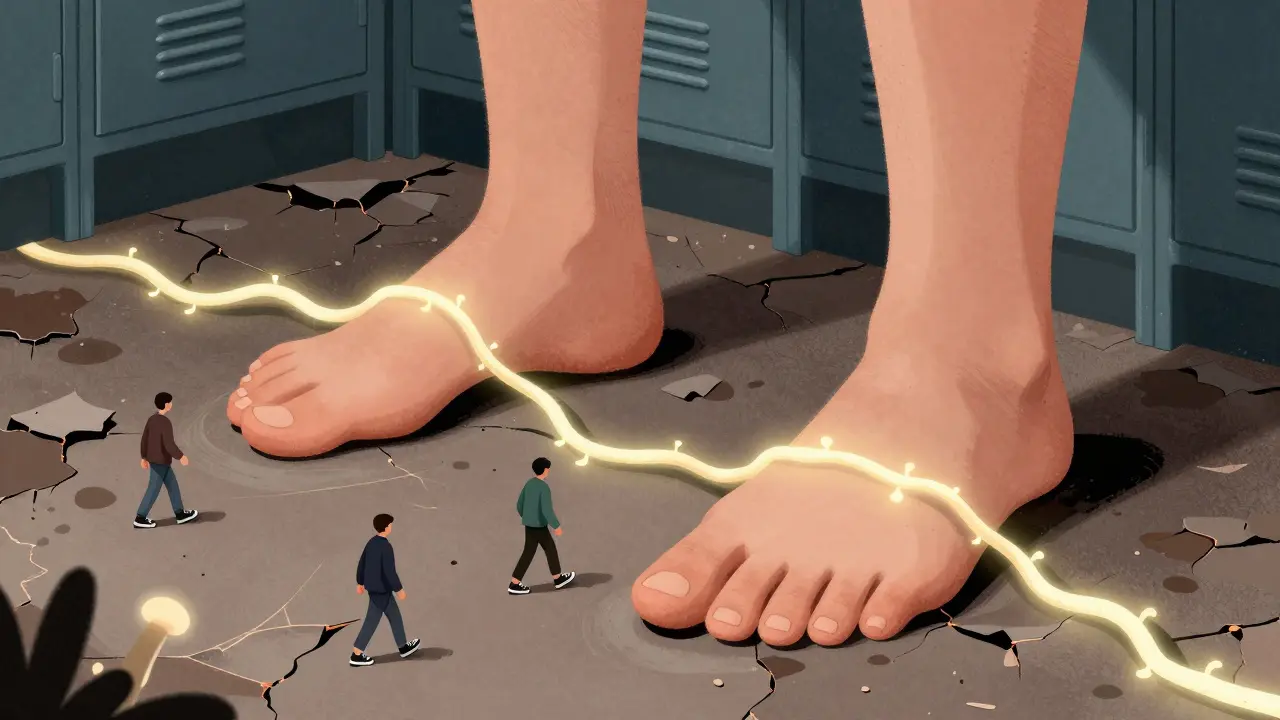
Most people think fungal infections are just a nuisance - itchy skin, peeling feet, or a rash that won’t go away. But if you’ve ever had athlete’s foot that came back after treatment, or a yeast infection that wouldn’t respond to the first cream you tried, you know it’s more than just annoying. Fungal infections like candida and athlete’s foot are common, often misunderstood, and can become serious if ignored - especially if you have diabetes, a weakened immune system, or don’t treat them properly.
What’s Really Causing Your Itch?
Not all fungal infections are the same. Athlete’s foot, also called tinea pedis, is caused by dermatophytes - fungi that feed on keratin, the tough protein in your skin, hair, and nails. These fungi love warm, damp places: locker rooms, public showers, sweaty shoes. That’s why it’s so common in athletes, but anyone who walks barefoot in these areas is at risk. The most common culprit? Trichophyton rubrum. It’s found in over 70% of cases. Candida infections, on the other hand, are caused by yeast - mostly Candida albicans. Unlike dermatophytes, candida doesn’t just live on the surface. It can grow inside your body: in your mouth (thrush), vagina (yeast infection), or even in your bloodstream if you’re immunocompromised. About 75% of women will have at least one vaginal yeast infection in their lifetime. And in people with HIV or diabetes, oral thrush is so common it’s almost expected. The key difference? Dermatophytes attack keratinized tissue - skin, nails, hair. Candida can invade both keratinized and non-keratinized areas - meaning it can infect mucous membranes, like the inside of your mouth or vagina. That’s why one infection might be a foot rash, and the other could be a burning sensation when you pee.How Athlete’s Foot Shows Up
Athlete’s foot doesn’t look the same in everyone. There are three main types:- Interdigital - the most common (70% of cases). It happens between your toes, especially the fourth and fifth. Skin peels, cracks, and gets white and soggy. It stings when you walk or put on shoes.
- Moccasin type - affects 20% of cases. Your soles and sides of the feet get dry, flaky, and thickened. People often mistake this for dry skin or eczema.
- Vesicular/bullous - the rarest (10%). Small blisters form on the bottom or sides of the foot. These can burst and become painful.
What Works: Antifungal Treatments Explained
There are two main approaches: topical (cream, spray, powder) and oral (pill). Both work, but which one you need depends on how bad it is.Topical Treatments
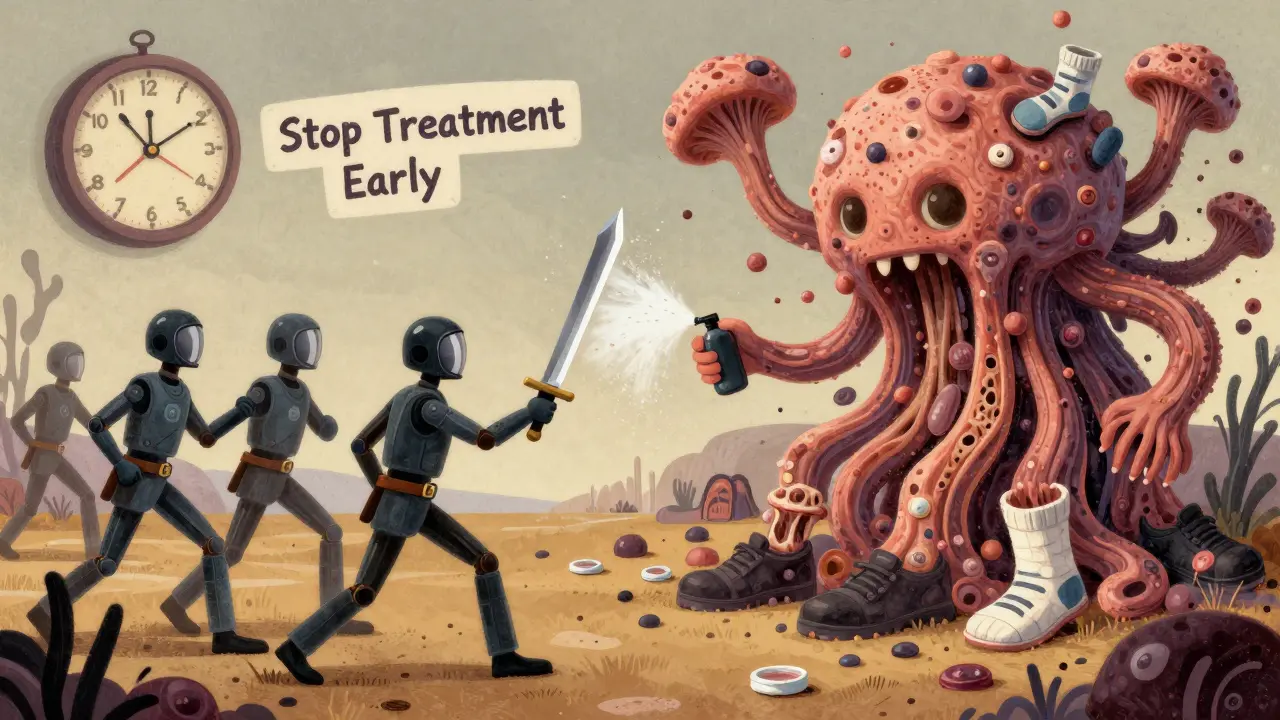
For mild cases - think peeling between the toes - topical antifungals are usually enough. Common options:- Clotrimazole and miconazole - azoles. They stop fungi from making cell membranes. Apply twice daily for 2-4 weeks. But here’s the catch: 40% of people who stop too early get it back.
- Terbinafine (Lamisil) - an allylamine. It kills the fungus directly. Studies show it clears athlete’s foot faster than azoles. One Reddit user said it cleared a 6-month case in 10 days when clotrimazole failed.
- Whitfield’s ointment - a mix of 3% salicylic acid and 6% benzoic acid. It doesn’t just kill fungi - it peels off the dead, infected skin. DermNet NZ reports 65% clearance in 4 weeks, better than clotrimazole alone.
Oral Treatments
If your infection is stubborn, widespread, or has spread to your nails, you’ll need pills:- Terbinafine - 250 mg daily for 2-6 weeks. Cure rate: 70-90%.
- Itraconazole - 200 mg daily for 1-2 weeks. Good for nail infections too.
- Fluconazole - 150 mg once a week for 2-4 weeks. Often used for candida, but also works for severe athlete’s foot.

Candida: More Than Just a Yeast Infection
Candida overgrowth is often treated like a simple problem - pop a pill, use a cream, done. But it’s more complex. In healthy people, candida lives harmlessly in the gut and mouth. It’s when the balance shifts - from antibiotics, stress, sugar-heavy diets, or hormonal changes - that it takes over. For vaginal yeast infections, fluconazole (one 150 mg pill) works for most. But if it keeps coming back (four or more times a year), you might need weekly doses for 6 months. Oral thrush? Nystatin mouthwash or clotrimazole lozenges are first-line. In people with HIV or cancer, candida can spread to the esophagus or bloodstream. Invasive candidiasis kills up to 40% of patients who get it - that’s why hospitals use antifungals like echinocandins (caspofungin) for serious cases. A big change came in 2021 with the FDA approval of Ibrexafungerp (Brexafemme). It’s the first new class of antifungal in 20 years, and it works against strains resistant to older drugs. It’s currently approved for vaginal yeast infections but may expand soon.Why Treatments Fail - And How to Avoid It
You’ve probably heard: “Just keep the area dry.” That’s true - but it’s not enough. Here’s what really works:- Change socks daily - cotton or moisture-wicking materials only. No synthetic fibers.
- Use antifungal powder - especially between toes. Look for 2% miconazole or zinc pyrithione. It cuts moisture and kills spores.
- Don’t walk barefoot - not in gyms, pools, or even at home if someone else has it. Fungi shed skin particles everywhere.
- Disinfect shoes - spray them with antifungal spray or use UV shoe sanitizers. Fungi can live in shoes for months.
- Don’t scratch - you’ll spread it to your hands, groin (jock itch), or under nails.
What’s New in 2026
The fight against fungal infections is evolving. In March 2023, Phase II trials for olorofim, a new topical antifungal, showed 82% cure rates for stubborn athlete’s foot. It’s not on the market yet, but it’s promising. The CDC’s “My Action Plan” initiative - launched in 2022 - helped reduce recurrent infections by 35% in diabetes clinics. How? By teaching patients to check their feet daily, use antifungal powder, and avoid barefoot walking. Simple. Effective. But there’s a dark side: resistance. A strain called Trichophyton indotineae, first seen in India in 2017, has now spread to 28 countries. It doesn’t respond to terbinafine. The WHO added it to its priority pathogens list in 2022. Experts warn that without better infection control and new drugs, antifungal resistance could rise 50% by 2030.When to See a Doctor
You can treat mild athlete’s foot at home. But see a doctor if:- Your skin is red, swollen, oozing, or has pus - that’s likely a bacterial infection.
- You have diabetes or a weakened immune system - even a small rash can turn dangerous.
- It’s been 4 weeks of treatment and it’s not better.
- It keeps coming back - more than twice a year.
- You have nail changes - thick, yellow, crumbling nails - that might be fungal nail infection.
Prevention Is the Best Treatment
The best antifungal treatment? Prevention.- Always wear flip-flops in public showers and pools.
- Let your feet breathe - choose open shoes when you can.
- Wash and dry feet thoroughly - especially between the toes.
- Don’t share towels, shoes, or socks.
- Use antifungal powder as a daily preventive if you’re prone to infections.
Can athlete’s foot go away on its own?
No. Athlete’s foot won’t disappear without treatment. The fungus lives on dead skin and thrives in warm, moist environments. If left untreated, it can spread to your nails, hands, or groin - and increase the risk of bacterial infections like cellulitis, especially in people with diabetes or poor circulation.
Is candida the same as athlete’s foot?
No. Athlete’s foot is caused by dermatophytes - fungi that eat keratin in skin, hair, and nails. Candida is a yeast that can infect both keratinized areas (like skin) and non-keratinized areas like the mouth or vagina. They’re different organisms, require different treatments, and behave differently in the body.
Why does my fungal infection keep coming back?
Mostly because treatment was stopped too early or hygiene wasn’t improved. Fungal spores survive in shoes, towels, and floors. Even if your skin looks fine, the fungus may still be there. Using antifungal powder daily, disinfecting shoes, and avoiding barefoot walking in public areas reduces recurrence by up to 60%.
Are over-the-counter antifungals effective?
Yes, for mild cases. Terbinafine cream (Lamisil), clotrimazole, and Whitfield’s ointment have proven effectiveness in clinical trials. But they must be used correctly - applied beyond the visible rash and continued for 1-2 weeks after symptoms disappear. If you don’t see improvement in 2 weeks, or if it’s spreading, see a doctor.
Can antifungal pills harm your liver?
Some can. Terbinafine and itraconazole are generally safe but may affect liver enzymes in rare cases. Your doctor will likely ask about your alcohol use and other medications. Blood tests aren’t always needed, but if you have liver disease or take other meds, they may be recommended. Fluconazole has fewer liver risks but can interact with blood thinners and seizure meds.
Mike Hammer
I've had athlete's foot for years. Tried everything. Clotrimazole? Nope. Terbinafine cream? Worked like magic in 10 days. The key? Keep going past the itching. I apply it to my ankles now, just in case. Also, UV shoe sanitizer changed my life. Fungi live in shoes forever.
Daniel Dover
Agreed. Prevention > treatment. Socks daily. Dry feet. No barefoot in the house if someone's infected. Simple.
Virginia Kimball
Y'all are forgetting the real villain: sugar. Candida thrives on it. Cut the carbs, cut the soda, cut the 'just one donut'. My recurrent yeast infections vanished after I went low-sugar. Not magic. Just biology. And yeah, I still use fluconazole when needed, but now I don't need it every month.
Erica Banatao Darilag
I appreciate the detail in this post. I've had oral thrush after antibiotics and it was awful. The nystatin mouthwash was a lifesaver. I didn't realize how common it was until I started researching. It's scary how many people just ignore it.
Chiruvella Pardha Krishna
In India, we've been dealing with Trichophyton indotineae for years. The West acts like it just appeared. We had outbreaks in Delhi and Bangalore before 2019. Terbinafine failed. We used itraconazole and topical iodine. No one listened. Now you're all surprised? This isn't new. It's just that your healthcare systems are slow to adapt.
Kapil Verma
You people are so soft. Fungal infections? Just slap some neem oil on it. Ayurveda solved this 5000 years ago. Why are you relying on Western chemicals? I use turmeric paste, neem leaves, and holy water. Works better than any pill. Your medicine is a scam. You're all just addicted to Big Pharma.
Mandeep Singh
I've been studying fungal biology for 17 years. Let me tell you, everything you've read here is oversimplified. Candida albicans isn't even the main culprit in 30% of cases anymore - Candida glabrata is rising fast, and it's naturally resistant to azoles. And terbinafine? It's not 'killing' the fungus - it's inhibiting squalene epoxidase. Most people don't even know what that means. And don't get me started on Whitfield's ointment - the benzoic acid concentration is actually 6.5%, not 6%. Minor detail, but it matters. The CDC data? Outdated. The real cure rate for terbinafine is closer to 83% in randomized trials. Also, UV shoe sanitizers? Useless if the fungus is embedded in the sole. You need ozone treatment. Or better yet - burn the shoes. That's what we did in my lab.
Joe Grushkin
So let me get this straight - you're telling me that a fungus that lives on dead skin can somehow cause systemic issues? And we're supposed to take pills for it? Meanwhile, people are dying from bacterial infections because we're too scared to touch antibiotics. This whole antifungal obsession is a distraction. You're scared of a rash. Meanwhile, the real killers are obesity, smoking, and poor sleep. Stop worrying about your feet and start fixing your life.
Betty Kirby
I can't believe people still use over-the-counter creams. You're not treating the infection - you're just hiding it. And then you wonder why it comes back. It's not about the cream. It's about your environment. Your socks, your shoes, your bathroom floor. If you're not disinfecting everything, you're just playing hide-and-seek with fungus. And don't even get me started on people who wear the same sneakers for months. You're not 'breaking them in' - you're growing a fungal colony.
Josiah Demara
I read this whole thing. It's basically a 2000-word ad for Lamisil and fluconazole. Where's the data on natural alternatives? Where's the discussion about microbiome disruption? Why is no one talking about the fact that antifungals wipe out beneficial fungi too? This isn't medicine - it's fearmongering disguised as science. Also, 'use antifungal powder daily'? That's not prevention - that's dependency. You're creating a new problem to sell a solution.
Kaye Alcaraz
Thank you for sharing such a comprehensive overview. I work in a diabetes clinic, and fungal infections are one of the most overlooked complications. The 'My Action Plan' initiative has been transformative. We now provide patients with a foot care kit - antifungal powder, a foot brush, and a reminder card. Since implementation, we've seen a 40% drop in foot-related hospitalizations. Prevention really is the best treatment.
Mike Hammer
I just read the comment from 7697 and had to reply. You're right about Candida glabrata - we're seeing more of it in my clinic too. But you're wrong about UV sanitizers. I tested them. They kill surface spores, but not embedded ones. That's why I spray my shoes with a 1:1 vinegar-water mix every week. Kills mold, kills fungus, cheap as dirt. Also - burn the shoes? That's extreme. Just toss them in the sun for a week. UV + heat = free disinfection.