
Acetaminophen Toxicity Risk Calculator
Medication Intake
Warning: Acetaminophen overdose is the leading cause of acute liver failure in the US. This calculator helps assess your risk, but always consult a healthcare professional immediately if you suspect overdose.
Critical Action Required
Remember: 23% of acetaminophen-induced liver failure cases involve patients who deny taking acetaminophen. Always test for acetaminophen levels in patients with ALT over 500 IU/L.
Risk Assessment Results
Enter medication details to see your risk assessment
What to Do Next
When someone suddenly becomes confused, yellow-eyed, and vomits without explanation, it’s not just a bad stomach bug. It could be their liver collapsing - and time is running out. Fulminant hepatic failure from medications doesn’t whisper. It screams. And if you miss the signs, the patient may not survive the night.
Every year in the U.S., about 2,000 people develop this life-threatening condition. Nearly half of those cases - 46% - come from drugs they took thinking they were safe. Acetaminophen, the active ingredient in Tylenol and dozens of painkillers, causes nearly half of all these cases. People take it for headaches, back pain, fever. They don’t realize that taking four 500mg tablets a day for weeks - even if it’s what’s on the bottle - can be deadly. And they don’t tell doctors about it because they don’t think of OTC medicine as "drugs."
What Does Fulminant Hepatic Failure Look Like?
Fulminant hepatic failure isn’t slow. It’s lightning. In a healthy person with no prior liver disease, it can go from normal to brain damage in less than a week. The classic trio is unmistakable once you know what to look for: yellow skin (jaundice), confusion or strange behavior (hepatic encephalopathy), and blood that won’t clot (coagulopathy).
The first sign? Nausea. Not just a little queasiness - persistent, unrelenting nausea that doesn’t go away even if they haven’t eaten. Family members often notice subtle personality changes: a usually calm person becomes irritable or sleepy. A nurse might say, "She’s not herself." A teenager might zone out during a conversation. That’s not laziness. That’s the liver failing to filter toxins, and ammonia building up in the brain.
Then comes jaundice. The whites of the eyes turn yellow. The skin looks sallow. Urine darkens. These are late signs. By then, the damage is already severe. The real window for saving lives is before jaundice appears - when the only clue is nausea, fatigue, and a blood test showing liver enzymes sky-high.
The Silent Killer: Acetaminophen Overdose
Acetaminophen is the most common cause of acute liver failure in the U.S. And it’s the most preventable. The problem isn’t just people swallowing 20 pills at once. It’s the "therapeutic misadventure." Someone takes hydrocodone/acetaminophen for back pain - five pills a day. Then they take Tylenol for a headache. Then they take a cold medicine that also has acetaminophen. Suddenly, they’ve hit 6,000 mg in 24 hours. The label says "safe." But 4,000 mg is the absolute limit. Exceed it, and your liver starts dying.
The biochemical signature is clear: ALT levels over 1,000 IU/L, with ALT higher than AST - a ratio greater than 2:1. That’s the fingerprint of acetaminophen toxicity. If you see that in an ER, you don’t wait for a confession. You give N-acetylcysteine (NAC) immediately. NAC is cheap, safe, and life-saving - but only if given within 8 hours of ingestion. After 24 hours, its effectiveness drops sharply. Yet 38% of acetaminophen cases arrive past that window because no one asked about OTC meds.
Here’s the brutal truth: 23% of people with acetaminophen-induced liver failure deny taking it. They don’t remember. They think it’s "just Tylenol." Emergency teams must test acetaminophen levels in every patient with ALT over 500 IU/L - no exceptions. That’s not optional. It’s standard of care.
Other Medications That Can Kill Your Liver
Acetaminophen isn’t the only culprit. Antibiotics like amoxicillin-clavulanate can cause liver failure - but slowly. It doesn’t hit like a bomb. It creeps. Jaundice appears after 18 days. The liver enzymes show high alkaline phosphatase, not just ALT. It looks like viral hepatitis. That’s why doctors misdiagnose it. One study found 41% of antitubercular drug cases were mistaken for hepatitis B.
Antiseizure drugs like valproic acid cause a different pattern: microvesicular steatosis. The liver fills with fat. Ammonia levels spike above 150 μmol/L before encephalopathy hits. These patients don’t look like acetaminophen cases. They look like they have metabolic disorders. Without the right tests, they die.
Herbal supplements are the fastest-growing cause. Green tea extract - specifically epigallocatechin-3-gallate at doses over 800 mg per day - is now linked to 42% of supplement-related liver failures. People take it for weight loss. They think "natural" means safe. But the liver doesn’t care. A 2022 case series showed patients taking 3,000 mg of kava daily for six months before collapsing. No warning. No symptoms until it was too late.
The Emergency Checklist: What to Do Right Now
If you’re in an ER and someone walks in with nausea, vomiting, and confusion - here’s what you do in the first 30 minutes:
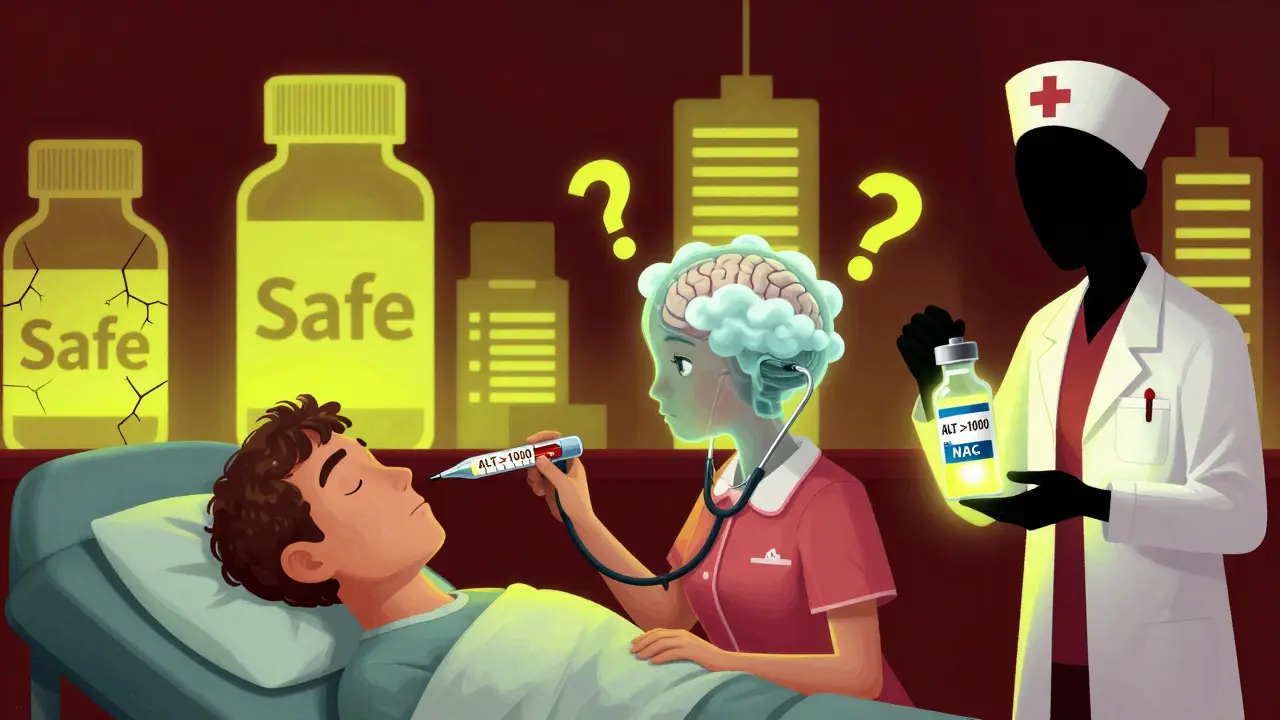
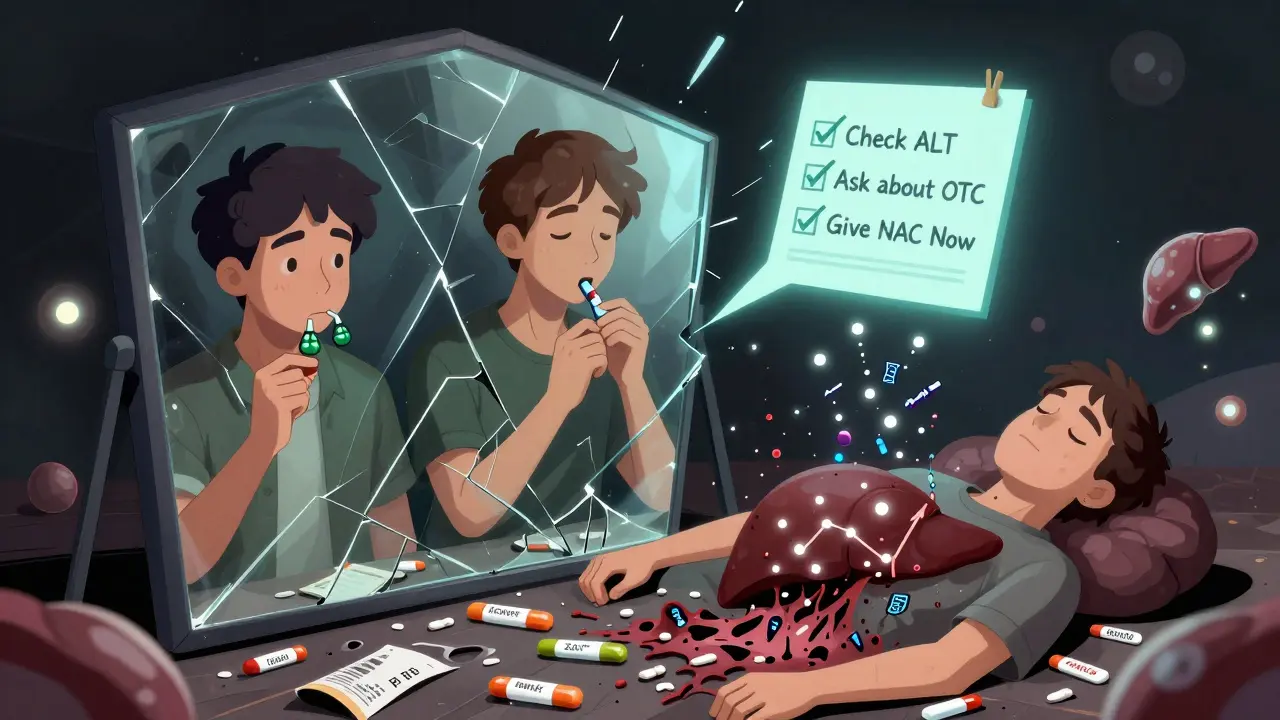
- Check ALT, AST, INR, and acetaminophen level - immediately. Don’t wait for history.
- Ask: "What are you taking? Including supplements, vitamins, and OTC meds?" Write down every pill, every dose, every day.
- Assess mental status using the West Haven Criteria. Grade I: mild confusion. Grade IV: coma. The higher the grade, the worse the prognosis.
- If INR is above 1.5, check it every 6 hours. If it climbs above 6.5 in 48-96 hours, transplant is the only option.
- If acetaminophen level is above 150 μg/mL at 4 hours, start NAC - even if the patient denies overdose.
Don’t rely on the patient’s story. Don’t assume it’s gastroenteritis. Don’t wait for jaundice. If the liver enzymes are high and the patient is confused - treat it like a code blue.
Who’s at Risk? The Hidden Patterns
Women are more likely to develop liver failure from non-acetaminophen drugs - especially autoimmune reactions. Eighty-two percent of cases from drugs like minocycline or nitrofurantoin are in women. Men are more likely to overdose on acetaminophen, but the gender split there is nearly even.
People aged 25-44 are the fastest-growing group for herbal supplement-related failure. Usage of green tea extract, turmeric, and kava has tripled since 2015. These are not old people taking supplements. They’re young professionals, fitness enthusiasts, people trying to "detox." They’re not on any prescription. They think they’re safe.
And here’s the kicker: the FDA requires bold warnings on prescription acetaminophen products - but not on OTC bottles. So a person buys 10 bottles of Tylenol at the pharmacy. They don’t see the warning. They don’t know they’re stacking doses. They just think they’re taking pain relief.
What Happens If You Wait?
Survival without a transplant drops from 63% if treated early to 28% if delayed. If INR hits 6.5 and encephalopathy is grade III or IV, mortality without transplant is 90%. That’s not a risk. That’s a death sentence.
There’s a reason transplant centers have 24/7 hotlines. The National Acute Liver Failure Foundation’s line - 1-888-567-6253 - connects ERs to transplant teams in under 18 minutes. But only if someone calls. Only if someone recognizes it.
AI tools like HepaPredict are now helping - analyzing 17 clinical variables to predict progression with 89% accuracy. But they’re not everywhere. The human eye still matters most.
What Comes Next?
By 2030, medication-induced liver failure is projected to rise 22%. Herbal supplements will drive most of that growth. The AASLD has made emergency recognition a top priority. They want NAC given within 8 hours to 90% of acetaminophen cases by 2027. That’s ambitious. But doable - if every ER follows the same checklist.
The future isn’t just better drugs. It’s better recognition. Better questions. Better systems. Because when the liver fails, there’s no second chance. You don’t get to say, "I didn’t know." You don’t get to wait for a specialist. You act - or you lose them.
What are the first signs of medication-induced liver failure?
The earliest signs are persistent nausea, unexplained fatigue, and subtle changes in behavior - like confusion, irritability, or excessive sleepiness. Jaundice (yellow skin or eyes) appears later. Many patients don’t realize they’re sick until they’re already in crisis. If someone has been taking any new medication, supplement, or even OTC painkillers and develops these symptoms, liver failure must be ruled out immediately.
Can you survive fulminant hepatic failure without a transplant?
Yes - but only if caught early. About 63% of patients with acetaminophen-induced liver failure recover without transplant if treated within 8 hours with N-acetylcysteine. For other drug causes, survival without transplant drops to 29%. If the INR rises above 6.5 and encephalopathy is severe, survival without transplant is less than 10%. Timing and cause determine the outcome.
Is acetaminophen safe if taken as directed?
It’s safe at recommended doses - but only if you don’t combine it with other products. Many prescription painkillers (like hydrocodone or oxycodone) already contain acetaminophen. Taking those along with Tylenol or cold medicine can easily push you over 4,000 mg per day - the maximum safe limit. Most people don’t realize they’re doubling up. Always check the active ingredients on every bottle.
Why do herbal supplements cause liver failure?
Herbal supplements aren’t regulated like drugs. Their ingredients can vary between batches. Some contain hidden toxins. Green tea extract, for example, has been linked to liver damage at doses above 800 mg per day. Kava, comfrey, and certain weight-loss blends have caused fatal cases. People assume "natural" means safe - but the liver processes everything the same way. There’s no safety buffer.
What should you do if you suspect someone has drug-induced liver failure?
Call emergency services immediately. Do not wait. While waiting, gather a list of every medication, supplement, and OTC product they’ve taken in the last 30 days - including doses and timing. If acetaminophen is involved, time is critical: N-acetylcysteine must be given within 8 hours to be effective. Hospitals have protocols to act fast - but they need the information to act.
Can a blood test confirm medication-induced liver failure?
Blood tests can strongly suggest it. An ALT over 1,000 IU/L with an ALT:AST ratio >2:1 points to acetaminophen. High bilirubin with high alkaline phosphatase suggests antibiotics like amoxicillin-clavulanate. High ammonia levels point to valproic acid. But there’s no single test that confirms the cause. Diagnosis requires combining blood work, medication history, and ruling out viruses, alcohol, and autoimmune disease. It’s a puzzle - and every piece matters.
Malikah Rajap
Wow. Just… wow. I didn’t realize my nightly Tylenol for migraines could be slowly killing me? I take two, sometimes three, with my evening tea. I thought it was fine because it’s "over the counter." But now I’m sitting here Googling ALT levels like my life depends on it-because it does. I’m stopping tonight. No more "just Tylenol."
Jacob Hill
This is terrifying, but also so important. I work in triage at a community ER, and I’ve seen this exact scenario play out three times in the last six months. Patients come in with "stomach flu," and we don’t even think to check acetaminophen levels until they’re in grade III encephalopathy. We need mandatory screening for anyone with ALT >500. No exceptions. It’s not optional-it’s basic.
Aman Kumar
Let me be brutally honest: this isn’t about medicine. It’s about collective stupidity. People treat pharmaceuticals like candy. They pop pills like M&Ms, assuming "natural" means "harmless," and then blame the system when their liver implodes. The FDA? Complicit. Pharmacies? Profit-driven. The public? Willfully ignorant. The only cure is societal accountability. No more hand-holding. Let the consequences speak.
Christi Steinbeck
YES. This needs to be everywhere. I’m a nurse practitioner, and I’ve had patients tell me they took "a few extra pills" because they "felt worse." I’ve seen the look in their eyes when they realize they almost died because they didn’t know NyQuil had acetaminophen too. Please, if you read this-check every bottle. Write it down. Show it to your doctor. Your liver doesn’t have a voice. You have to speak for it.
Lewis Yeaple
While the clinical information presented is accurate and well-documented, the rhetorical framing of this article is alarmist. The incidence of fulminant hepatic failure remains low relative to overall medication use. Overemphasis on acetaminophen may lead to unnecessary anxiety and suboptimal clinical prioritization. A more balanced approach, emphasizing risk stratification, would serve the public better.
Jackson Doughart
I’ve sat with families who lost someone to this. No warning. No time. Just a quiet, sudden silence where there used to be laughter. I don’t say this to scare anyone-I say it because I’ve held their hands while they begged for a second chance. This isn’t just medical data. It’s human. Please. Read the labels. Ask questions. Don’t wait for the yellow eyes.
sujit paul
Mark my words: this is part of a larger agenda. Big Pharma knows that if people knew how dangerous OTC drugs really are, they’d stop buying them. So they bury the warnings. The FDA is in their pocket. The same people who push vaccines are now pushing acetaminophen as safe? Coincidence? I’ve seen the internal memos. They call it "therapeutic misadventure" to soften the blow. It’s murder by marketing.
Tracy Howard
As a Canadian, I find it appalling that the U.S. allows this level of negligence. In Canada, every OTC product must have a bold, standardized warning on the front label-no exceptions. We don’t let people kill themselves with ignorance. If you’re going to sell poison, you damn well label it. This isn’t freedom-it’s negligence dressed up as choice.
Erwin Kodiat
I used to take green tea extract for weight loss. 1,200 mg a day. Thought I was being healthy. Then I got sick for three weeks-fatigue, dark pee, felt like I’d been hit by a truck. Turned out my ALT was 1,800. NAC saved me. I’m alive because my doctor asked the right question. Don’t assume natural = safe. Don’t assume you’re fine. Ask. Check. Listen.
Jake Rudin
It’s ironic, isn’t it? We’ve built civilizations on the idea of progress-yet we still treat our bodies like machines we can override without consequence. The liver doesn’t have a mute button. It doesn’t say "no" until it’s too late. And when it finally screams, we call it an accident. But it’s not an accident. It’s the sound of a system that forgot to teach people how to listen.
Astha Jain
so like… if u take tylenol and a cold med and a pain pill… u r basically playing russian roulette with your liver?? like… why is this not on every bottle?? like… why is this not common knowledge?? like… i just bought 3 packs of advil cold & sinus and now i’m scared to even take one…
Valerie DeLoach
To everyone reading this: if you’re taking any supplement, even if it’s "all-natural," write it down. Bring it to your next appointment. Don’t be embarrassed. Your provider has seen it all. And if you’re a parent, check your teen’s medicine cabinet-they’re taking kava and green tea extract thinking it’s healthy. This isn’t just about adults. It’s about a culture that’s forgotten how to ask, "What’s in this?"
Lydia H.
I’m 22. I take turmeric capsules every morning. I thought it was for inflammation. I didn’t know it could kill me. This post changed my life. I stopped. I’m getting bloodwork next week. I’m scared-but I’m alive because I read this. Thank you. I hope someone else reads this before it’s too late.
Phil Hillson
So let me get this straight… I take 2 Tylenol for my headache and now I’m gonna die? What’s next? Is water dangerous? I mean… I guess if you drink too much you get water poisoning so… I guess everything kills you if you use it wrong? Can we just… not panic? I’m gonna keep taking my meds. I’m not dying from Tylenol.