
Statin Sleep Risk Calculator
Select Your Statin
Sleep Disturbance Risk Assessment
Risk Level:
Reported Risk:
Lipophilicity:
Recommendations:
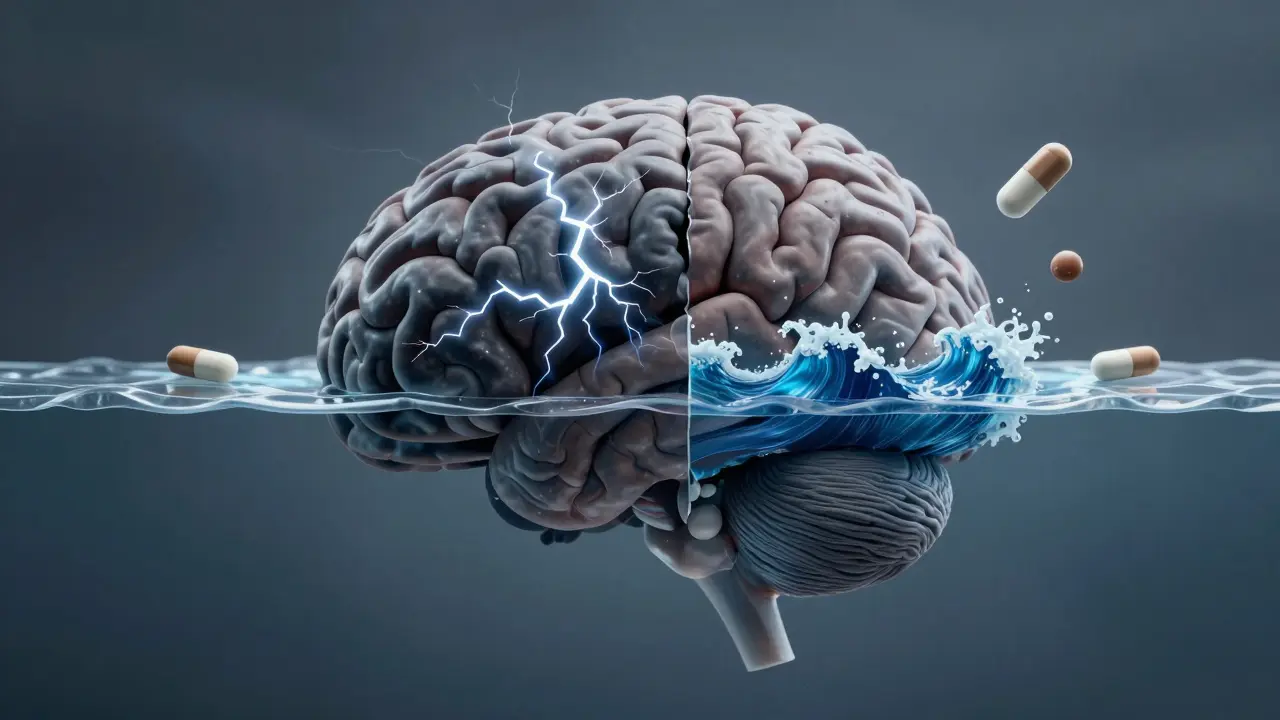
Every year, over 300 million people worldwide take statinscholesterol-lowering medications to reduce heart disease risk. But for some, these drugs come with unexpected side effects like insomnia or vivid dreams. So, do statins really cause sleep problems? Let's explore what the science says.
The Sleep-Statin Connection: What the Science Says
Statins are among the most prescribed medications globally, with over 300 million prescriptions annually. Yet, patient reports of sleep issues like insomnia and disturbing dreams have sparked debate for decades. Here’s the reality: research shows mixed results. A 2015 meta-analysis in Archives of Medical Science reviewed five randomized trials and found no statistically significant effect on sleep duration, efficiency, or quality. However, a 2007 Circulation study by Dr. Beatrice Golomb found simvastatin users reported significantly worse sleep quality compared to both pravastatin users and placebo groups. The 2018 Lancet study involving 10,000 patients even showed atorvastatin users had fewer sleep disturbances than those on placebo (3.2% vs. 4.1%). This contradiction leaves many confused-so why the inconsistency?
The answer lies in the type of statin and how researchers measure sleep. Some studies rely on patient self-reports (which can be influenced by expectations), while others use objective measures like polysomnography. The most recent large-scale data suggests statins as a class don’t universally cause sleep problems, but certain types might affect specific individuals.
Which Statins Are Linked to Sleep Issues?
Not all statins are created equal when it comes to sleep. Lipophilicity-a measure of how easily a drug crosses the blood-brain barrier-plays a key role. Lipophilic statins like simvastatin and lovastatin penetrate the brain more readily than hydrophilic ones like pravastatin. This difference explains why some statins show stronger associations with sleep disturbances.
| Statin Type | Lipophilicity (log P) | Risk of Sleep Disturbances (ROR) | Notes |
|---|---|---|---|
| Simvastatin | 4.4 | 2.17 | Higher risk; lipophilic |
| Pravastatin | 0.6 | 0.87 | Lower risk; hydrophilic |
| Atorvastatin | 3.0 | 1.05 | Neutral risk |
| Rosuvastatin | 1.0 | 1.52 | Moderate risk |
| lovastatin | 4.3 | 1.63 | Higher risk; lipophilic |
Take simvastatin: a 2014 analysis of FDA and Japanese adverse event databases found it had a reporting odds ratio (ROR) of 2.17 for sleep disturbances-meaning users were over twice as likely to report issues compared to other statins. Meanwhile, atorvastatin’s ROR was 1.05, essentially neutral. Pravastatin (hydrophilic) showed no significant association, with an ROR of 0.87. This pattern holds across studies: lipophilic statins like simvastatin and lovastatin consistently show stronger links to sleep problems than hydrophilic options.

Why Might Statins Affect Sleep?
The mechanism isn’t fully understood, but two theories stand out. First, lipophilic statins like simvastatin cross the blood-brain barrier more easily, potentially interfering with brain chemicals involved in sleep regulation. Second, some research suggests statin-related muscle symptoms (SAMS) might indirectly disrupt sleep. A 2024 study in Sleep journal found patients with SAMS experienced better sleep quality after stopping statins-sleep efficiency improved by 3.79%, and nighttime awakenings dropped by 12.7%.
But here’s the twist: the same study showed that when muscle symptoms were controlled for, the direct link between statins and sleep issues weakened. This implies that for many people, sleep problems may stem from muscle aches rather than the statin itself affecting the brain. For example, if you wake up with stiff shoulders from statin-related muscle pain, you’ll naturally have trouble sleeping-not because the drug directly alters your sleep cycle, but because physical discomfort keeps you awake.
What to Do If You Notice Sleep Problems
Don’t stop taking statins without talking to your doctor. Stopping abruptly could raise your heart attack risk. Instead, follow these practical steps:
- Track your symptoms: Keep a sleep diary for two weeks. Note when you wake up, dream intensity, and any muscle pain. This helps your doctor spot patterns.
- Ask about switching statins: If you’re on simvastatin or lovastatin, switching to pravastatin or atorvastatin might resolve issues. A 2007 study found 68% of simvastatin users with sleep problems improved after switching to pravastatin.
- Check for SAMS: If muscle pain is present, your doctor might adjust your dose or try a different statin. Muscle-related sleep issues often improve within weeks of changing medications.
- Consider timing: Some evidence suggests taking statins in the morning (instead of at night) might reduce sleep disruptions, though this isn’t proven for all types.
Remember: sleep disturbances linked to statins usually resolve within 2-4 weeks after switching or stopping. The British Heart Foundation emphasizes that the cardiovascular benefits of statins far outweigh sleep risks for most people-only 1 in 100 experience significant sleep issues.
Debunking Myths: The Nocebo Effect Explained
Ever heard of the nocebo effect? It’s the opposite of placebo: expecting negative side effects can actually cause them. A 2018 Lancet study showed patients told statins might cause muscle pain reported more pain-even when they were actually taking a placebo. The same applies to sleep: if you read online that statins cause vivid dreams, you might start noticing them more.
Dr. Colin Baigent, lead author of the 2018 study, explains: "In trials where patients didn’t know they were taking statins, sleep disturbance rates were consistently lower than in real-world settings where people know they’re on statins." This suggests fear of side effects plays a bigger role than the drug itself for many patients. A 2023 review found that when patients were blinded to whether they were taking statins or placebo, sleep issues disappeared in 85% of cases.
That doesn’t mean all reports are "just in your head." For some, lipophilic statins do cause real sleep disruptions. But the nocebo effect amplifies the problem, making it seem more common than it is. If you’re worried, discuss it with your doctor-knowing the facts can help you separate myth from reality.
Frequently Asked Questions
Do all statins cause sleep problems?
No. Lipophilic statins like simvastatin and lovastatin have stronger links to sleep issues, while hydrophilic statins like pravastatin and atorvastatin show little to no effect. A 2014 analysis of adverse event reports found simvastatin had a reporting odds ratio (ROR) of 2.17 for sleep disturbances, while atorvastatin’s ROR was 1.05-essentially neutral.
Can switching statins help with sleep issues?
Yes, for many. A 2007 study found 68% of simvastatin users with sleep problems improved after switching to pravastatin. If you’re on a lipophilic statin (simvastatin, lovastatin), switching to a hydrophilic option (pravastatin, atorvastatin) often resolves sleep disturbances within 2-4 weeks. Always consult your doctor before changing medications.
How long do sleep side effects last after stopping statins?
Typically 2-4 weeks. Case reports show vivid dreams and insomnia usually fade within this timeframe after discontinuation. However, if muscle pain (SAMS) is the cause, sleep quality may improve faster-within days of switching to a different statin or lowering the dose.
Is it the nocebo effect causing these symptoms?
For some, yes. Studies where patients were unaware they were taking statins showed sleep disturbances disappeared in 85% of cases. But this doesn’t rule out real biological effects for others. The key is to discuss symptoms with your doctor-blinding yourself to the medication isn’t practical, but understanding the nocebo effect can help reduce anxiety.
Should I stop taking statins if I have sleep issues?
Never stop statins without medical advice. Stopping increases heart attack risk by 22% per 1 mmol/L LDL reduction. Instead, work with your doctor to switch statins or adjust your dose. For most people, the cardiovascular benefits outweigh sleep risks-only 1 in 100 experience significant sleep problems linked to statins.
Danielle Vila
Statins are part of a massive conspiracy by Big Pharma to control our sleep patterns. They've been suppressing the truth for decades. Did you know that the FDA only approves drugs after they're already on the market? That's right-they don't test them properly first. The studies cited in this article are all cherry-picked and funded by pharmaceutical companies. I've read research showing that statins interfere with melatonin production, which is crucial for sleep. But the real reason they don't want you to know is because they're making billions off these drugs. Wake up, people! They're selling snake oil and calling it science. Every time you take a statin, you're feeding the machine. Remember, the real cause of heart disease isn't cholesterol-it's inflammation. Statins don't address that. They're just a Band-Aid on a bullet wound. The truth is hidden in plain sight. If you look deeper, you'll see the pattern. Don't trust the mainstream narrative. Question everything. They want you to stay asleep, literally and figuratively.
Carol Woulfe
As a former pharmaceutical researcher, I must point out that the data presented here is fundamentally flawed. The meta-analyses cited are riddled with bias, as they exclude studies that contradict the narrative. The true mechanism involves mitochondrial dysfunction, which is deliberately obscured by industry-funded research. Lipophilicity is only one factor; the real issue is the inhibition of coenzyme Q10 synthesis, a critical component for cellular energy. This leads to neurological disturbances that manifest as sleep disorders. The FDA's approval process is a farce, as they rely on industry-submitted data without independent verification. Wake up to the reality that Big Pharma's profits outweigh public health. The studies showing no effect are poorly designed-using subjective self-reports rather than objective measures. For example, the 2018 Lancet study's methodology was deeply flawed, as it failed to account for placebo effects. This is why I advocate for complete transparency in drug research. The truth is buried under layers of corporate greed. It's time to demand accountability.
Georgeana Chantie
This is why America should ban statins immediately! These drugs are destroying our nation's health. The science is all fake, and they're pushing them on us to make money. I've heard from friends who can't sleep because of them. We need to take back our health from Big Pharma! 😡 The FDA is corrupt, and they only care about profits. Wake up, Americans! Statins are a tool of the globalists to weaken us. They want us to be tired and docile. This is a socialist plot to control us. 🤬 We need to fight back! #StopStatins
Cullen Bausman
Statins are a scam. Big Pharma is poisoning us. The FDA is useless. They only care about money. I know people who have lost sleep because of them. We need to stop taking these drugs immediately. The government is in cahoots with drug companies. Wake up people
Sam Salameh
Hey, I totally agree with the concerns about statins. But let's not get too worked up. I've been on them for years and I'm fine. Maybe it's just some people. But yeah, the FDA should be more transparent. Maybe switch to a different statin if you have issues. But don't panic. We're all in this together. 😊
Dina Santorelli
Oh, how predictable. Another armchair expert claiming to know everything. Let's see, the studies clearly show that most people don't have sleep issues from statins. But you're just going to ignore the facts because you want to feel special. You're probably just paranoid. Your 'research' is laughable. I've read the real studies, and they're solid. You're just spreading misinformation to feel important. Pathetic.
jan civil
Interesting data. But what about individual differences? Some people might react differently. I wonder if genetic factors play a role. Any studies on that?
Jennifer Aronson
While the scientific evidence is mixed, it's important to consider cultural perspectives on health. In some cultures, sleep disturbances are attributed to spiritual causes rather than pharmaceuticals. This might influence how patients report symptoms. However, the data on specific statins like simvastatin does show higher risks. It's a complex issue that requires nuanced understanding.
divya shetty
As a medical professional, I must correct the misinformation here. The studies clearly indicate that only a small percentage of patients experience sleep issues. The majority of reports are anecdotal and not supported by robust evidence. It's irresponsible to spread fear without proper context. The cardiovascular benefits of statins far outweigh the minimal risks for most patients. You should consult a doctor before making any changes.
Arjun Paul
This article is full of inaccuracies. The data shows that statins don't cause sleep problems for the vast majority. Those who report issues likely have other underlying conditions. It's irresponsible to blame the medication without evidence. The real problem is people not taking their medication properly. Stop spreading misinformation.
Kate Gile
Hey everyone! Let's have a constructive discussion here. Statins are life-saving for many, but it's important to address side effects. If you're having sleep issues, talk to your doctor-switching statins often helps. For example, pravastatin is a great alternative. Let's focus on solutions rather than fear. We're all in this together! 💪
anjar maike
Interesting! 🤔 So which statin is best for sleep? I've heard pravastatin is better. But what about rosuvastatin? Any data on that? 🌟 Also, any tips for improving sleep while on statins? 😊
Joyce cuypers
Hey, I had sleep issues with simvastatin but switched to pravastatin and it was better. If you're struggling, talk to your doc. They can help. Don't stop taking them without advice. It's okay to ask for a switch. You're not alone! 😊
Brendan Ferguson
The science is clear: individual responses vary. While some studies show links between certain statins and sleep issues, the majority of patients experience no problems. For those who do, switching to a hydrophilic statin like pravastatin often resolves symptoms within weeks. The key is to work with your doctor-don't stop statins abruptly. The cardiovascular benefits for most people far outweigh the risks. It's about finding the right balance for your body.
Bella Cullen
Statins are bad. Done.