

Managing Type 2 diabetes often feels like a balancing act. For many, starting with a single medication isn't enough to keep blood sugar in check. When that happens, doctors often move to diabetes combination medications. Instead of adding a second or third pill to your daily routine, these products merge two or more active ingredients into one single tablet. It's a straightforward way to tackle the disease from multiple angles without making your pill organizer look like a pharmacy.
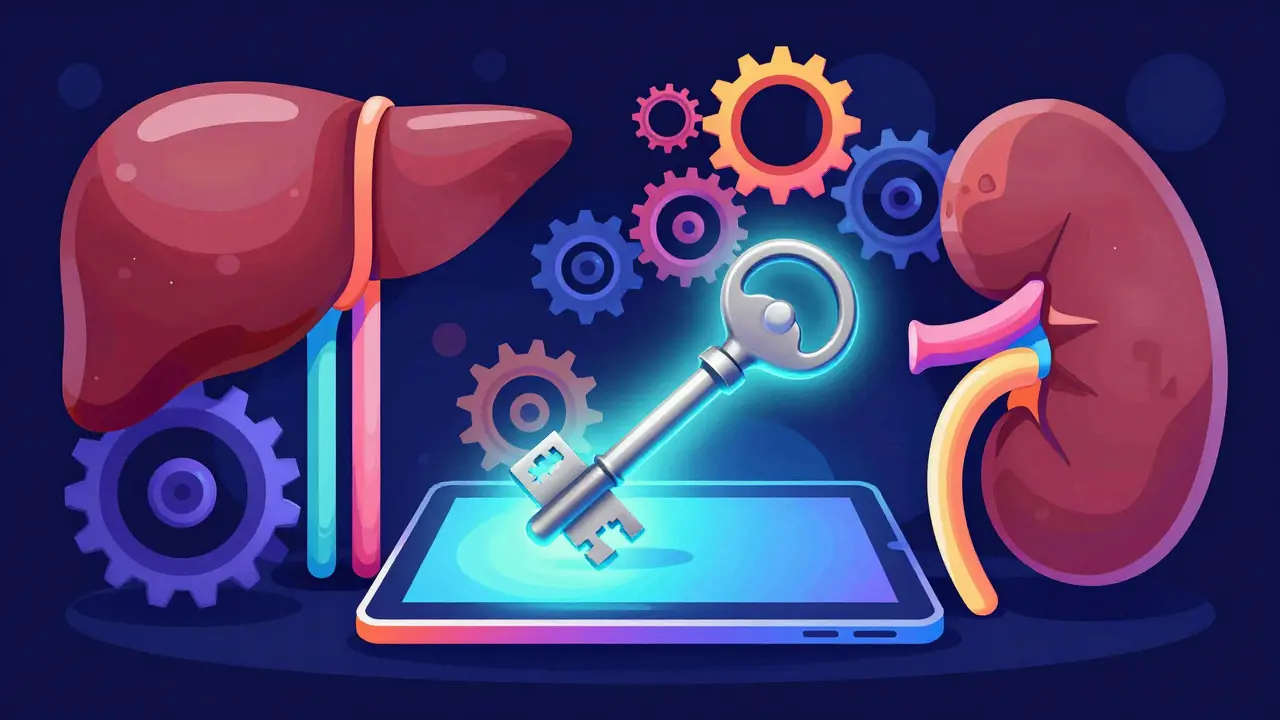
The goal here is simple: better glycemic control with less effort. By attacking different biological pathways-like how your liver produces glucose and how your kidneys excrete it-these combinations often perform better than a single drug. But as with any medication, the price tag can be a hurdle. That's where generic options and substitutions come into play, offering a way to maintain your health without breaking the bank.
Key Takeaways for Patients
- Combination meds reduce "pill burden," which can improve adherence by about 37%.
- Generic versions can save you 85-95% compared to brand-name equivalents.
- Not all combinations have generics yet; newer classes like SGLT2 inhibitors often remain branded.
- Switching to a generic requires 2-4 weeks of close glucose monitoring to ensure stability.
What Exactly Are Combination Diabetes Meds?
At their core, Diabetes Combination Medications is a class of pharmaceutical products that combine two or more glucose-lowering active ingredients into a single dosage form. These are designed primarily for people with Type 2 diabetes. The logic is based on the fact that the body has multiple "defects" in how it handles insulin and glucose; using one drug is like trying to fix a leaky roof with a single nail when you actually need a whole toolkit.
Most of these combinations use Metformin as the foundation. In fact, about 80% of all combination diabetes drugs include this medication because of its proven track record in reducing glucose production in the liver. It is typically paired with other agents like DPP-4 Inhibitors (which help the pancreas produce more insulin) or SGLT2 Inhibitors (which help the kidneys flush out excess sugar via urine).
You'll usually see these in two versions: Immediate-Release (IR) and Extended-Release (XR). XR versions are more common-making up about 60% of the market-because they dissolve slowly, which often means fewer stomach upsets and only one dose per day.
The Real Value: Why Use a Combination?
If you're taking three different pills, you might forget one. If you're taking one pill that does the work of three, your chances of staying on track skyrocket. Research shows that simplifying the regimen can improve medication adherence by 37%. But it's not just about convenience; it's about the numbers. Clinical data shows that these therapies can drop HbA1c levels by 1.2 to 1.8 percentage points, whereas using a single drug usually only manages a 0.7 to 1.0 point reduction.
There's also a biological advantage. By using two drugs at lower doses in one pill, you can sometimes get the same result as high doses of a single drug but with fewer side effects. For example, instead of cranking up a dose of a sulfonylurea-which might cause your blood sugar to dip too low (hypoglycemia)-a doctor can add a second agent to keep the levels steady.
Navigating Generic Options and Costs
The biggest question for most people is: "Is there a cheaper version?" The answer depends entirely on which combination you're taking. The pharmaceutical market is split between long-established drugs and newer, patent-protected ones.
Older combinations are almost always available as generics. For instance, Metaglip (a mix of glipizide and metformin) has been available generically for years. While the brand name once cost hundreds of dollars, the generic version often averages around $18.75 for 60 tablets. Similarly, Glucovance (glyburide and metformin) has a generic version that costs a fraction of the original brand price.
On the other hand, newer drugs are expensive. Synjardy (empagliflozin and metformin), approved in 2015, is still exclusively brand-name. Because of patent laws, you won't see a generic version of this specific combination until at least 2026. This can lead to a massive price gap-where one combination costs $20 a month and another costs nearly $600.
| Medication Name | Components | Generic Available? | Typical Cost Profile |
|---|---|---|---|
| Metaglip | Glipizide / Metformin | Yes | Low / Budget-friendly |
| Glucovance | Glyburide / Metformin | Yes | Low / Budget-friendly |
| Synjardy | Empagliflozin / Metformin | No (Until 2026) | High / Brand-only |
| Janumet | Sitagliptin / Metformin | Expected 2024-2026 | Moderate to High |
The Substitution Transition: What to Watch For
Switching from a brand-name drug to a generic version is usually a seamless process, but it isn't always invisible. While the FDA requires generics to be bioequivalent, there is a window of 80-125% for pharmacokinetics. For most people, this is a non-issue. However, some patients report "noticeable but manageable" changes in their blood sugar patterns after a switch.
One common complaint isn't about the chemistry, but the pill itself. Some users have noted that generic versions have different shapes or sizes, which can make swallowing more difficult. More importantly, a small number of patients have experienced different release kinetics. In one verified case, a patient switching from brand Glucovance to a generic experienced recurrent hypoglycemia because the generic version released the active ingredient differently in their system.
Because of this, you shouldn't just swap pills and hope for the best. Experts recommend a transition period of 2 to 4 weeks. During this time, you should monitor your glucose levels more frequently-sometimes up to four times a day-to make sure the generic is holding your sugar at the same level as the brand name.
Pros and Cons of the "All-in-One" Approach
Before you switch to a combination pill, it's worth weighing the trade-offs. It's not a perfect solution for everyone.
The Upside:
- Less mental energy spent on remembering multiple pills.
- Stronger reduction in HbA1c compared to single-drug therapy.
- Huge cost savings when generic options are available.
The Downside:
- Fixed Ratios: You can't adjust the dose of just one ingredient. If you need more metformin but less of the other drug, you have to go back to separate pills.
- All-or-Nothing: If you develop an allergy or side effect to one component, you have to stop the entire combination medication.
- Limited Generic Formulations: While brands often offer both IR and XR versions, generics are frequently only available in the immediate-release form.
Practical Steps for Switching and Saving
If you're looking to lower your medication costs, don't just ask for the generic at the pharmacy counter. Start with a conversation with your doctor about your specific targets. If you are stable on your current dose and don't require precise titration, a generic substitution is a great move.
If you find yourself stuck with a brand-name drug that has no generic (like Synjardy), look into manufacturer copay cards. These programs can sometimes reduce your out-of-pocket costs by 75% to 100% for eligible patients. Additionally, check if your insurance requires a "prior authorization" for the brand name, as this is a common hurdle that can delay your treatment.
Finally, remember that renal function is key. Most metformin-based combinations require an eGFR (estimated glomerular filtration rate) above 30 mL/min. If your kidney function changes, a combination that was safe last year might not be safe this year, regardless of whether it's brand or generic.
Will switching to a generic combination drug affect my blood sugar?
For most people, the effect is minimal. However, because generic drugs can have slightly different absorption rates, some users notice small shifts in their glucose levels. It is highly recommended to test your blood sugar more frequently for the first 2-4 weeks after switching to ensure the generic is working as expected.
Why is my doctor prescribing a combination pill instead of two separate ones?
The primary reasons are simplicity and adherence. Reducing the number of pills you take daily makes it much more likely that you'll take your medication consistently. Additionally, combining drugs that target different biological pathways often leads to a more significant drop in HbA1c than using a single medication alone.
Can I get a generic version of Synjardy?
Currently, no. Synjardy is protected by patents and is only available as a brand-name product. Generic versions are not expected to hit the market until at least 2026.
What happens if I only have a side effect from one part of the combination pill?
This is one of the main disadvantages of combination meds. Because the drugs are fused into one tablet, you cannot stop one without stopping the other. If you experience an adverse reaction to just one component, your doctor will likely switch you back to separate monotherapies so they can adjust or remove the problematic drug.
Are generic combinations as effective as brand names?
Yes, in the vast majority of cases. The FDA requires generics to be bioequivalent, meaning they deliver the same amount of active ingredient into the bloodstream. While a small percentage of patients may notice differences due to different fillers or release kinetics, most find them equally effective for long-term maintenance.
dwight koyner
It is imperative to remember that while these combinations offer significant convenience, the monitoring phase mentioned is not optional. Many patients overlook the importance of the eGFR check, but given that metformin is cleared renally, a decline in kidney function can lead to a dangerous buildup of the drug, potentially causing lactic acidosis. Please ensure your healthcare provider schedules regular blood work to monitor your renal health alongside your HbA1c levels.
Ethan Davis
Big Pharma just wants us on these "combination" pills so they can lock us into a lifelong subscription model. They make it a single pill for "convenience" but really it's just a way to keep you dependent on their specific patented blends. Wake up people.
Grace Lottering
Pure greed. Patents are just tools for control.
Timothy Burroughs
Imagine thinking the FDA actually cares about your wallet
this whole system is a joke and only American grit can solve it but most of you are too weak to even track your own sugar levels properly
Jay Vernon
Saving money on meds is the best feeling ever! 💸 Thanks for the tips on the copay cards 😊👍
Brady Davis
Oh sure, because taking one giant pill that might cause a massive stomach ache is just so much better than taking two small ones. My life is just complete now that I can save 10 seconds of my morning. Truly a medical miracle.
Danielle Kelley
The bioequivalence window is a scam! An 80-125% range is huge. They are basically experimenting on us with these generics and then telling us to "monitor our sugar" to see if the experiment worked. It is disgusting how they treat patients like lab rats just to shave a few bucks off the price!
Srikanth Makineni
just check the eGFR levels man it is simple
Dhriti Chhabra
I believe that exploring these generic alternatives is a most prudent approach for those facing financial hardship. It is heartening to see a guide that emphasizes both the economic benefits and the necessary medical precautions to ensure patient safety during the transition period.
Jitesh Mohun
listen up you all just follow the protocol and stop complaining about the price
get your blood work done and stop being lazy with your health
Laurie Iten
the idea of a single pill solving a complex biological failure is almost poetic in its simplicity but we must remember that the body is not a machine with parts to be replaced
it is a flow of energy and chemical balance that requires patience
Vivek Hattangadi
I've seen a few people in my support group struggle with the switch to generics, but honestly, if you just stay on top of your testing for those first few weeks, it's usually a breeze! It's all about staying proactive and keeping your doctor in the loop. You guys got this!
Rauf Ronald
Spot on! I always tell my patients that the "pill burden" is a real psychological weight. When you simplify the routine, the mental load drops, and that's often when we see the biggest improvements in A1c. Also, pro tip: if you're struggling with a brand-name cost, don't sleep on those manufacturer apps; they often have instant coupons that pharmacies can apply right at the register! Let's keep pushing for better health outcomes for everyone!
Sarabjeet Singh
Keeping it simple is definitely the way to go here.