
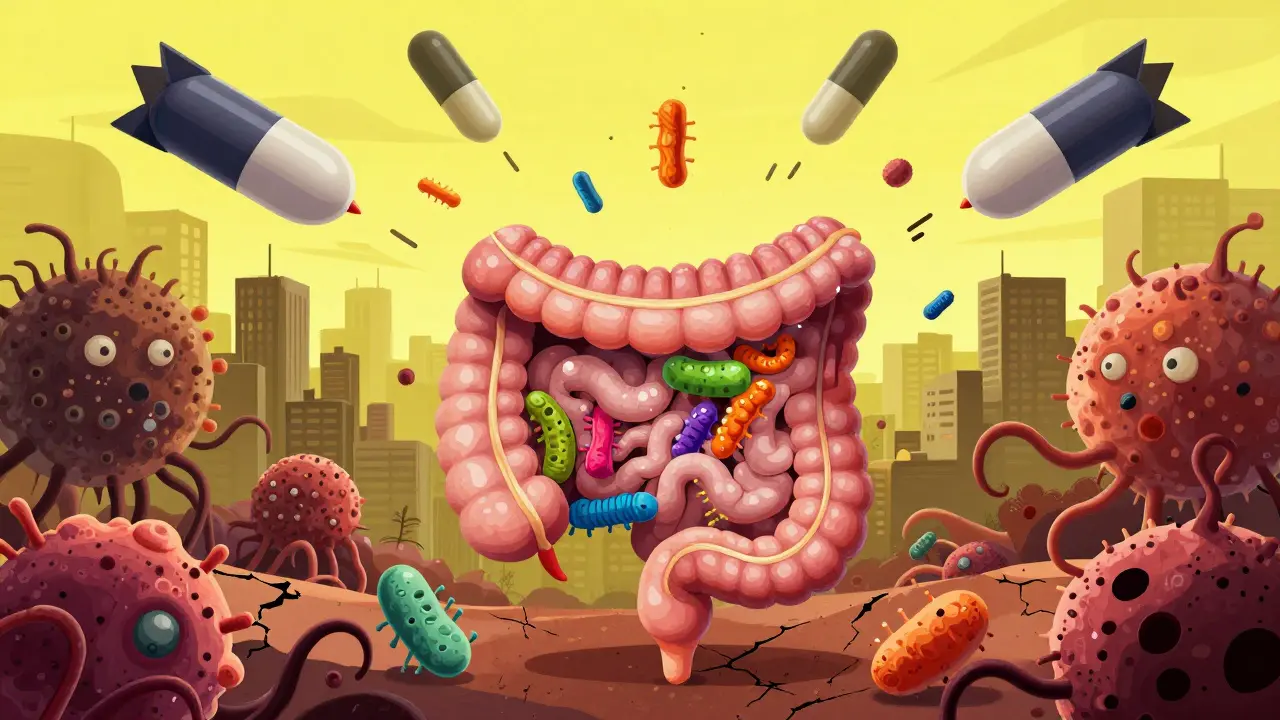
When you take an antibiotic for a sore throat or a sinus infection, you expect to feel better. But what if, a few days later, you start having watery diarrhea, stomach cramps, and fever? It might not be a stomach bug-it could be Clostridioides difficile, or C. diff, a bacteria that thrives when antibiotics wipe out the good bugs in your gut.
What Is Clostridioides difficile?
Clostridioides difficile is a tough, spore-forming bacterium that lives in the environment-on surfaces, in soil, and sometimes in the human gut without causing harm. But when antibiotics like clindamycin, ciprofloxacin, or cephalosporins disrupt the natural balance of your intestinal microbiome, C. diff can take over. It releases two powerful toxins (Toxin A and Toxin B) that attack the lining of your colon, causing inflammation, diarrhea, and in severe cases, life-threatening colitis.
It’s not rare. In the U.S., C. diff causes nearly half a million infections each year, making it the most common bacterial cause of healthcare-associated diarrhea. About 15 to 25% of all cases of antibiotic-associated diarrhea are linked to C. diff. And while it used to be mostly a hospital problem, now more than half of cases happen in people who haven’t been hospitalized in the past year.
How Do You Get It?
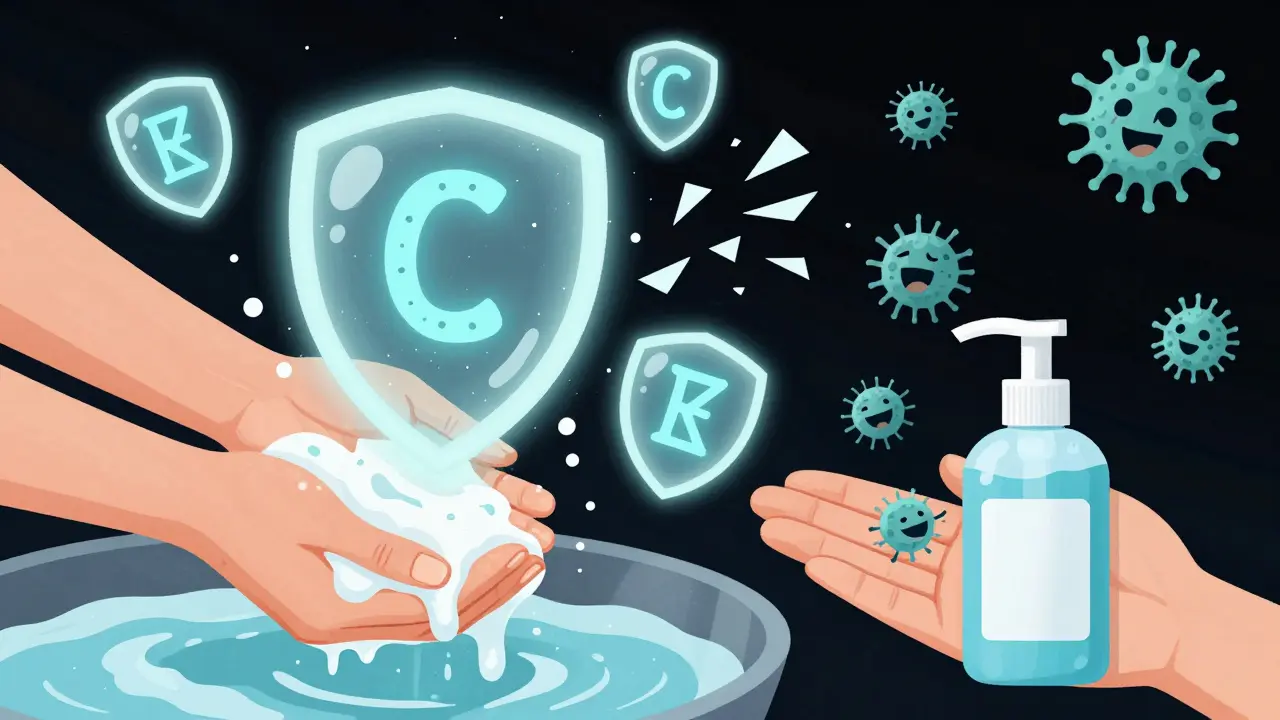
You don’t catch C. diff from someone sneezing. You get it by touching something contaminated-like a doorknob, bed rail, or toilet seat-that has C. diff spores on it, then touching your mouth. These spores are incredibly tough. They survive for months on surfaces, resist regular cleaning, and aren’t killed by hand sanitizer. Only bleach-based cleaners or hydrogen peroxide disinfectants (EPA List K products) can destroy them.
Antibiotics are the biggest trigger. Fluoroquinolones, clindamycin, and broad-spectrum cephalosporins carry the highest risk. But even a short course of amoxicillin can set the stage. The risk goes up the longer you’re on antibiotics and the older you are. People over 65 are eight to ten times more likely to get a serious infection-and their death rate is much higher.
Other risk factors include recent hospital stays, being in a nursing home, having inflammatory bowel disease (IBD), or having had gut surgery. Each day in the hospital increases your risk by about 1.5%. If you’ve had a C. diff infection before, your chance of getting it again is 20 to 30%-and if you’ve had it twice, your risk of a third infection jumps to over 60%.
What Are the Symptoms?
Symptoms usually start 5 to 10 days after starting an antibiotic, but they can appear as early as the first day or as late as two months after finishing treatment. Mild cases look like food poisoning: loose stools (three or more per day), cramps, bloating, and low fever. More severe cases bring high fever, severe abdominal pain, bloody stools, rapid heart rate, and swelling in the belly. In rare cases, the colon can rupture, requiring emergency surgery.
Here’s the tricky part: some people carry C. diff in their gut without symptoms-up to 50% of hospitalized patients. That’s why doctors don’t test everyone with diarrhea. They look for symptoms plus recent antibiotic use. If you’re on antibiotics and suddenly have watery diarrhea, don’t assume it’s just a side effect. Call your doctor.
How Is It Diagnosed?
Testing isn’t perfect. A stool sample is the standard, but no single test catches every case. The CDC recommends a two-step process: first, a test for glutamate dehydrogenase (GDH), which detects the presence of C. diff. If that’s positive, a second test checks for toxins (EIA) or bacterial DNA (NAAT). This reduces false positives and negatives.
False negatives happen in 10 to 30% of cases, especially if the sample is collected too early or too late. That’s why doctors rely on clinical judgment. If your symptoms match and you’ve been on antibiotics, they’ll treat you even if the first test is negative.
How Is It Treated?
Treatment has changed dramatically in the last five years. Metronidazole used to be the go-to drug. Now, it’s not recommended at all. Studies showed it’s less effective and leads to more recurrences.
Today, the top choice is fidaxomicin (Dificid). Taken as a pill twice a day for 10 days, it kills C. diff without wiping out as many good gut bacteria. It cuts the chance of recurrence by nearly half compared to vancomycin.
Vancomycin (Vancocin) is still used-especially if fidaxomicin isn’t available or too expensive. It’s taken four times a day for 10 days. It works, but recurrence rates are higher.
For people who have had two or more recurrences, fecal microbiota transplant (FMT) is now a standard treatment. It involves transferring healthy donor stool into the patient’s colon-usually via colonoscopy or capsule. Success rates? 85 to 90%. That’s far better than repeating antibiotics, which only work about 40 to 60% of the time for recurrent cases.
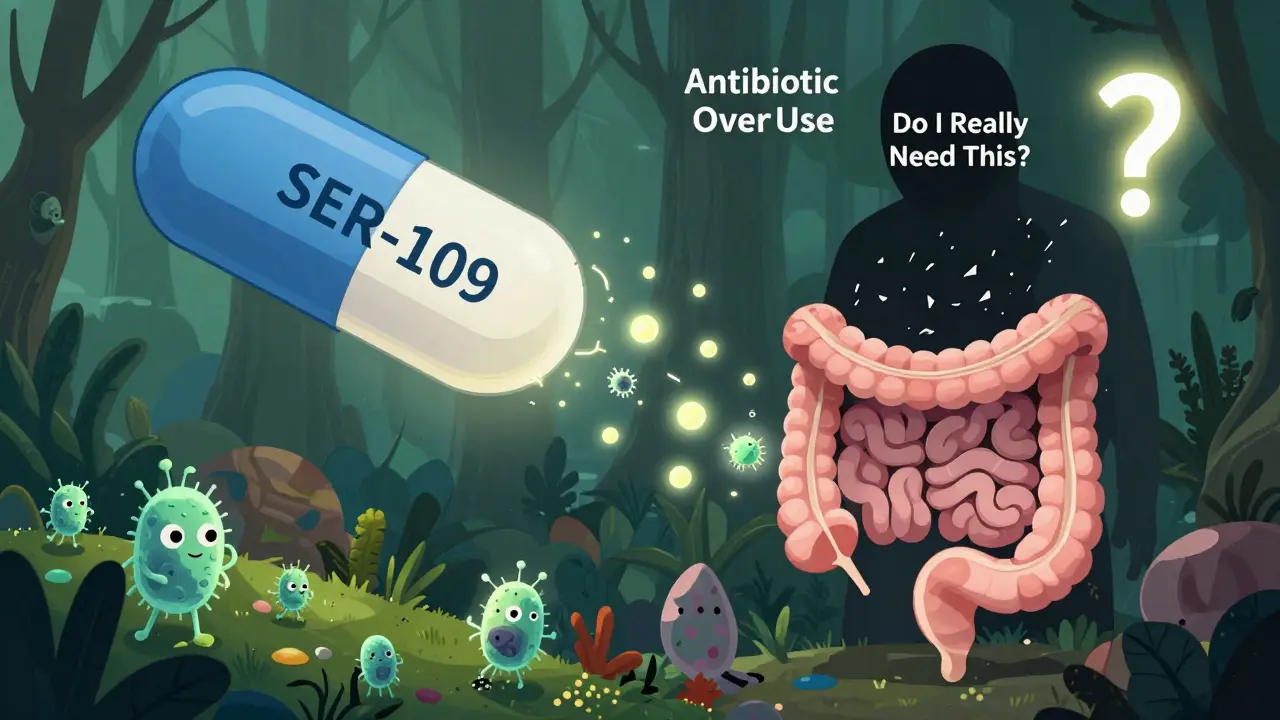
In 2023, the FDA approved a new option: SER-109, a purified spore-based microbiome therapy made from carefully screened donor stool. It’s taken as capsules and reduced recurrence by 88% in clinical trials. This isn’t a magic bullet, but it’s a big step toward targeted, non-antibiotic treatments.
Why Probiotics Don’t Work for Prevention
You’ve probably seen ads for probiotics to “prevent C. diff.” But here’s the truth: major health groups, including the American College of Gastroenterology and the CDC, now say there’s no strong evidence they help prevent C. diff infections.
A 2022 Cochrane review of nearly 10,000 people found that probiotics didn’t significantly lower the risk of C. diff. They did slightly reduce general antibiotic-associated diarrhea, but not the dangerous kind caused by C. diff. So spending money on probiotics isn’t a reliable prevention strategy.
How to Prevent C. diff-The Real Ways
Prevention isn’t about supplements. It’s about two things: using antibiotics wisely and stopping the spread.
1. Antibiotic stewardship. Don’t take antibiotics unless you really need them. For a viral cold? No antibiotics. For a sinus infection? Wait a few days-many clear on their own. Hospitals that use antibiotic stewardship programs have cut C. diff rates by 25 to 30%.
2. Hand hygiene. Wash hands with soap and water-especially after using the bathroom or before eating. Alcohol-based hand sanitizers don’t kill C. diff spores.
3. Environmental cleaning. In hospitals and homes where someone has C. diff, clean surfaces with bleach-based cleaners. Regular disinfectants won’t cut it. Spores can live on countertops, phones, and even remote controls.
4. Isolation and precautions. If you’re diagnosed, wear gloves and gowns in the hospital. Use separate bathrooms if possible. Don’t share towels or utensils.
5. Avoid unnecessary hospital stays. If you can recover at home, do it. The longer you’re in a hospital, the higher your risk.
The Bigger Picture
C. diff isn’t just a hospital problem anymore. Community cases are rising. People who’ve never been hospitalized are getting infected after taking antibiotics for a dental procedure or a urinary tract infection. The economic cost in the U.S. is over $4.8 billion a year. And with aging populations and more antibiotic use, the problem isn’t going away.
But there’s hope. New treatments like SER-109, better diagnostics, and smarter antibiotic use are changing the game. The goal isn’t just to treat the infection-it’s to stop it before it starts. That means patients asking questions: “Do I really need this antibiotic?” and doctors listening and choosing alternatives when possible.
If you’ve had C. diff before, talk to your doctor about long-term prevention. If you’re on antibiotics now, watch for diarrhea. Don’t ignore it. And if you’re caring for someone with C. diff, clean with bleach, wash your hands, and don’t assume it’s just a tummy bug.
C. diff is serious-but it’s preventable. The tools are here. What’s needed now is awareness, action, and better choices about antibiotics.
Can you get C. diff from food?
C. diff isn’t typically spread through food like salmonella or E. coli. It spreads through fecal contamination-so if someone with C. diff doesn’t wash their hands after using the bathroom and then touches food, it’s possible. But this is rare. The main route is person-to-person via contaminated surfaces, not food.
Is C. diff contagious?
Yes, but not like the flu. You can’t catch it from breathing the same air. You get it by touching something contaminated with C. diff spores-like a toilet handle, bed rail, or phone-and then touching your mouth. That’s why handwashing and cleaning with bleach are so important.
Can you get C. diff without taking antibiotics?
Yes. While antibiotics are the biggest risk factor, about half of all C. diff cases now happen in people who haven’t taken antibiotics in the past month. Other factors like age, hospital stays, weakened immune systems, or gut surgery can also lead to infection-even without recent antibiotic use.
How long does C. diff last?
With treatment, symptoms usually improve within a few days. But the infection can linger. Some people carry spores for weeks after recovery. That’s why recurrence is common-up to 30% of people get it again. Full recovery means not just symptom relief, but restoring a healthy gut microbiome, which can take months.
Are children at risk for C. diff?
Children under 2 often carry C. diff without symptoms-it’s normal in babies. But older children and teens who take antibiotics, especially broad-spectrum ones, can develop infection. Hospitalized kids with weakened immune systems are at higher risk. Treatment in children is similar to adults, but dosing is adjusted by weight.
What’s the difference between C. diff and IBS?
IBS (Irritable Bowel Syndrome) is a chronic condition with bloating, cramps, and alternating diarrhea or constipation-but no infection or inflammation. C. diff causes sudden, watery diarrhea, often with fever and recent antibiotic use. IBS doesn’t cause bloody stools or high white blood cell counts. Testing is needed to tell them apart.
Can C. diff come back after FMT?
Yes, but it’s rare. FMT works in 85 to 90% of recurrent cases. Still, about 10 to 15% of patients have another recurrence after transplant. This can happen if the new microbiome doesn’t fully establish, or if the person takes antibiotics again. Long-term, avoiding unnecessary antibiotics is the best way to keep C. diff from returning.
Is C. diff dangerous for pregnant women?
Pregnant women can get C. diff, but it’s uncommon. If they do, fidaxomicin and vancomycin are considered safe during pregnancy. Metronidazole is avoided because of potential risks to the fetus. Untreated severe C. diff can lead to dehydration and preterm labor, so prompt diagnosis and treatment are critical.
Connor Hale
C. diff is one of those silent killers that slips in after you think you're done with the antibiotics. It's not just about the bugs-it's about the ecosystem. Our guts aren't just tubes; they're rainforests. When you blast them with broad-spectrum drugs, you're not curing an infection-you're burning down the forest and wondering why the invasive species took over.
Roshan Aryal
Let’s be real-this whole C. diff panic is just Big Pharma’s way to sell expensive pills. Fidaxomicin costs more than a damn iPhone. And FMT? That’s just poop transplants dressed up in lab coats. In India, we treat diarrhea with ORS and patience-not $5,000 capsules. Stop overmedicalizing everything.
Jack Wernet
Thank you for this comprehensive and clinically accurate overview. The distinction between colonization and infection is critically underappreciated in public discourse. The emphasis on antibiotic stewardship, particularly in outpatient settings, is not merely prudent-it is a public health imperative. The rise in community-acquired cases underscores the need for systemic change in prescribing practices.
Charlotte N
so like… if you get diarrhea after antibiotics… you just… call your doctor? no? maybe? i mean… what if you’re not sure? like… is it just the meds or is it… the thing? also… why is bleach the only thing that works? like… why not vinegar? or tea tree? or… something less scary?
Vicki Yuan
I had C. diff twice. First time, I was in the hospital for a hip replacement. Second time, I got it after a simple UTI antibiotic. FMT saved me. It wasn’t magic-it was science. But the real win? I stopped taking antibiotics like candy. Now I ask, ‘What if I wait?’ and guess what? Most things clear up on their own. Your body is smarter than you think.
Abhishek Mondal
Let me guess-you’re one of those people who thinks ‘natural remedies’ can cure everything. Probiotics don’t work? Fine. But you’re ignoring the fact that Western medicine is built on reductionist nonsense. C. diff isn’t a ‘bacteria’-it’s a symptom of a broken system. You don’t treat the pathogen-you treat the host’s relationship with the environment. And no, bleach isn’t the answer. You need spiritual cleansing.
Terri Gladden
OMG I JUST GOT C. DIFF AFTER MY DENTAL WORK AND NOW I’M SCARED TO GO TO THE BATHROOM AND MY CAT LOOKS AT ME LIKE I’M GONNA DIE AND I’M NOT EVEN KIDDING I CRIED IN THE CVS IS THIS NORMAL???
Jennifer Glass
I’ve been researching this since my mom got it last year. The part about spores surviving on phones and remotes blew my mind. We cleaned everything with bleach, stopped using hand sanitizer, and started washing hands like we’re in surgery. It’s weird how something so simple-soap and water-can be the most powerful tool. I wish more people knew this.
Joseph Snow
This entire article is a government-approved narrative designed to normalize antibiotic overuse while pushing expensive, unproven therapies. FMT? SER-109? These are Trojan horses for microbiome manipulation. Who funds these studies? Who owns the patents? The real threat isn’t C. diff-it’s the erosion of personal medical autonomy under the guise of ‘science’.
Akshaya Gandra _ Student - EastCaryMS
so wait so if you dont take abx you can still get it? like from touching a door handle? that sounds so scary. i had diarrhea after amoxicillin but i thought it was just me being sensitive. now im scared to even take tylenol
en Max
From a clinical microbiology standpoint, the shift from metronidazole to fidaxomicin represents a paradigmatic evolution in targeted antimicrobial therapy. The reduced collateral damage to the commensal microbiota-particularly the preservation of Bacteroidetes and Firmicutes populations-directly correlates with decreased recurrence rates. Furthermore, the FDA’s approval of SER-109 constitutes a landmark in defined microbial consortia therapeutics, moving beyond empirical fecal transplantation toward precision microbiome reconstitution.
Angie Rehe
Why is no one talking about the fact that hospitals are breeding grounds for superbugs? You think they clean properly? Ha. They use ‘disinfectants’ that don’t even touch the spores. And the staff? Half of them don’t wash their hands. It’s not C. diff-it’s systemic negligence. And they charge you $3,000 a day to get infected.
Jacob Milano
I used to think antibiotics were harmless magic pills. Then I watched my brother go through three rounds of C. diff. He lost 30 pounds. Couldn’t eat. Didn’t sleep. The day he got the FMT, he cried. Not from pain-from relief. It wasn’t just a procedure. It was a second chance. Don’t take antibiotics lightly. And if you’ve had C. diff? Please, talk to your doctor about prevention. You’re not alone.
saurabh singh
Bro in India we don’t even know what fidaxomicin is. We use neem, turmeric, and boiled rice water. But honestly? The real problem is antibiotics being sold over the counter like candy. My uncle took 5 days of cipro for a cold. Now he’s in the hospital. This isn’t a medical issue-it’s a cultural one. We need education, not expensive pills.
Dee Humprey
Just want to say thank you for writing this. I’ve been a nurse for 18 years and I see this every day. The fear, the confusion, the shame. People think they did something wrong. They didn’t. It’s not their fault. Just a broken system. But you? You gave people the truth. And that’s everything.