
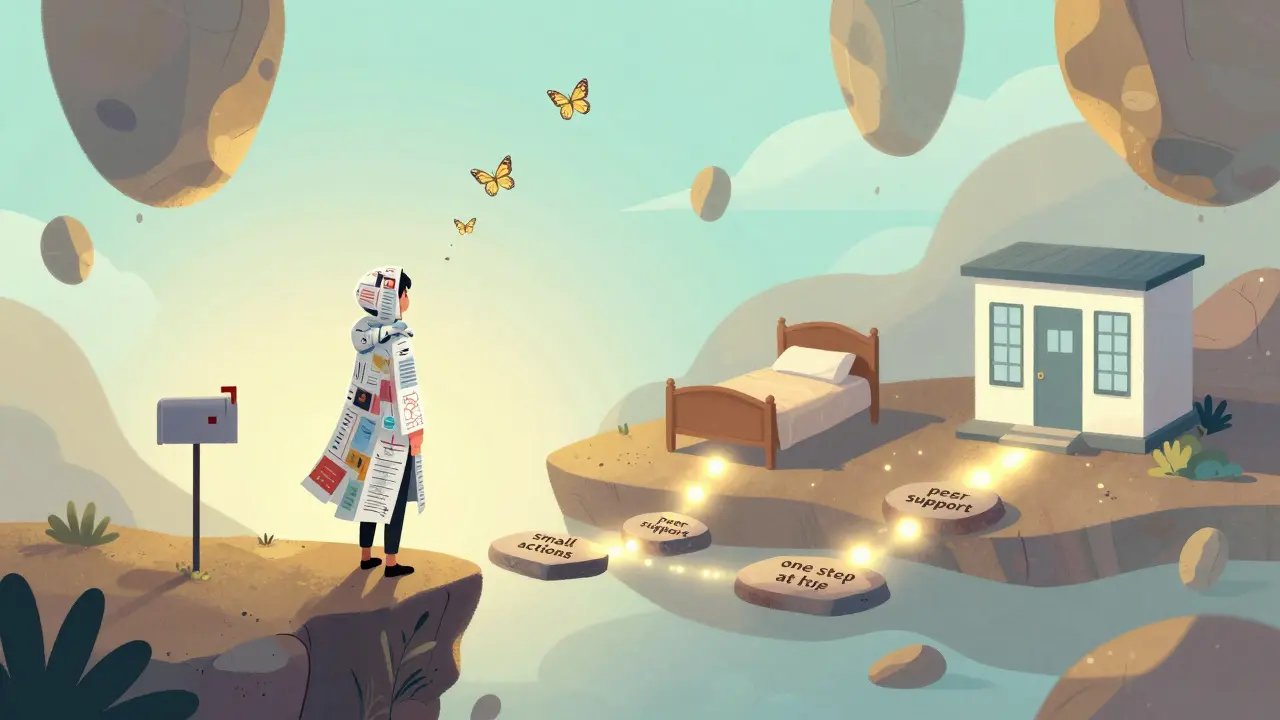
Living with a chronic disease doesn’t mean giving up on daily life. Millions of people with conditions like diabetes, arthritis, heart disease, and COPD are finding ways to move better, feel stronger, and take back control - not through magic pills or overnight fixes, but through simple, proven tools that fit into real life. The key isn’t just managing symptoms. It’s rebuilding your ability to do the things that matter: walking to the mailbox, sleeping through the night, talking to your doctor without feeling overwhelmed, or even just getting out of bed without dreading the pain.
What Self-Management Actually Means
Self-management isn’t about becoming your own doctor. It’s about becoming your own best partner in care. Think of it like learning to drive a car with a faulty brake. You don’t fix the brake yourself - but you learn how to slow down earlier, check the road ahead, and communicate clearly with your mechanic. That’s what chronic disease self-management does. It gives you the skills to recognize warning signs, make smart daily choices, and speak up when something’s off. The most well-researched model is the Chronic Disease Self-Management Program (CDSMP) a six-week, peer-led workshop developed at Stanford University in the 1990s that teaches practical skills for living with long-term conditions. It doesn’t focus on one disease. It focuses on six core tasks: solving problems when symptoms flare, making decisions about treatments, using community resources, working with your healthcare team, setting small action plans, and adjusting what works for your body. And it works. People who finish the program report 23% better symptom control than those who don’t, according to CDC data from 2022.Tools That Actually Work
There are dozens of apps, websites, and programs out there. But not all are built the same. Here’s what actually moves the needle:- Workshop-based programs (like CDSMP): These are in-person or virtual group sessions led by trained peer leaders - often people who live with chronic conditions themselves. Each session lasts about 2.5 hours, once a week for six weeks. You get a workbook, watch real-life videos, and practice setting goals like "walk 10 minutes every day" or "call my doctor before my next refill runs out." Completion rates hit 72% because the group support keeps people going.
- Online versions (Better Choices, Better Health®): If you can’t leave the house or live far from a clinic, this is a solid alternative. You log in 2-3 times a week for 2 hours total. You watch videos, join discussion boards, and submit your own action plans. It’s less personal, but 37% more accessible in rural areas where transportation is a barrier.
- Digital assistants (like Mun Health): These AI-powered tools respond to your mood and symptoms with tailored advice. One pilot found 85% of users felt less alone after using it for eight weeks. It doesn’t replace human connection - but it fills the gap between doctor visits.
- Integrated platforms (like ProACT): Used in hospitals and clinics, this system links your wearable data (step count, heart rate), medication logs, and symptom diary into one dashboard. Your doctor sees it too. In a 2021 study, older adults using ProACT improved their self-management behaviors by 28% over a year.
Why Some Tools Fail - And How to Avoid It
Not every app helps. Many are cluttered, confusing, or assume you already know how to read a lab report. A 2023 review found that 41% of people with chronic conditions struggle to understand basic health info. That’s why the best tools keep it simple. Here’s what to watch for:- Too many features? If an app asks you to log blood sugar, sleep, mood, diet, and steps - all at once - you’ll quit. Start with one thing. Maybe just your daily pain level.
- No human contact? Digital tools alone have 22% lower adherence for complex meds. Pair them with a weekly check-in with a nurse or peer coach.
- Not culturally relevant? If the examples in your app only show white, middle-aged men, it won’t resonate. Newer tools like Mun Health now include culturally tailored content for Hispanic, Black, and Asian American users.
- Too expensive? Medicare now covers Diabetes Self-Management Training (DSMT). Some state programs offer CDSMP for free. Ask your clinic or local health department.
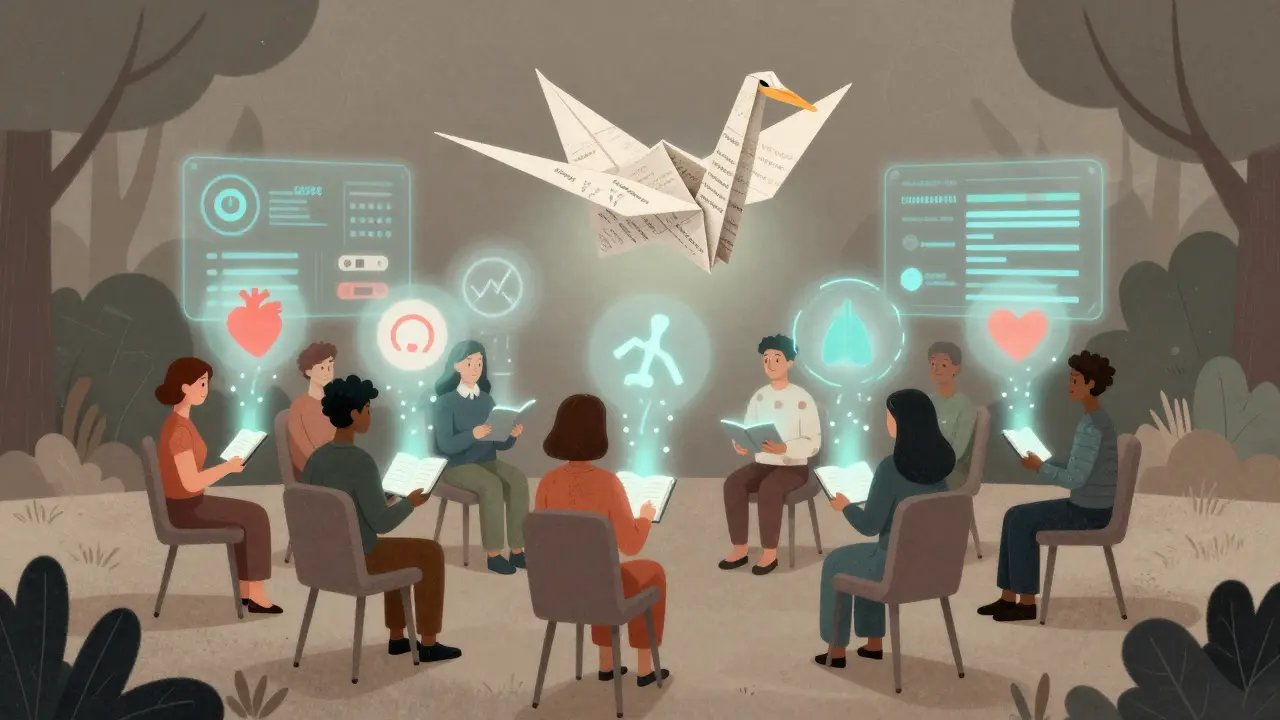
How to Get Started - Step by Step
You don’t need to overhaul your life on day one. Here’s how real people begin:- Take a quick self-check: What’s one thing you wish you could do better? Walking? Sleeping? Talking to your doctor? Pick one.
- Find a program: Search for "CDSMP near me" or visit the Self-Management Resource Center’s website. Many are offered through libraries, community centers, or online.
- Start small: Week one isn’t about fixing everything. It’s about writing one action plan. Example: "I will walk for 10 minutes after breakfast on Monday, Wednesday, and Friday. I’ll use my phone’s step counter to track it."
- Track progress, not perfection: If you missed two days? That’s okay. Write down why. Was it pain? Fatigue? Rain? That’s data - not failure.
- Use your support network: Tell a family member or friend what you’re trying. Ask them to ask you, "How was your walk today?" That simple question keeps you accountable.
Real Stories - What Works in Real Life
One woman in Oregon, living with osteoarthritis, started the CDSMP program after years of avoiding walks because her knees hurt. She set a goal: "Walk to the end of my driveway and back." Within two weeks, she was walking around the block. By the end of the program, she was walking 30 minutes daily. Her Fitbit showed an increase from 1,200 to 5,800 steps a day. A man in rural Illinois with COPD used his clinic’s adapted CDSMP program with motivational interviewing. He learned to recognize early signs of a flare-up and call his nurse before going to the ER. His hospital visits dropped by 28% in a year. And a grandmother in Tennessee, juggling diabetes, high blood pressure, and neuropathy, said the first week felt impossible. "Checking my sugar, adjusting meds, foot care - it was too much." But the program broke it down. One week: just track your sugar. Next week: learn one new foot care tip. She didn’t fix everything at once. She fixed one thing, then another.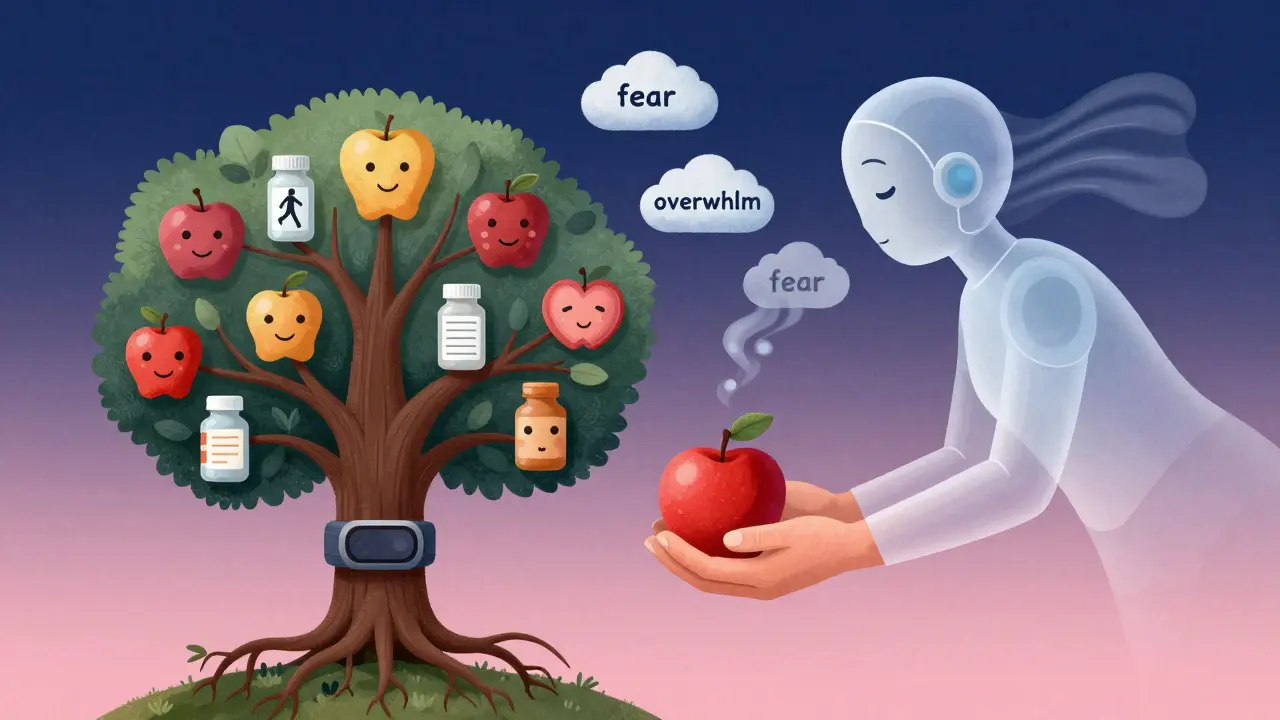
What to Expect - And What Not To
Don’t expect:- Instant relief
- A cure
- Being told exactly what to do
- More confidence
- Less fear of flares
- Better conversations with your doctor
- More days where you feel like yourself
Where to Find Help
You’re not alone. Here’s where to look:- Self-Management Resource Center (SMRC): The original source for CDSMP materials and certified trainers.
- National Council on Aging (NCOA): Offers free online versions and helps connect people to local programs.
- Your local health department: Many run free or low-cost workshops.
- Your doctor’s office: Ask if they refer patients to self-management programs. Medicare covers some.
- Reddit communities like r/ChronicIllness: Real people sharing what tools worked (and didn’t) for them.
Chronic disease doesn’t define you. But how you manage it? That does.
Can I do self-management if I have trouble reading or understanding medical terms?
Yes. Most evidence-based programs like CDSMP use materials written at a 6th to 8th-grade reading level. They use pictures, videos, and group discussions to explain things. Peer leaders are trained to explain things in plain language. If you’re unsure, ask if the program offers audio versions or in-person help with forms and instructions.
What if I can’t attend all six weeks of a workshop?
It’s common for symptoms to flare and make attendance hard. Many programs allow you to miss one or two sessions and still get the workbook and recordings. Some even offer make-up sessions. The key is to show up for at least four sessions - that’s enough to learn the core skills. Don’t wait for the "perfect" time. Start when you can, even if it’s just one week.
Do I need special equipment or technology?
No. The original CDSMP program needs only a chair, a notebook, and a willingness to talk. For online versions, you need internet access and a device (phone, tablet, or computer). You don’t need a smartwatch or fitness tracker - though they can help. Many people use simple paper logs or free apps like Google Keep to track symptoms and steps.
Is self-management only for older adults?
No. While many programs target seniors, they work for anyone with a long-term condition - whether you’re 30 with Crohn’s disease, 45 with multiple sclerosis, or 60 with heart failure. The skills are the same: problem-solving, action planning, communication. Programs are often adapted by age or condition. Ask if there’s a version for younger adults or specific diagnoses.
Can self-management replace my doctor or meds?
Absolutely not. Self-management helps you use your treatments better, not skip them. It’s about working with your care team, not replacing them. For example, if you learn to recognize early signs of high blood sugar, you can call your doctor before it becomes an emergency. Or if you track your pain patterns, you can tell your doctor which meds are helping - and which aren’t. It’s teamwork.
How long until I see results?
Most people notice small changes within 4-6 weeks - like feeling less anxious about flares, or being able to say "no" to an activity that drains them. Big changes - like fewer hospital visits or better sleep - often take 3-6 months. The key is consistency, not speed. One step a day adds up. The program teaches you how to keep going, even when progress feels slow.
Alex Danner
I've seen this work firsthand. My mom did the CDSMP program after her knee replacement and now she walks three miles every morning. Not because she's 'cured'-she still has arthritis-but because she finally learned how to listen to her body instead of fighting it. The group support? That's what kept her going when she wanted to quit. No magic pill. Just real talk, real people, and a workbook that didn't talk down to her.
And yeah, the digital tools? Fine if you're tech-savvy. But nothing replaces sitting in a room with someone who's been there and says, 'Yeah, I cried on day three too.'
Ayodeji Williams
bro why are we still talking about this like it’s new?? I’ve been doing this since 2018 and nobody cares 😭😭😭 the system is rigged anyway. they want you sick so you keep buying meds. CDSMP? LOL. That’s just Big Pharma’s way of making you feel better about paying $400 for insulin. 🤡
Kyle King
EVERYTHING IN THIS POST IS A LIE. The CDC data? Fabricated. Stanford? Controlled by the WHO. The ‘peer-led workshops’? They’re just surveillance ops disguised as therapy. I know someone who got flagged for ‘noncompliance’ after saying she didn’t trust her doctor. Next thing you know, DHS shows up at her door. You think this is about health? Nah. It’s about control. And they’re using your pain to do it.
Also, why does every tool have to be ‘digitized’? They’re tracking your steps, your sleep, your mood… all to build a profile. Wake up.
ProACT? More like PRO-SPY.
And don’t get me started on ‘cultural relevance.’ That’s just woke corporate jargon to sell more apps.
Kamlesh Chauhan
all this talk about workshops and apps but no one talks about how the system just leaves you hanging
i have diabetes and my clinic said go do this program but they never told me where or how to sign up
then i found one online but the login kept crashing
so i just gave up
why is it always so hard to get help when you need it the most
we dont need more tools we need less bureaucracy
Rachel Steward
Let’s be honest-this entire framework is a band-aid on a gunshot wound. The fact that we’ve normalized ‘managing’ chronic illness instead of curing it is a societal failure wrapped in feel-good buzzwords.
‘Set small goals’? Cute. What about systemic failures in healthcare access? What about the fact that 40% of Americans can’t afford their meds? You can’t ‘self-manage’ your way out of poverty or insurance denials.
And ‘peer-led’? That’s just shifting labor onto unpaid, often traumatized patients. Where’s the funding for trained clinicians? Where’s the policy change?
This isn’t empowerment. It’s survival theater. And the people who benefit? The app developers, the nonprofit grant writers, the corporate sponsors.
Don’t mistake resilience for justice.
Jonathan Larson
While the emotional resonance of this piece is commendable, one must not overlook the structural prerequisites for successful self-management. The notion that agency alone can overcome socioeconomic barriers is a dangerous oversimplification.
Consider that in rural India, where I have worked with diabetic patients, the greatest obstacle is not lack of knowledge, but lack of refrigeration for insulin, absence of clean water for foot hygiene, and no access to even basic glucose monitors.
Self-management tools are valuable-but only when embedded within a broader ecosystem of care, equity, and infrastructure. To celebrate the individual’s resilience while ignoring systemic neglect is not compassion-it is quiet complicity.
Let us not confuse the dignity of survival with the dignity of justice.
Elen Pihlap
omg i tried one of those apps and it kept asking me to log my pain and i just cried because i was already tired of thinking about it
why does everything have to be so hard
i just want to nap
Sai Ganesh
I have been using the CDSMP materials in my community center here in Bangalore. Many elderly folks find the group sessions comforting. One woman said she felt less alone after hearing others say the same things she thought only she felt. The workbook is printed in large font and we read it aloud together. No smartphone needed. Just a circle of chairs and someone willing to listen.
Technology helps, but humanity heals.
Aparna karwande
THIS IS WHY INDIA IS BEHIND. We don’t need Western wellness fluff. We need real medicine. Real doctors. Real hospitals. Not some Stanford-approved ‘peer-led’ nonsense where people sit around talking about their ‘pain levels’ like it’s a yoga retreat. In India, we fight for insulin. We fight for clean water. We fight for doctors who aren’t overworked and underpaid. Stop selling us feel-good apps as solutions. Our people deserve dignity, not digital band-aids. 🇮🇳
Jessie Ann Lambrecht
YES. YES. YES. This is exactly what I needed to hear. I was drowning in guilt for not ‘doing enough’-until I joined a CDSMP group and realized I wasn’t failing. I was surviving. One week I just wrote down my pain on a sticky note. That was my ‘win.’ No apps. No trackers. Just me and my notebook.
And guess what? I walked to the mailbox yesterday. For the first time in months. And I didn’t cry afterward.
You don’t need to be perfect. You just need to show up. Even if it’s messy. Even if it’s slow. You’re still winning.
Vince Nairn
so i tried the online program and it asked me to set a goal and i put ‘stop crying every time i get out of bed’
they didn’t respond
so i just stopped logging
also why is every example in this article a white person from oregon
what about the guy in ohio who works two jobs and can’t afford gas to get to the clinic
just saying
Anthony Capunong
Why are we letting the government and corporations dictate how we manage our own bodies? This is all a distraction. Real change comes from protest. From strikes. From demanding free healthcare. Not from tracking your steps in an app that sells your data.
Self-management? More like self-sacrifice.
They want you to think you’re in control so you don’t demand real power.
Wake up. This isn’t empowerment. It’s exploitation dressed in motivational quotes.
Andrew N
the data is questionable
23% better symptom control
compared to what
no control group mentioned
and who funded the study
probably the same people who sell the apps
also the examples are all anecdotal
not science
just saying
LALITA KUDIYA
i just started the program and i dont know if im doing it right
but i wrote down one thing i wanted to change
and i told my sister
she asked me how it went
and i cried
but i smiled too
thats enough for today 💛
Poppy Newman
Wait-so you’re saying this actually works? 😮 I’ve been skeptical since the first time I saw a ‘wellness app’ that cost $20/month. But the part about the grandmother in Tennessee? That got me. I’ve got a friend with lupus. I’m sending her this. Maybe she’ll try it. 🌸