
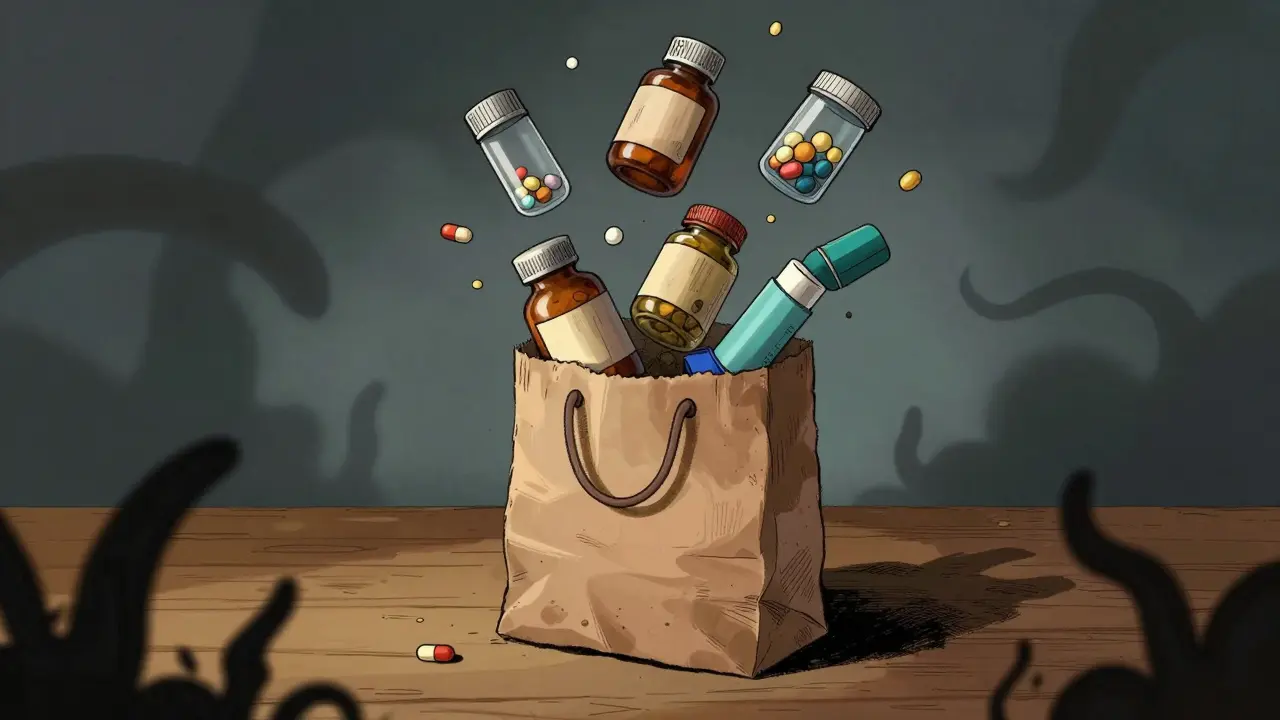
Brown Bag Readiness Checker
Research shows relying on memory misses nearly 90% of medications. Use this checklist to ensure your "Brown Bag" is complete before your appointment.
Step 1: Inventory Check
Standard Prescriptions
Non-Prescription
Natural Products
High-Risk Items Often Forgotten
These items are often left in refrigerators, nightstands, or pockets. Missing these increases adverse event risk significantly.
Your Missing Pieces
- Please select items above to see analysis.
Why You Should Never Skip This Appointment
You might think your medication list is perfect in your head. Maybe you recite the names to your General Practitioner is a primary care doctor who manages your overall health every year without issue. But studies show that when patients rely on memory alone, they miss nearly 90% of their medications. The danger isn't just forgetting a pill; it is dangerous interactions between drugs you take daily. That is where the Brown Bag Medication Review comes in.
This process involves bringing every single container to your appointment for physical inspection. Research indicates medication errors contribute to up to 50% of healthcare problems. For older adults, the stakes are even higher. This guide explains exactly how to prepare, what to expect, and why this specific safety protocol saves lives.
The Basics of a Brown Bag Review
Imagine walking into your pharmacy or clinic with a paper bag filled with everything you put into your body. This concept started in 1982 by pharmacists who wanted better data than verbal reports could provide. By 2016, the Agency for Healthcare Research and Quality (AHRQ) formalized the method into its Health Literacy Universal Precautions Toolkit. The goal is simple: verify what you take against what is safe.
Unlike a standard check-up, this requires physical presence of the drugs. Your doctor looks at bottle labels, expiration dates, and quantities. They cross-reference prescription pills with vitamins and herbal remedies. The result is a clear picture of your regimen versus potential conflicts.
Exactly What Goes Into the Bag
Mistakes often happen because patients leave critical items at home. Don't fall into that trap. When you pack your bag, you need to gather these specific categories:
- Prescription Bottles: Every box or tube, even if you have refills elsewhere.
- Over-the-counter Drugs: Pain relievers like ibuprofen, antacids, or sleep aids found on grocery shelves.
- Vitamins and Supplements: Fish oil, calcium, multivitamins, and protein powders.
- Herbal Remedies: Ginkgo biloba, St. John's Wort, or tinctures stored in dark glass.
- Topical Treatments: Creams, ointments, inhalers, and eye drops.
| Item Type | Likelihood of Being Forgotten | Risk if Missed |
|---|---|---|
| Insulin Pens | High (often left in fridge) | Dosage errors affecting blood sugar |
| Patch Patches | Medium | Nicotine or hormone interaction issues |
| Cough Syrups | Very High | Dopamine or sedative overlap risk |
Many seniors don't realize that natural products can be just as potent as prescribed drugs. A study published in the Journal of the American Geriatrics Society noted that 29.8% of first-time participants were confused about which medications counted. Bring everything to avoid gaps.

How the Session Unfolds
This isn't a quick five-minute chat. Expect to spend 30 to 45 minutes in the exam room. During this time, the provider opens bottles to inspect contents and compare them with electronic records. They look for "red flags" such as duplicate therapy or incorrect dosing.
For example, reviewers might find a patient taking two different beta-blockers unknowingly. One came from a cardiologist and another from a GP. Without seeing both bottles, the system shows no warning. With the bag, the conflict is immediate. Providers also check for expiration dates. Old meds lose potency or become toxic over time.
The Data Behind Accuracy
Why bother with the inconvenience? Because self-reporting fails frequently. AHRQ documentation states that out of 10-15 verbal reviews, only 2 are accurate. That creates an 80-87% error rate. In contrast, physical brown bag reviews achieve 92-95% accuracy.
This gap directly impacts outcomes. Dr. Barry D. Weiss documented that these reviews prevented hospitalizations in 12.7% of high-risk elderly patients. When errors are caught early, they stop adverse drug events before they cause harm. The financial impact is massive too; preventing one hospitalization saves thousands compared to outpatient costs.

Overcoming Common Barriers
Honesty matters here. Some people feel embarrassed about hoarding unused pills or hiding alcohol intake. Others worry about the time commitment. To combat this, doctors use nonjudgmental language. If you forget something, tell them. Better they know you have a hidden stash than assume you are compliant.
Compliance strategies exist to help you remember. Appointment cards increase follow-through by 22%. Sending reminder calls helps 28.7% more people bring their items. If you struggle to organize, buy a dedicated plastic bin specifically for this purpose. Store it near your front door.
Tech and Traditional Methods Combined
We are in 2026 now. New tools are emerging. Scanning apps use smartphone cameras to identify pills. However, experts warn technology cannot replace physical verification entirely. About 41% of critical errors involve meds not in any electronic database. Keep the bag, even if you use an app as backup. Major systems like Kaiser Permanente still mandate physical reviews for annual wellness visits among those over 65.
Frequently Asked Questions
Do I need to empty the bottles before the review?
No, keep pills inside the original packaging. The pharmacist needs to see the label details and remaining quantity to assess adherence accurately.
How often should I schedule this review?
Ideally once a year, or whenever you add a new chronic medication. Patients with polypharmacy (five or more drugs) benefit from biannual reviews.
Will my insurance cover the visit?
Most Medicare Advantage plans incentivize providers to conduct these. Average reimbursement is around $45.75 per completed review, but check with your carrier directly.
Can a family member do this for me?
Yes, especially for those with cognitive decline. However, the patient should attend if possible to discuss side effects they experience personally.
What happens if I find an error?
The provider writes a new prescription plan on the spot. They may discontinue unnecessary drugs immediately or adjust dosages to prevent toxicity.
kendra 0712
I absolutely love this idea! It sounds so much safer than just guessing! My mom always forgets her insulin pen and this would catch it instantly! We really need to do this every single year! It gives me peace of mind!!!
Aaron Olney
I am scared because the doctors never tell us the truth about pills!!! Medcations kill peopel silently and i think this review is too little too late!!! Everyone is hiding drugs in their cupboards!!!
Jordan Marx
Polypharmacy management requires systemic intervention like this clinical pathway. Adverse drug events stem from incomplete reconciliation protocols. Pharmacokinetic interactions remain invisible during verbal history taking. Utilizing physical inventory verification mitigates significant risk exposure for geriatric patients.
Sophie Hallam
I understand the concern regarding medical safety protocols. It is important that everyone feels comfortable bringing their items. We should support patients who might feel shy about sharing everything. A calm environment helps the process go smoothly for everyone.
Monique Ball
Supplements interact badly with prescriptions often! Many people forget that fish oil changes how blood thinners work! 🚡 You also need to check expiration dates on all your bottles frequently. Old pills lose potency and become dangerous toxins eventually. 🚫 I find it fascinating how many herbs hide potent compounds. St John’s Wort actually messes up antidepressant levels significantly. ⚠️ Doctors cannot see what is in your cupboard at home. Bringing the bag ensures nothing gets left behind completely. It is vital to include topical creams too often overlooked. Eye drops can cause severe side effects if mixed incorrectly. 💉 Even expired patches on skin absorb hormones differently than fresh ones. Insurance usually covers this review cost so you save money later. Hospitalization bills are way higher than a simple clinic visit. Your health depends on accurate inventory lists every time. Please share this info with your neighbors too!
Debra Brigman
The brown bag acts like a canvas for our chaotic health narratives. It weaves together the disparate threads of prescription logic and organic remedies. We create a symphony of wellness when every note is checked against the score. Silence in the bottle labels speaks louder than words ever could. Our bodies are temples demanding rigorous maintenance rituals constantly.
Paul Vanderheiden
hey guys dont forget to pack everything though! it really helps the doctor out and keeps you safe too. i did this last year and found out i was taking two same meds. saved me a trip to hospital. glad someone finally wrote this guide down for us. lets stay healthy friends 😊
Rohan Kumar
big pharma wants you sick and dependent on their endless supply chains 🙄. they only suggest this review so they can sell you more expensive generic alternatives next month. nobody cares about your health except your own wallet unfortunately. typical corporate trick to increase revenue streams slightly. 😂
Sabrina Herciu
Research consistently shows that self-reporting fails eighty percent of the time!!! Physical inspection improves accuracy rates to over ninety five percent!!! Patients must bring every container including empty boxes!!! Neglect leads to preventable hospital admissions daily!!! Compliance increases significantly with organized packing methods!!!!!
Philip Wynkoop
You got it right about the importance of preparation :)
Richard Kubíček
We exist within a web of chemical dependencies and biological vulnerabilities. Autonomy over one's intake defines personal responsibility in healthcare settings. The ritual of sorting bottles becomes meditation upon mortality. Trust is built through transparency rather than assumption. We learn that healing requires visibility of the hidden burdens we carry.
gina macabuhay
Your perspective lacks basic understanding of patient obligations. People who ignore medication lists endanger themselves and waste taxpayer resources significantly. It is negligent to rely on memory when written records exist clearly. You must prioritize compliance above convenience in medical scenarios immediately. Ignoring these protocols invites unnecessary suffering for everyone involved.
Monique Louise Hill
You really need to wake up and pay attention to your own safety standards 🚷! Living while ignoring such obvious risks causes harm to your life! Making excuses about forgetting things in the house is unacceptable behavior! You owe it to yourself and your family to get this sorted now 🌟! Health professionals are waiting to help you fix this mess! 💊