

When you're nursing and hit a rough patch-whether it's a stuffy nose from allergies, a headache, or a sore throat-it’s natural to reach for something over the counter. But before you take that pill, you need to know: which pain relievers and antihistamines are actually safe while breastfeeding? The answer isn’t as simple as "it’s fine" or "avoid everything." It’s about knowing the difference between medications that barely make it into your milk and those that can affect your baby’s sleep, feeding, or even breathing.
Not All Antihistamines Are Created Equal
You’ve probably heard "don’t take Benadryl while breastfeeding." That’s not because it’s dangerous-it’s because it’s the wrong kind. First-generation antihistamines like diphenhydramine (Benadryl), chlorpheniramine, and promethazine are old-school drugs. They cross into breast milk easily and have strong sedative effects. That’s fine for a sleepy adult, but for a newborn? It can mean drowsiness, poor feeding, and even failure to thrive if used often.Studies show that when a mother takes 50 mg of diphenhydramine, about 1% of that dose ends up in her milk. That might sound small, but babies don’t metabolize drugs like adults. Their livers are still learning how to process things. In one case documented by LactMed, a baby became so sleepy that she missed feeds for hours and lost weight. That’s not common-but it happens often enough to warrant caution.
Second-generation antihistamines are the clear winners here. Loratadine (Claritin), cetirizine (Zyrtec), and fexofenadine (Allegra) are designed to stay out of the brain and avoid drowsiness in adults. That same design helps them stay out of breast milk too. Loratadine transfers at just 0.04% of the maternal dose. Fexofenadine? Only 0.02%. That’s less than a drop in a gallon of water. The Breastfeeding Network and Mayo Clinic both list these as "preferred choices" for nursing mothers. No reports of drowsiness, irritability, or feeding issues in babies. Just quiet relief.
Pain Relievers: Acetaminophen and Ibuprofen Are Your Best Friends
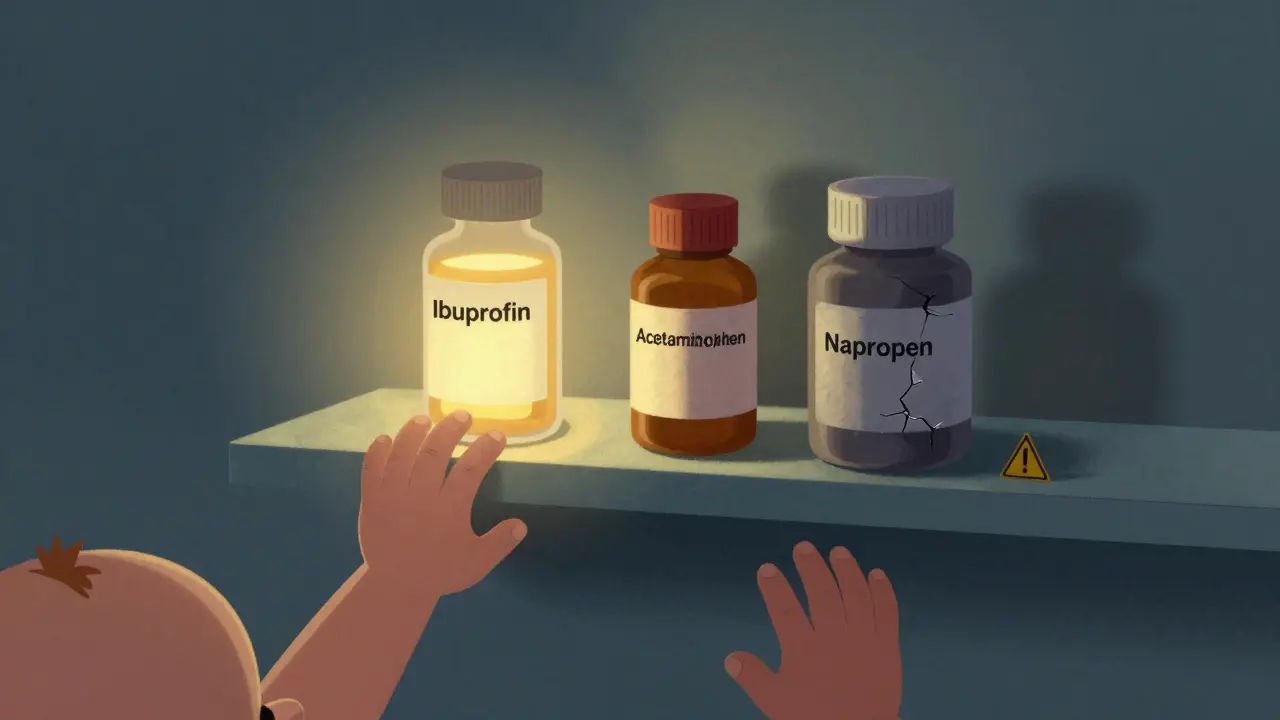
For headaches, postpartum pain, or a toothache, acetaminophen (Tylenol) is the gold standard. It passes into breast milk at only 1-2% of the mother’s dose. Even after taking 1,000 mg, your baby gets less than 20 mg. That’s far below any level shown to cause harm. The American Academy of Family Physicians calls it "preferred"-no caveats.Ibuprofen (Advil, Motrin) is even better in some ways. It’s highly protein-bound, meaning most of it sticks to your blood proteins and doesn’t float freely into milk. Only 0.6-0.8% of your dose ends up in breast milk. Its half-life is just two hours, so it clears your system fast. Multiple studies tracking over 100,000 nursing mothers found no adverse effects on infants. The AAP and WHO both endorse it for use during breastfeeding.
Now, here’s where things get risky: naproxen (Aleve). It stays in your system for 12-17 hours. That’s a long time for a baby to be exposed. Studies show it transfers at around 7% of the maternal dose-much higher than ibuprofen. There are documented cases of infants developing bleeding, anemia, or vomiting after prolonged naproxen use. The AAFP specifically warns against long-term use. If you need something for chronic pain, stick to ibuprofen. Use naproxen only for a day or two, and only if nothing else works.
What About Prescription Painkillers?
If you’ve had a C-section or other major surgery, you might be prescribed opioids. Here’s the reality: codeine, hydrocodone, oxycodone, and tramadol are not safe without close monitoring. Why? Because some mothers metabolize these drugs differently due to genetics. A small number of women turn codeine into morphine at a dangerously high rate, flooding their breast milk with it. There have been infant deaths linked to this. The FDA has issued warnings. Even if your doctor prescribes it, ask if there’s a safer alternative.Hydrocodone and oxycodone carry similar risks. Morphine is considered "acceptable" if used briefly and at low doses-but still not first-line. The safest option? Stick with acetaminophen and ibuprofen as long as possible. If you absolutely need something stronger, use the lowest dose for the shortest time. Watch your baby closely for signs of drowsiness, difficulty breathing, or poor feeding. If you see any of those, stop the medication and call your pediatrician.
Hidden Dangers: OTC Medicines Are Full of Surprises
One of the biggest mistakes nursing mothers make? Taking "cold and flu" mixes without checking the label. A single pill might contain diphenhydramine, pseudoephedrine, and acetaminophen-all in one. You think you’re just treating a runny nose, but you’re also giving your baby a sedative. Nurseslabs warns that "many OTC drugs contain antihistamines" and that mothers often don’t realize they’re doubling up.Check every product. If it says "nighttime formula," "all-in-one," or "for congestion and cough," it likely has a first-generation antihistamine. Stick to single-ingredient products. Buy plain loratadine. Buy plain ibuprofen. Avoid combination pills unless your doctor says it’s okay.
What About Topical or Nasal Sprays?
Good news: if you’re using a nasal spray like fluticasone (Flonase) or a topical cream with hydrocortisone, you’re likely fine. These rarely enter your bloodstream in meaningful amounts, so almost none reaches your milk. Same goes for eye drops or skin patches. Always rinse your hands after applying topical treatments, especially if you’re going to hold your baby right after.
When to Skip It Altogether
There are times when even "safe" meds need to be avoided:- If you or your baby has liver or kidney disease-your body can’t clear drugs as efficiently.
- If your baby was born premature or is under 2 months old-their systems are still developing.
- If your baby has a known allergy to a medication-even if you’re not taking it, trace amounts can trigger a reaction.
And if you’re unsure? Talk to your pediatrician or a lactation consultant. Don’t rely on internet forums or old nursing handbooks. The advice from 2015 is outdated. The 2022 AAFP guidelines, LactMed data, and Mayo Clinic recommendations are current-and they’re backed by real-world data from thousands of nursing mothers.
Real-Life Scenarios
Case 1: A mom takes Claritin for seasonal allergies. Her baby sleeps normally, feeds well, and gains weight. No issues. She continues for months. Case 2: A mom takes Benadryl every night to help her sleep. After a week, her 3-week-old starts sleeping longer between feeds, seems lethargic, and refuses to latch. She stops Benadryl. Within 48 hours, the baby returns to normal. Case 3: A mom takes Aleve for back pain for three days straight. Her 4-month-old develops mild diarrhea and seems unusually fussy. She switches to ibuprofen. Symptoms resolve in a day.These aren’t rare cases. They happen every day. The difference between safety and risk is often just choosing the right drug.
Final Checklist
- Safe to use: Loratadine, cetirizine, fexofenadine (antihistamines); acetaminophen, ibuprofen (pain relievers)
- Use with caution: Naproxen, hydrocodone, oxycodone, tramadol
- Avoid: Diphenhydramine, chlorpheniramine, promethazine (if used regularly); codeine; combination cold medicines
- Always check labels: Look for "antihistamine," "drowsy formula," or "nighttime" on OTC products
- Monitor your baby: Watch for excessive sleepiness, poor feeding, or breathing problems
- When in doubt: Call your pediatrician or a lactation consultant. Don’t guess.
Breastfeeding doesn’t mean you have to suffer through allergies or pain. But it does mean you need to choose wisely. The safest options exist. You just need to know which ones they are.
Can I take Zyrtec while breastfeeding?
Yes, cetirizine (Zyrtec) is considered safe for breastfeeding mothers. It transfers to breast milk at very low levels-less than 1% of the maternal dose-and has no documented side effects in infants. It’s one of the top-recommended antihistamines by the Mayo Clinic and the American Academy of Family Physicians. Use it at the standard adult dose (10 mg once daily).
Is Benadryl safe for nursing mothers?
Benadryl (diphenhydramine) is not recommended for regular use while breastfeeding. While a single dose is unlikely to cause harm, it can make both mother and baby drowsy. It may reduce milk supply and interfere with feeding. If you must use it-for a severe allergic reaction-take it right after a feeding, and monitor your baby for unusual sleepiness or poor feeding. Avoid daily use.
Can I take Aleve while breastfeeding?
Aleve (naproxen) is not ideal for regular use while breastfeeding. It has a long half-life and transfers into breast milk at higher levels than ibuprofen or acetaminophen. There have been reports of infants developing bleeding, anemia, or vomiting after prolonged exposure. Use it only for short-term, acute pain and avoid it if possible. Ibuprofen is a safer choice.
Do antihistamines reduce milk supply?
Some antihistamines, especially first-generation ones like diphenhydramine and chlorpheniramine, can reduce milk supply by blocking prolactin, the hormone that triggers milk production. This effect is more likely with frequent or high-dose use. Second-generation antihistamines like loratadine and cetirizine do not significantly affect milk supply. If you notice your supply dropping after starting a new medication, switch to a non-sedating option.
What’s the safest pain reliever for breastfeeding mothers?
Ibuprofen is the safest and most recommended pain reliever for breastfeeding mothers. It transfers in tiny amounts into breast milk, clears from the body quickly, and has no known adverse effects on infants. Acetaminophen is also very safe and often used alongside ibuprofen. Avoid naproxen and opioids unless absolutely necessary and under medical supervision.
Susan Purney Mark
Just wanted to say THANK YOU for this 💖 I was about to grab Benadryl for my allergies last week until I saw your post. Switched to Zyrtec and my little one hasn’t slept better or fed more consistently. Life saver.
amber carrillo
Ibuprofen and loratadine are the gold standard for nursing mothers. No need to overcomplicate it.
Sean Callahan
i took aleve for 5 days after my c section and my baby was fine?? like wtf why is everyone so scared? i mean i know its not ideal but like... maybe we're being too paranoid? 🤷♂️
Ferdinand Aton
I mean sure, but have you considered that maybe the studies are funded by Big Pharma? Like, why are they pushing second-gen antihistamines so hard? Coincidence? I think not.
William Minks
As someone from a country where OTC meds are way more restricted, I’m so glad I found this. We don’t even get Claritin over the counter here. It’s wild how different nursing advice is across borders. This is the kind of clarity we need!
Jeff Mirisola
Look, I get that science says one thing, but my grandma gave me Benadryl when I was a baby and I turned out fine. My sister took naproxen for two weeks and her kid is now a varsity athlete. We’re not lab rats. Trust your body. And your grandma.
Amina Aminkhuslen
Oh sweet merciful heavens. Someone finally said it: DON’T USE COMBINATION COLD MEDS. I’ve seen moms pop DayQuil like candy and then cry because their baby ‘suddenly’ became a zombie. Honey, that’s not a miracle, that’s pharmacology. Stop being lazy and read the label. It’s not that hard.
Tim Hnatko
Just a quiet thank you. I’m a new mom and this post made me feel less alone. I was terrified I’d have to choose between relief and my baby’s health. Turns out, I don’t. I’m using cetirizine and ibuprofen like a pro now. Also, I cried reading the part about monitoring feeding. Thank you for seeing us.
Joey Pearson
Zyrtec + ibuprofen = my nursing survival combo. No drowsiness. No supply drop. No drama. Just peace.
Roland Silber
Interesting how much this mirrors the 2022 AAFP guidelines. I work in maternal health and we’ve been teaching this exact protocol for over a year now. The real tragedy? Most OBs still default to Benadryl because it’s cheap and familiar. Education gap. We need more posts like this.
Patrick Jackson
Bro. I just want to say… this post gave me chills. Like, I’ve been a single dad raising twins while nursing (yes, I’m a trans dad) and I felt so lost. This didn’t just inform me-it saved me. I cried. I hugged my kids. I bought plain loratadine. Thank you. From the bottom of my heart. 🌈💖
Andrew Poulin
Naproxen is fine if you dont take it daily. Stop scaremongering.
Weston Potgieter
Wow. So much info. But honestly? Who has time to read all this? I just want a pill that works. Why does everything have to be so complicated? I’m tired. I’m breastfeeding. I just need to sleep.