
Red-Green Color Blindness: What It Is, How It Affects You, and What You Can Do
When you see a stop sign, you know it’s red—not because someone told you, but because your eyes and brain automatically recognize the color. For people with red-green color blindness, a genetic condition that affects how the eyes distinguish between red and green hues. Also known as color vision deficiency, it doesn’t mean seeing in black and white—it means certain colors blend together in ways most people don’t notice. This isn’t rare. About 1 in 12 men and 1 in 200 women have some form of it. Most cases are inherited, passed down through the X chromosome, which is why it’s far more common in men.
There are two main types: deuteranopia, a reduced sensitivity to green light and protanopia, a reduced sensitivity to red light. People with deuteranopia often mix up reds, greens, browns, and oranges. Those with protanopia see red as darker, almost black, and struggle to tell red from black or dark green. Neither condition gets worse over time—it’s stable from childhood. But it can show up in surprising ways: confusing traffic lights, misreading food labels, struggling with color-coded charts at work, or even missing ripe fruit at the grocery store.
It’s not just about convenience. In some jobs—pilots, electricians, graphic designers, even some medical roles—color recognition matters for safety and accuracy. Many people live their whole lives without realizing they have it, because they adapt. They learn to rely on brightness, position, or context. A green light is always on the bottom. Red wire is usually the hot one. But when you’re diagnosed later in life, it can be a revelation. And it’s not just about seeing differently—it’s about understanding how the world was designed for people who see colors the way most of us do.
There’s no cure, but tools exist. Special glasses can help some people distinguish colors better in certain lighting. Apps on your phone can identify colors by pointing the camera. And awareness is growing. More websites now use patterns or labels alongside color cues. Food packaging is slowly improving. Even your doctor’s office might start asking about color vision if you’re taking certain medications that affect the eyes.
What you’ll find below are real stories and practical guides from people who’ve learned to live with this condition—and the medical insights that explain why it happens. You’ll read about how color perception links to other health issues, how medications can sometimes affect vision, and how to avoid misdiagnosing color blindness as something else entirely. Whether you’ve just found out you have it, or you’ve lived with it your whole life, these posts offer clarity, not just facts.
Color Blindness: Understanding Red-Green Defects and How They’re Passed Down
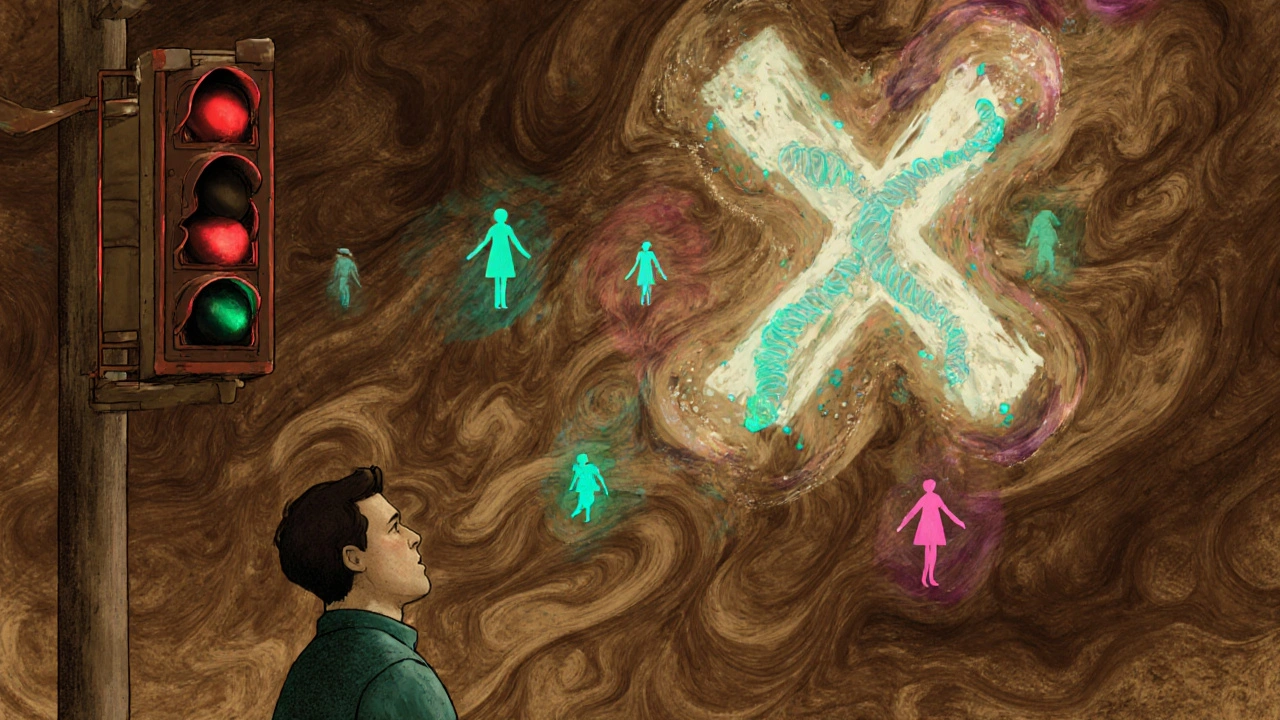
Red-green color blindness affects 8% of men and 0.5% of women due to X-linked genetic inheritance. Learn how it works, why it's more common in men, and how to adapt - not just live with it.
More