
Genetic Inheritance: How Traits Pass Down and Impact Your Health
When we talk about genetic inheritance, the process by which biological traits are passed from parents to offspring through DNA. Also known as heredity, it’s not just about eye color or height—it directly affects how your body reacts to medications, your risk for chronic diseases, and even how you process caffeine or alcohol. Every time you take a pill, your genes are silently deciding whether it will work, cause side effects, or do nothing at all.
hereditary conditions, diseases passed down through families due to specific gene mutations, show up in surprising ways. A parent’s history of high blood pressure, diabetes, or even severe drug reactions isn’t just a family story—it’s a biological blueprint. That’s why knowing your family health history matters more than you think. If your grandmother had a bad reaction to a common antibiotic, or your father developed early-onset heart disease, those aren’t coincidences. They’re signals written in your DNA. And if you’ve ever been told you have a "penicillin allergy" without ever being tested, you might be mislabeling a side effect as a genetic reaction—something that can limit your treatment options for years.
DNA transmission, how genetic information is copied and passed from one generation to the next isn’t always straightforward. Some traits skip generations. Others only show up under stress, poor diet, or when combined with certain drugs. That’s why two people with the same gene variant can have completely different health outcomes. One might handle statins fine; the other gets muscle pain. One might metabolize caffeine slowly and lose sleep after one cup; the other drinks three espressos and feels fine. It’s all in the genes.
And here’s the thing: you don’t need a lab test to start understanding your genetic inheritance. Just sit down with your family. Ask about illnesses, drug reactions, and even things like miscarriages or early menopause. These aren’t awkward family secrets—they’re clues. The more you know, the better you can talk to your doctor about what meds to avoid, what screenings to ask for, and how to adjust your lifestyle before problems start.
What you’ll find below isn’t a textbook on genetics. It’s a collection of real, practical stories and guides from people who’ve navigated the messy intersection of genes, medications, and daily health. From how caffeine interacts with genes that control its breakdown, to why some people can’t take certain antibiotics because of inherited liver enzyme differences, these posts cut through the noise. You’ll learn how to spot inherited patterns in your own health, what questions to ask your doctor, and how to use your family history as a tool—not a warning.
Color Blindness: Understanding Red-Green Defects and How They’re Passed Down
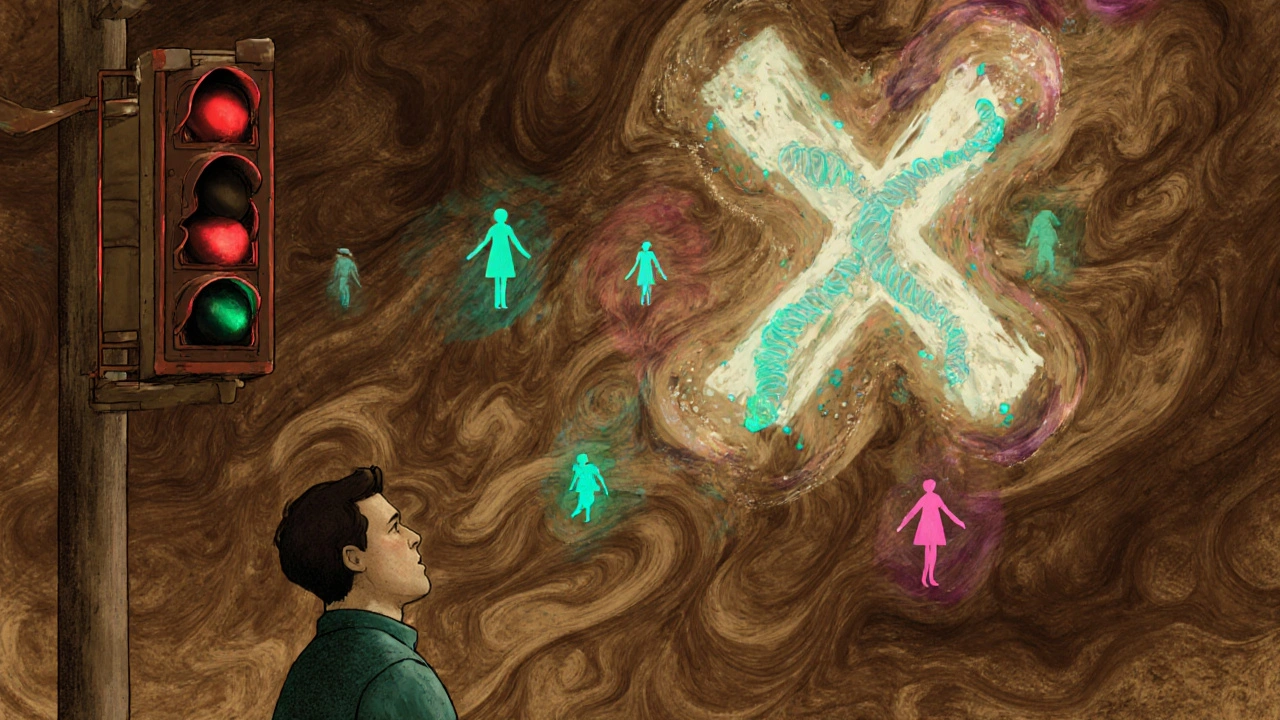
Red-green color blindness affects 8% of men and 0.5% of women due to X-linked genetic inheritance. Learn how it works, why it's more common in men, and how to adapt - not just live with it.
More