
Deuteranomaly: What It Is, How It Affects Color Vision, and What You Can Do
When you see a stop sign and instantly know it’s red, you’re relying on a system most people take for granted. But for people with deuteranomaly, a type of red-green color vision deficiency where green cones in the eye don’t work properly. Also known as green weakness, it’s the most common form of color blindness, affecting about 6% of men and 0.4% of women. It’s not a disease. It’s not something you can catch. It’s a genetic difference—usually passed down from mother to child—that changes how your eyes process certain wavelengths of light.
People with deuteranomaly don’t see the world in black and white. They see colors, but the line between red, green, and sometimes yellow gets blurry. A ripe tomato might look more orange. A green traffic light might seem dimmer or yellower than it should. This isn’t just a minor annoyance—it can affect safety, career choices, and even everyday tasks like picking out clothes or reading color-coded charts. And because it’s often mild, many people don’t even know they have it until they take a test or someone points out they’re mixing up colors.
Deuteranomaly is part of a larger group called red-green color blindness, a category of inherited vision conditions affecting how the eyes distinguish between red and green hues. It’s different from deuteranopia, where green cones are missing entirely. With deuteranomaly, the cones are there but don’t respond correctly—like a microphone that picks up sound but muddles the tone. This is why people with deuteranomaly often score better on color tests than those with full deuteranopia. But it’s still enough to cause real problems in fields like electrical work, graphic design, or aviation.
There’s no cure, but there are tools. Special tinted glasses can help some people distinguish colors more clearly. Smartphone apps can label colors in real time. And knowing you have it? That’s half the battle. Many people spend years thinking they’re just bad at colors, when the real issue is a simple biological quirk. Once you understand it, you can adapt—use labels on markers, ask for help with color-based instructions, or rely on patterns instead of hues.
What you’ll find in the posts below isn’t a medical textbook. It’s real-world advice from people who’ve dealt with similar health quirks—how to manage medication side effects, avoid dangerous interactions, and navigate life when your body works differently than expected. Just like deuteranomaly isn’t a flaw but a variation, many health conditions are misunderstood because we focus on fixing them instead of adapting to them. These articles show you how to take control, ask the right questions, and live well—even when your eyes, your body, or your meds don’t behave the way they’re "supposed" to.
Color Blindness: Understanding Red-Green Defects and How They’re Passed Down
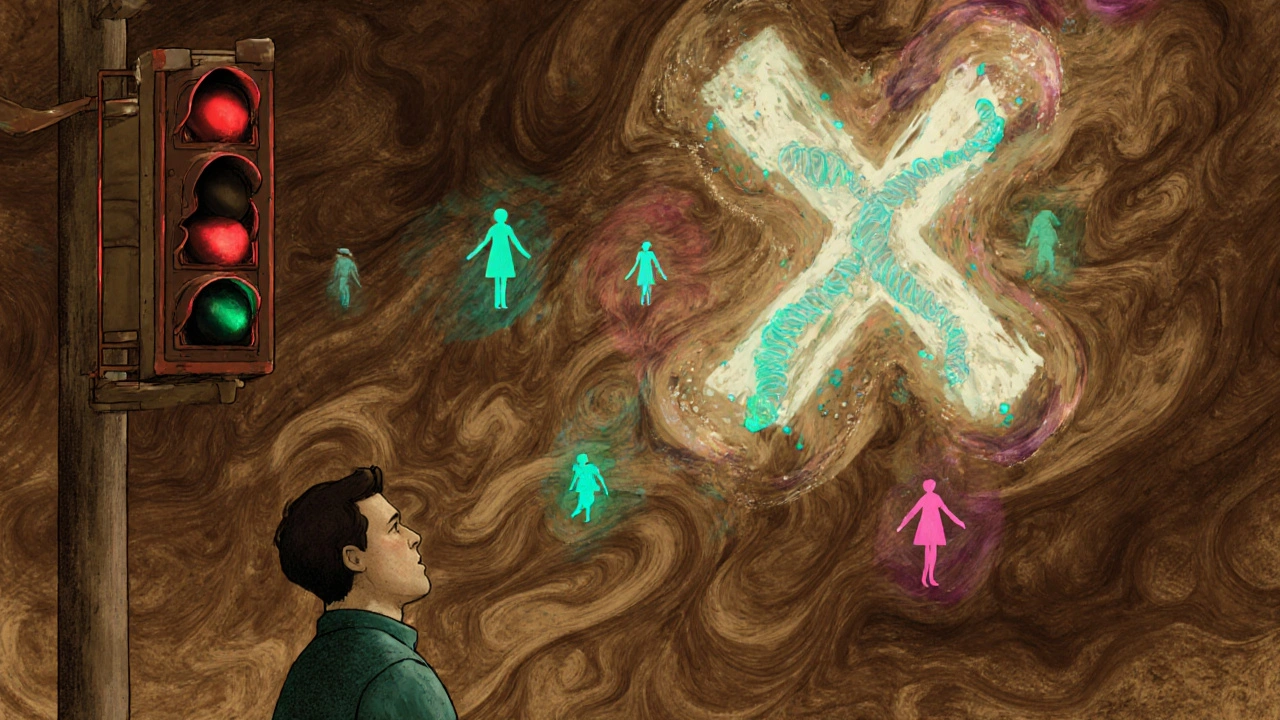
Red-green color blindness affects 8% of men and 0.5% of women due to X-linked genetic inheritance. Learn how it works, why it's more common in men, and how to adapt - not just live with it.
More